
Architect: Perry Maxwell
Walkable: Yes, but there’s quite a bit of elevation change
Highlighted holes: 2, 3, 4, 5, 11, 12, 16
Built between 1934 and 1938, Veenker was part of Works Progress Administration funded efforts to stabilize employment and invest in public infrastructure during the great depression. Iowa State planned to build a golf course and hired famed architect Perry Maxwell for the job. At this point in his career he had already built or assisted on: Crystal Downs, Southern Hills, and Augusta. Due in part to being a university course and a testament to the challenge it presented, Veenker hosted the 1949 NCAA Tournament in which Arnold Palmer medaled with 141 and Harvie Ward was the individual champion.
Originally the course was routed so that the golfer returned to the clubhouse only after playing all 18. After a tragic rerouting in the 70s and 80s, the Perry Maxwell holes that remain are full of quirk and character, and include remnants of his legendary greens. Of the non-original holes, one is good, some are passable, and one is one of the dumbest I’ve been lucky enough to play. The bones are still there and the existing holes are worth a visit.
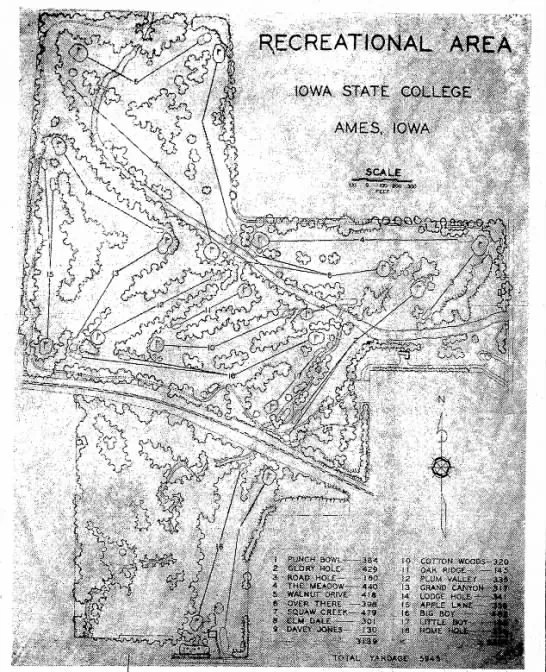
The first significant alterations to the course came in 1972 when the first and eighteenth holes were removed to make way for 13th Street. According to Chris Clouser in his book The Midwest Associate, “The first and eighteenth were reminiscent of the first and eighteenth at The Old Course at St. Andrews. The two holes shared a wide fairway with out of bounds directly to the right of the first hole.” In fact, Clouser goes on to mention, “The eighteenth was a replica of the famous Home hole at the Old Course […] and the green featured a gigantic depression short of the green much like the infamous Valley of Sin.”
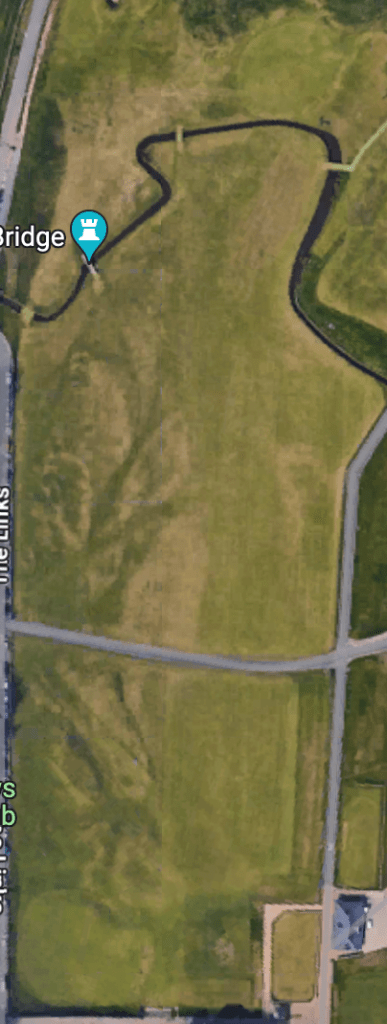
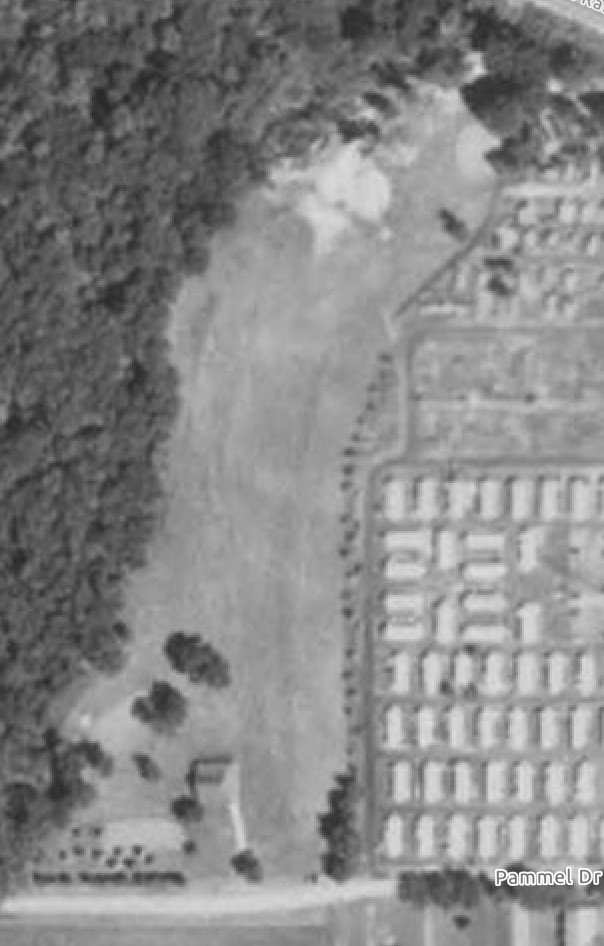
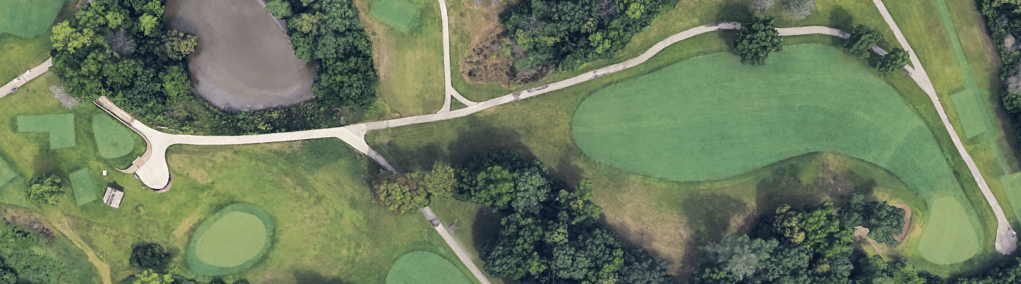
Here are two aerials: one from the 1950s and one from the 2020s that show what’s been added and what remains. The original first and eighteenth were just south of this image and are pictured above.
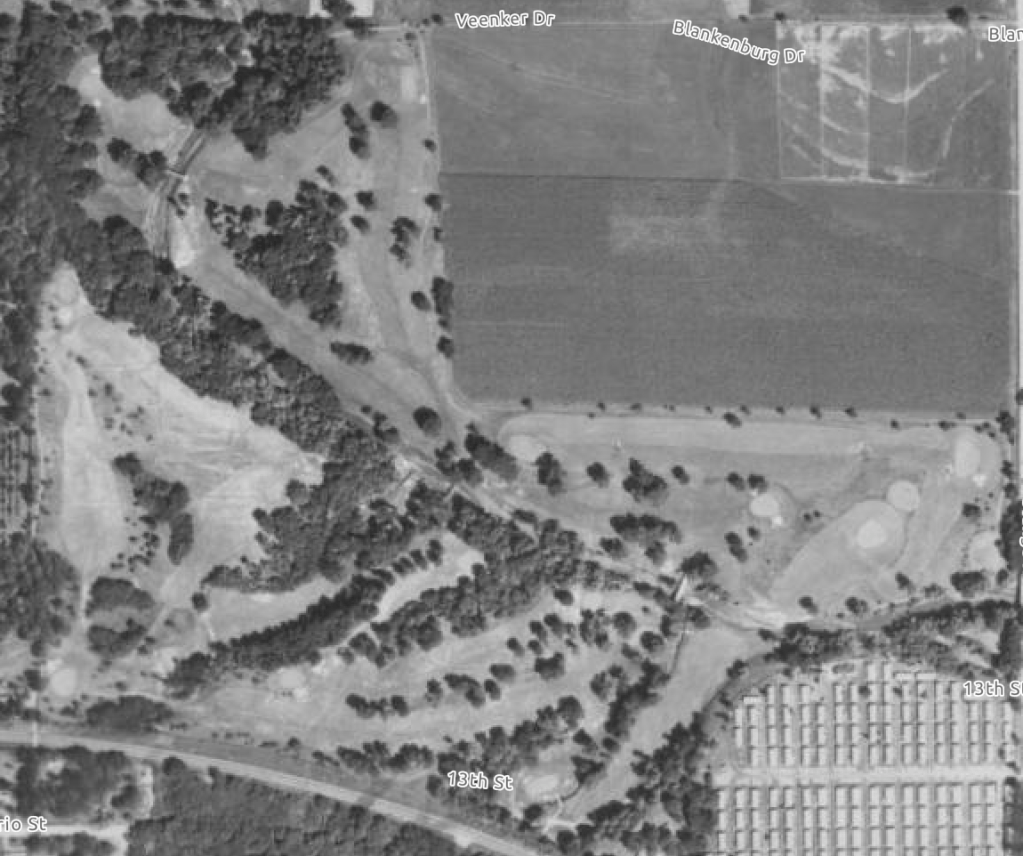

Here are some of the changes:
– The north side of the course was widened and the original holes were replaced with four whose sole purpose seems to be to get you out to the course and back again from the new clubhouse location.
– The second hole that originally played downhill to the creek before a demanding approach was turned into the dreadful 7th – a par five with a blind layup, two fairways (in case your initial layup missed the first fairway), the second of which has no access on foot to the rest of the hole requiring a double back, and trees that get in the way of just about any success from the tee.
– The fourth played along a field with out of bounds right and a green tucked to the left. This field was converted into the driving range and room for four new holes to complement the clubhouse move.
– The short par four eighth was traded for a par three, though the movement in the green on today’s tenth hole makes me wonder if the original eighth green was repurposed, especially as the location doesn’t seem to have changed.
– The sixteenth, which Clouser calls, “the feature hole in the original design,” was known as ‘Big Boy’ – a long par four over excellent terrain with strategic interest. It was abandoned and today exists as a thoroughfare between the new sixth and the aforementioned lousy seventh.
– The seventeenth, a short par three, was also demolished in service of the rotten seventh.
By my count, seven of the original holes no longer exist in any form on the golf course, one was significantly altered, and six are brand new. As far as I can tell, the originals that remain are the current second, third, fourth, fifth, eighth, eleventh, twelfth, thirteenth, fourteenth, fifteenth, and sixteenth. If everything adds up in that jumble of a word problem, it should leave us with eleven originals and seven replacements.
Two (Plum Valley): The second is a short par four, yet it doglegs twice, drops then rises dramatically, and has a green that is small, but complex. In summary, the second is a land of contrasts. Originally the 12th hole, it’s short enough to tempt the longest hitters, but because of how it’s laid out, the prudent play is an iron to the right side of the fairway. From below the hole you can’t see the green atop a steep mound. The green is two tiered and fast, sloping back to front. Length isn’t everything.
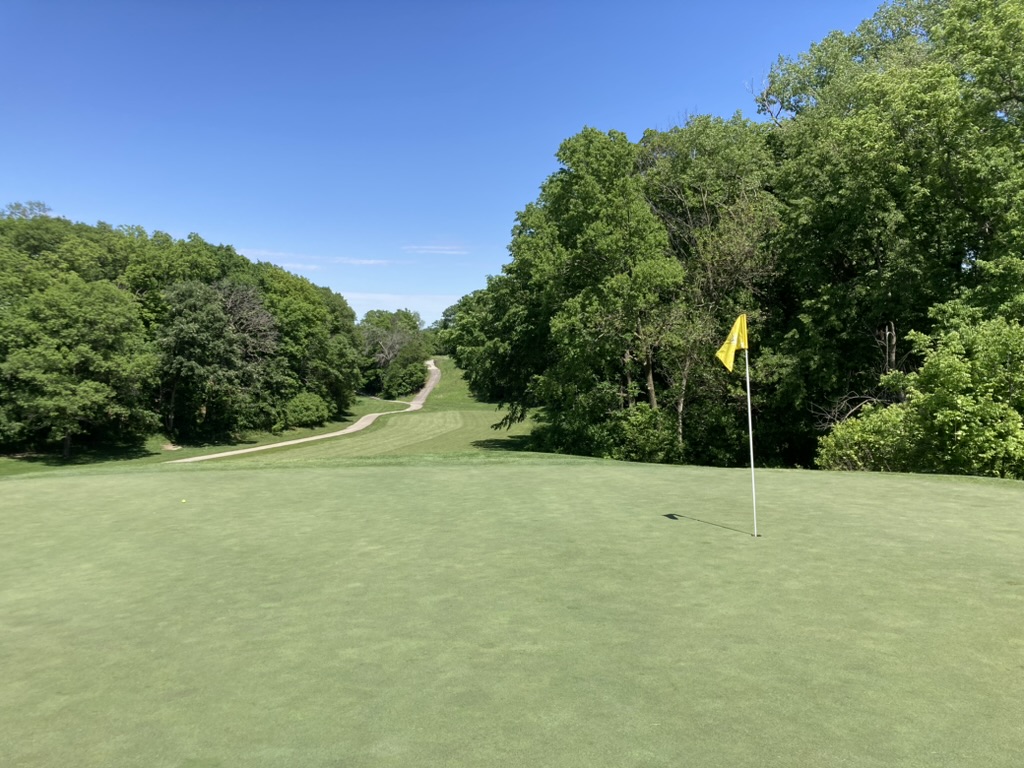

Three (Grand Canyon): The third hole is another short par four that begins with a blind tee shot over a valley and up a hill. The fairway is much wider than it looks, but anything right of center will end up stymied by a tree that guards the green. A long iron or wood to the left might leave you farther from the green, but with an open angle. Miss short as woods close in around the back of the putting surface.
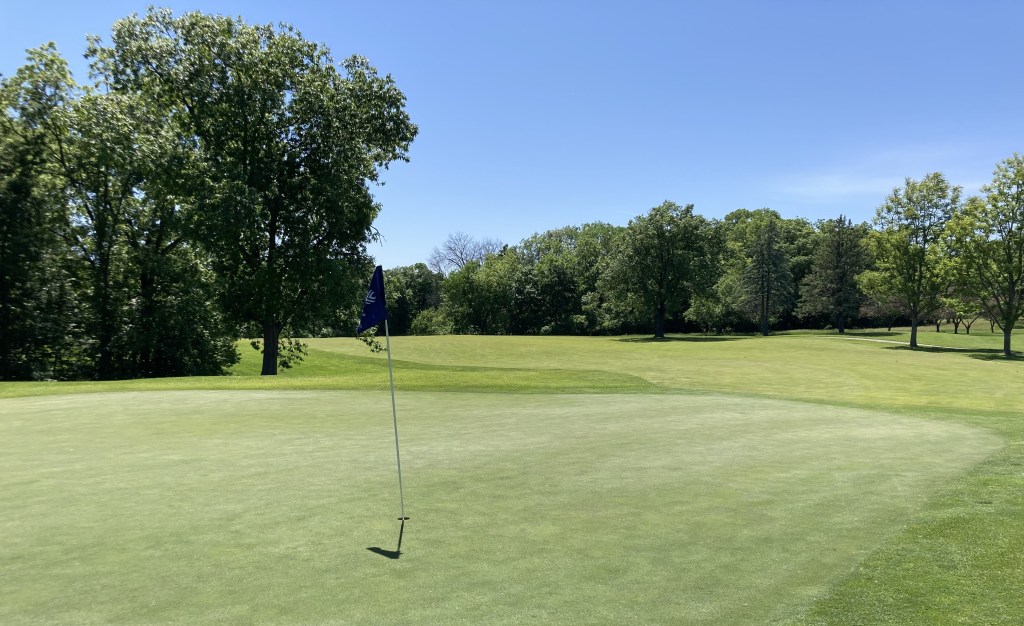
Four (Lodge Hole): Without a doubt my favorite hole on the course, the fourth is a 350 yard par four with a generous fairway that slopes to the right and rewards a tee shot kept to the left. Too far left, however, and you’ll find yourself behind a tree (note: you’d have to be awfully far left). Two large high-faced bunkers guard the front of the green and wouldn’t look out of place at Prairie Dunes. The green has some of Maxwell’s subtlety and shots can funnel from the back to the front right. It’s a big, sweeping hole that feels, to this layman, like quintessential Perry Maxwell.
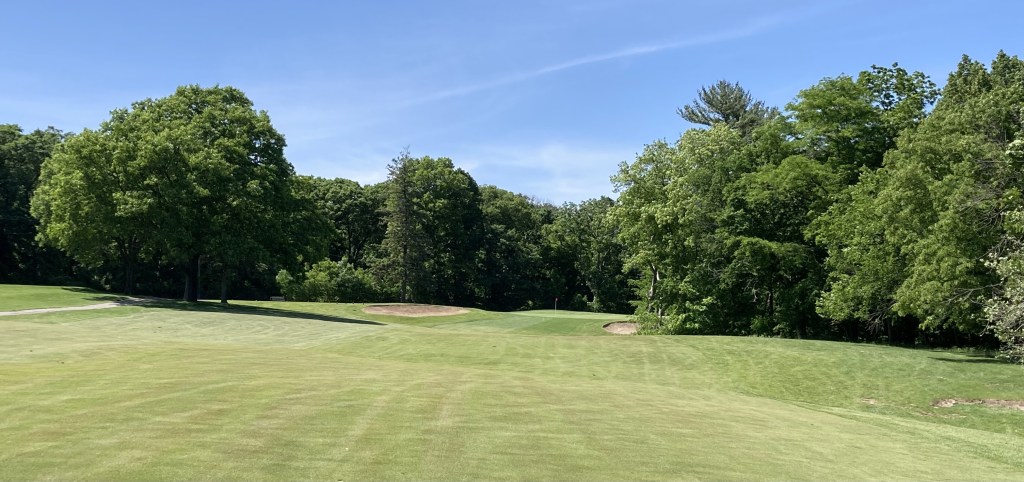
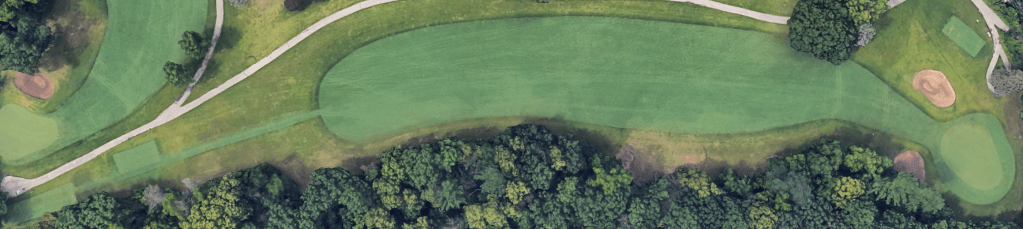
Five (Apple Lane): The fifth is unrelenting. It requires a long layup to the top of a hill and a long second over a pond nestled in the valley below. Mercifully, there is rough ahead of the pond to catch a long teeball that got away, as well as rough in front of the green to nab anything mishit (within reason). The tradeoff is that either of these misses makes for a tough par.
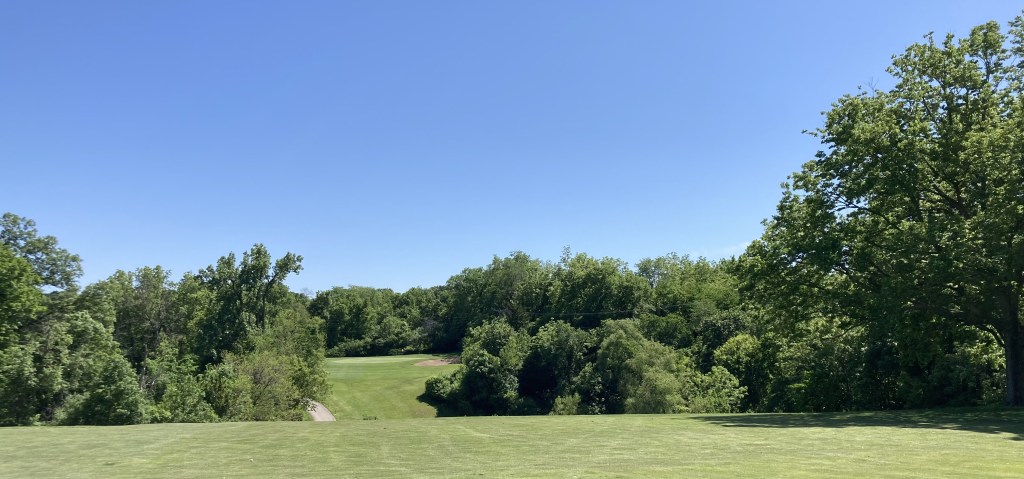
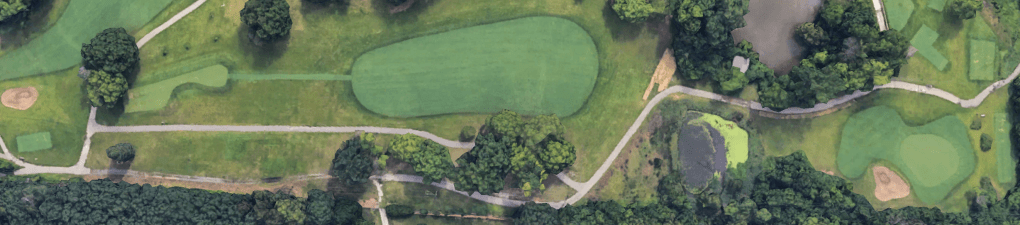
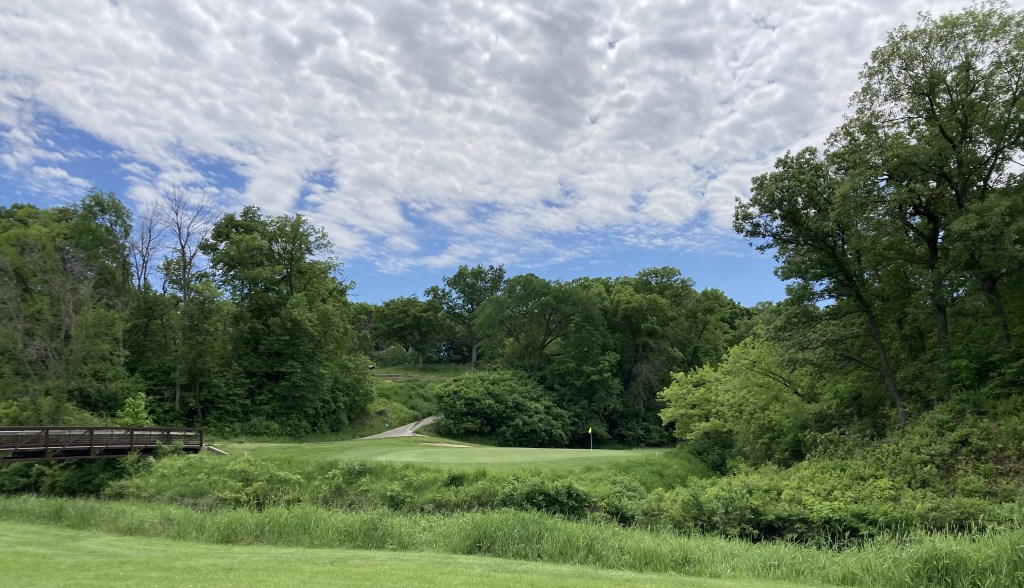
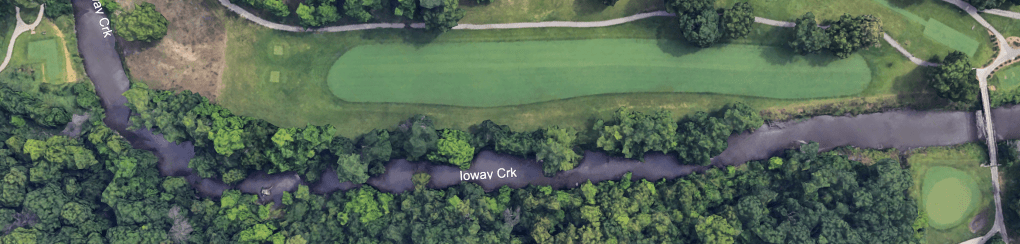
Eleven (Davey Jones): Not only do you have to fly the Ioway Creek, you have to do so looking up at the green. The green angles away from the tee with a bunker left. The hole plays about 155 from the back tees and all but requires your shot to land on the green and stop. It’s an exciting hole that was probably even better before they took out two large back bunkers sometime in the past few years.
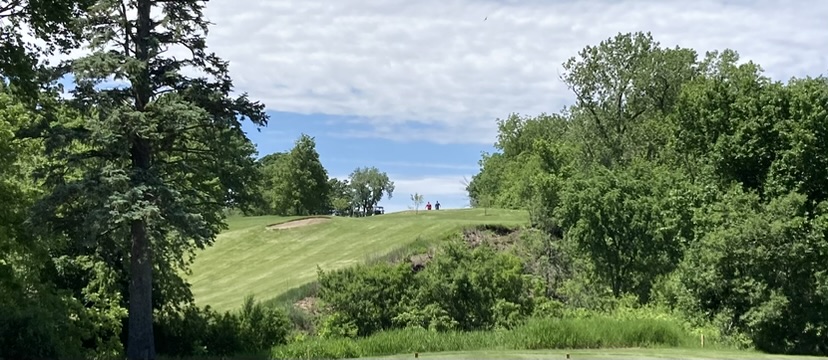

Twelve (Cotton Woods): Twelve has great movement in the fairway, a gentle dogleg right, tall cottonwoods left, and a tee shot that benefits accuracy. The green sits up with a high front slope to reject any approaches that don’t carry to the green. The right greenside bunker almost fades into the dense brush that lines the right side of the hole. More subtle contours on the green make it another great short par four.
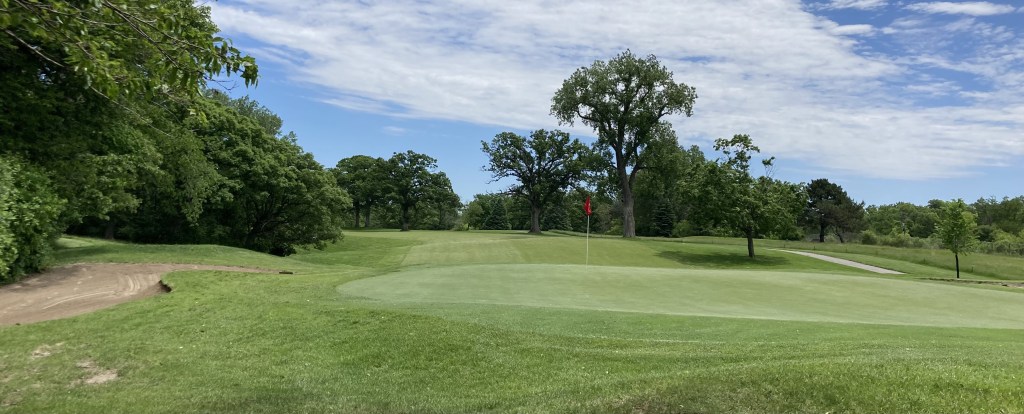
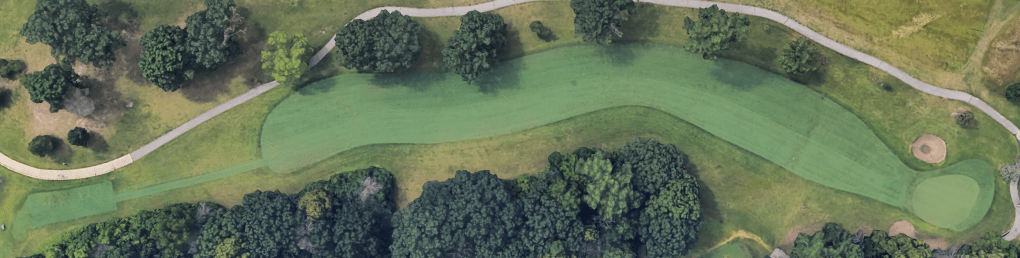
Sixteen (Squaw Creek): Sixteen is the last of the original holes on the course. It’s a big, burly par five with a fairway that takes a dramatic fall to the right. Hold on to the left side for dear life as your second shot will need to be a layup to the end of the fairway. Anything right will be blocked by heavy trees leaving you no shot to the green, which, by the way, sits on the other side of the Ioway Creek. Ideally your third will be a wedge over to this green, but even then, it’s not a big target with trouble everywhere.
Final Thoughts:
Veenker has charm, quirk, and a somewhat incomprehensible routing. I’ve never played a course that left me asking, “what if” more than Veenker. The original had an homage to the Old Course, a unique routing for Maxwell, and what may have been great holes shelved for freeway school monotony. Maxwell’s originals are more than worth the $40 to play and beg the question, how good was it? How good could it have been with a little TLC? We can only guess, but considering Maxwell’s routing prowess and green building skills, it might have been something special.
Further Reading
Golf Club Atlas – Changes to Maxwell’s design at Iowa State
Golfdom Magazine (digital archive hosted by Michigan State University) – Iowa State Opens New $133,000 Course
Veenker Course Tour
Chris Clouser – The Midwest Associate: The Life and Work of Perry Duke Maxwell


 Layman's Hall
Leave a comment