
Architects: Dave Axland and Dan Proctor
Walkable: The front is (and could use some walking paths between holes) but the back is a workout
Highlighted Holes: 1, 2, 4, 6, 7, 9, 11, 13, 16, 17
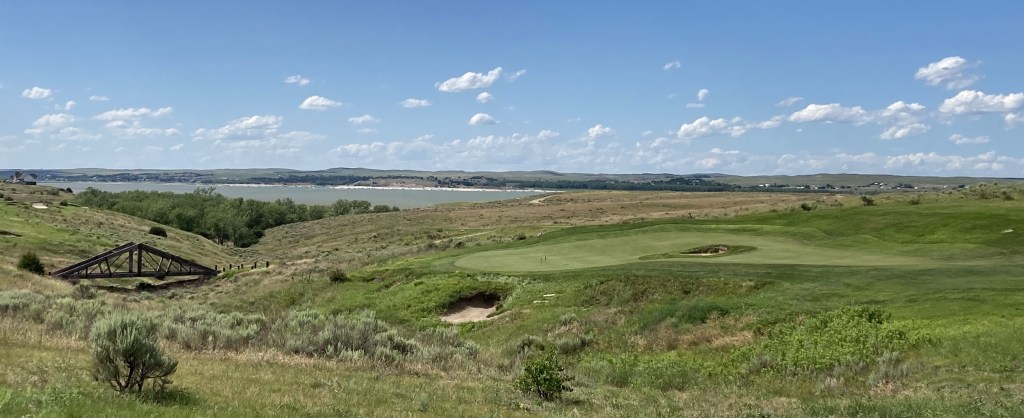
Located on the shores of Lake McConaughy, Bayside is built on rolling dunes and through scrub and prairie grass. The front nine is on par with any other public nine in Nebraska and is comparable to the topography and design principles used at Wild Horse. The back nine is built on much more severe land. It is fun in its own right, but what could have been had they been given the kind of land for the back that they got on the front? It’s full of forced carries over arroyos and fewer holes with the latitude to feed the ball to the hole.
The front nine was built in 1999 with the back being added a couple years later. You can see in the images below how they placed their holes on the existing land, a study in minimalist design on a dramatic site.
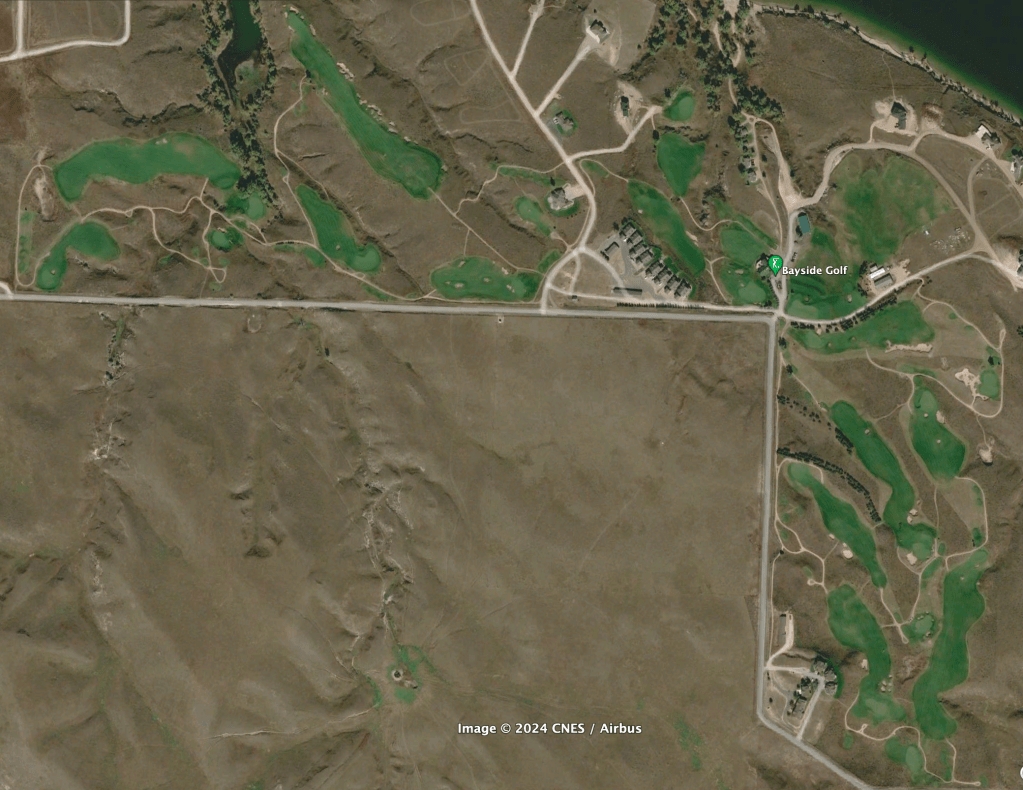
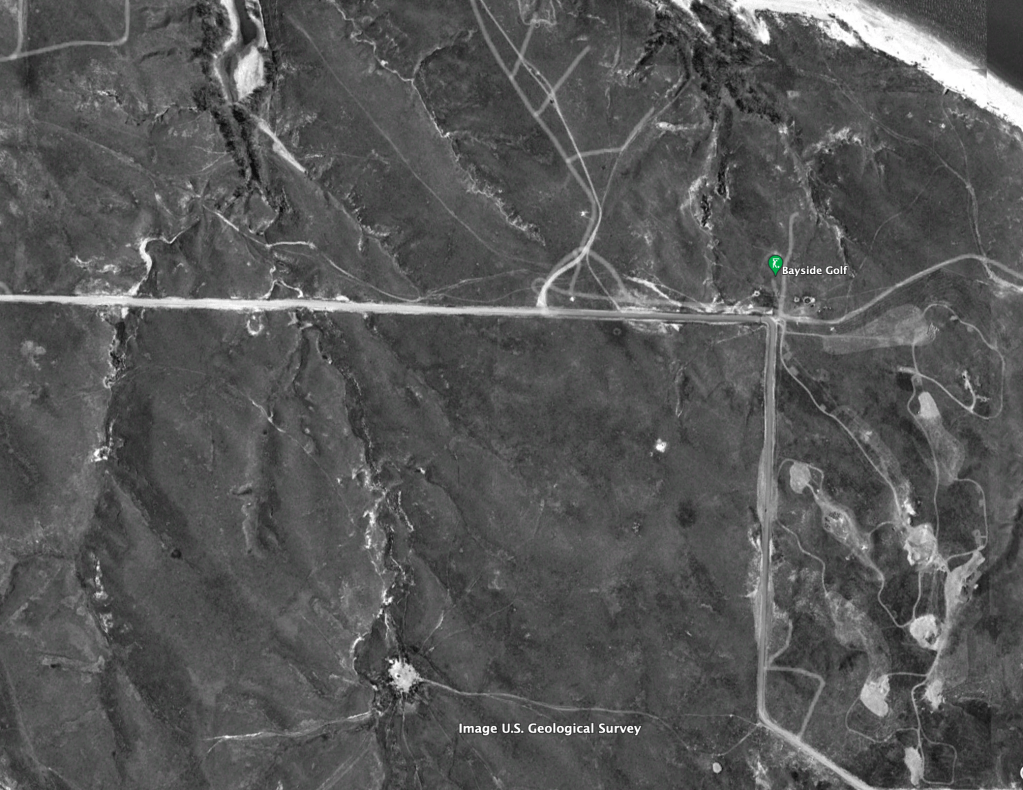
Much of the challenge is dependent on the wind direction, but Axland and Proctor offer an interesting combination of offsetting scoring holes and challenges. Two par fives on the front play as 4.5s as do two par fours. On the back, two par fives play as 5.5s and two par fours play as 3.5s. Each challenge is paired with an opportunity, and both reward patience.
Note: In the Scottish tradition, each hole is named and identified in brackets.
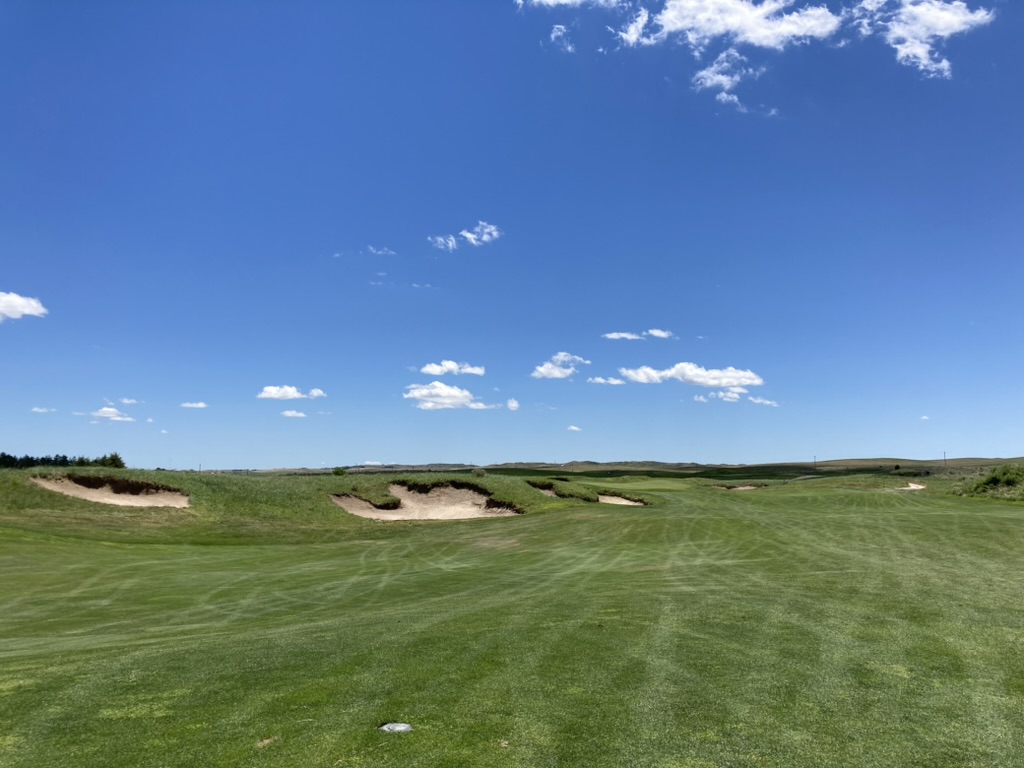
One (Cauldron): The first hole is one of the aforementioned half par par fives. From the tee box you can see one of the beautiful bunkers on the left, well within driving distance, and a grouping of pine trees to the right. Unless your drive is way out past the bunker, your second shot will be blind as a dune muscles into the fairway from the left in direct line with the green. The area to layup narrows with three more brilliant bunkers, but go for the green and your room to miss opens up on the left. The opening green is a good sign of what’s to come: dramatic movement and opportunities to feed the ball to the hole if you come in low.
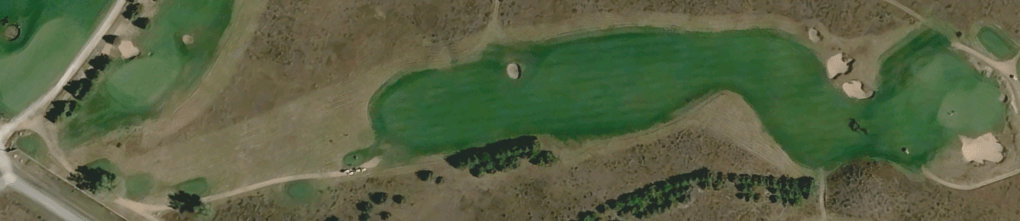
Two (Postage Due): The second is an homage to the famous Postage Stamp par three at Royal Troon. At Bayside however, the mound is smaller and the green is larger. This short hole is protected by bunkers on all sides to a green that only the craftiest ground game could run it up to.
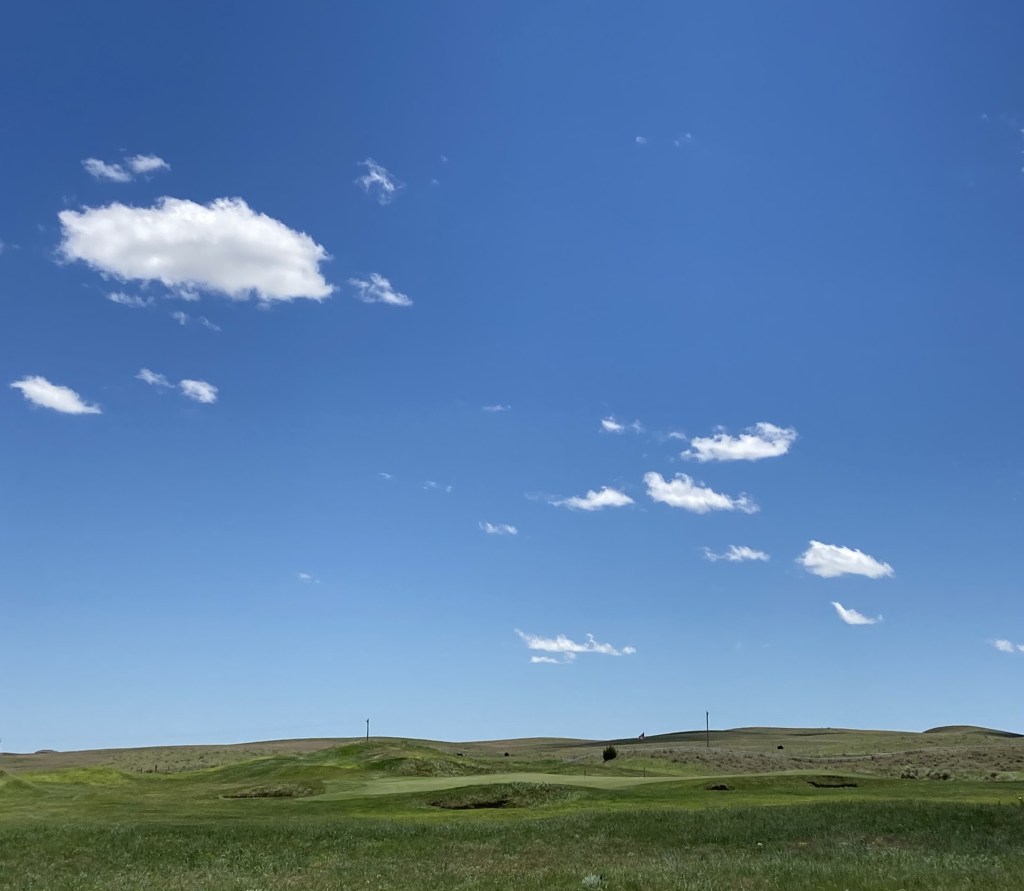
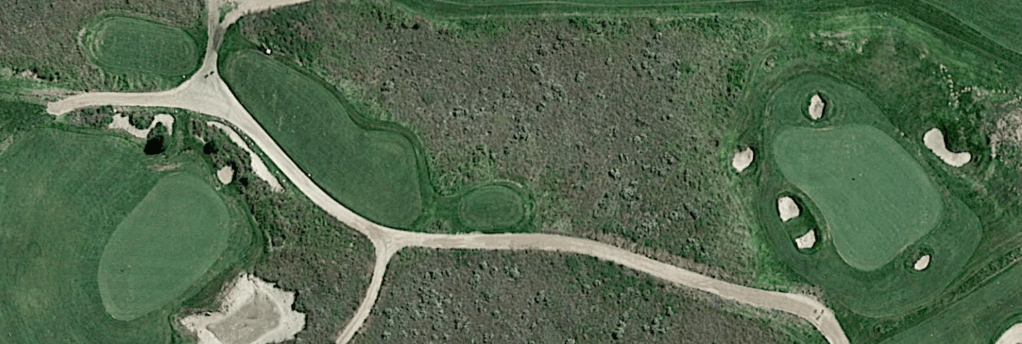
Four (Tempest Tossed): The second of the two par fives on the front, four has one of the most interesting fairways that I’ve seen. While it’s about 75 yards wide, 45 of that is a deep bowl on the right. Combined with a blind tee shot, any second shot from within the valley will be hit from behind an especially large dune making any attempt at going for the green in two completely blind. Tee balls that hold the mostly flat upper level will have a relatively short second shot into the green. As it is such a short par five, the second set of defenses comes from the green itself. Three severe tiers make three putt a very real possibility. Anything long and left will filter down to the bottom of a large hollow some fifteen to twenty feet lower than the surface of the green. There is variety in every shot on this hole and aggressive plays can be rewarded or severely punished. At less than 500 yards, this par five is one of the most fun holes on the course.
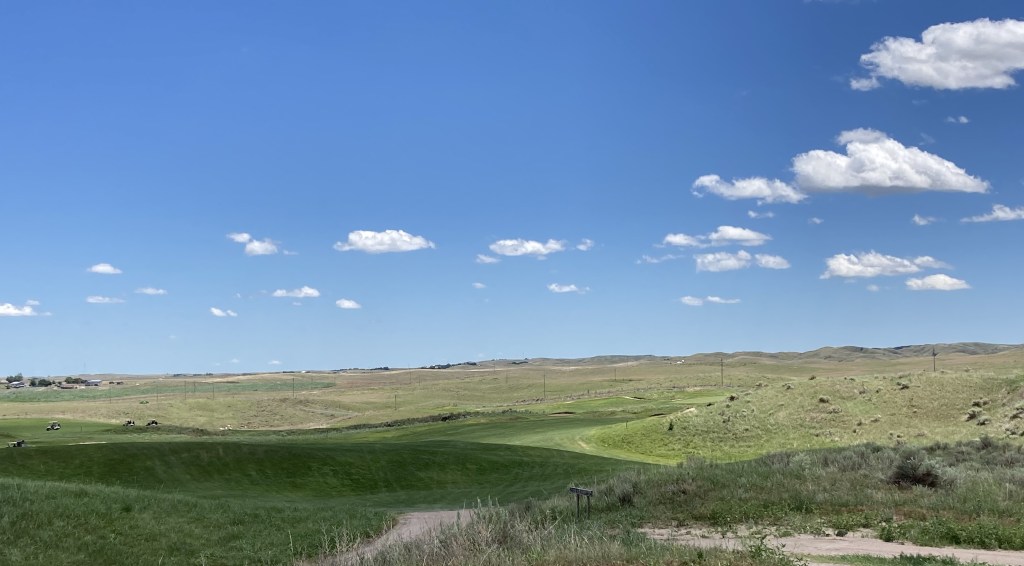
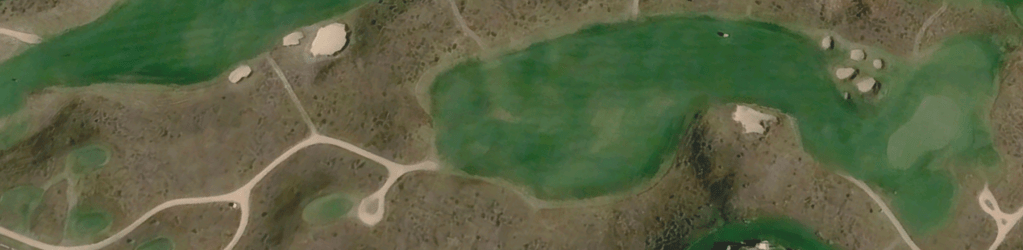
Six (Eagle Landing): The sixth is a big ol’ par four (par five from everywhere but the tips). Make it to the wide landing area, some of which is over an arroyo, and you’ll have what feels like going for the green in two on a par five. Into the wind, there’s no shame in laying up to pitch onto a raised green. Play to above the centerline bunker for a level pitch down the gut of the green, but bail out right and you’ll find yourself below with an awkward, blind pitch up. If the wind is with you and you can take a full swing second shot, the right fringe is angled that any balls played off of it will run down onto the putting surface. Depending on the pin and your luck, you could find yourself with an all-world birdie.
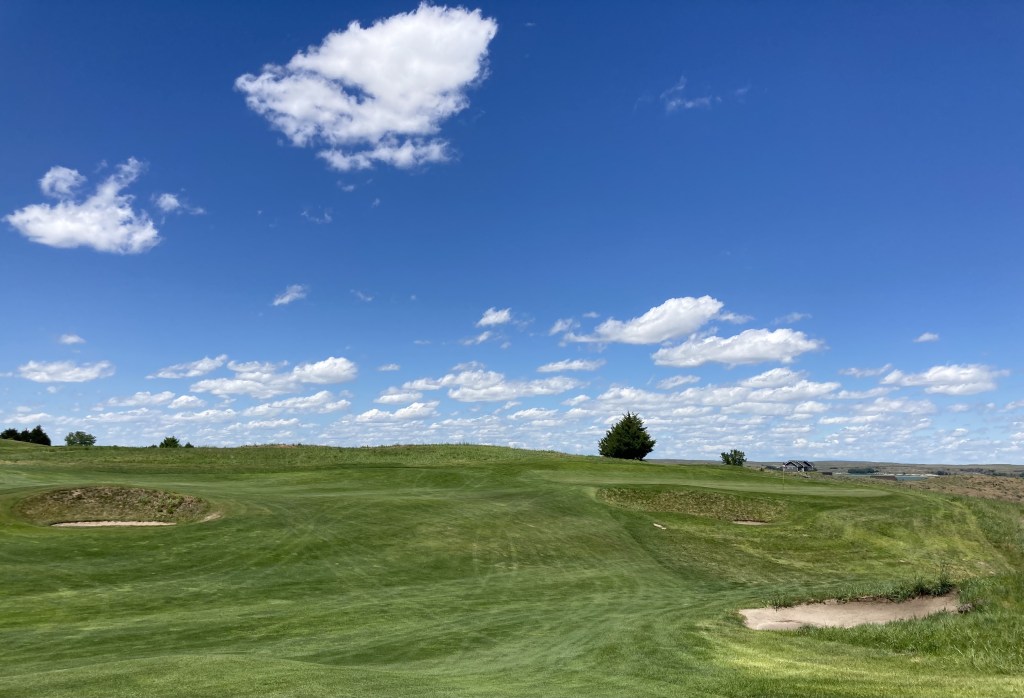
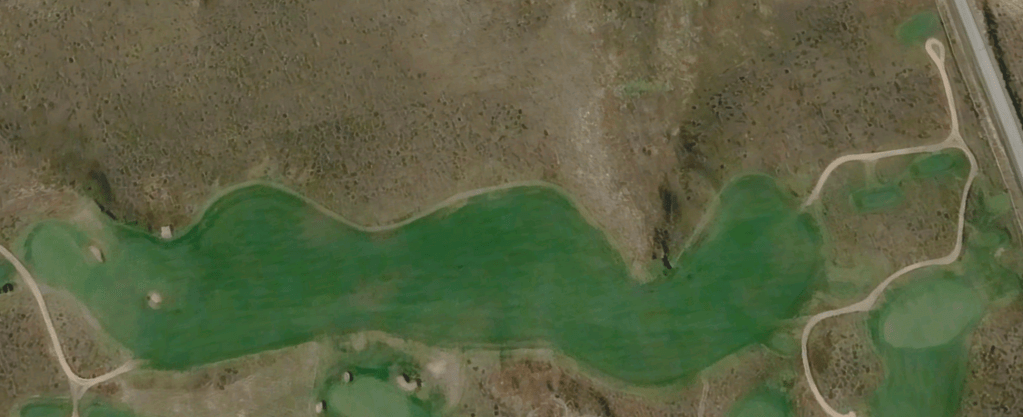
Seven (Temptation): The seventh is the first of two exceptional short par fours on the course. At just over 300 yards, long hitters will be very tempted to go for the sizable green. In doing so, the first bunker won’t be a factor, but the one front left restricts any realistic attempt at running it on while the blowout right will swallow anything flared. A well contoured green will provide fun pitches in from those who choose to lay up. A catch basin left is surrounded by long grass right makes for a fun hazard for those who suffer a pull.
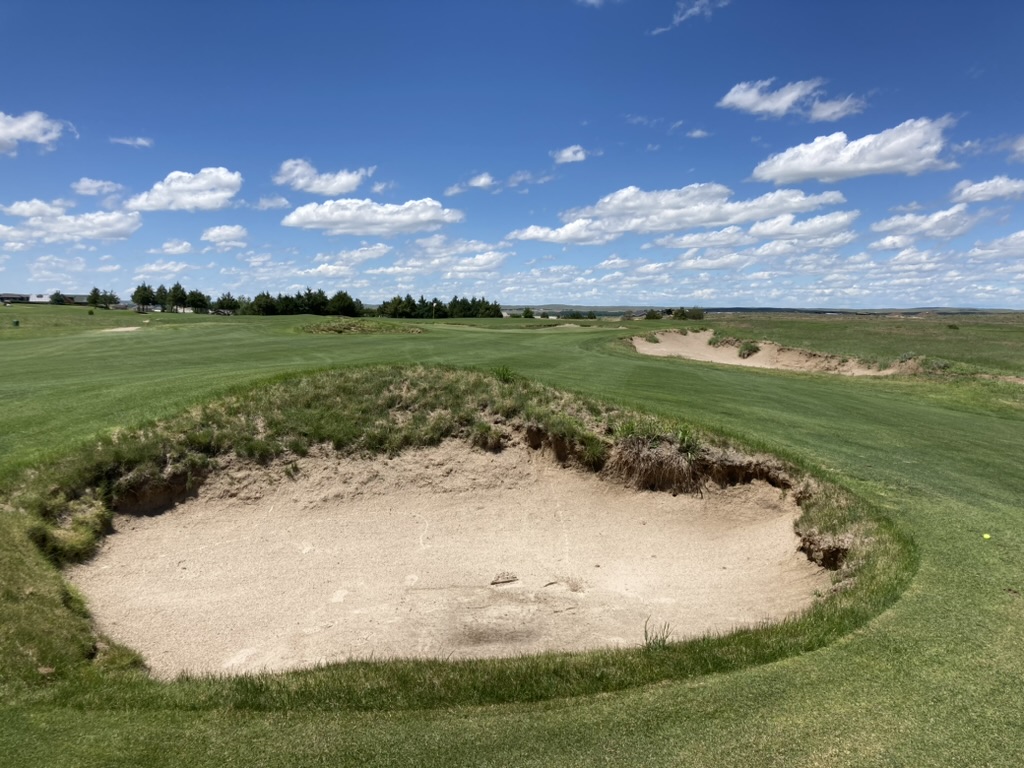
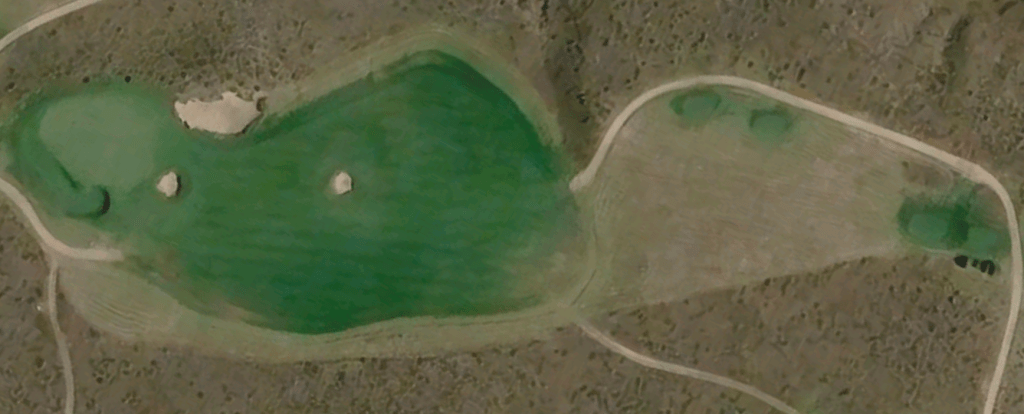
Eleven (Forever): I would be remiss if I didn’t mention the punishing eleventh where making it to the fairway from the tee box is a victory all it’s own. This 652 yard par five rides along the top of a ridge, entirely unprotected from the wind. The fairway narrows the closer you get to the green, compounding the wind problem. Bunkers line the sides and should your ball head that way, hope it finds one as anything over the side is lost. The green is long with more bunkers around it. If everything else goes wrong, the view up top is spectacular.
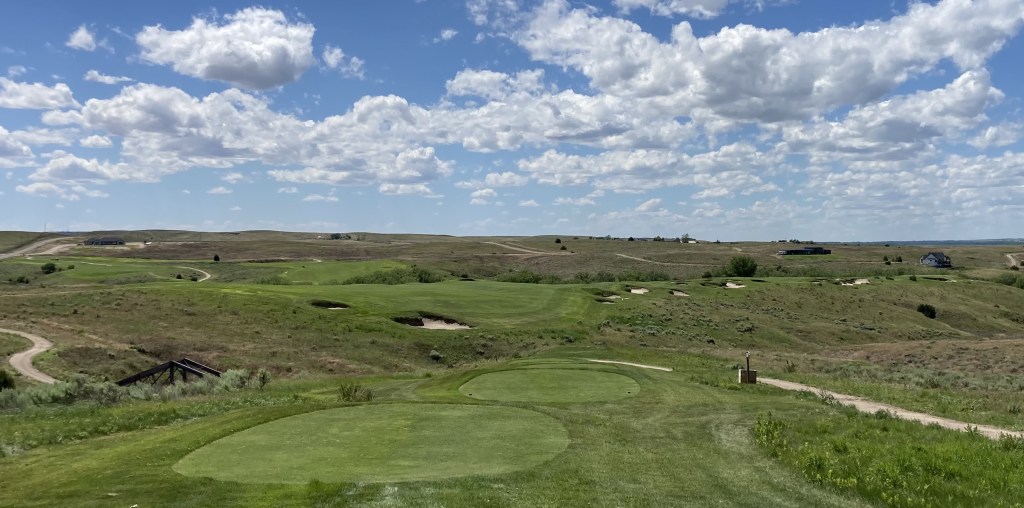
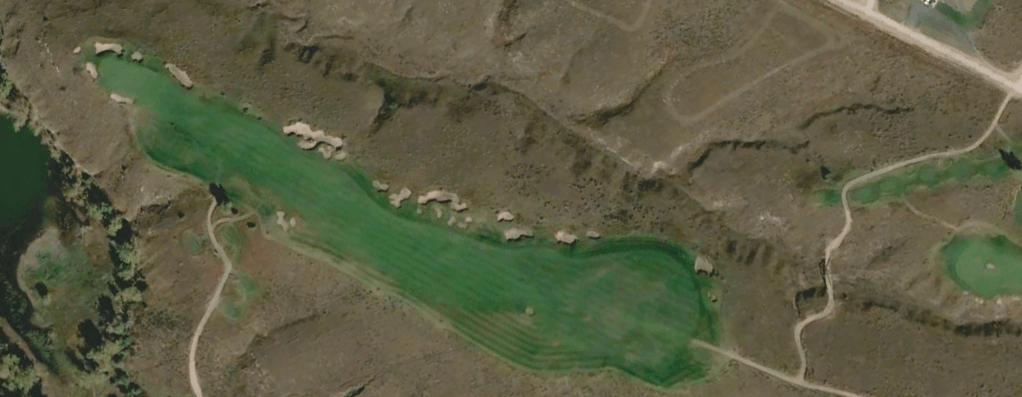
Thirteen (Humility): All you need to do here is hit your 205 yard club (assuming no wind), all carry, to a tabletop green where right is dead (and scratchy), short is a story or two below, and too far left is ten feet up. But boy is it sure nice to look at.
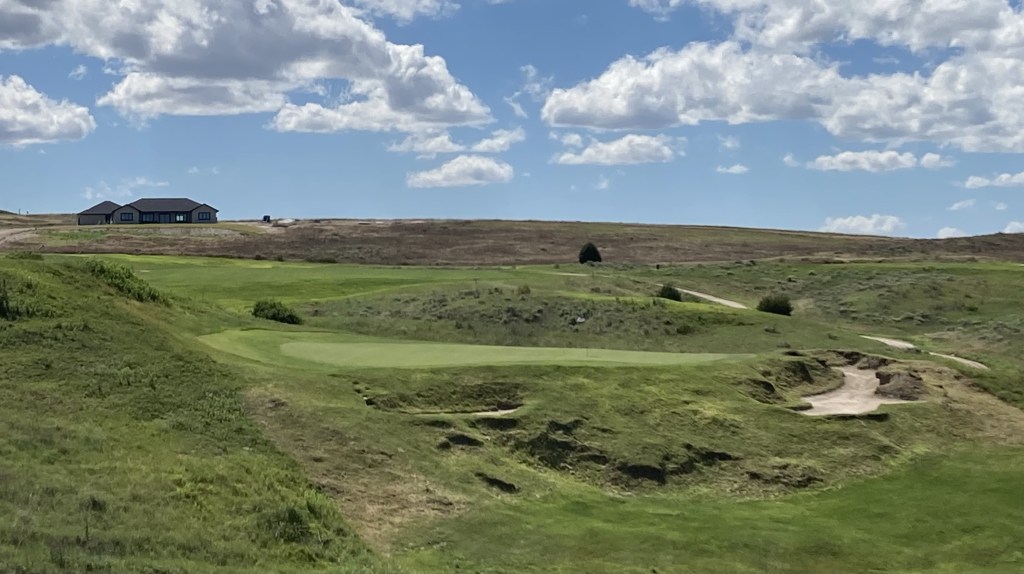
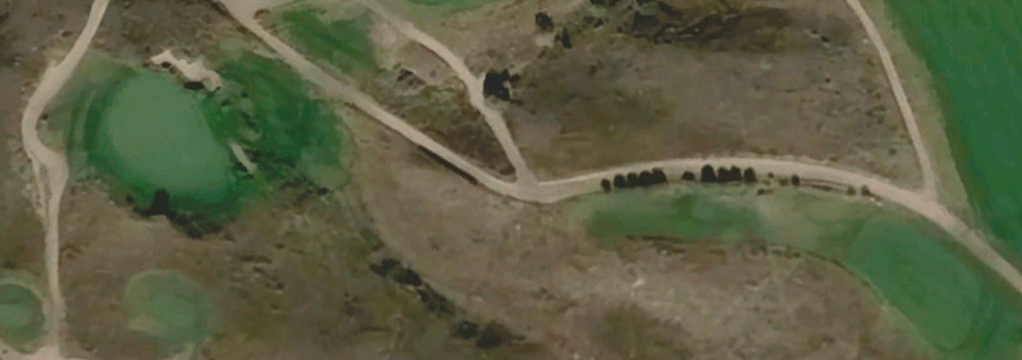
Sixteen (O’Neills Risk & Hope): The second of the two brilliant short par fours, the sixteenth is dotted with bunkers that break up its wide fairway. Depending on the day and your mood, you could find a dozen different paths to the cup on this one, but the surefire play is to the left side of the fairway providing a more accessible line in.
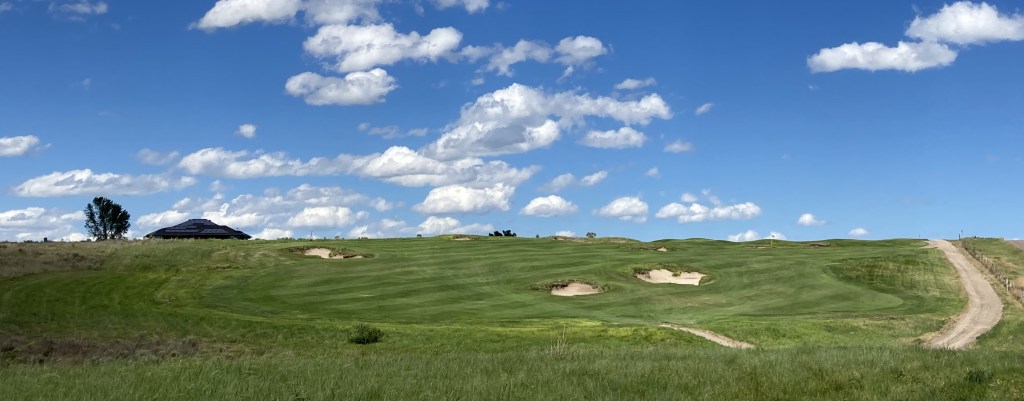
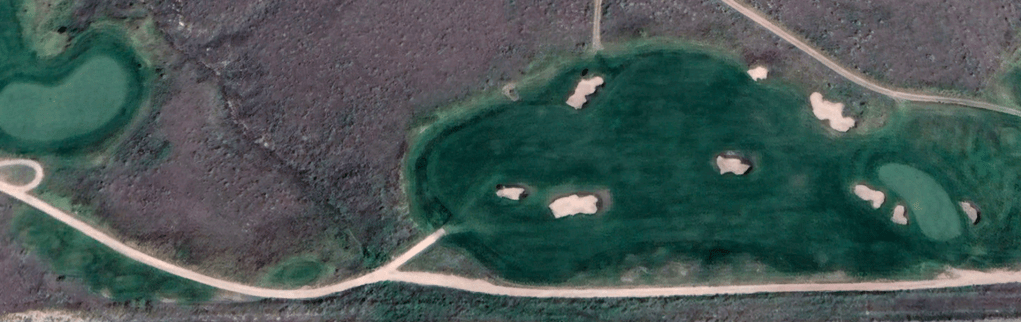
Seventeen (Short but Sweet): Consider this short par three an ode to the sixth at Riviera, a course that Axland and Proctor spent time restoring in the early 90s with Coore and Crenshaw. The two tiers are accessible from one another as putts around the center green bunker funnel up or down as required, however no two putt is guaranteed should you find yourself on the wrong one.
Final Thoughts
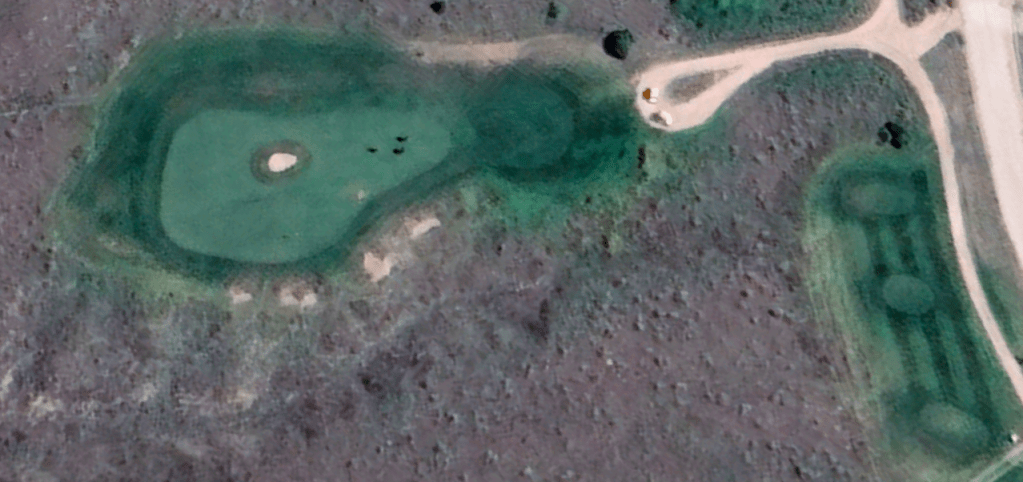
Bayside is on a beautiful site and if each nine had a more proportional nine to go with it, you might have one of the best 36 hole public sites in the country. It’s a shame that Axland and Proctor only really built the two courses in Nebraska (Sand Hills notwithstanding) as their style is perfect for the land here. There is a delightfully fun putting course near the clubhouse with large humps and bumps reminiscent of the Himalayas putting course at St. Andrews. Bayside is a joy and as long as you embrace the drastic back nine, you’ll have a great time.
Further Reading
Bayside, Axeland and Proctor, in retrospect – Golf Club Atlas
Bayside by Axland & Proctor in Nebraska – Golf Club Atlas
Bayside Golf Club – Top 100 Golf Courses
 Layman's Hall
Leave a comment