Architects: Tom Lehman and Chris Brands
Walkable: Yes, but if you play 36 you may want to walk 18 and ride 18
Highlighted Holes: 1, 2, 4, 5, 7, 8
The Prairie Club is a special place within a special place. Nebraska’s Sand Hills are something of a golfing mecca; a high class neighborhood with Sand Hills Golf Club, Dismal River, GrayBull and Caprock Ranch all on the block, but in one of the most beautiful places on earth to play golf, none of them is publicly accessible. Enter: the Prairie Club. Part private getaway, part golf resort, the Prairie Club is 20 miles south of the 2,600 person metropolis of Valentine: hometown of onetime VP candidate Tim Walz and Full House’s Rebecca Donaldson.
It’s a six hour drive from Denver but after turning left at Ogallala, there’s nothing but two lane highways and the vast rolling landscape of prairie sand dunes. However big you think they may be, think a little bigger. It’s easy to imagine that at any moment an ocean could rise into view above the horizon. The Sand Hills are speckled with lakes, crossed by determined rivers, and dotted with pine trees, the result of thousands of years of wind and water.
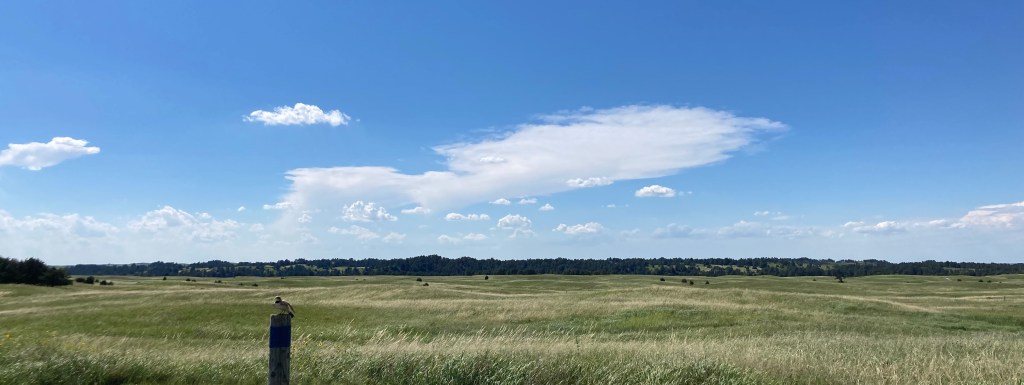
In 1998, having seen the success of Sand Hills Golf Club, rancher and Doctor Cleve Trimble and venture capitalist Paul Schock were looking at Trimble’s 2500 acre ranch as a possible golf destination. By 2002 they were bringing golf architects like Tom Doak, Gil Hanse, and Rod Whitman to this land where the dunes meet the Snake River canyon. Unsurprisingly, the architects were eager to build. Doak called the property one of the best he’d ever seen, and Hanse and Geoff Shackelford routed what would eventually become CapRock Ranch two decades later.
By the mid-2000s, however, Trimble was in poor health and sold 1700 acres of land to Schock to begin development of the club. He quickly selected Graham Marsh for the Pines course and 1996 Open Champion Tom Lehman for the Dunes course. By this time, Lehman had already partnered with Hurdzan and Fry on The Raven at Three Peaks in Colorado and Troy Burne in Wisconsin, but the Dunes Course would establish him as a golf architect in his own right rather than a tour player masquerading as one. Alongside partner Chris Brands, they got to work.
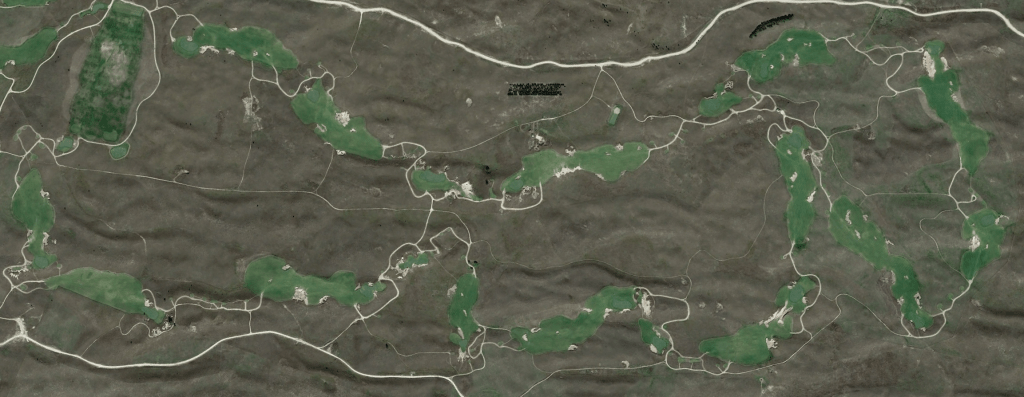
Lehman is well traveled and values the strategic, naturalistic style of the old masters. The Dunes is routed out and back in three large loops of seven, six, and five holes which, in concert with a cart or chauffeur, could offer some eclectic rounds of golf. The course has four official tees (six if you count combinations), and a secret ‘Lehman Tee’ that’s not on the card but can stretch the course to nearly 8,100 yards. From back there it becomes one of the longest courses in the country and nearly impossible in the Nebraska wind. Word is that from 7,900 yards, the course frustrated Jon Rahm to no end as he battled his way to a three day two under total in a college tournament.
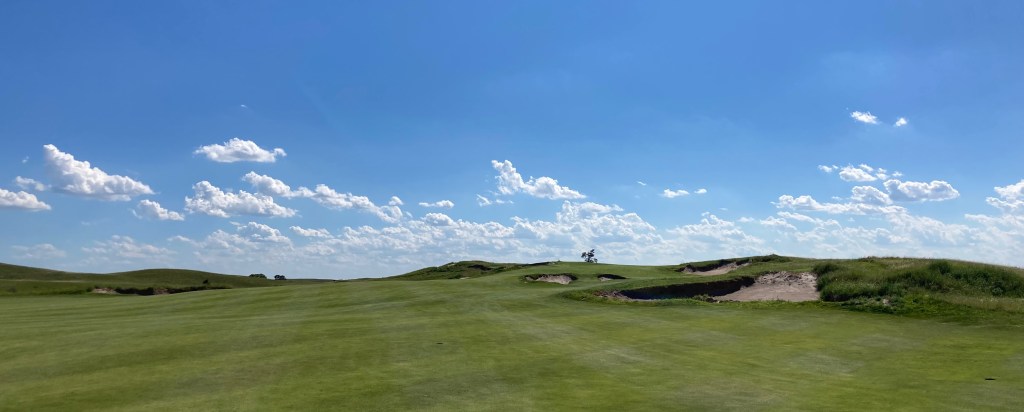
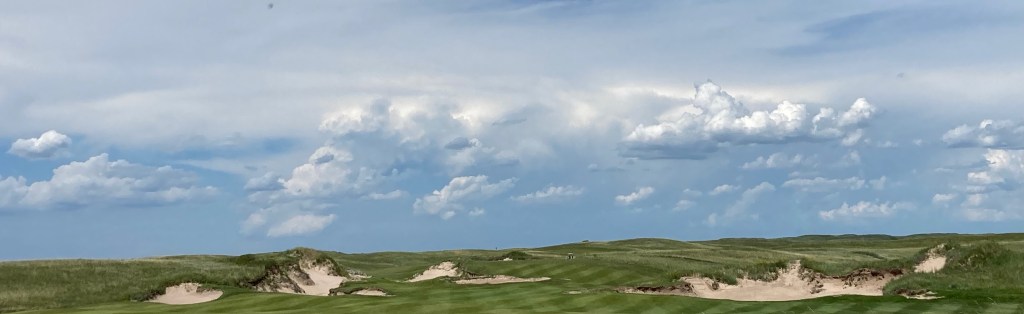
One: This dramatic opening hole goes straight uphill to a mostly blind green. There is room right to play safe with a tough angle in that brings the prairie grass into play with no view of the pin, a section left over the fairway bunker that shortens the approach significantly with a look at the flag, and the center of the fairway that offers a middle ground: a look up the gut at the green should you want to run the ball. It’s an excellent introduction to the width, the bunkers, the multiple strategies, and the elevation changes to come.
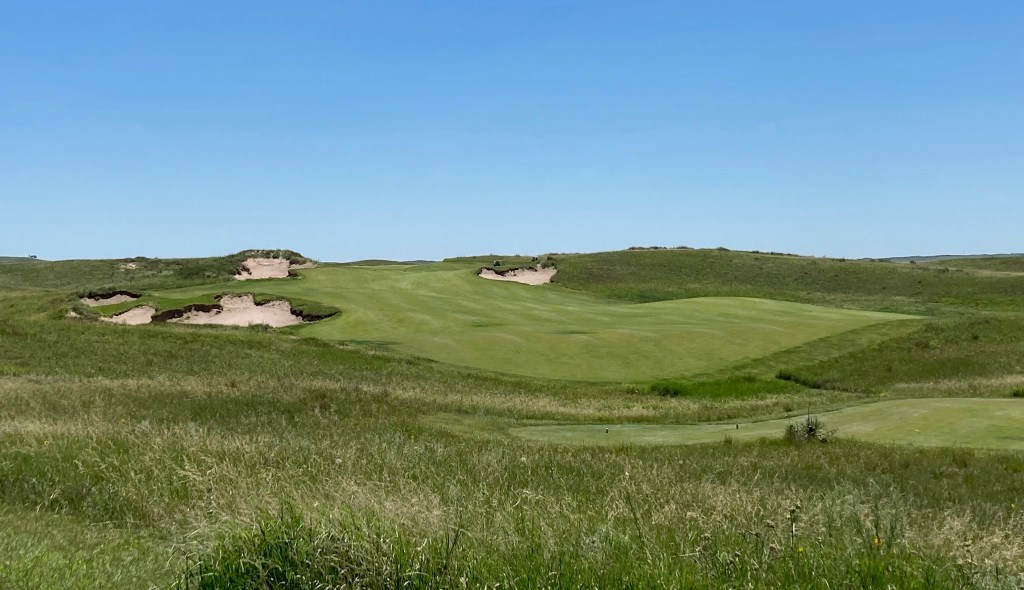
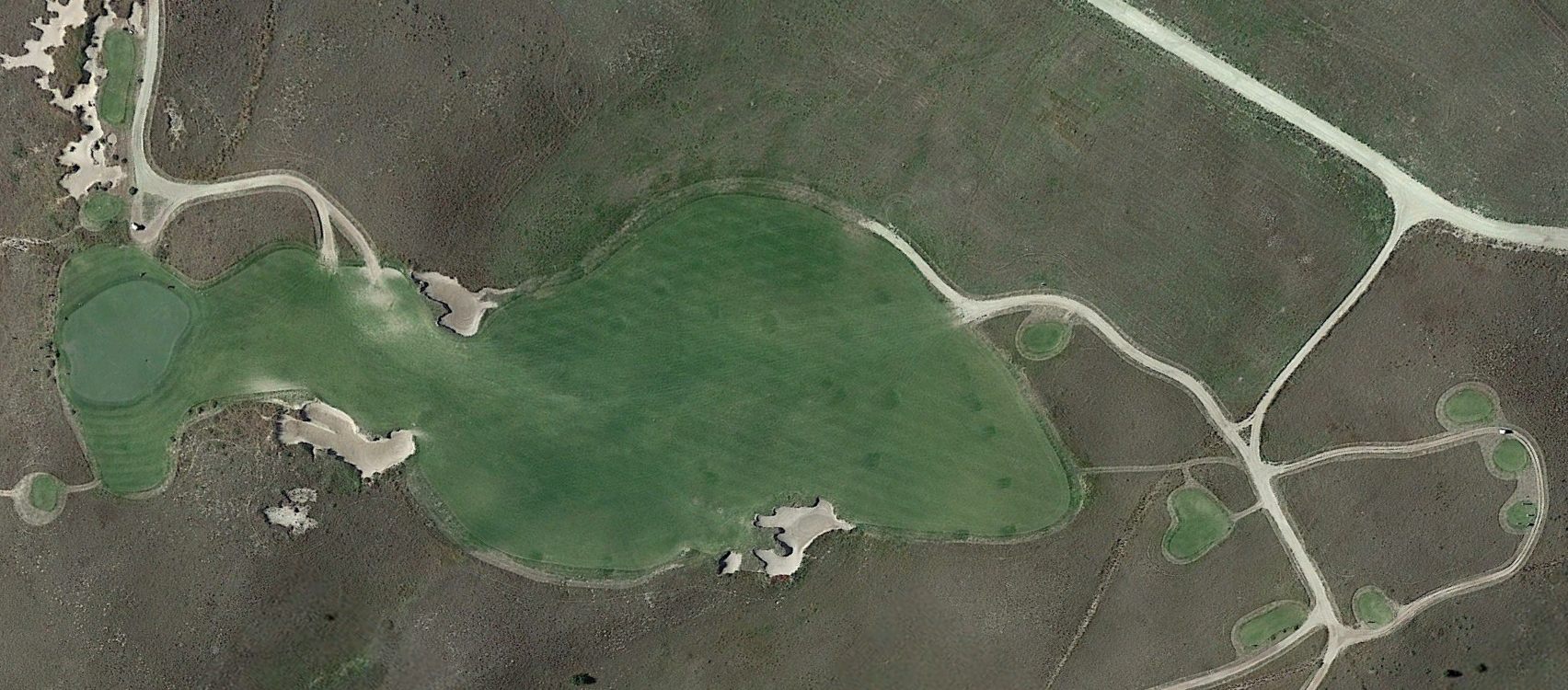
Two: The second fairway is one hundred ten yards wide to the left of the only straight line on the property: an out of bounds fence. Bailing out left will leave you with an awkward approach angled over an intimidating bunker to a skinny green. Challenge the fence line and you’re rewarded with a more advantageous angle to the well contoured green. Even then, the strategy isn’t that simple. If the pin is back right, being left is much better than being near the fence as a slight ridge front right will kick short shots away. Lehman drew inspiration from the fourteenth hole at Royal St. George’s in England and you can see the similarities in both the hard line right and the strategic advantage in taking it on.
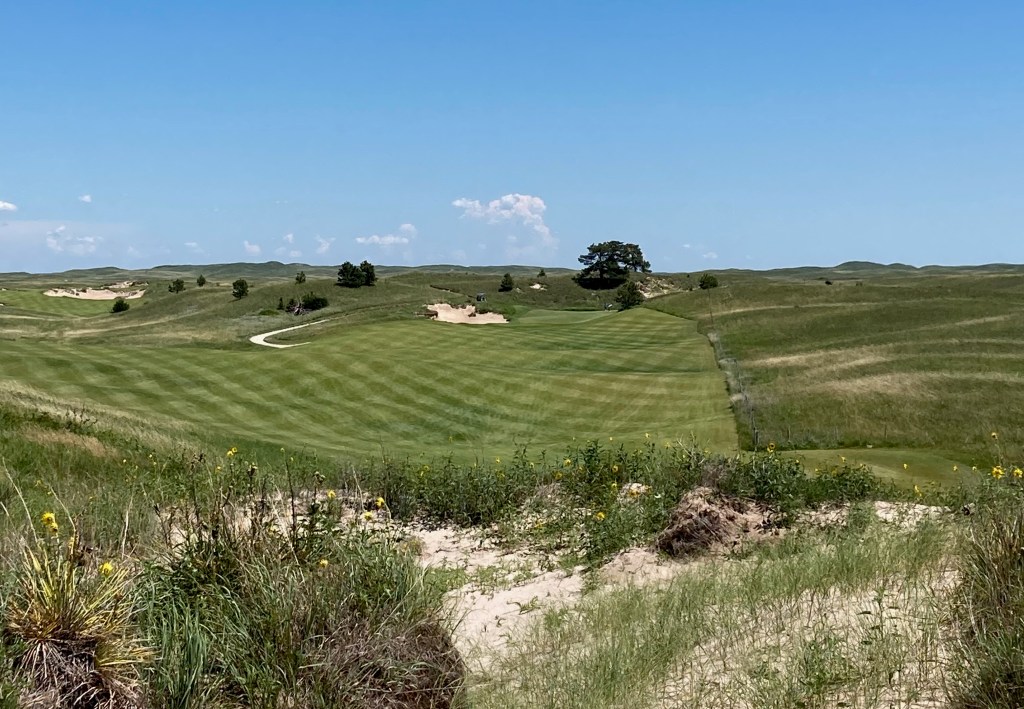
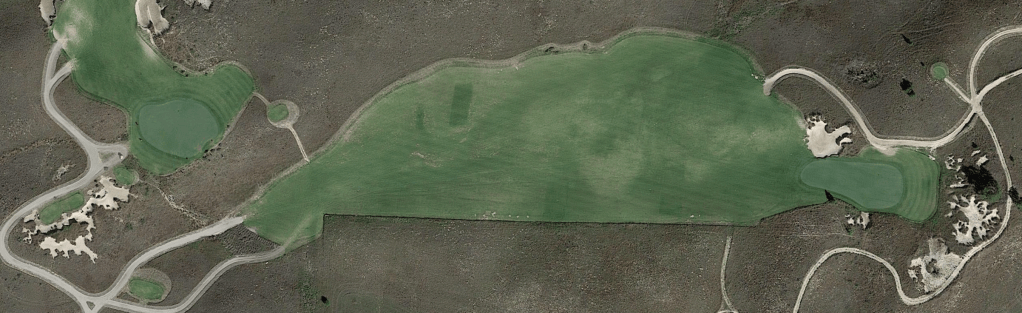
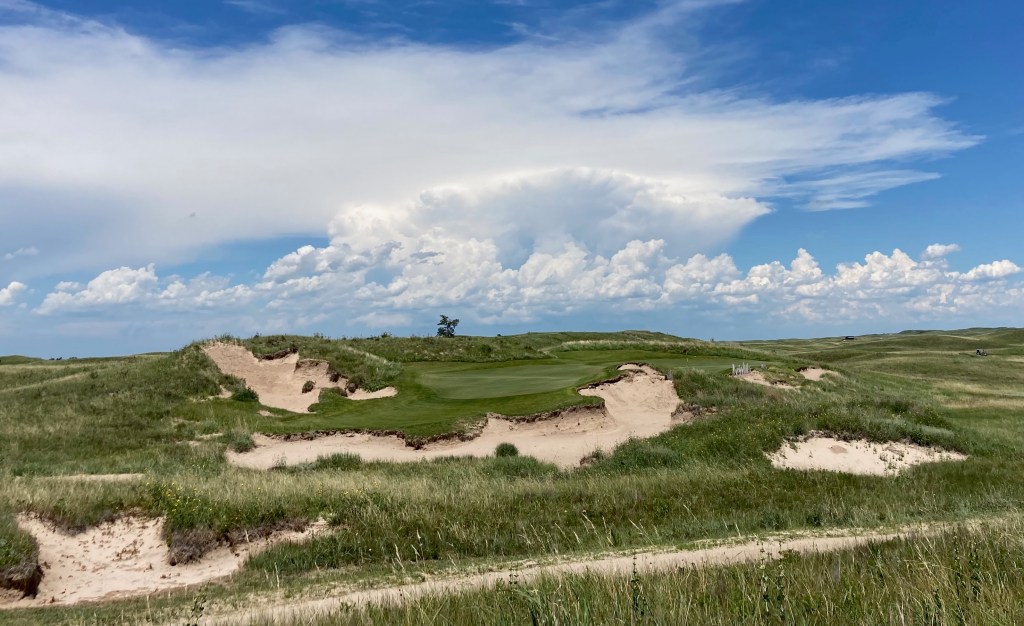
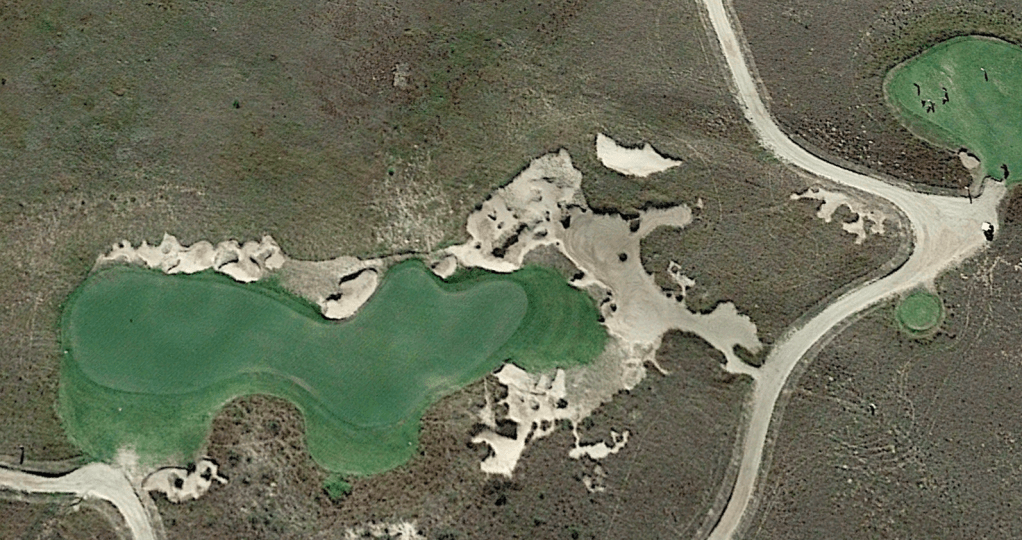
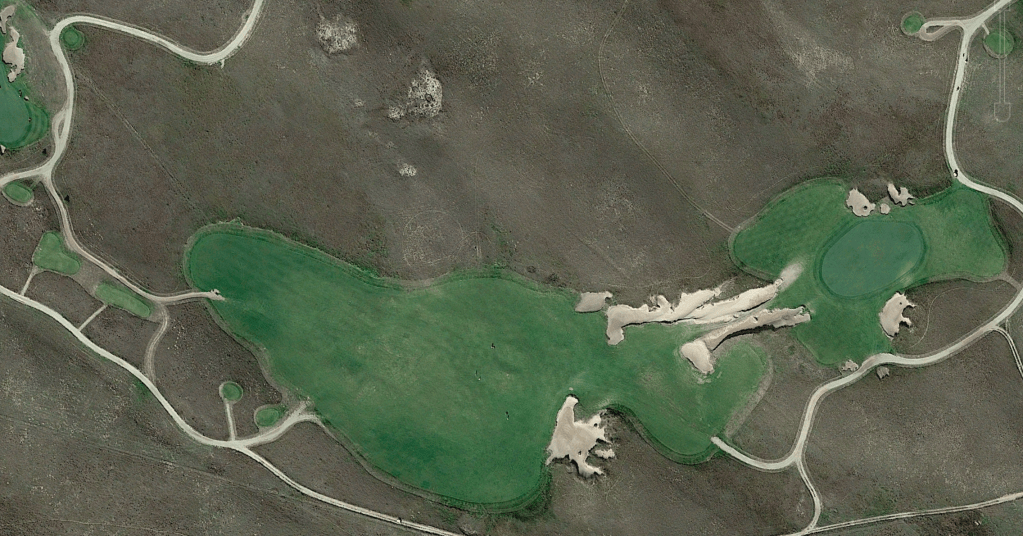
Four: With a green that stretches eighty yards from front to the back and surrounded by bunkers, this is one of the most photogenic golf holes anywhere. Half bunkers, half green, this par three can play as short as 107 and as long as 180 from the tips. Flatter spots on either end of the green and a raised left side makes it possible to get from one to the other provided you take enough club playing a kick onto the green.
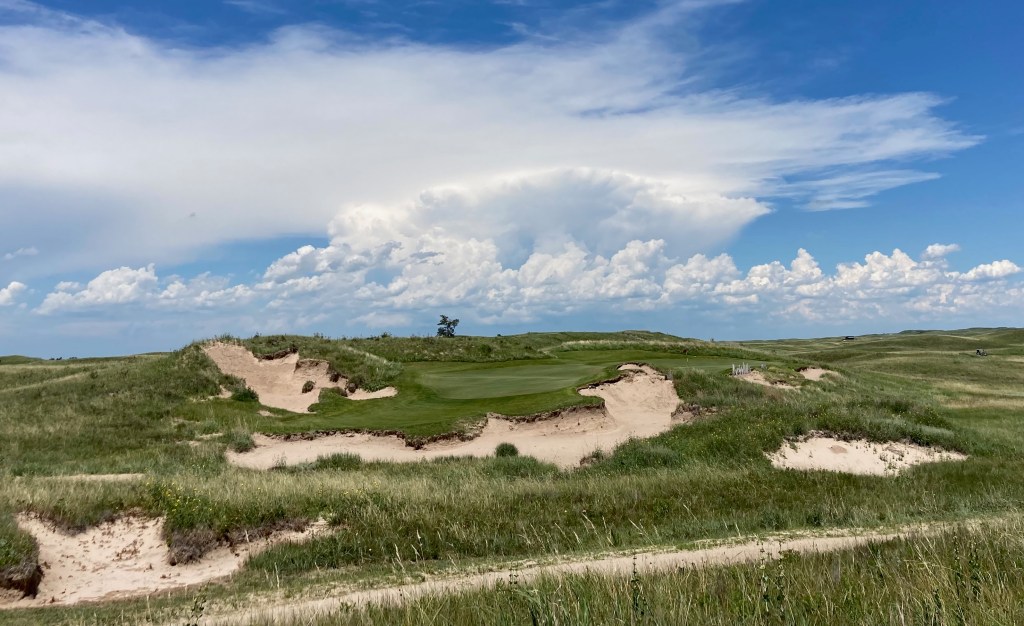
Five: The only deciduous tree on the property might be just off the fairway offering shade to an old wagon wheel. Six tee boxes provide a variety of angles from the black and Lehman tees giving the best look at the fairway to a short tee that is almost straight down the line. This shot brings two centerline bunkers into play and challenging each one gives you an increasingly better look at the green. Playing to the wide part of the fairway puts you behind a long bunker built into a dune that obscures the entire green and collection area right.
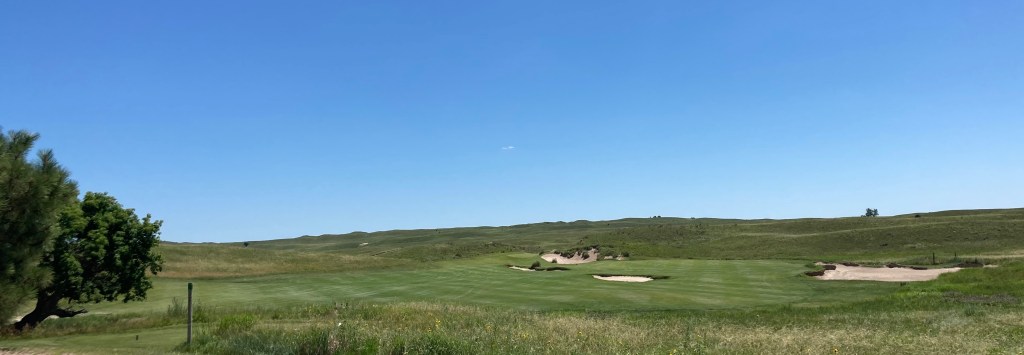
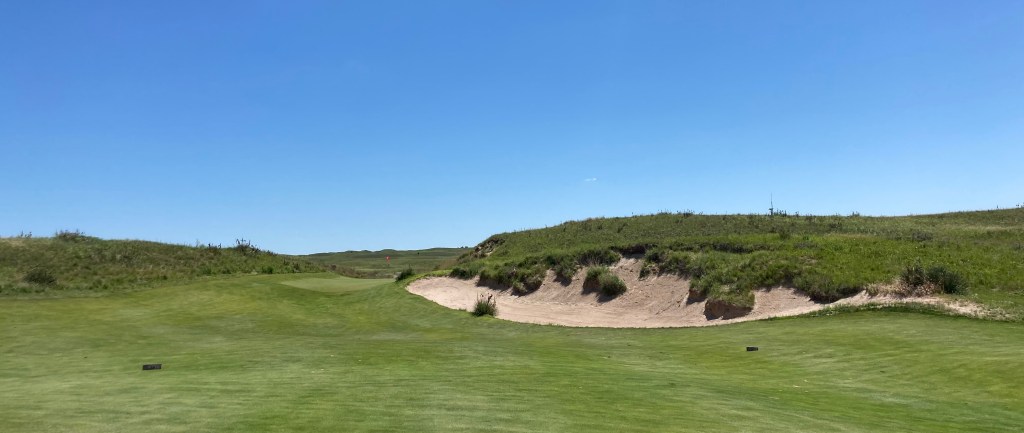
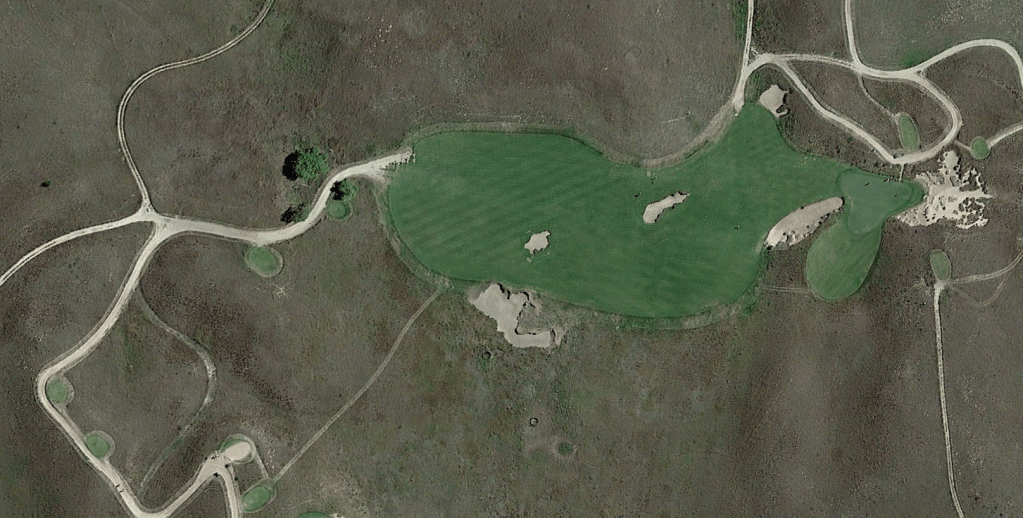
Seven: Woe be the golfer who tops their shot into the large bunker that fronts the box. Woe also be the golfer who finds one of the wicked little bunkers around the green. Luckily there’s a lot of real estate and a view that’s second to none. Depending on your tee, the top of the bunker could obscure some of the green.
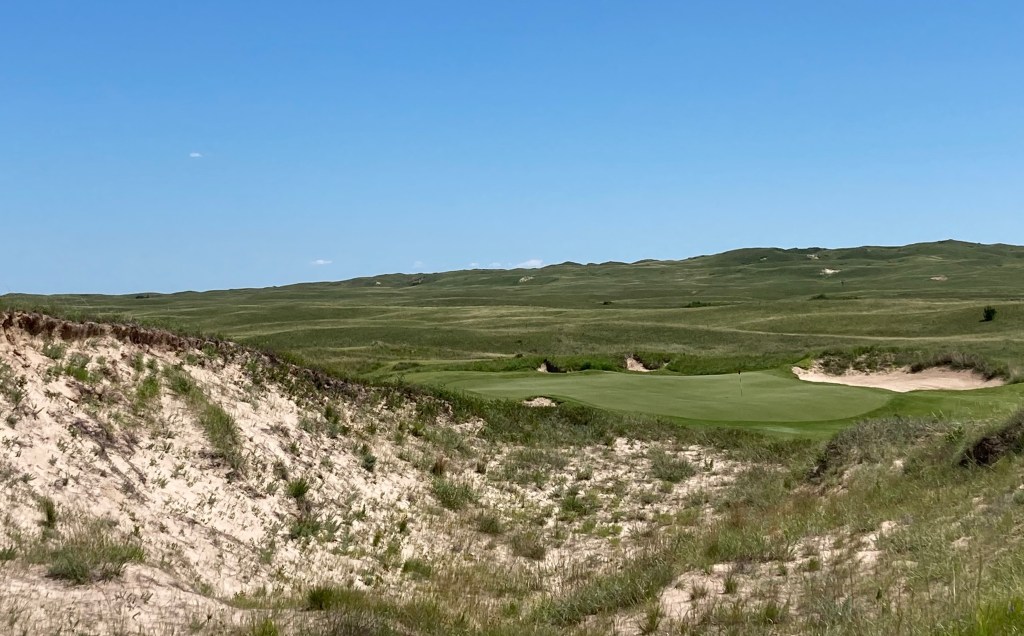
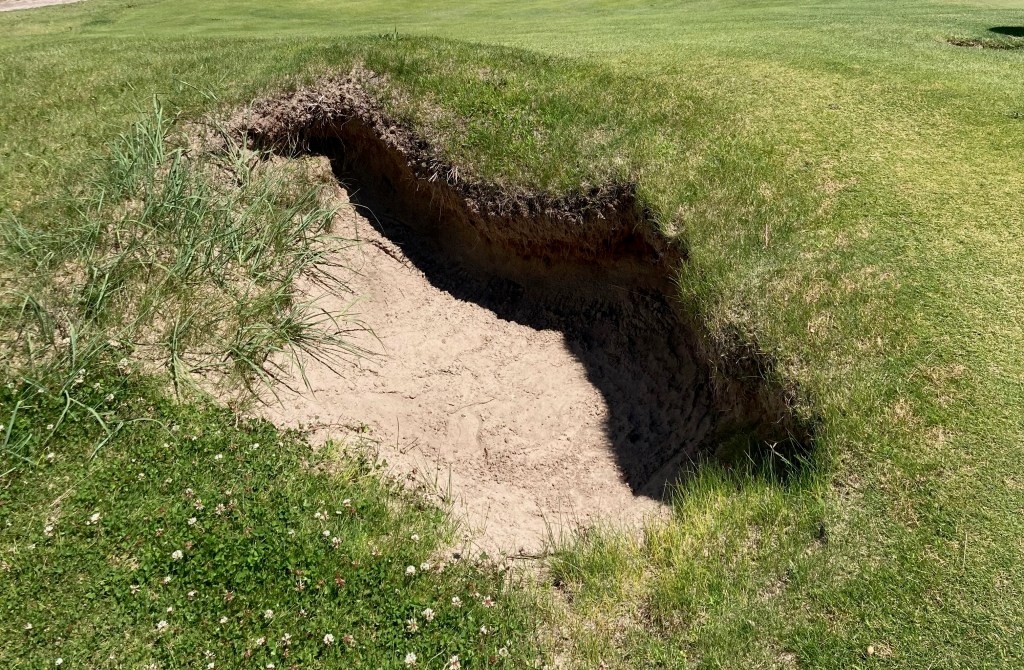
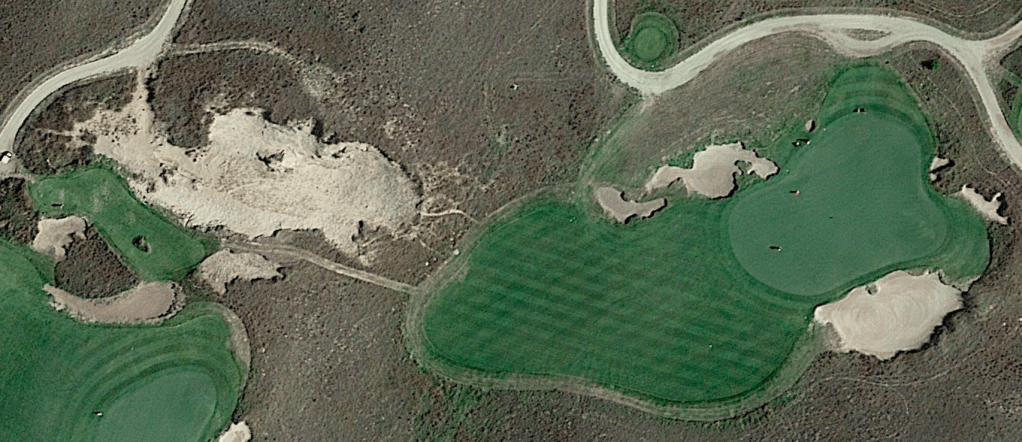
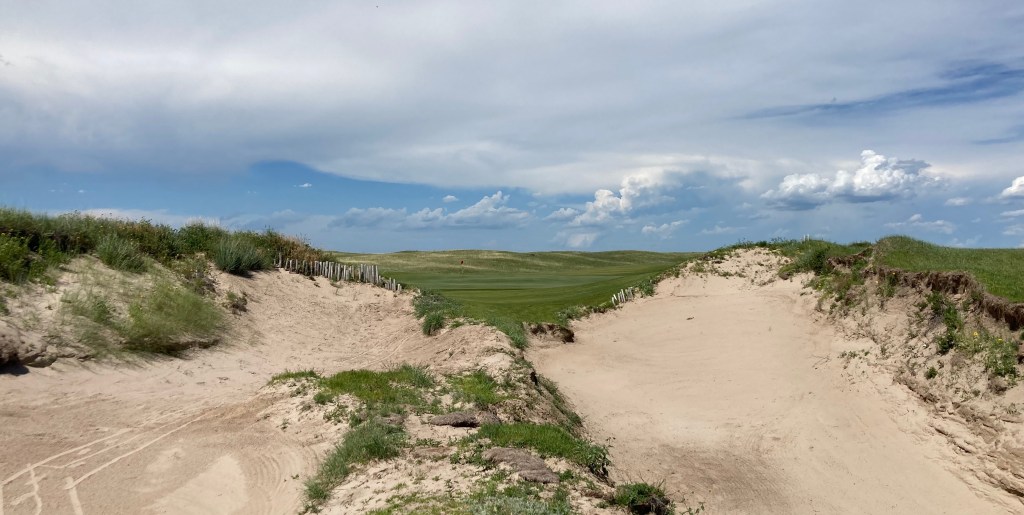
Eight: The eighth was one of the first holes that Lehman found. He saw the dramatic natural blowout bunkers that front the green and had to get the course there. They create an effect as original as anything in golf and demand to be reckoned with as there’s no route to the green that doesn’t bring them into play. If you’re really averse to taking them on, the safest play is to lay up right of the blowouts and take a wedge into the green, but Lehman describes the shot in the context of why he finds it so important to play the right tee box. He says, “you want everybody to be able to experience getting to that spot and half the fun of that hole, if not more, is getting that tee shot to that magical spot where you can see right through to that little bowl green back there.”
Final Thoughts
The Dunes course has one of the strongest front nines of any course I’ve played with a back nine that is a little less playful, a little more brawny, but no less stunning. The creativity and delight from the wide, gorgeously bunkered fairways to the rollicking greens combine with an out and back routing for eighteen fun, distinct public golf holes in what is otherwise pretty rare air.
The sheer variety of ways to play each hole must make local members giddy. In combination with the wind, strategic bunkers and dunes are legion, making it the kind of course you could conceivably play a different way every day for a year, and still not figure it out. With the Pines and Horse courses nearby, the Prairie Club offers an embarrassment of riches. If you’ve ever thought about moving to Valentine and you’re a dedicated golf lover, I don’t see why you haven’t already. As the club puts it, what’s out there is “Pure Golf.”
Further Reading:
The Prairie Club Story
Golf Course Gurus – The Prairie Club (Dunes)
Feed the Ball Salon vol. 16, ft. Tom Lehman
The Fried Egg – Prairie Club (Dunes Course) – Note: excellent photos and a good writeup that requires a Fried Egg membership to view
Golfers Journal – The Prairie Club – Note: requires subscription to read
 Layman's Hall
Leave a comment