Architect: Scott Hoffman
Walkable: Yes. It’s hilly but hardly noticeable
Highlighted Holes: 2, 3, 5, 7, 9, 10, 13, 15, 16, 17, 18
One of the most beautiful things about golf is what any golfer has come to appreciate: each playing field is as distinct from the next as snowflakes are from fingerprints and the land is a product of the same cosmological dice role that makes each person distinct from one another. The room on which to build, however, is a wholly human construct. Courses like Sand Hills with it’s thousands of acres to choose from have nearly unlimited land on which to find golf holes while others like Merion on its 120 acres squeeze every inch of potential out of a small property. Lost Rail occupies something closer to the latter: a severe 150 acre property west of Omaha.
The land was originally a farm with terraces on the east side, woods encroaching from the north, and a more open field on the west side through which ran a couple lines of trees. It would be easy enough to clear the land and start fresh, something a former Fazio associate would be well familiar with, but Hoffman managed to keep many of the mature trees, incorporating the lines on the westward and central parts of the property into the layout (see aerials below). You’d be excused for thinking that the site feels cramped when looking at it from above. Instead, despite the close proximity, you rarely notice the nearby holes. Rather than use hokey faux mounding to divide them, the terraced land becomes a tool for vertical separation.
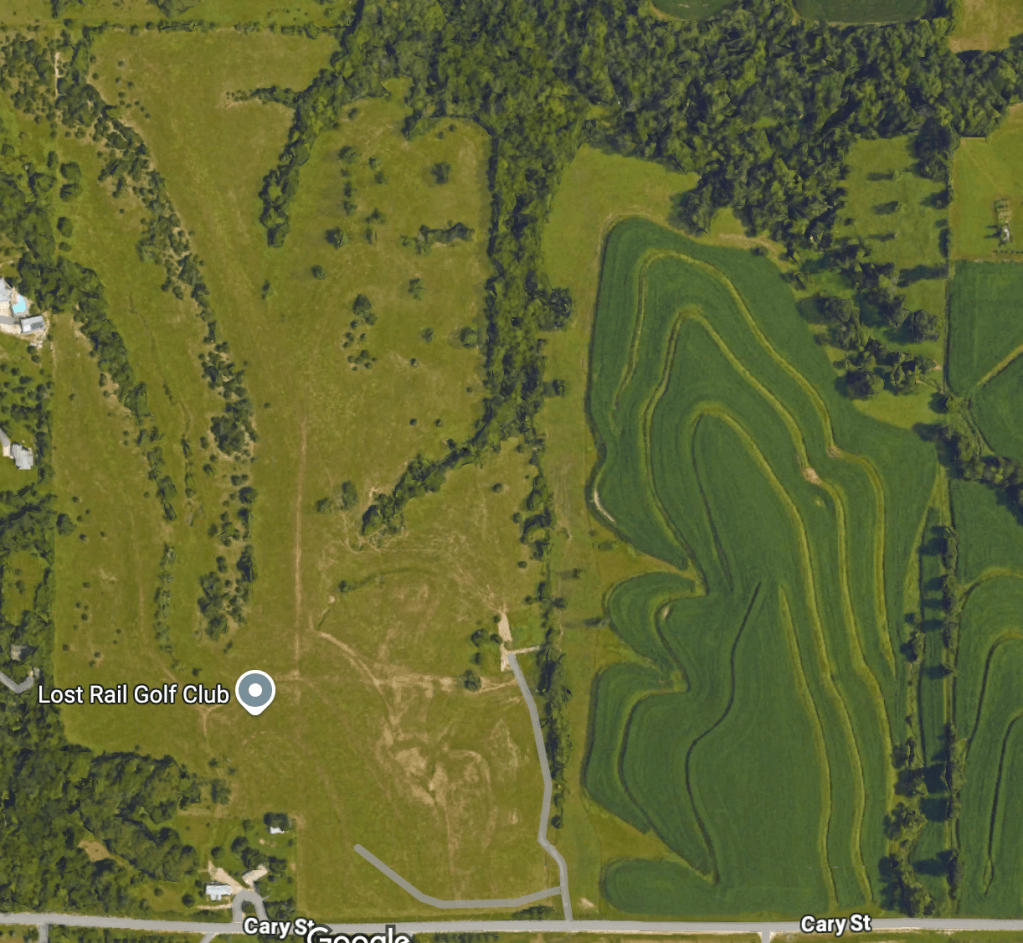
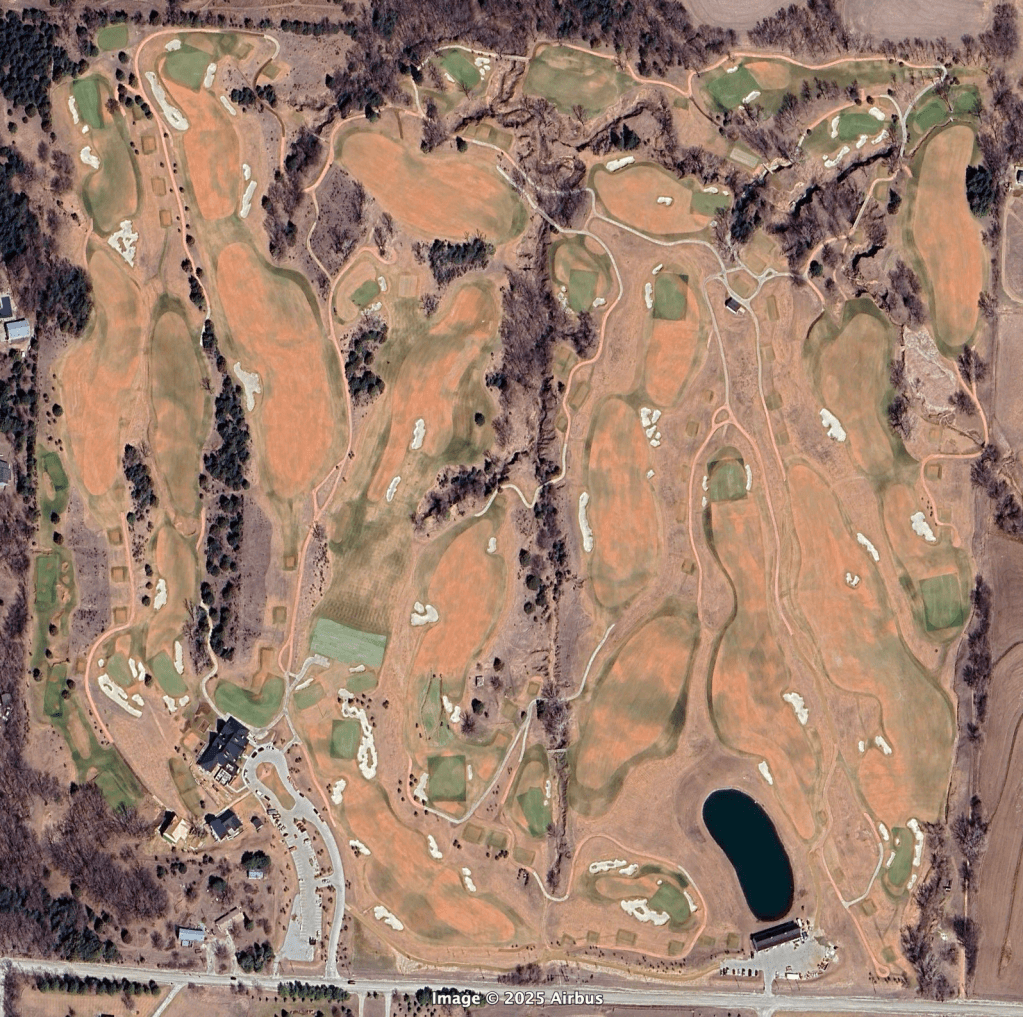
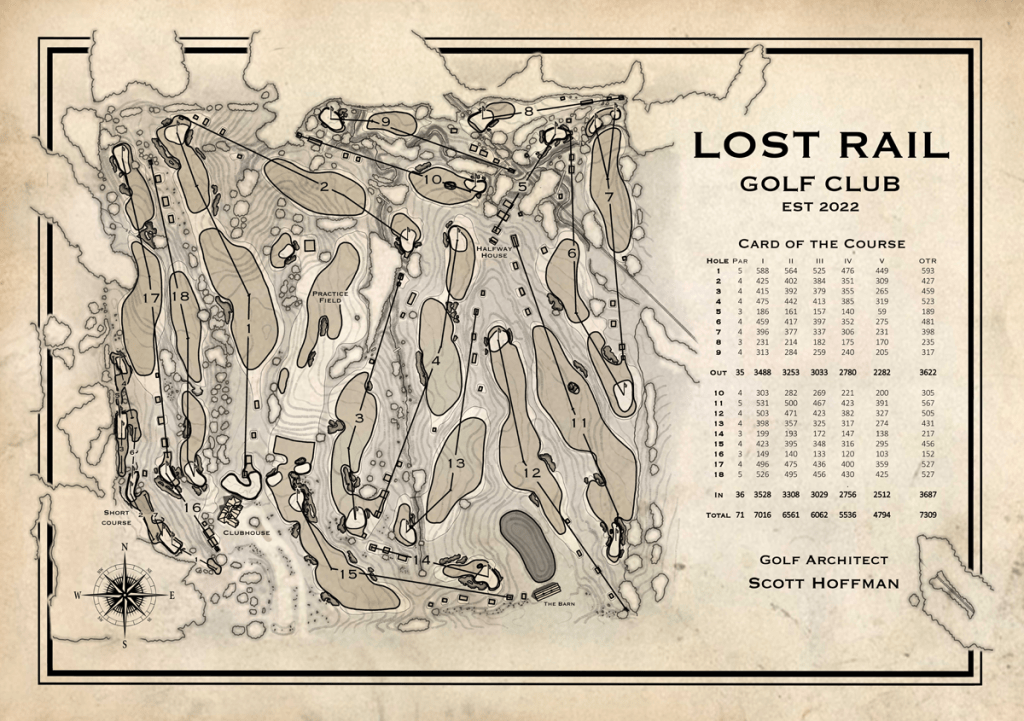
Lost Rail came together as the result of a collaboration between Hoffman’s local sportswriter cousin Dirk Chatelain, course construction firm Landscapes Unlimited founder Bill Kubly, and Hoffman himself, a longtime Tom Fazio associate. It’s hard to believe that this is his first solo design as it’s as masterful as anything that’s been built in the past few years. An Omahan himself, Hoffman has an apartment on the property and plays it regularly, making minor tweaks as he goes.
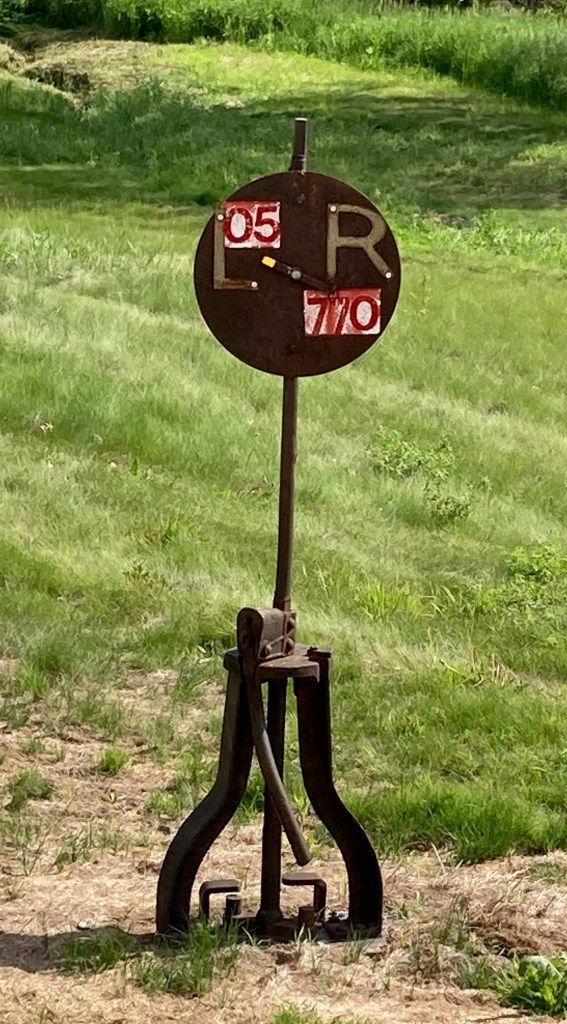
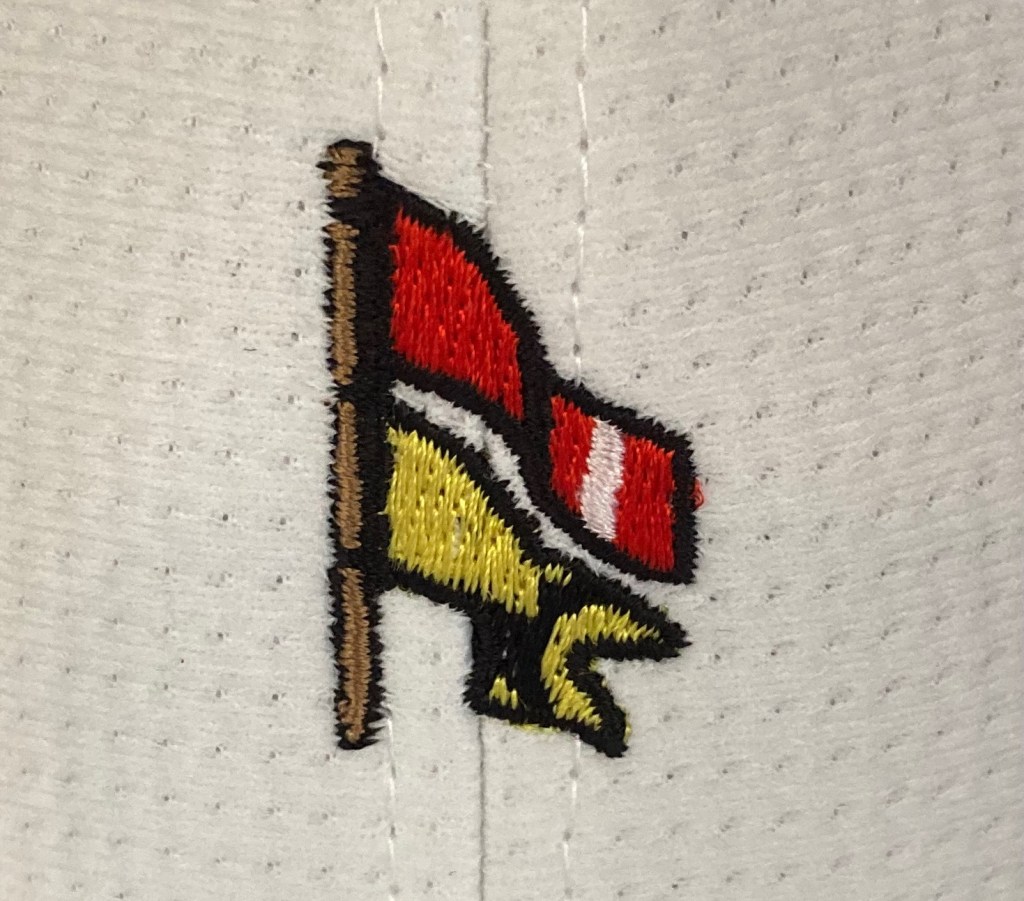
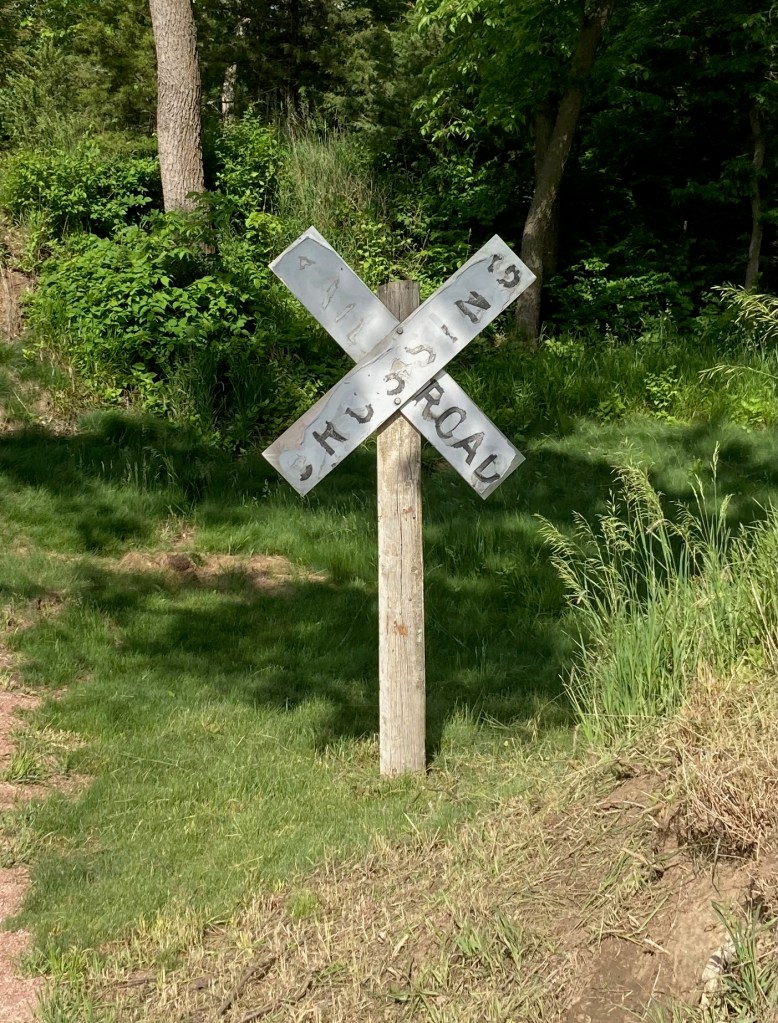
The club leans heavily into the railroad iconography. Tees are marked with a rail spike and each pin is topped with both a red and yellow signal flag – also used beautifully as the members logo. Throughout the course are old rail signs for crossings and original train tracks still sit on the fifth and eighth holes. The clubhouse is adorned with railroad memorabilia which ties into Omaha’s (and Nebraska’s) history.
The course boasts an impressive collection of par threes and as distinct a set of par fours as I’ve seen. With ten or so on a course and somewhat fewer options than par fives, I’ve always thought that par fours can have a tough time setting themselves apart. At Lost Rail each one stands out from the others in its location, strategy, length, movement, and quirk. Many of the holes require a forced carry off the tee and there are a number where a hazard guards any attempt to run the ball. Some may take this as a knock on the course but I think the features perfectly complement the nature of Lost Rail. The generous fairways counter the ample places to lose a ball and there is excellent contouring around the greens that offers options for short game creativity.
Two: This medium length par four has one of the widest fairways on the course, though most of the right side is at an angle that isn’t likely to hold a drive. It will kick shots down to a flatter spot for a short approach to the green set across a creek. The fourth hole can be seen high above.
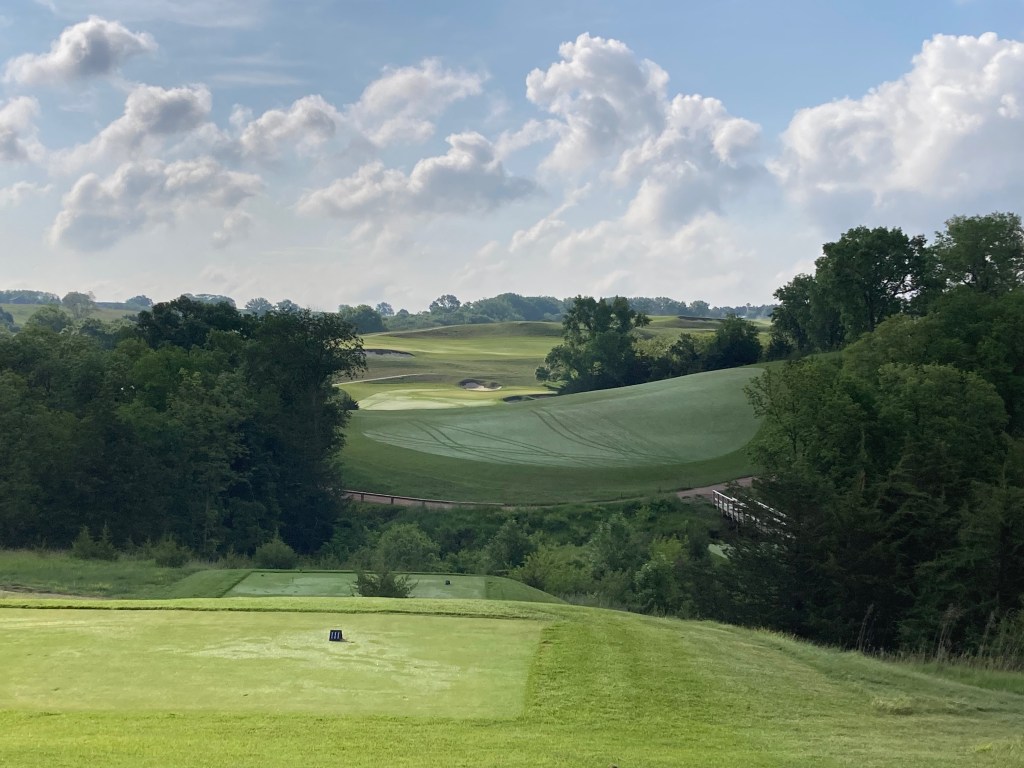

Three: The tee shot on this par four looks intimidating. It starts with a forced carry toward two fairway bunkers, one long and one short, that look to be no more than 25 yards apart. In fact, there’s some 70 yards between them with only 200 or so yards to carry the first. It’s an excellent example of Hoffman’s use of forced perspective to set the golfer ill at ease. The approach to the green is played over another fairway bunker to a putting surface that runs hard right to left. This green has a playful front portion that looks like a child’s slide ready to carry the ball down towards the large collection of divots near the fourth teebox.


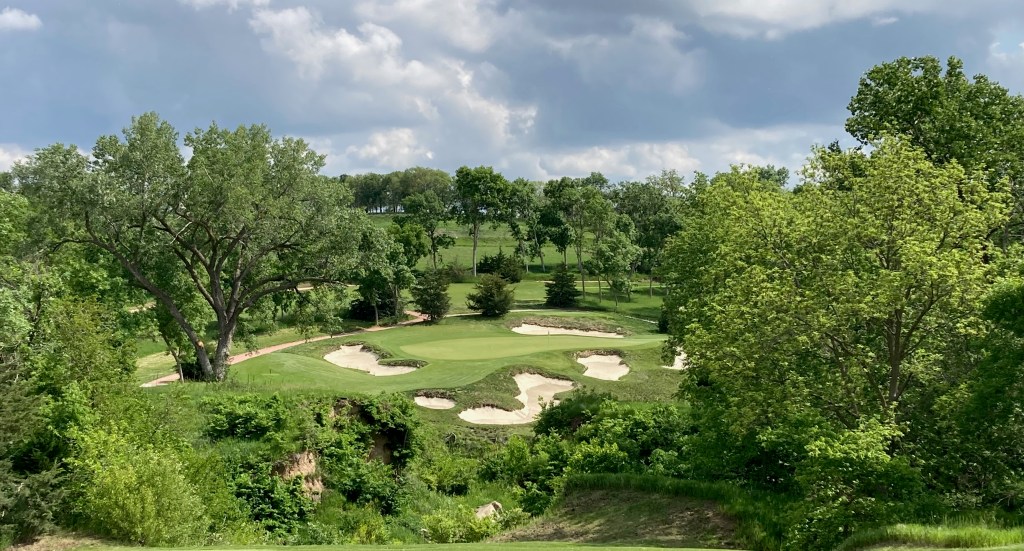
Five: If you’ve seen a picture of Lost Rail before reading this article, there’s a good chance it’s been of this hole. The par three is heavily guarded by bunkers as well as a ravine in the front in which a bridge of the rail line that ran through the property has fallen. The green has a roll running through the center creating a front and back section to complement the left and right options.
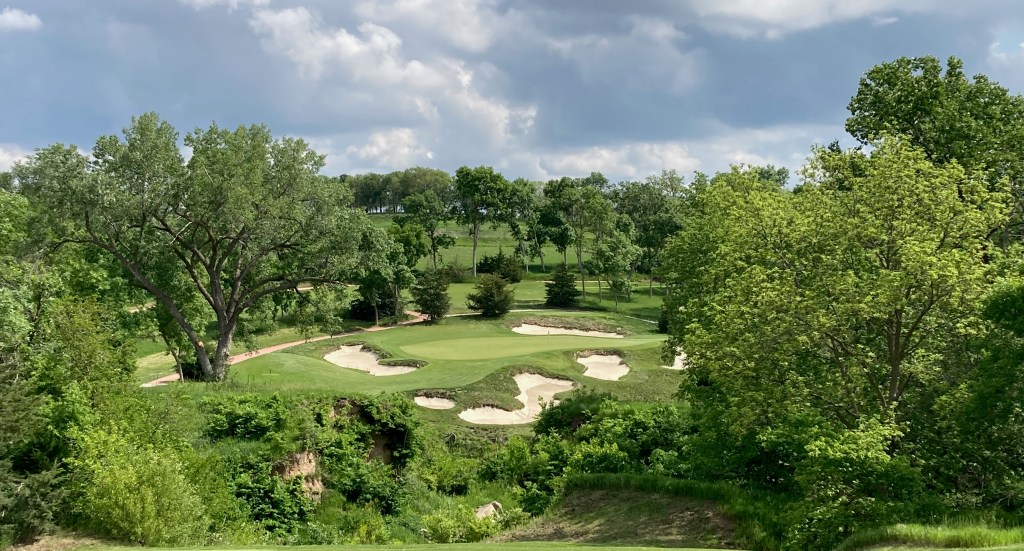
Seven: Taking inspiration from the eighth and ninth at Pine Valley (or any number of courses in Japan), the seventh has two greens and an old rail yard sign near the tee indicating which you’re playing that day. From the tee, the fairway looks similar to two but if you’re able to reach the crest of the ridge on the right, the ball will careen down to the front of a scraggly creek guarding the greens. Keep this play in mind as you’ll notice it again shortly. A tall tree stand between the putting surfaces with the right higher up, smaller, and rounder, and the left lower, larger, and wider. It’s an exceptional bunkerless hole to either green.
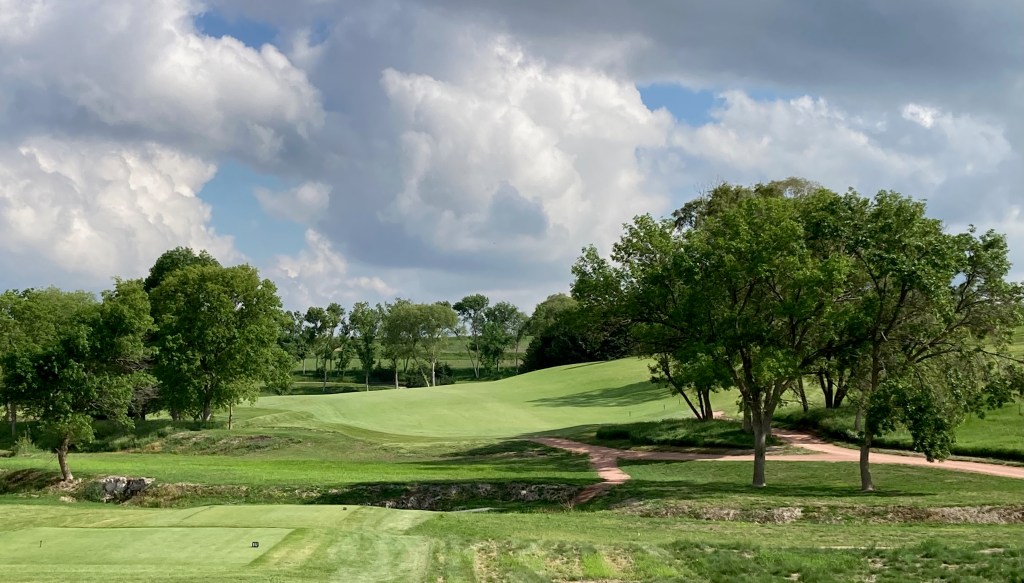
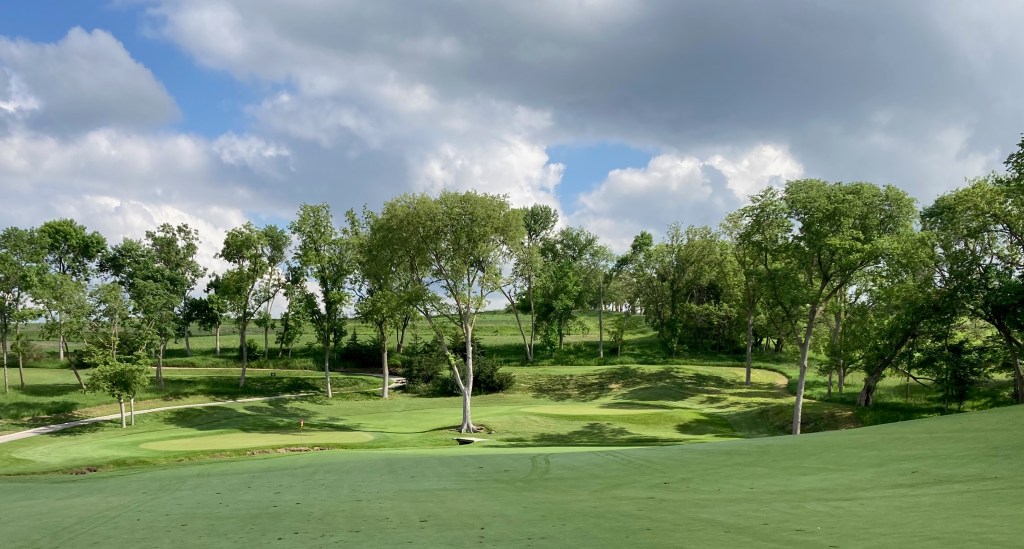
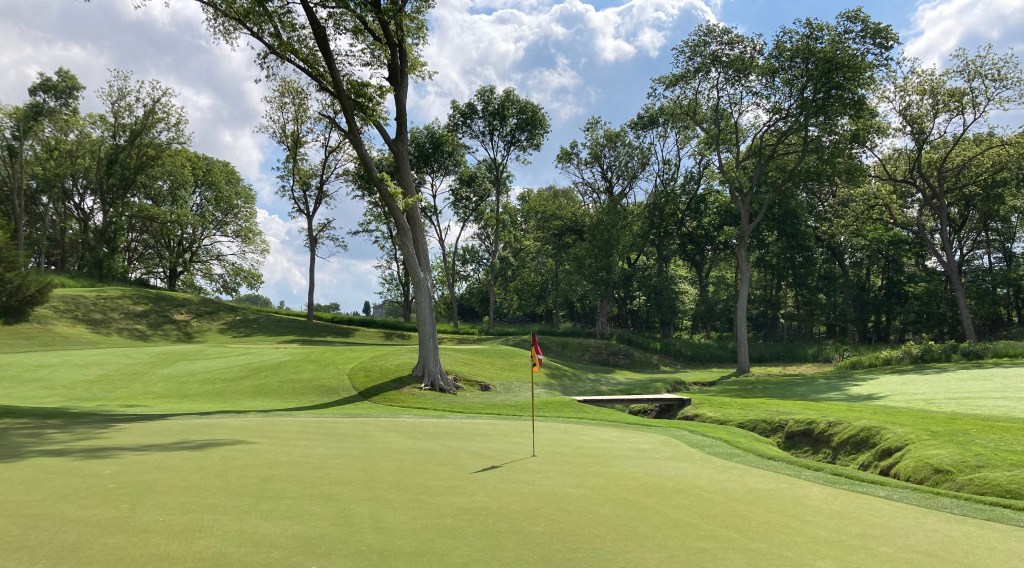
Nine: The ninth is short but unreachable for all but the heaviest hitters. Even then, I’m not sure it’s worth it to go for. The tee shot needs to carry no more than 200 yards over the creek (twice as it meanders back) before a wedge over the creek once more into a green angled perpendicular to the fairway and guarded by an assortment of bunkers. The green protects itself not only by its orientation but with wavy rolls throughout.
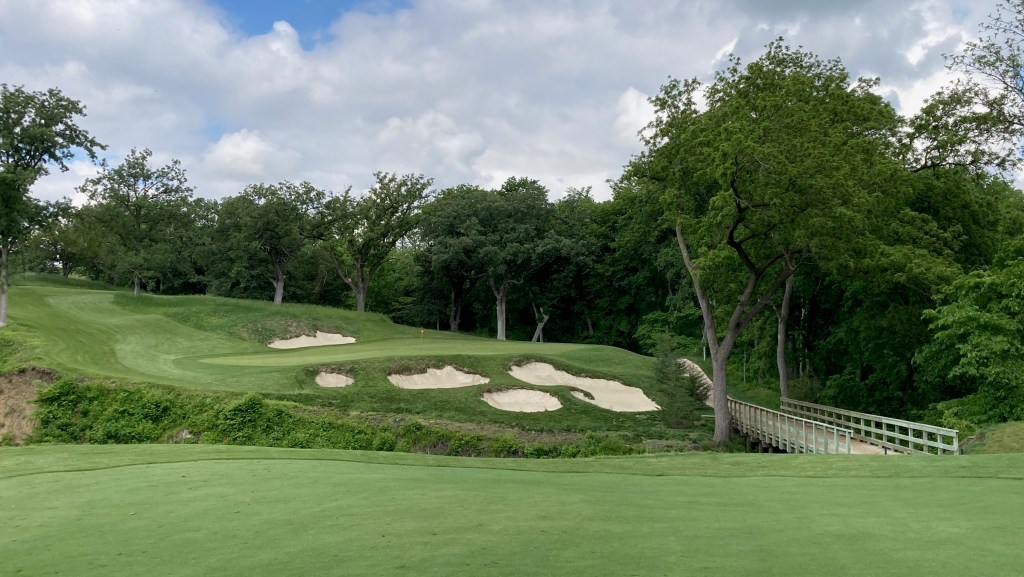
Ten: This second of the consecutive short par fours is one everyone should try to go for. A centerline bunker splits the fairway at the ridge top with a wide high side that rewards any drives that can carry the top with a green under regulation. It’s still intimidating by being skinny and guarded by both bunkers and the ravine on two sides. Laying up to the left side of the fairway is a tougher shot off the tee but offers a flat lie and a clear look with a wedge. Play it any way you want as no option is bad. One of my favorite holes on the course.
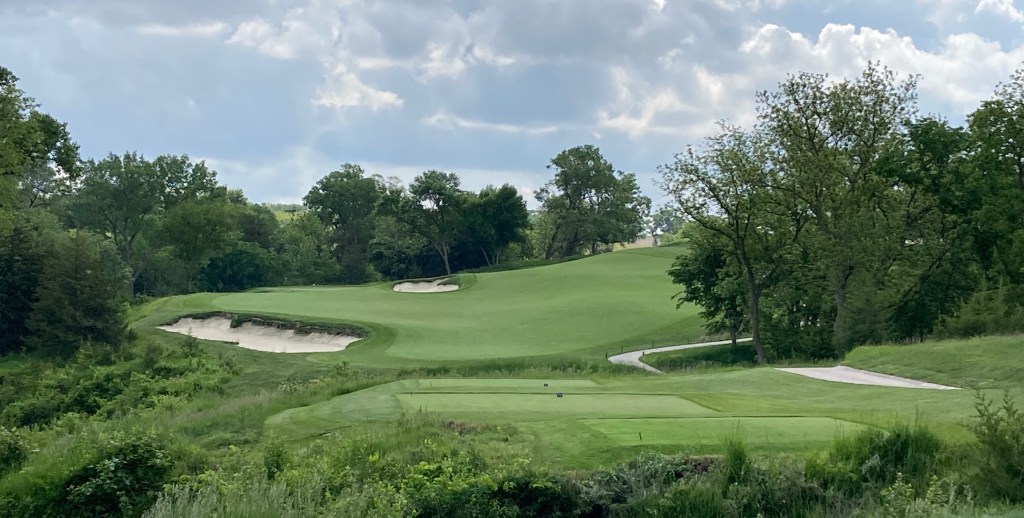
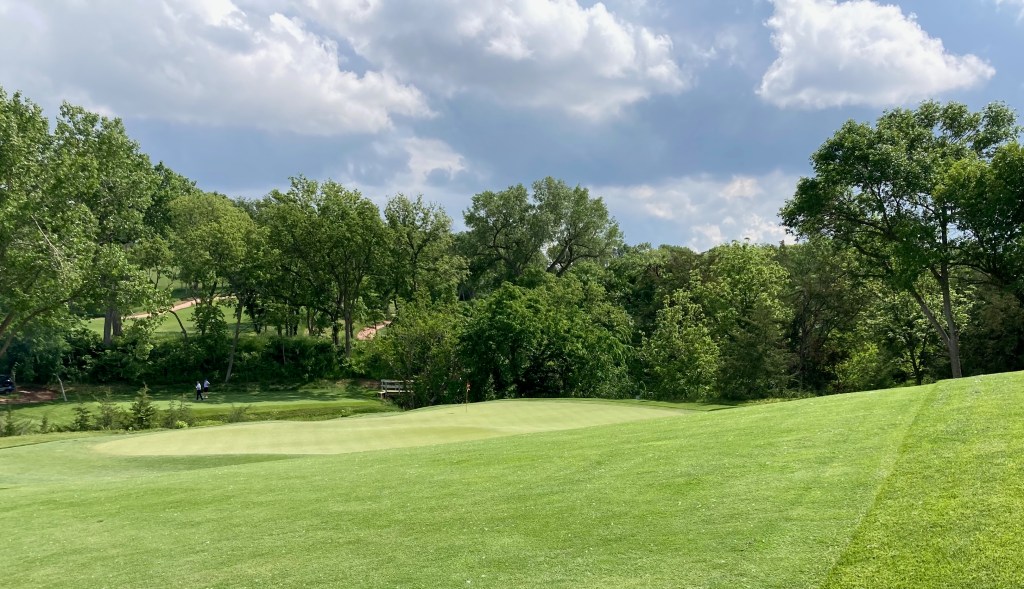
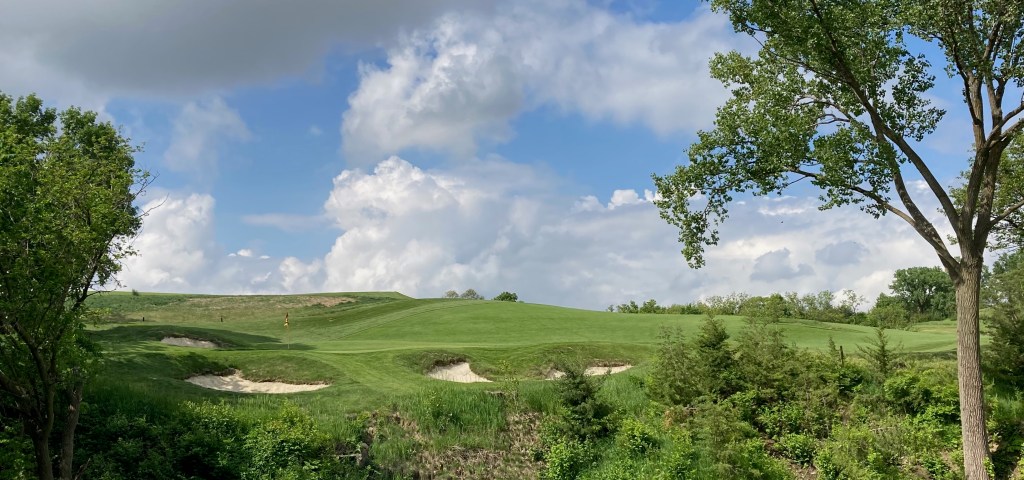
Twelve: We are squarely back in the prairie section of the course now. Most of the hole is blind from the tee with a drive that is uphill and needs to split the bunkers. If you’re feeling long, you can take it directly over the left bunker to find a slope that will kick you down to a more generous landing area. Fail to carry it and it’ll take three to get on. The infinity green is generous and sits at the edge of the hill which falls off on three sides. It’s like the eleventh at Bayside done well. Despite a clever kicker hump at the front, it’s one of the more subdued greens on the course.
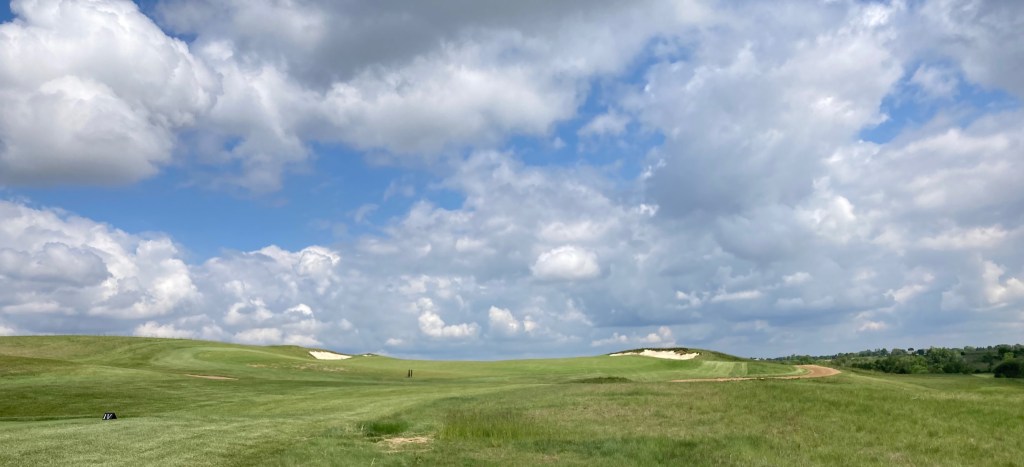
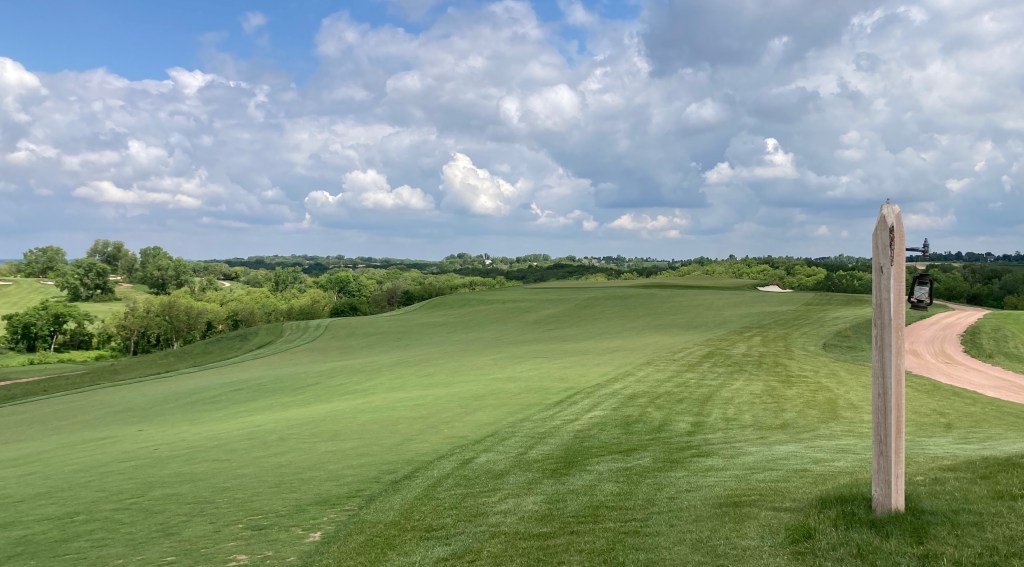
Fifteen: In all of the photos I’d seen before visiting Lost Rail, I thought this was the eighteenth. The hole sweeps right with a cape-like question to be answered off the tee. Which bunker should be challenged? The same visual trick is played here as on three – the sixty five yard wide fairway looks significantly less forgiving than it is. The large front right greenside bunkers should be a concern so if you miss, miss left.

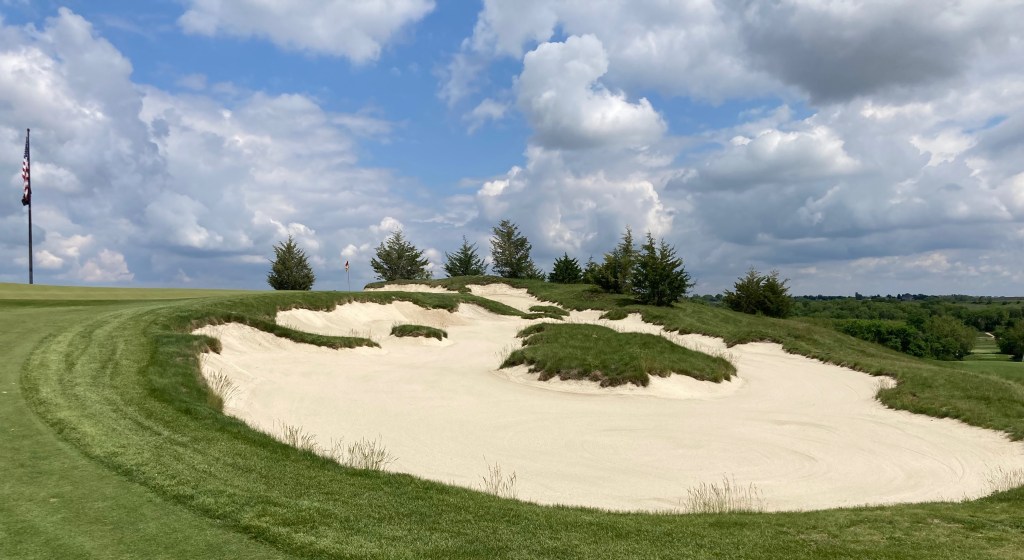
Sixteen: This short par three has a crown green and is well protected by bunkers. A miss long will tumble down toward the seventeenth tee box and I have it on good authority that you’re just as likely to ping pong a ball between the bunkers as you are to get it to stop on the green. With the Elkhorn river off to your left, this rounds out a set of par threes that are as picturesque as it gets.

Seventeen: Looking at the seventeenth from the tee, it’s hard to believe there is anywhere safe to drive the ball. The fairway corkscrews down to the right before reemerging from a blind valley. Fortunately, Hoffman figured that the length, 503 yards, was enough trouble so anything hit into this chasm will be kicked onto a flat spot. With as long as the hole is, the second shot will be a long iron or wood that can be played toward the tree near the green for a kick onto the putting surface. I’m told that after their first year they made the green more forgiving to shots that ran up as there’s only so much punishment a golfer can take.

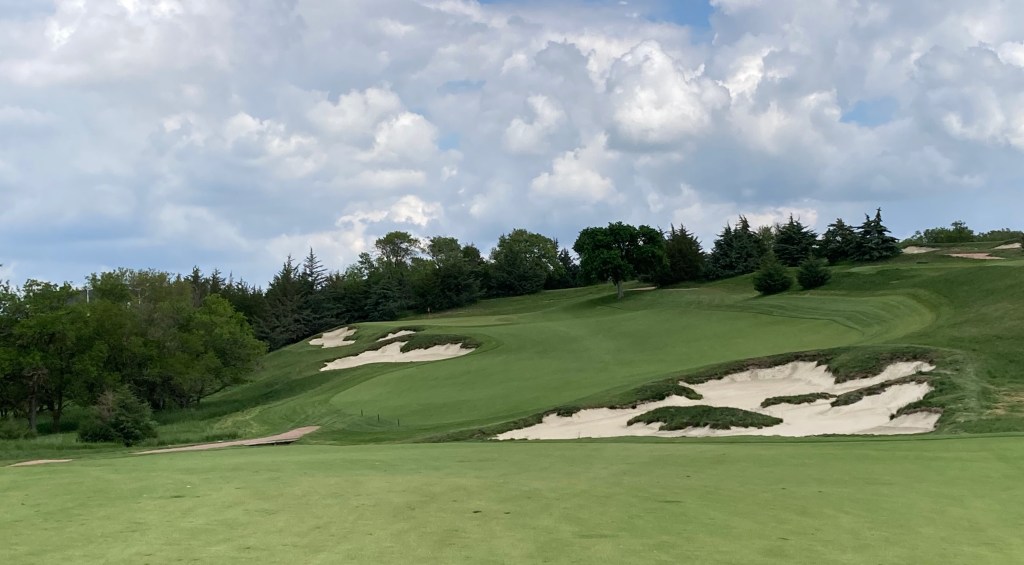
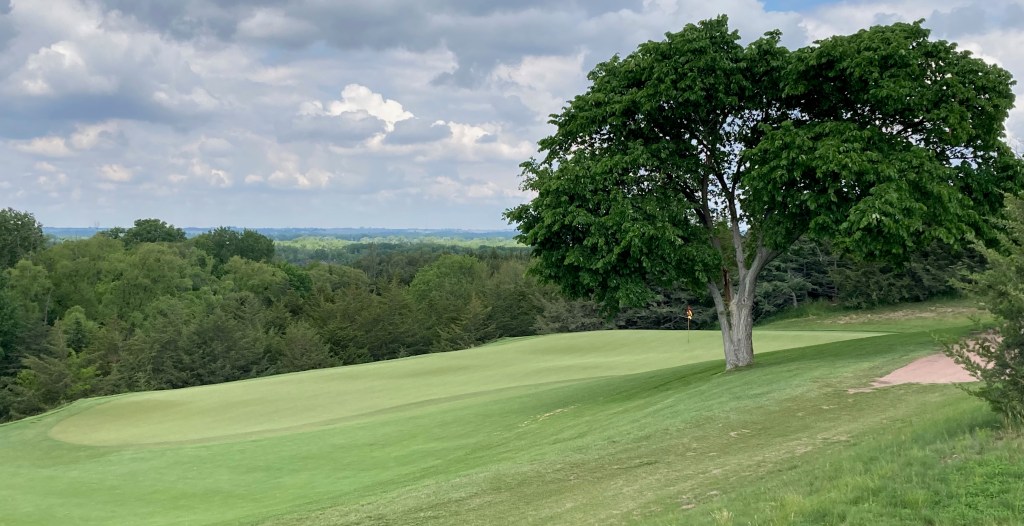
Eighteen: Lost Rail begins and ends with a par five. The first fairway slopes from left to right and has some of the more dramatic contours that carry from the seventeenth hole. A swath of gangly rough divides the two fairways but there are generous landing areas short and long of it. The green is elevated and sits near the clubhouse for a gettable finisher.
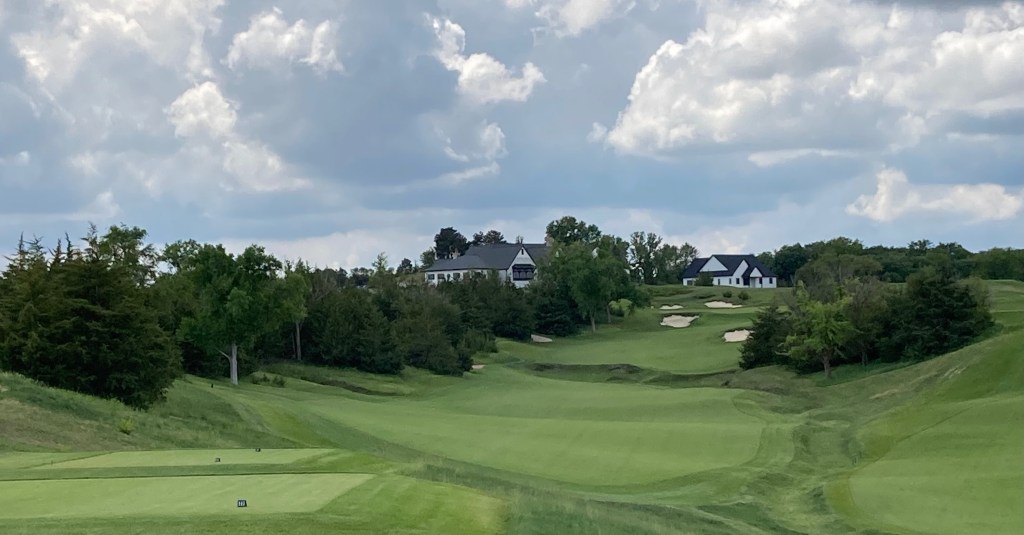

Final Thoughts
That Omaha native Scott Hoffman got the chance to build this as his first course is serendipitous. That he was able to route this caliber of course on such a small site is a sign of his immense talent. That he was able to route it while preserving the amount of trees he did while creating the variety he did is nothing short of incredible. There are at least three par fours out here that I would rank among my favorites I’ve ever played. The routing flows from a prairie landscape down into mature Eastern Nebraska woodlands and back before finishing among cedars and pines that wouldn’t feel out of place in Colorado. Despite stiff competition within Nebraska, and from South Carolina, Lost Rail has a strong argument for being the best course built in America since 2020.
Further Reading
Lost Rail History
Construction to resume on new Lost Rail golf course in Nebraska – Golf Course Architecture
New Lost Rail golf course in Nebraska nears grand opening – Golf Course Architecture
Episode 87: Scott Hoffman – Feed the Ball Podcast
 Layman's Hall
Leave a comment