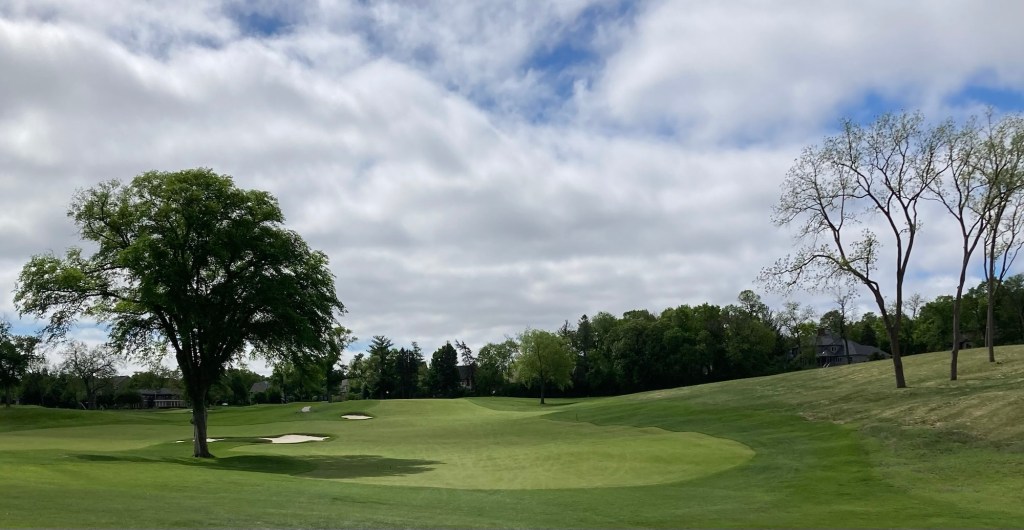
Architect: A.W. Tillinghast
Walkable: The course is very hilly but quite walkable. In fact, I only saw one group with a cart on the busy day we were out there.
Highlighted Holes: 4, 6, 7, 10, 11, 12, 15, 16, 18
Not many 6500 yard courses are as big and burly as Rochester with land that makes it longer than its yardage. At the same time it squeezes more delight and variety into its eighteen holes than its ‘big and burly’ descriptor suggests. The ability to be both at once is a testament to A.W. Tillinghast’s mastery and routing prowess. The mid-century trend of building ‘championship’ golf courses that emphasize difficulty over heart cast a shadow on golden age creativity and Rochester is a reminder that the two aren’t mutually exclusive. They lay in harmony across the land.
A.W. Tillinghast was part of the famed ‘Philadelphia School’ known for its outsize influence on golf in the Mid-Atlantic. Tillie, as he was known, was the most prolific of the group building the famous Bethpage Black, Winged Foot, Baltusrol, Somerset Hills, and Quaker Ridge on the East coast with San Francisco as a Western standout. His two courses in Minnesota, Rochester and Golden Valley, came as a result of his daughter’s marriage to a doctor at the famed Mayo Clinic. Almost as soon as it opened, Rochester began to change. For years the superintendent planted trees everywhere he could resulting in a tight, heavily wooded contrast to the expansive original.
Restoration and tree removal can happen for a number of reasons. Sometimes it’s practical: to improve airflow and turf growth. Sometimes it’s fashionable: tree removal has been in vogue with stunning transformations at courses like Oakmont and Moraine. Rochester’s restoration began unintentionally when a DuPont herbicide killed many of the white pine trees throughout the course and a multi-million dollar settlement made it possible to bring Tom Doak and co. in to make the rest of the tree removal intentional.
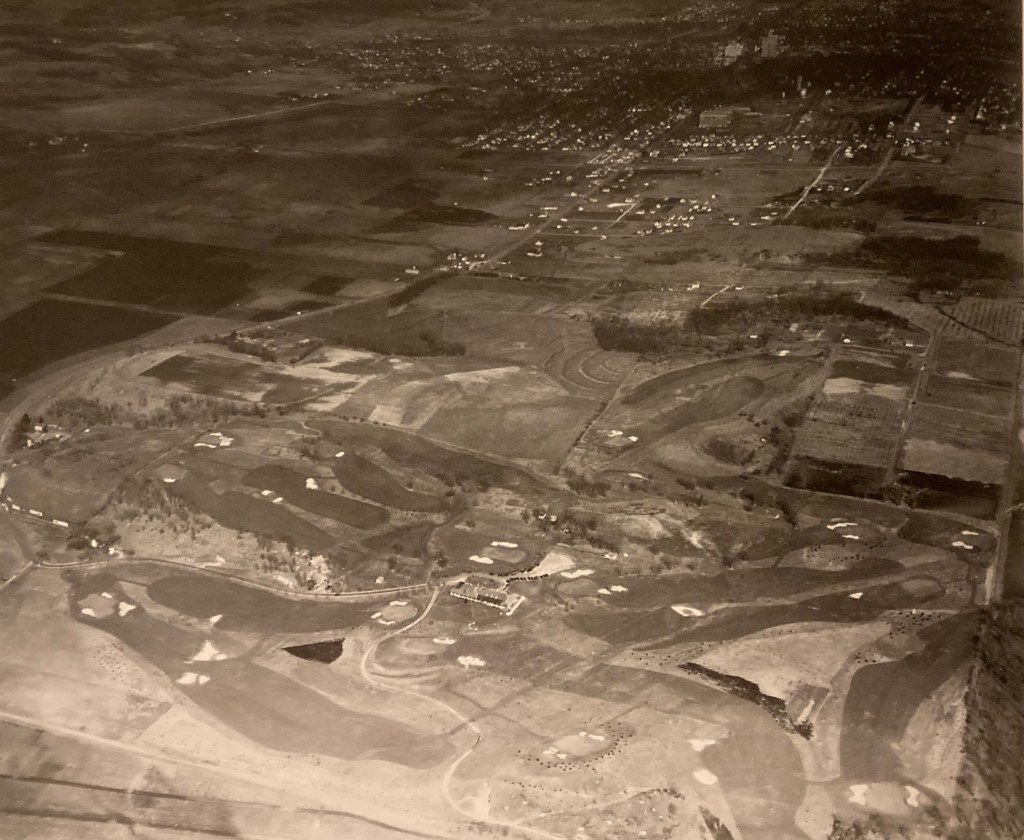
An aerial photograph in Rick Shefchik’s excellent history of Minnesota golf, From Fields to Fairways, shows off much of Tillie’s original work and the same potential that the Renaissance crew uncovered. With Brian Slawnik taking the lead, the team removed more than three thousand trees, reclaimed greens, and improved the course’s infrastructure, bringing this golden age gem back to glory.


The course is built in, on, and around three primary hills; 1-6 occupying one, 8-12 another, and 14-17 atop the tallest of them all. In less capable hands the course could have been too extreme, but even with the elevation change, no hole feels unfair or ‘goofy.’ Blind shots on holes like 9, 12, and 13 build tension but aren’t penal and the trees that were kept are strategic and well placed. Good sized greens, many of which fall off on the sides, put a premium on how approaches need to be thought out.
Four: Rochester has two par fives and they’re only one hole apart. The first starts in the southwest corner of the property where many of the white pines were killed by a DuPont chemical application. The lawsuit over the incident largely funded the ten million dollar restoration. The fairway swings out to the edge of the hill before plummeting down toward the clubhouse and back up to a green protected by two decieving fairway bunkers left and a greenside bunker right. It’s better to hit the green than pinseek here as misses left and long fall of sharply.
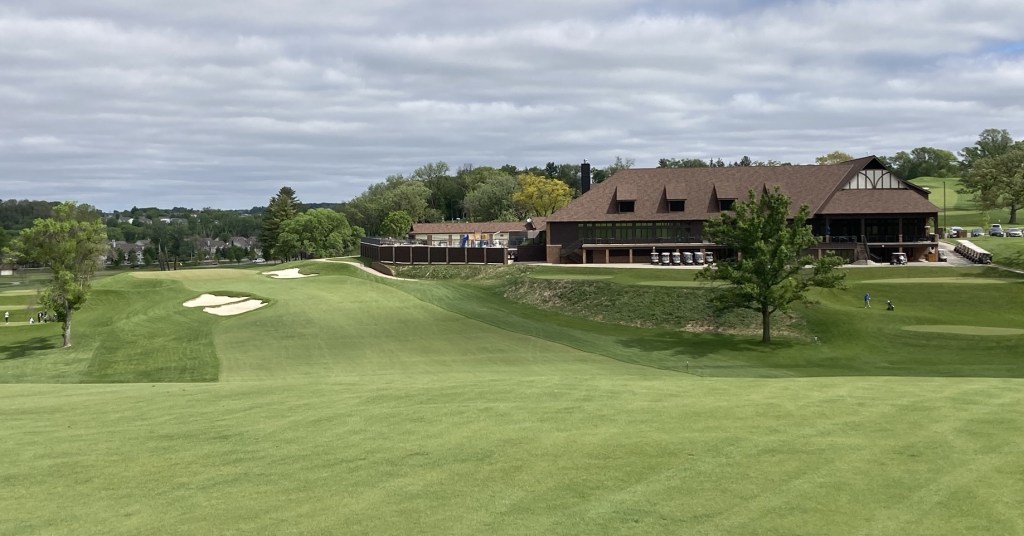
Six: The sixth tee box sits above the flattest hole on the course. Depending on your length, one of the first couple of fairway bunkers could cause concern but a well positioned shot will leave you able to attack the green in two. While the fairway is flat, the bunkering creates the kind of intrigue courses on flat sites should aspire to. The green is superb with a false front (or lower tier if it is indeed pinnable) and sharp left and back edges eager to dump your ball into the bunker or the rough.
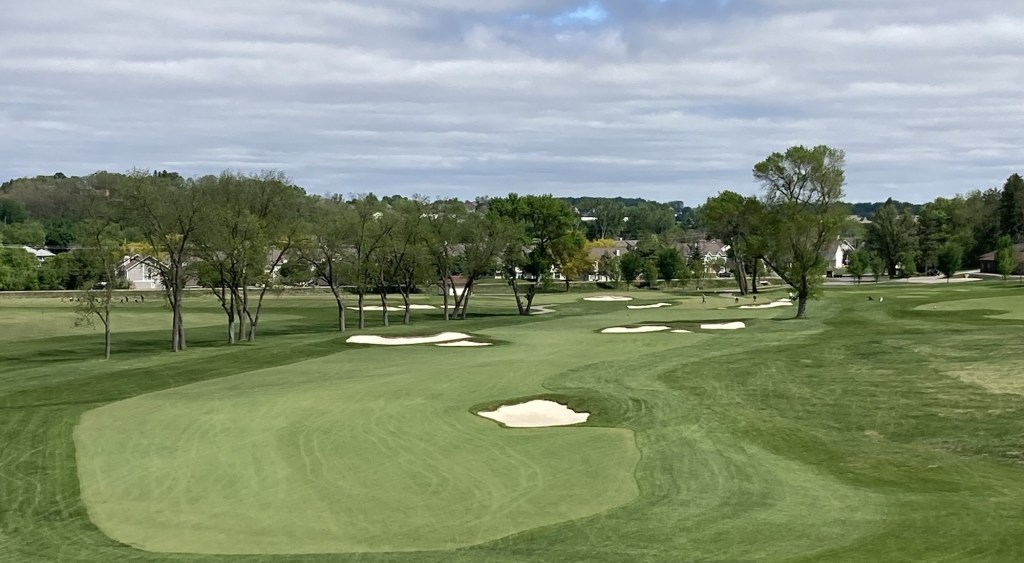
Seven: The short par four seventh may be the most playful hole on the course. From the tee, the challenge is obvious: find a good spot to leave your tee shot so that you can accurately hit a high ball onto an elevated green, the surface of which is but a suggestion from the fairway. Three deep penalizing bunkers lurk low front, right, and left should the ball not carry to the putting surface. I adore this hole and the only knock is that the pool house behind is a poor backdrop for such a dramatic greensite.
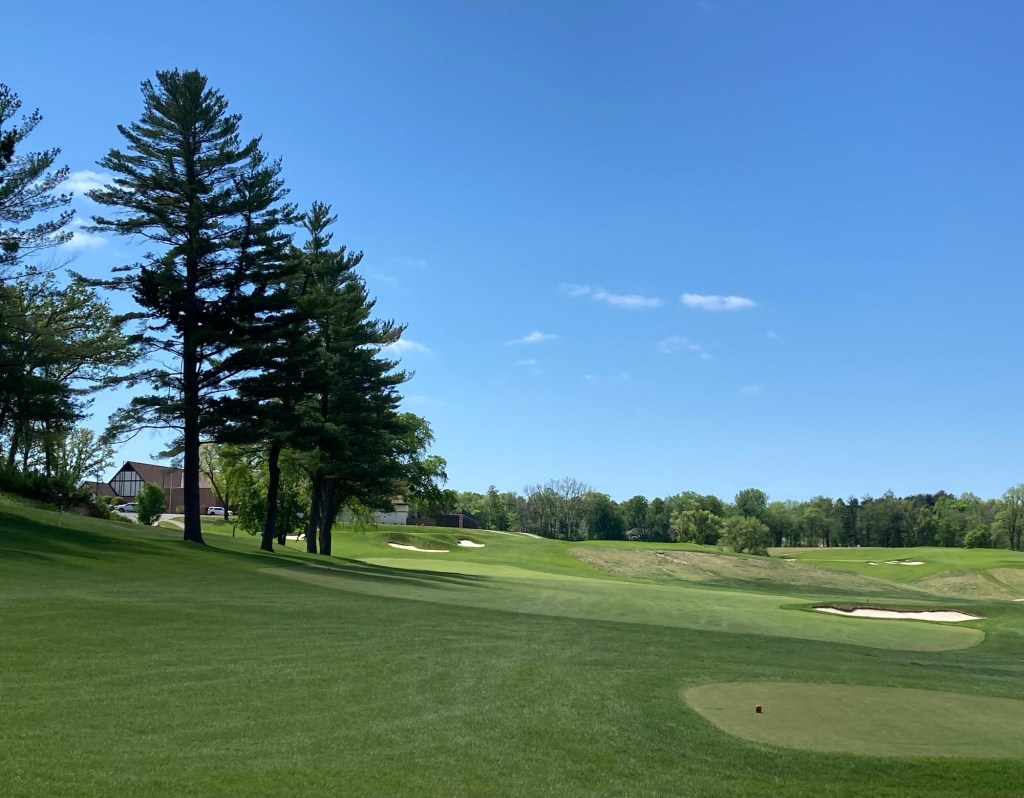

Ten: The tenth is a short, uphill par four with a large tree carefully kept to prevent (or at least limit) the direct line to the green. I’m sure there are folks that can get the ball up quickly enough for this line but mere mortals such as myself are relegated to laying back into the fairway left or attempting a big fade around such a stark vertical hazard. The approach is a blind, uphill shot over a front bunker. Play smart for an easy par or makeable birdie.

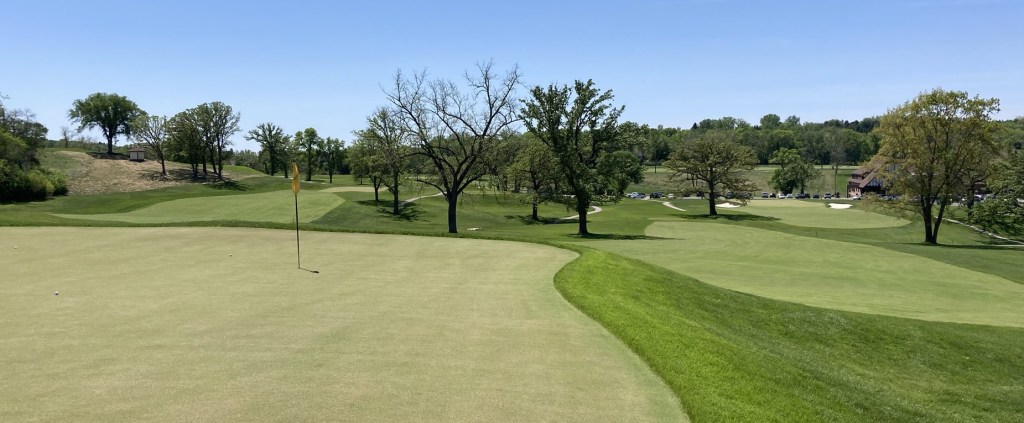
Eleven: The par three eleventh is somewhat reminiscent of the tenth at Winged Foot West. It’s short, but well guarded by a truly imposing front bunker as well as left and right traps to catch strays. There isn’t much room behind the green as long shots will careen off the slope towards the bushes out of bounds. The green is built something like a cartoon’s speech bubble with a charming arrow at the front.
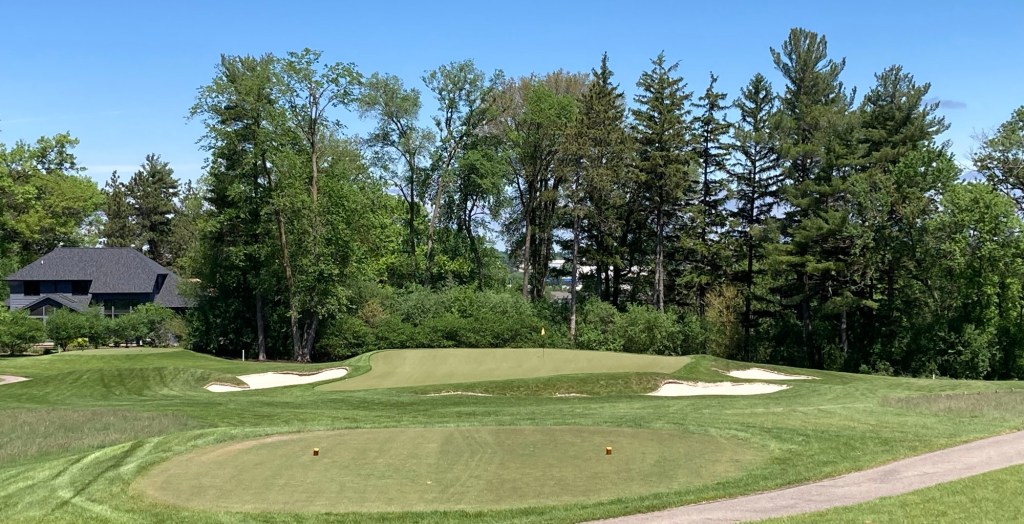
Twelve: The tee box on the par four twelfth sits below the crest of the course’s northernmost hill and a designating a spotter to stand at the top and signal when the fairway is clear wouldn’t be a bad idea. Perhaps the high scorer on 11? Crest the top of the hill and the wide fairway should carry the ball forward. The fairway continues to toss before feeding into a green that slopes hard left to right off another hill.

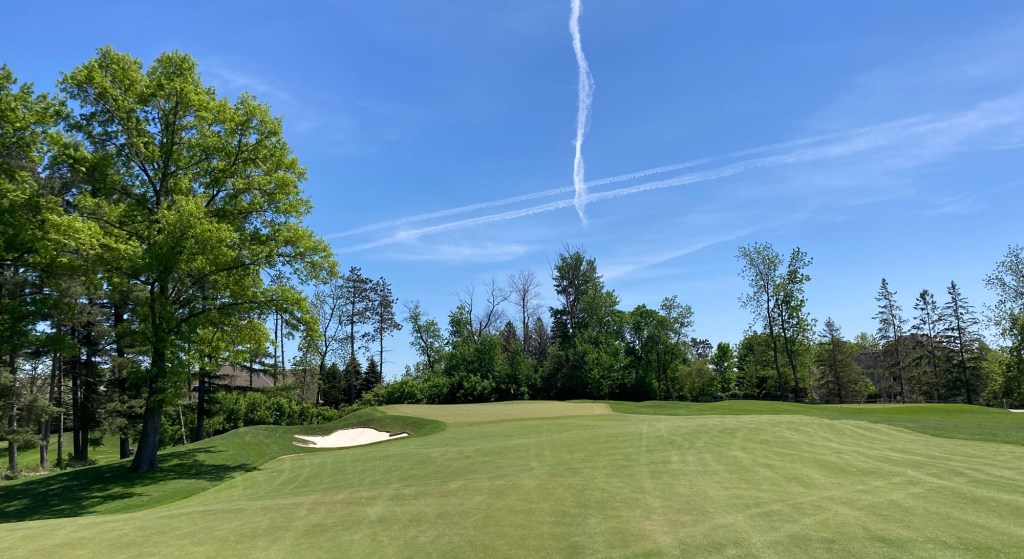
Fifteen: The fifteenth follows a dramatically steep par three up towards the highest point on the property. The hole doglegs softly right to the top of the hill that obscures the green. Once it’s been crested, the fairway leans right to left ready to shoot short shots into the rough behind a tree or into the greenside bunker. I wouldn’t attack any pins that aren’t in the middle as falloffs on the left and front will leave an imprecise shot scrambling up a steep slope. This is a sneaky hole where the conservative play will prevent doubles or worse.
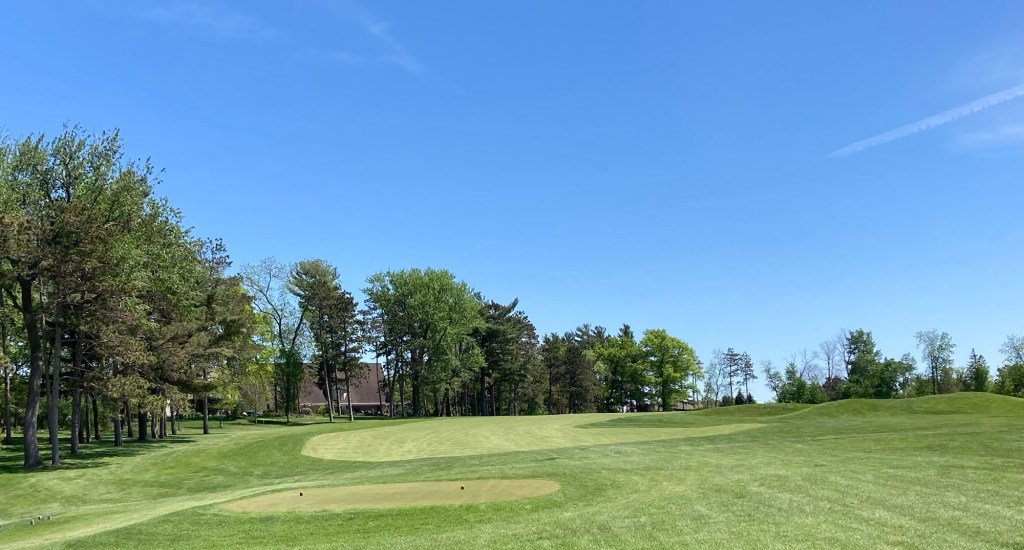
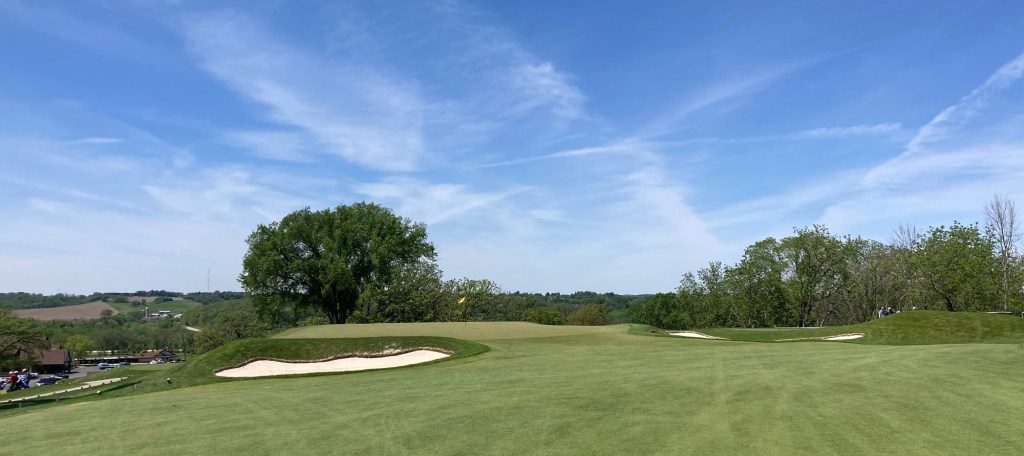
Sixteen: The sixteenth follows back across and down the hilltop with stunning views of the surrounding area and the rest of the course. The fairway is generous with a mound on the right that obscures the green. Deep, sudden bunkers sit at the front left and right while the hills falls off steeply to the left and behind. Keep the drive in play, give yourself a short shot in, and find the putting surface. From the tee, two grain silos can be seen off in the distance in approximately the middle of the hole. The story is that when Nick Faldo played Rochester his playing partner told him to aim for the silos. That wasn’t great guidance for Faldo as he replied, “which one?”
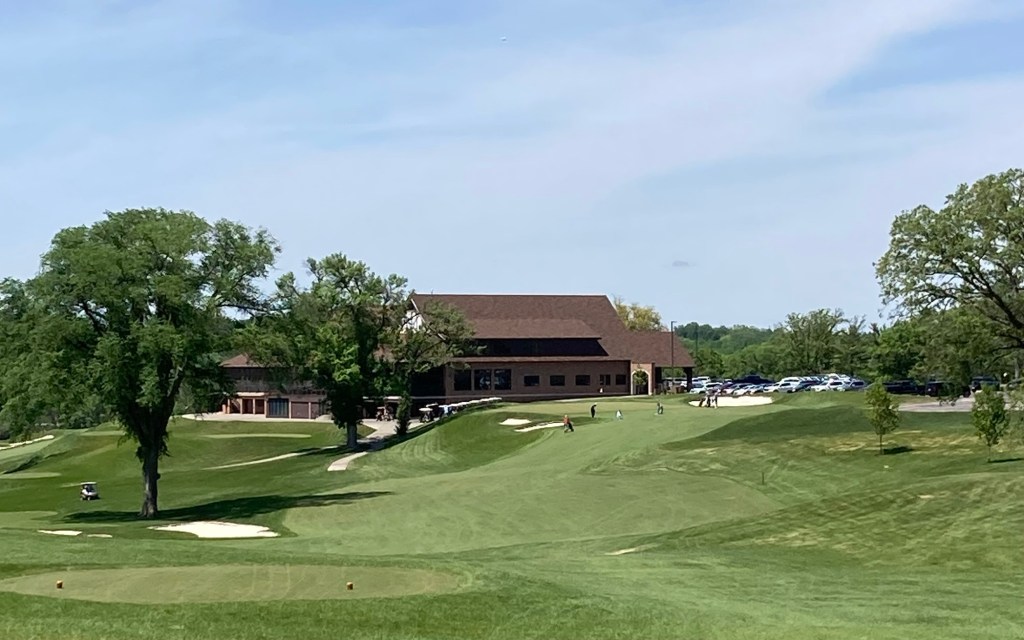
Eighteen: The fairway slopes right to left away from the green on this marvelous finisher. The shared doughnut shaped bunker with the first is on the left and an easy target to miss. The approach shot is blind to a green that curls back atop a ridge but is big enough for folks with good distance control.
Final Thoughts
Rochester left me thinking of Elmwood, the short, quirky, golden age muni in Omaha that is draped across rolling hills. It has similar variety on a much larger scale with the kind of bunkering and strategic design you’d expect from someone of Tillinghast’s caliber. Doak and co. kept a superb collection of trees that emphasize rather than penalize. On top of all that, RG&CC has to be the best course in the country to have a medical emergency. The Mayo Clinic is two miles away, and many of the membership are some of the best doctors in the nation.
 Layman's Hall
Leave a comment