Architect: Jim Engh
Walkable: Yes! Well routed with nothing particularly severe and some nice paths from tees to fairways.
Highlighted holes: 1, 3, 5, 6, 7, 9, 10, 12, 13, 14, 15, 17
I am an unapologetic Jim Engh fan. Some critiques of his work are fair, but by and large I greatly appreciate the risks he took and style he developed during his career. He had a tendency to take jobs on severe sites with elevation challenges, routing complications, and the difficulties that come with building in the mountains. His ‘muscle bunkers’ are seen as gimmicky and undulating greens as too severe. He has templates that he returns to time and again in his designs, but, despite being an excellent player himself, built courses that were playable for golfers of many skill levels.
A criticism I read of his work said, “you can hit bad shots that turn out good and good shots that turn out bad. If you like true golf do not play here.” Is that not as true as golf gets? Is that not the game that’s been played in Scotland for hundreds of years?
The Harmony Club was opened in 2007, a tough time for developers. It was slated to be the centerpiece of a housing development in Timnath, a medium-sized town outside of Fort Collins, when the recession made home sales nose dive and new builds come to a halt. The course held on through the downturn and now thrives as the centerpiece of the neighborhood in Timnath.
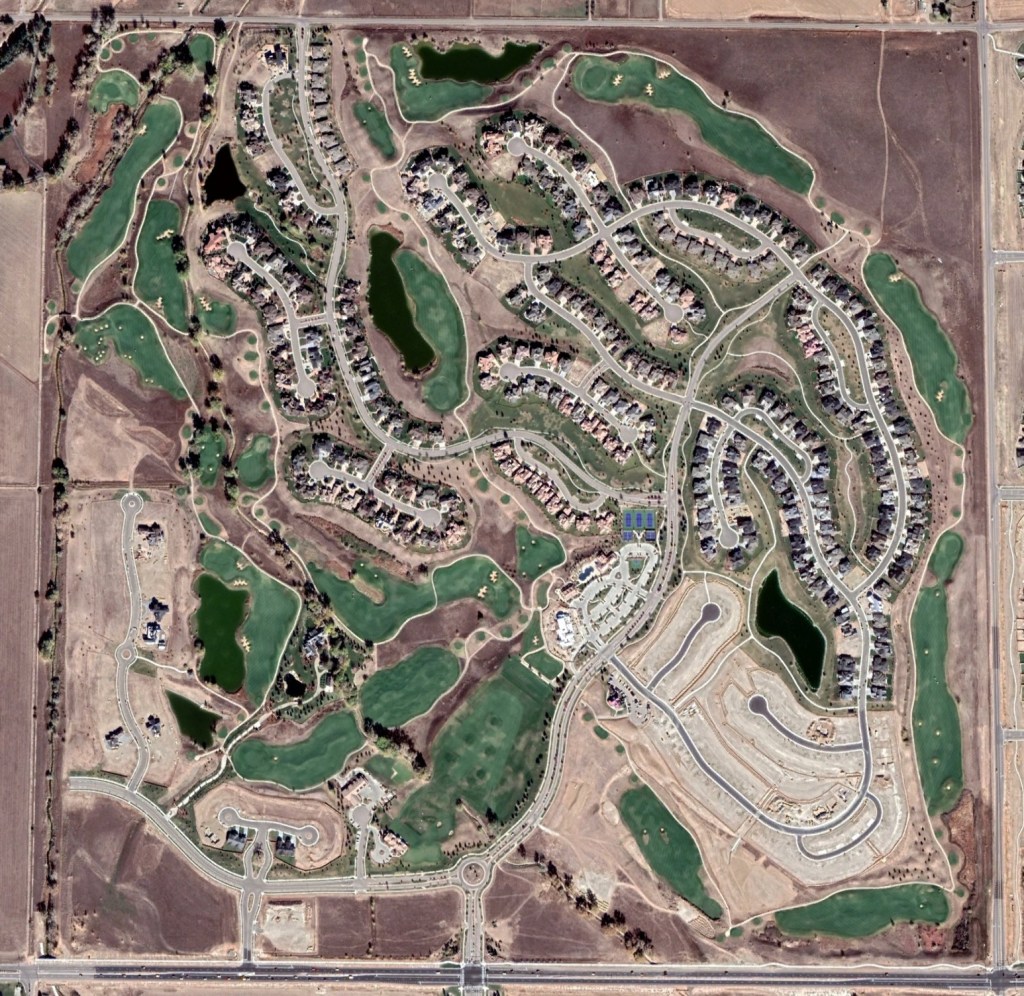
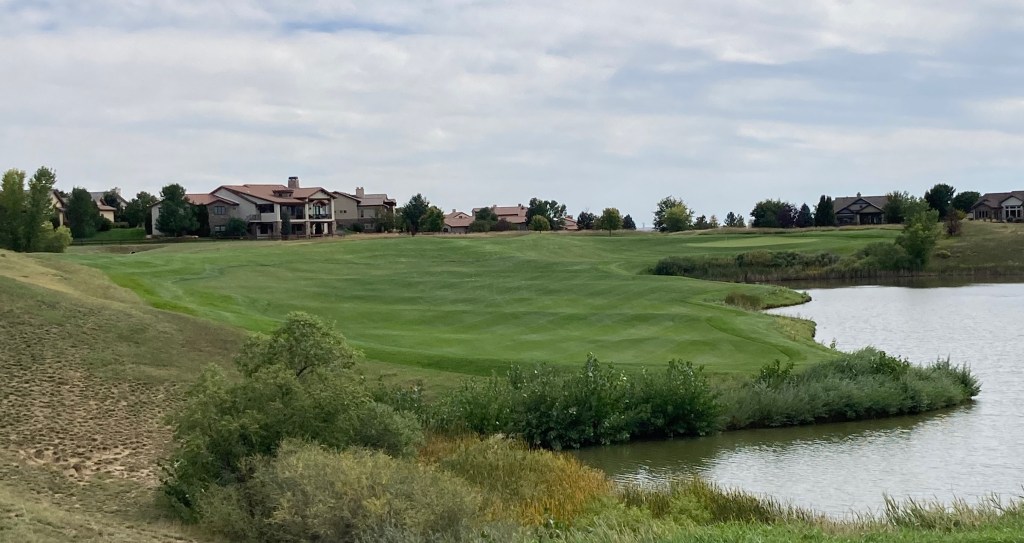
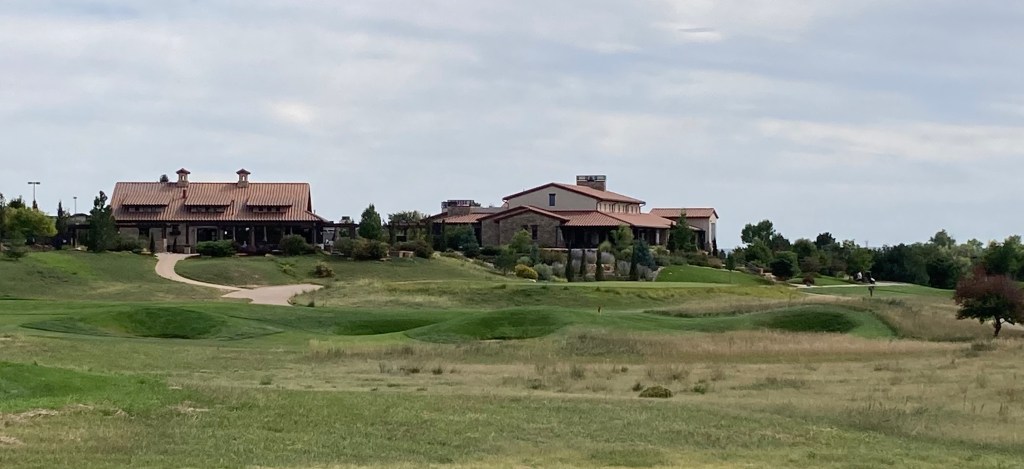
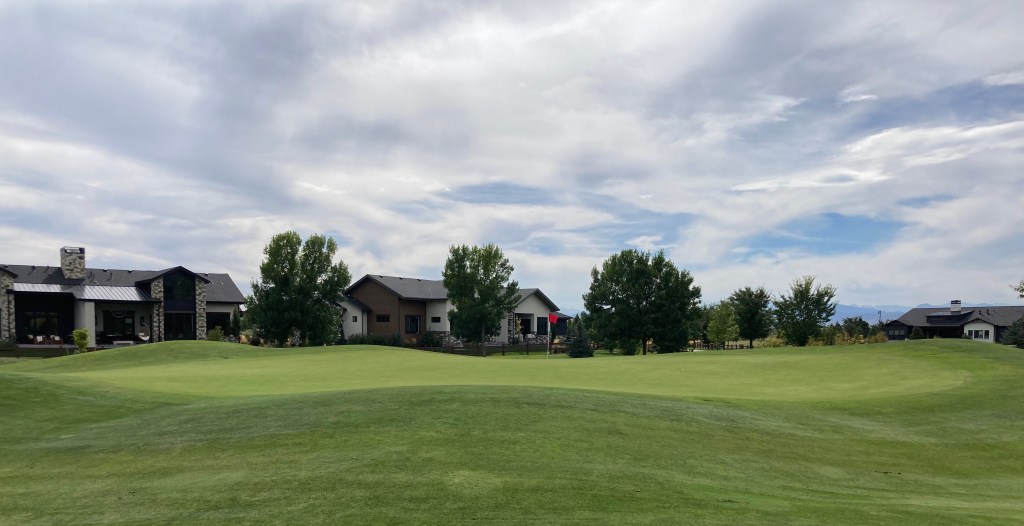
The course occupies some of the most restrained land Engh built on in Colorado and it shines as a result. Rather than being shoehorned into certain severe uphill or downhill holes, he was able to work with the land and be more intentional in each hole design. The front nine is a big loop out around the neighborhood. The houses are there, but never in play and easy to ignore. The back nine is more compact, naturally routed in a riparian zone, through, along, and over a pair of meandering creeks. There are fewer houses along the back which feels like it was built in a state park.
Engh’s signature muscle bunkers share screen time with small circular pot bunkers. The fairway contours and bunker strategy create routes and options throughout with rolls, ridges, knobs, humps, and hollows. Harmony has a great set of greens which may not be to everyone’s taste. Those people are wrong however, as the contours, sections, and size allow for holes to play differently day to day. They combine with their surrounds to create opportunities for creative short game shotmaking, especially on the six bunkerless greensites.
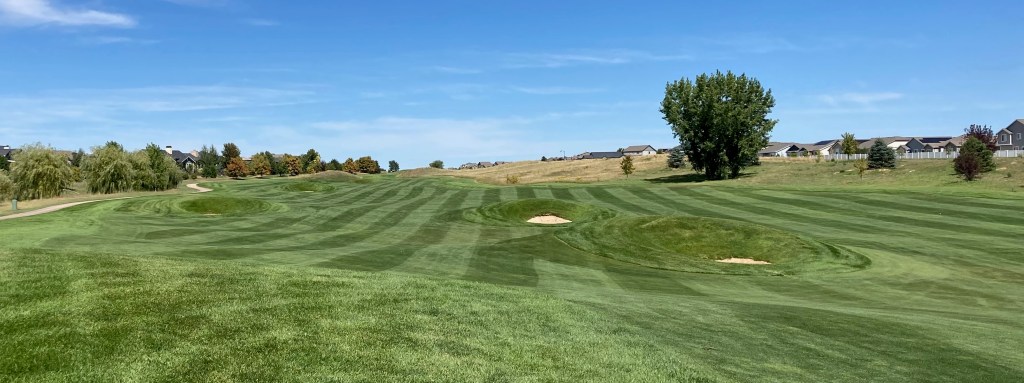
One (Pipeline): The par four’s eighty yard wide fairway hides behind two small bunkers tucked into deep grass faced mounds like a pair of bushy browed eyes. The left side of the fairway draws looks like a safe option while the right side is hidden behind the aforementioned eyes, however, a shot left leaves most of the target hidden by a hill while the right side keeps the receptive green open. The bottom of the hill on the left and a knob on the right side of the fairway create a funnel that kicks into the green and a stark advantage. A beautiful line of rabbitbrush lines the right side of the green like mountain gorse. This is as good of an opening hole as you’ll find in NoCo.



Three (Moonscape): Dotted with crater-like pot bunkers, this par five stacks the sand left on the tee shot, but an accurate ball between creates a direct look at the green tucked between two hills that pinch the fairway 50 yards out, similar to his second hole at Pradera. The green is a long bathtub in a punchbowl and the potential for getting close is there for golfers with the length to make it to tranquility base.
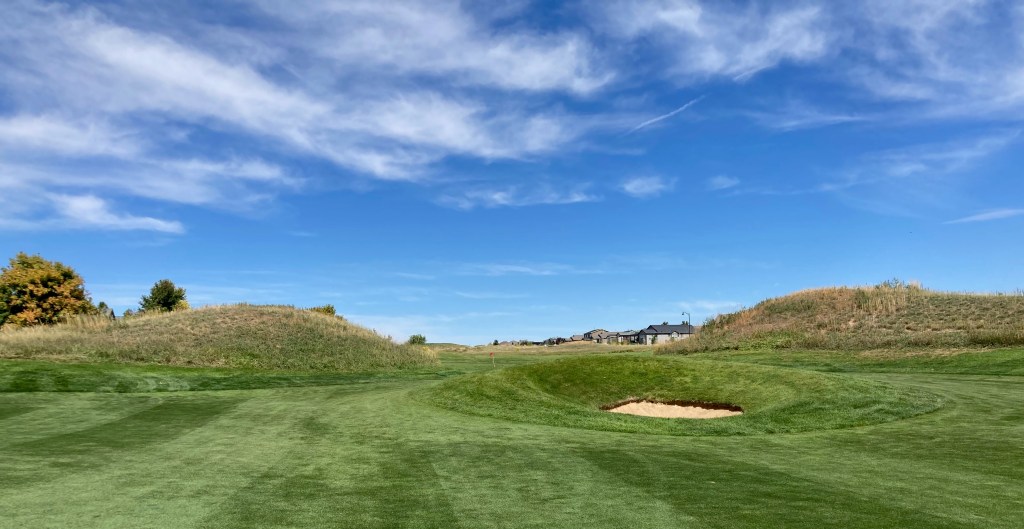
Five (Serengeti): This long par five curls down right to left with a generous fairway full of bumps and bobs for the tee shot which progressively narrows closer to the green. Some of the most prominently faced bunkers on the course pinch the fairway and another sits in front of the green. The green itself is severe, almost an inverse biarritz that rewards, or at least doesn’t penalize, being below the hole.

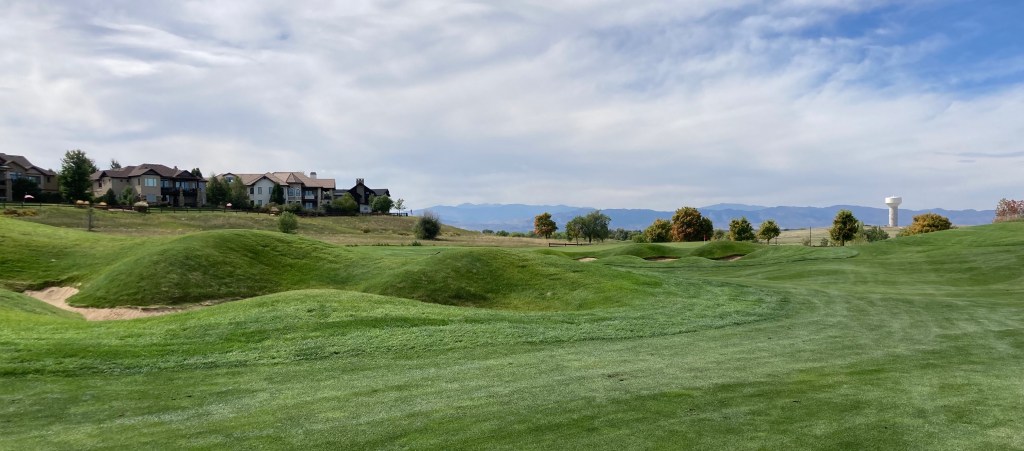

Six (Re-Load): This driveable par four is all carry to a skinny green. The name is apt as many golfers will undoubtedly get cocky gunning for eagle. The smart play, a lay up to a generous fairway, leaves a short pitch in. The green is wide with two winged back sections and a front bowl that can help collect drives in. Two front bunkers and an amphitheater back don’t guarantee an up and down to anyone off the mark.
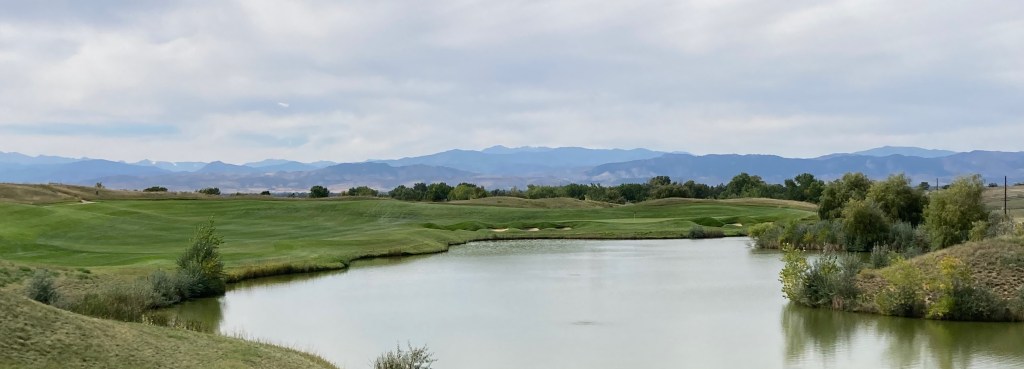

Seven (Seven): With a green longer than a football field, this par three can play completely differently depending on what the super is feeling when he wakes up. Built into a signature Engh amphitheater, the snaking green will reward the right yardage even if the line is a little off and punish mishits or misclubbed shots. I didn’t get the chance to try and two putt from one end to the other, but if you end up that far off course, you might as well embrace it and take a whack. It’s an excellent way to create variety in a par three, though I do think they could have come up with a better name.
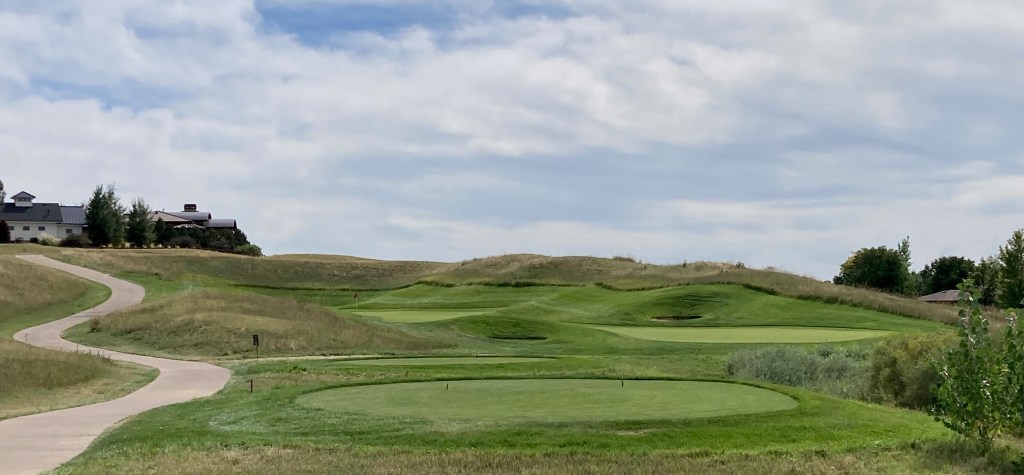
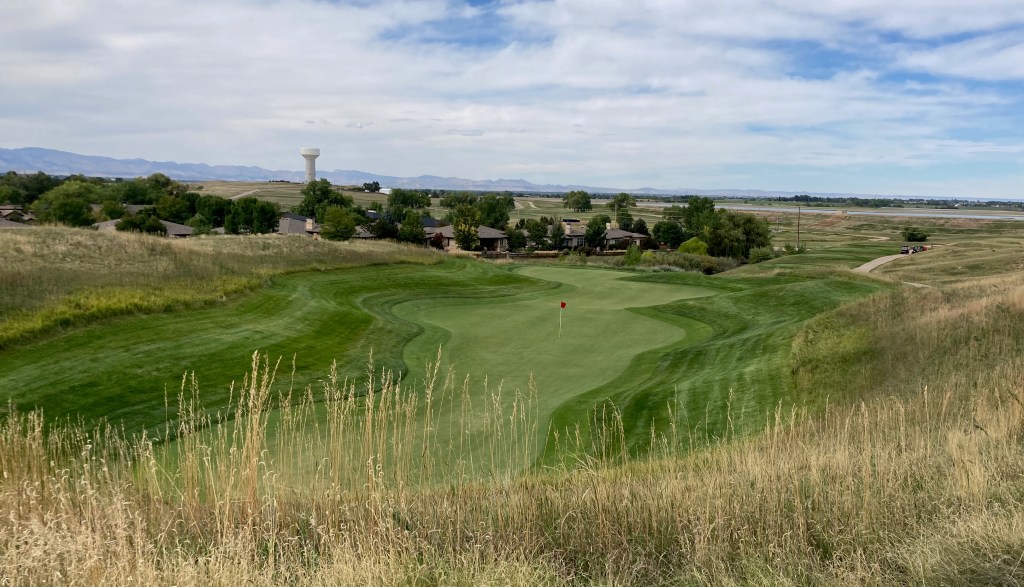
Nine (Mirage): Engh, whose architecture is heavily inspired by Irish links, was probably thinking of Lahinch’s Dell hole, a blind par three that hides most of the green behind large dunes. The dunes here aren’t as large and a tall pin makes the hole location findable but the shot is downhill to a skinny green.

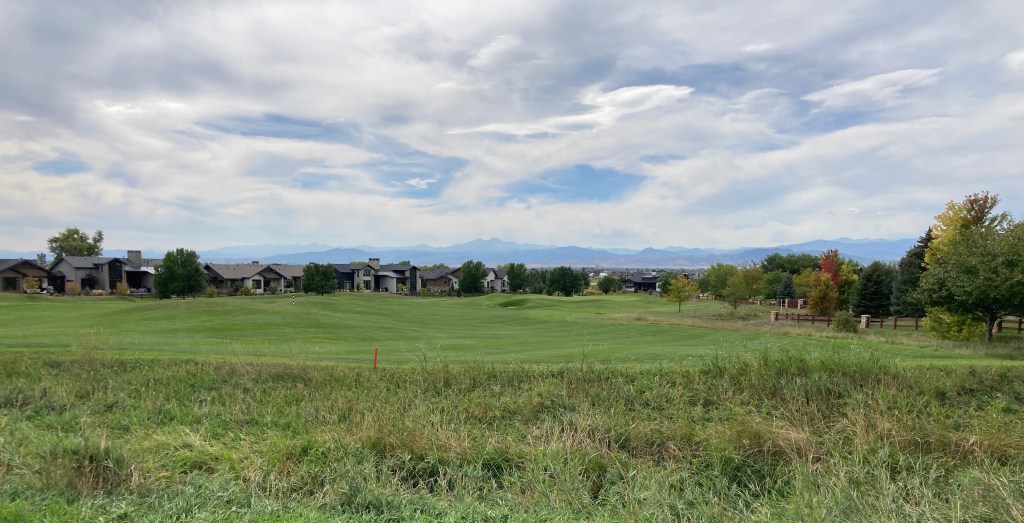
Ten (Twin Peaks): A wood or long iron that splits Long’s Peak and Mount Meeker would be ideal as a creek runs across the clever fairway of this par five. The center is flat and about 20-25 yards wide while each side is covered in small undulations that likely make going for the green impossible. The fairway beyond the creek is just as interesting. Some sixty yards wide, it has a spine that runs through the center dividing it into two sections. Going up the right creates a shorter shot in but brings a pot bunker into play whereas the left side leaves a longer, safer approach. The green is rolling with three or four humps around the edges that offer chances to be creative if left chipping. I love this unconventional par five. It feels strategically unique with its impressive variety of options.


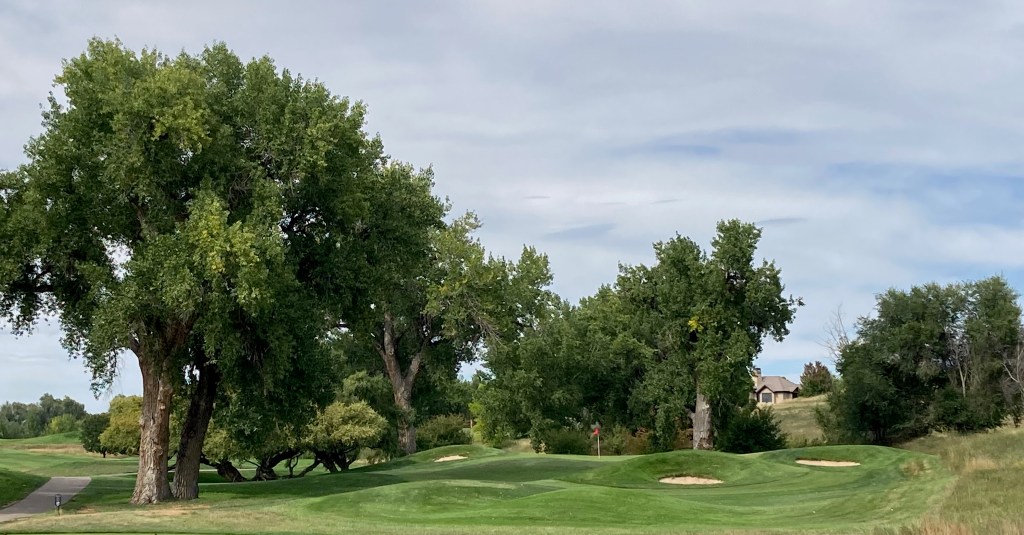
Twelve (Hawk Tree): This scenic short par three is surrounded by trees and boasts one of the strangest sections of green I’ve ever seen. The bulk of it is somewhat reserved but a fall-away tongue juts out the back a foot or two below the main putting surface. The back slopes up, theoretically to keep quick putts on the green, but I’m not convinced. It’s certainly creative, but I don’t know that I’d want to see that pin more than once every couple weeks at most.
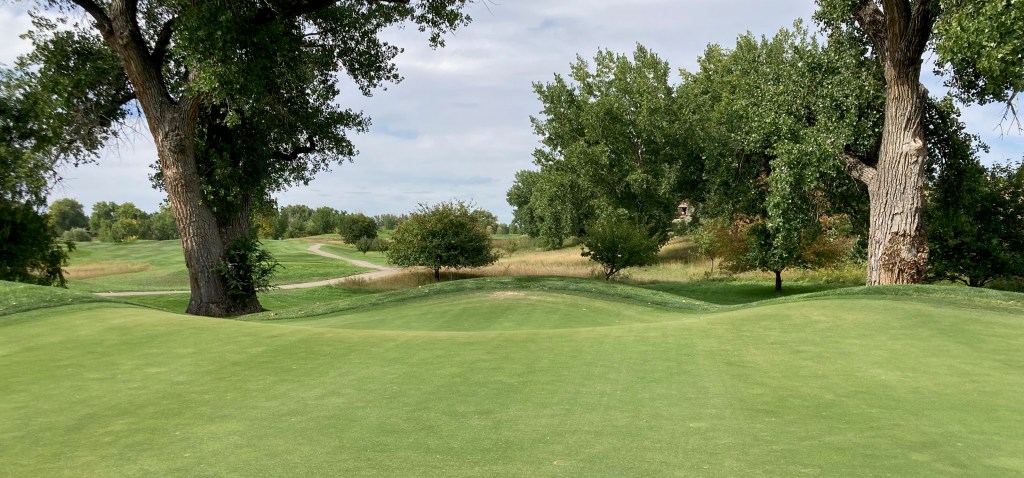
Fourteen (King Fisher): This par five is a good take on a favorite Engh template. Run the fairway out and fit the green in at a ninety degree angle. The options are: hit a good drive out into the fairway and have a risky attempt at it in two or lay up to the end of the fairway and have a short shot in. A drive 260 to 300 yards in the middle of the fairway presents a tantalizing opening; all carry over marsh. The green is two tiered and in a bit of a bowl so hitting it further wouldn’t hurt. Laying up to the end of the rolling fairway requires navigating a tough trap on the left but gives you a full look at the green.



Fifteen (Tea Cup): Half of this green is blocked from the tee by rising river banks. A grove of trees hide the tiny back shelf teacup handle. As with so many of his greens, the amphitheater keeps any reasonable shot in play, provided it clears the water. The tee is serene with a setting that feels like a prairie park.
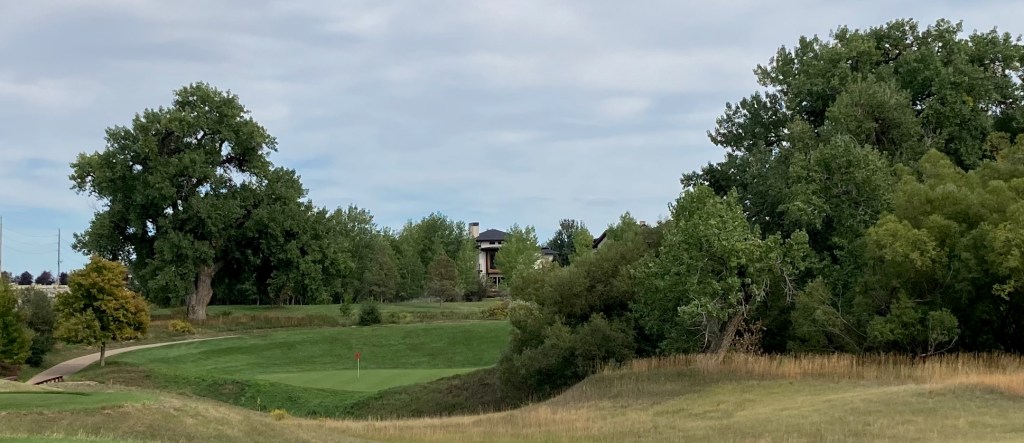

Seventeen (Engh’s Revenge): The last blind par three is the most memorable and, I’m told, the bane of many members. The biggest green on the course is blocked by a jarring dune topped with a pot bunker that cuts the view in half. The front right of the green swells to kick balls right or back depending on how it’s hit. A ridge coming into the left side creates another batch of options and helps define distinct front and back sections. This is a three puttable green that offers the chance to be creative should you miss.


Final Thoughts
I could happily play Harmony Club every day. It’s walkable, full of options, has exciting greens with multiple pin positions, and, especially on the back nine, sits in a beautiful setting. Jim Engh’s detractors point to the obviously manufactured nature of his bunkers and greens but as far as I’m concerned they add to the variety. Every hole asks questions and, with five par fives and at least three short par fours, Harmony is a blast from start to finish. The members have what we all should want: a course that can be played in equally reasonable but completely different ways each time out.
 Layman's Hall
Leave a comment