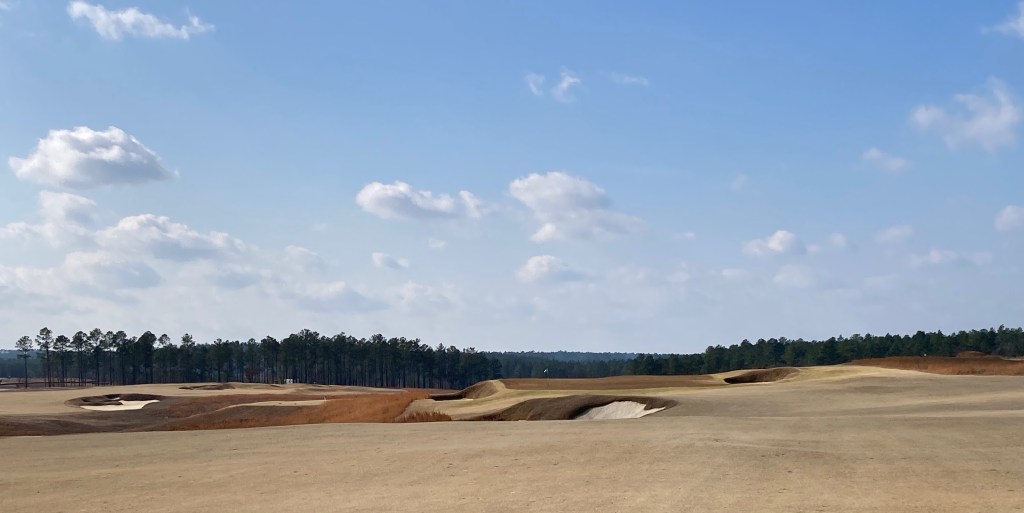
Architects: Brian Schneider and Blake Conant
Walkable: Hilly and vast but a good walk
Highlighted Holes: 2, 3, 4, 7, 8, 9, 11, 15, 16, 17
Directions from Aiken: Take highway 78 from the center of town past Happyville, the short lived colony of free thinkers and socialists, to Montmorenci and take a right. Drive for six miles. Thick pine forest closes in around the road. Keep an eye out for Andrews Circle, a hard right turn into more trees. The club will be on the left, a post with a barn owl the only sign.

Glimpses of the kids course show through the trees along the driveway but it’s not until you walk through the breezeway between the pro shop and the clubhouse that the scale of the property hits you. Old Barnwell is big.
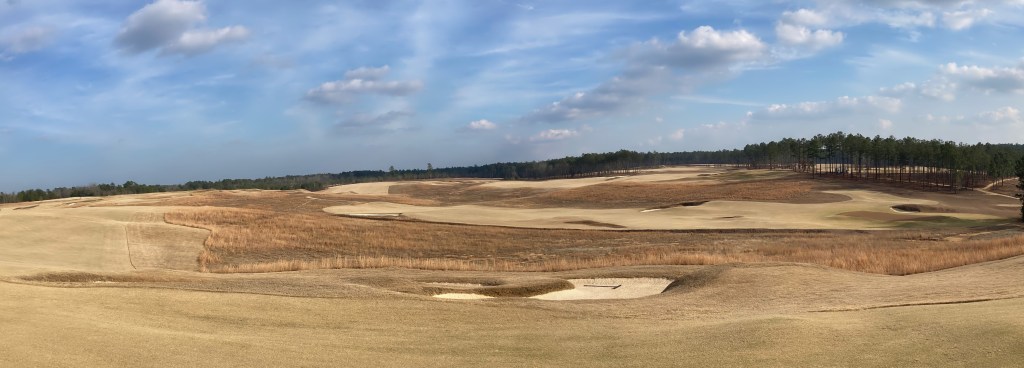
Most of the property was cleared of trees in 2013, making it easy for founder Nick Schreiber and architects Brian Schneider and Blake Conant to see the potential while looking at sites. The main property supported the bulk of the course but Schreiber bought adjacent land that became the third, fourth, and fifteenth holes to complete the routing. The course twists and turns in on itself across the hills. Holes ten through fourteen circle each other on the south side in a way that maximizes the room that most people wouldn’t see were they to route the course.
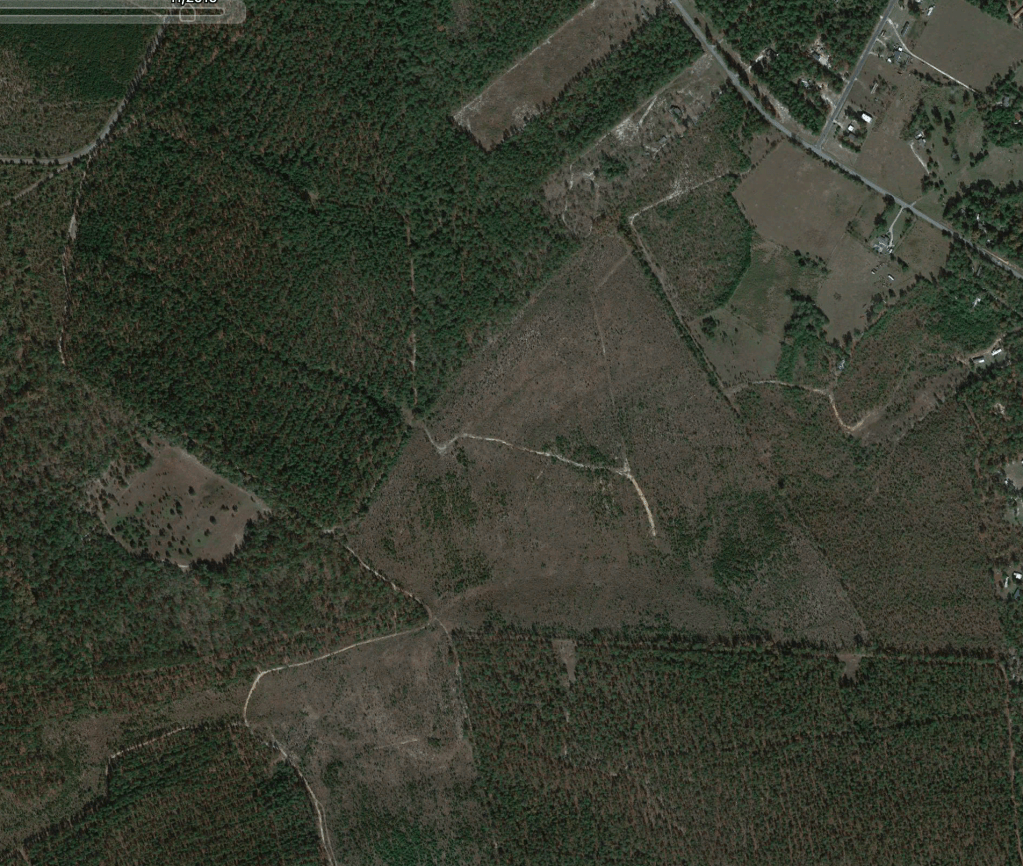
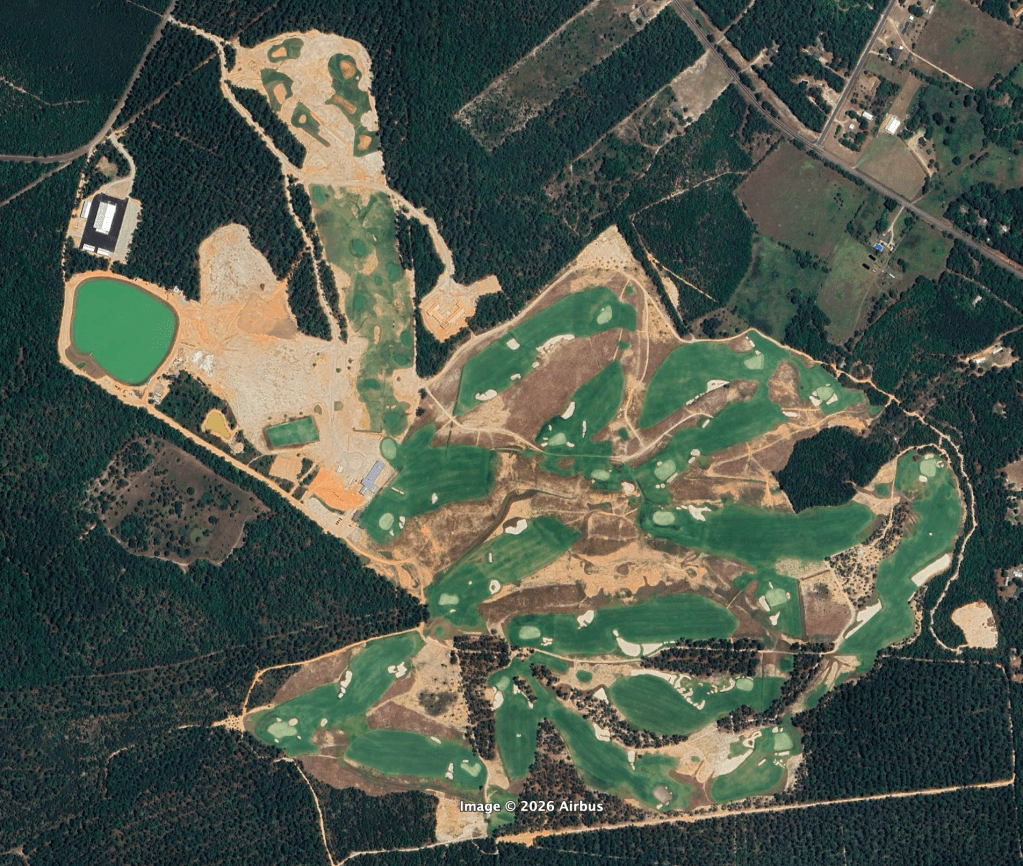
In a way, Old Barnwell is both a fresh new approach and an ode to the origins of great American architecture. For two guys who come directly from the minimalist tree, it feels like a response to the movement. The routing follows the land, but was obviously crafted. It incorporates a twist on classical strategy with elements of the old masters. It does all of this without trying to disguise its intentionality. Hard lines create contrast between bunkers and cops and moguls sprout up unexpectedly. It’s at once a pinball game and a treasure hunt. For Schneider and Conant, this was a pragmatic decision as much as an artistic one.
Building a golf course produces a lot of excess dirt. On many builds the team will either truck it away or make it look natural by blending it into the course. According to Conant, creating obvious shapes was both economical and a nod to the greats. “The old golf architects in the twenties like Donald Ross or Walter Travis or others were like, ‘just plop them here and we’ll build a field of mounds and we’ll turn that into a feature.’ We took that same mindset of, lets use every part of the buffalo.”
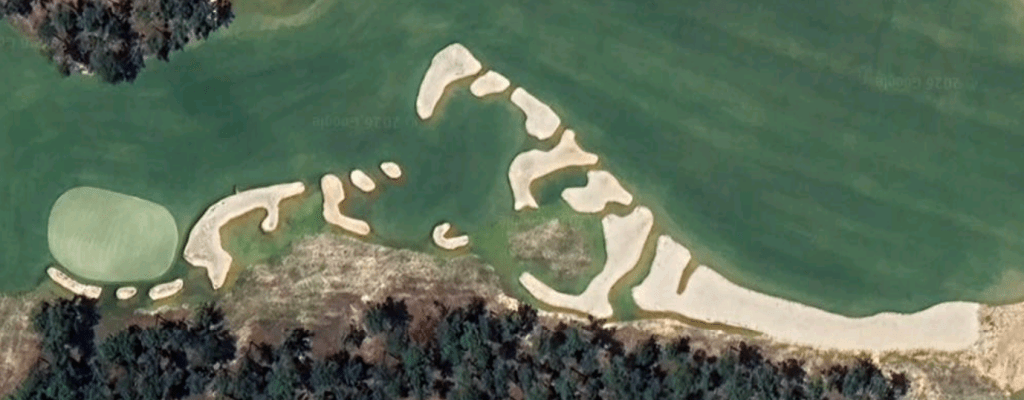
In a different way than I’ve discussed before, Old Barnwell has a sense of humor. That’s not to say it’s not a serious golf course. It can play long, firm, and devilish with some of its pin positions; it just doesn’t take itself too seriously. It’s a par 73. It has one par five and one par three on the front. It has three par fives and two par threes on the back. Three of the par fours are less than 320 yards long. The tenth hole has dinosaur bunkers. Let me say that again. THE TENTH HOLE HAS 250 YARDS OF BUNKERS THAT LOOK LIKE DINOSAURS. And doesn’t feel gimmicky at all.
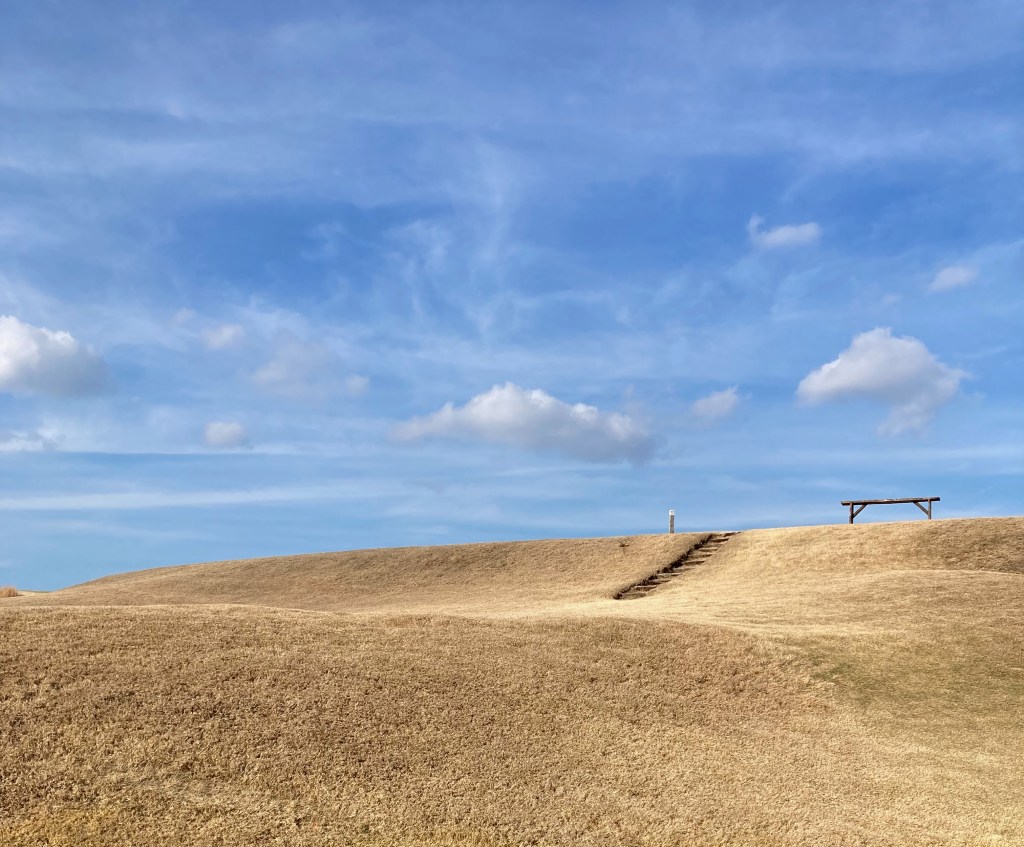
We played the course in early January on its tightly mowed dormant brown Bermuda winter palette that played as fast as any course I’ve experienced. Being a Midwesterner, this is a style of golf with which I am unfamiliar. Without the bent grass cushion, I was much more reliant on the ground game and considerate of the angles offered by the land like an opening ahead of the right side of the twelfth green that acts like bumpers, provided you get to the right side. The course is full of contours to be found. An ode to its replayability.
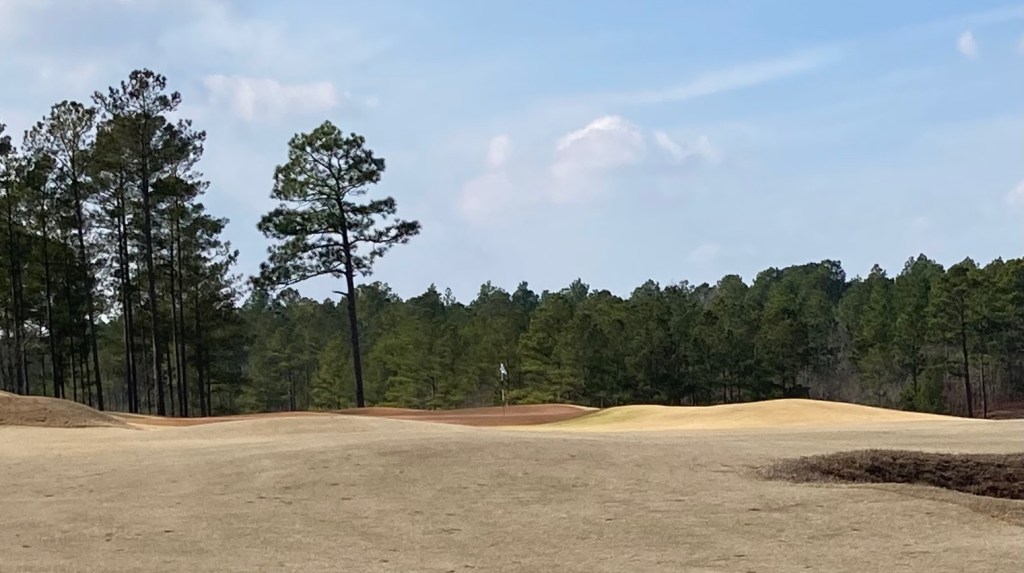
There is no one bunker style. According to Conant, “a lot of our favorite golf courses have a myriad of different bunker styles and there’s not one prescribed look or consistent theme throughout. The bunker theme is that there is no theme. What fits that place and what fits the landscape.”
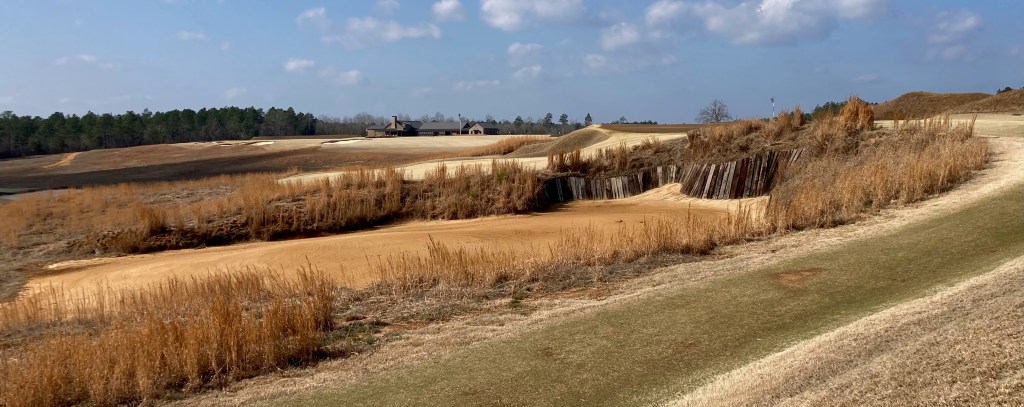
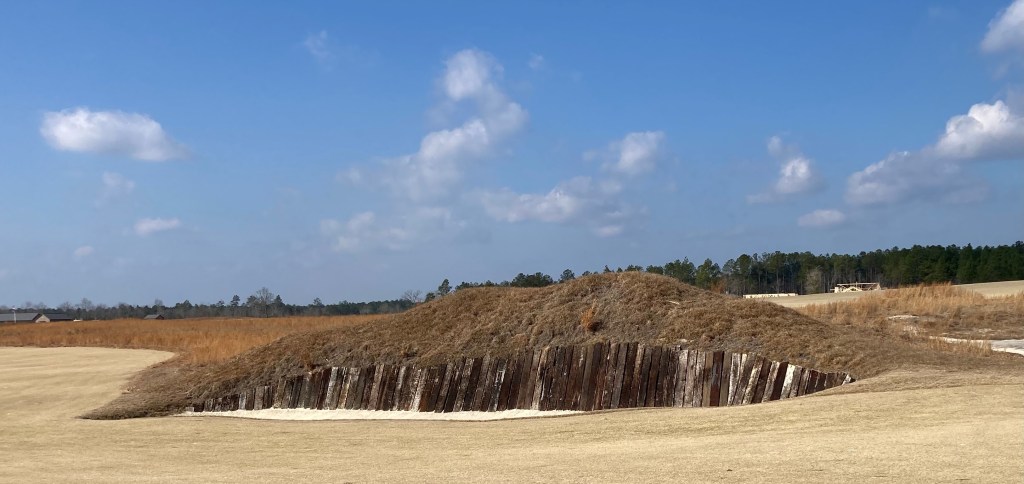
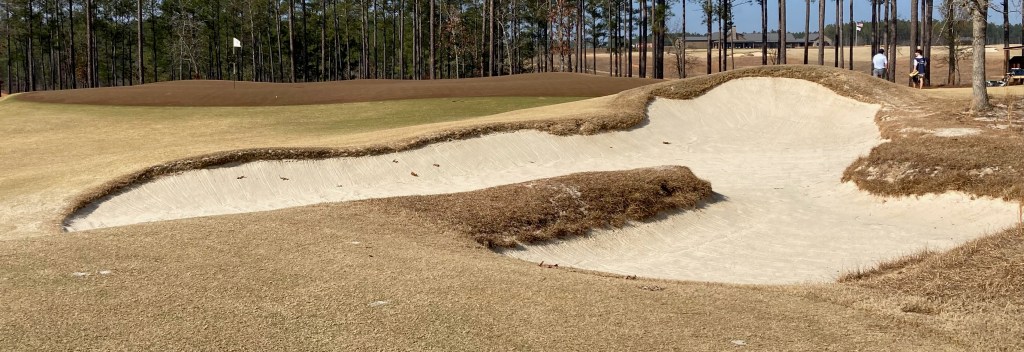
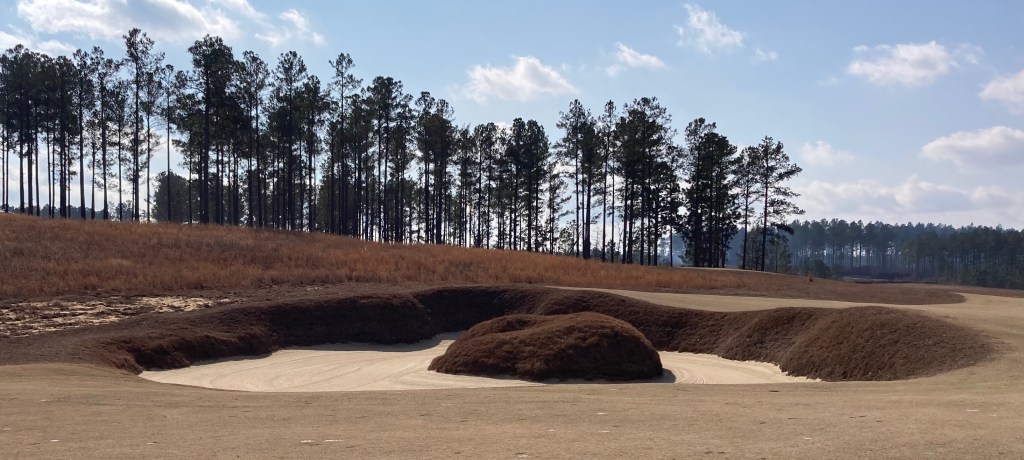
Two: On the first of the short par fours, the second fairway cants to the right pushing balls to the bunkers, or if the drive clears the bunkers, keeps them in front of the green. The bunker on the right side of the hole is big with a high face and a flat bottom that leaves a 30 to 70 yard bunker shot to the front. Sneaking the ball past the centerline bunker on the left gives a good angle, but is almost certainly somewhere you’d find yourself unintentionally. The middle of the green is relatively flat but falls off on the left and the right into close cut pockets.
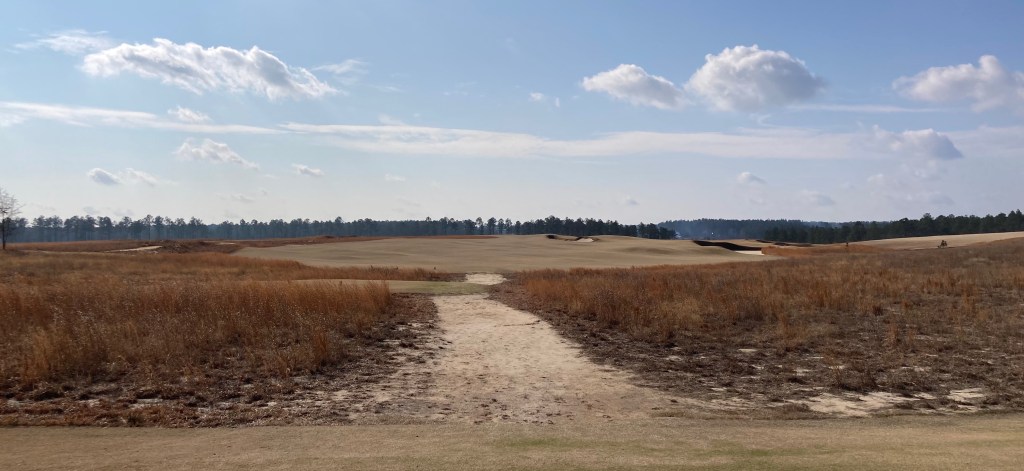
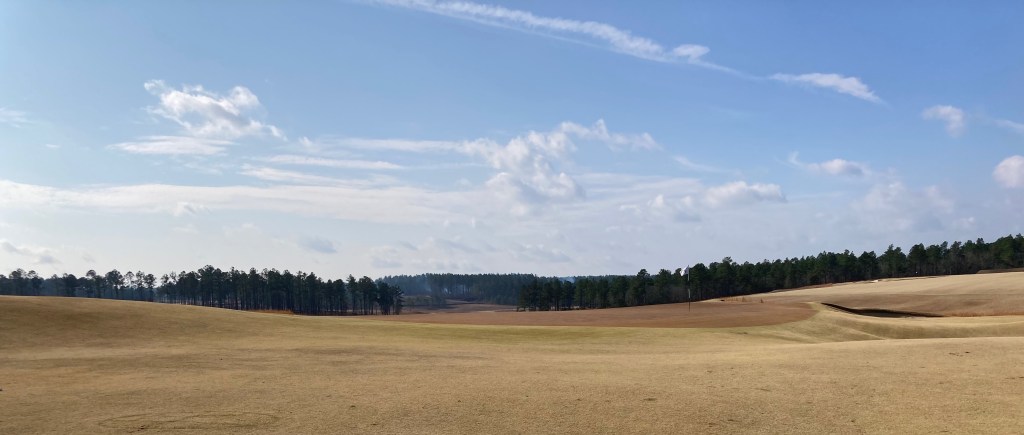
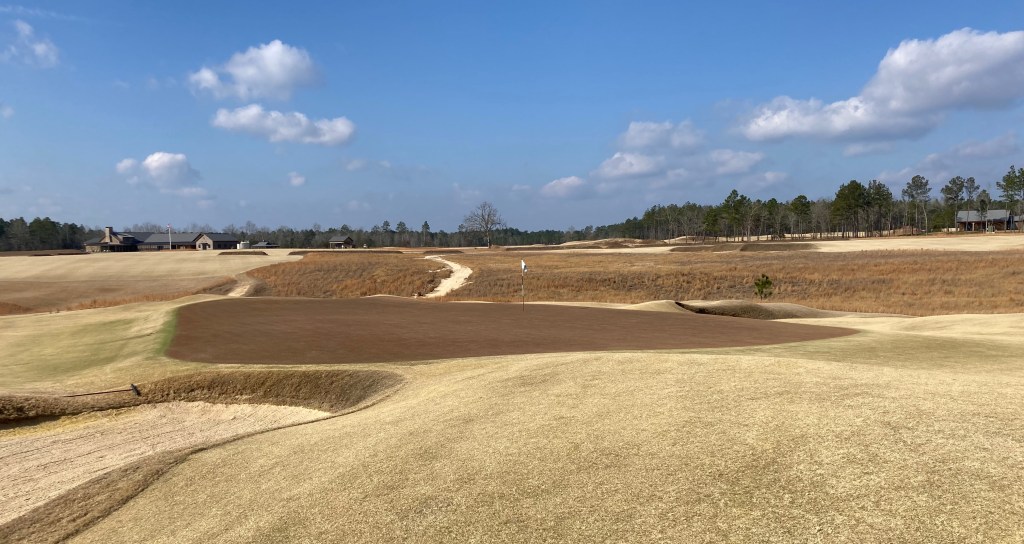
Three: The third is wide. Really wide. One hundred yards of fairway wide with a Hog’s Back running up the center. Hugging the right side opens the optimal angle but brings a row of bunkers into play, the largest of which is the last which pushes out further into the hole. Playing safe out to the left is likely to leave you with a longer shot partially hidden by the hill. The green swirls with three distinct sections at the front, back, and right.
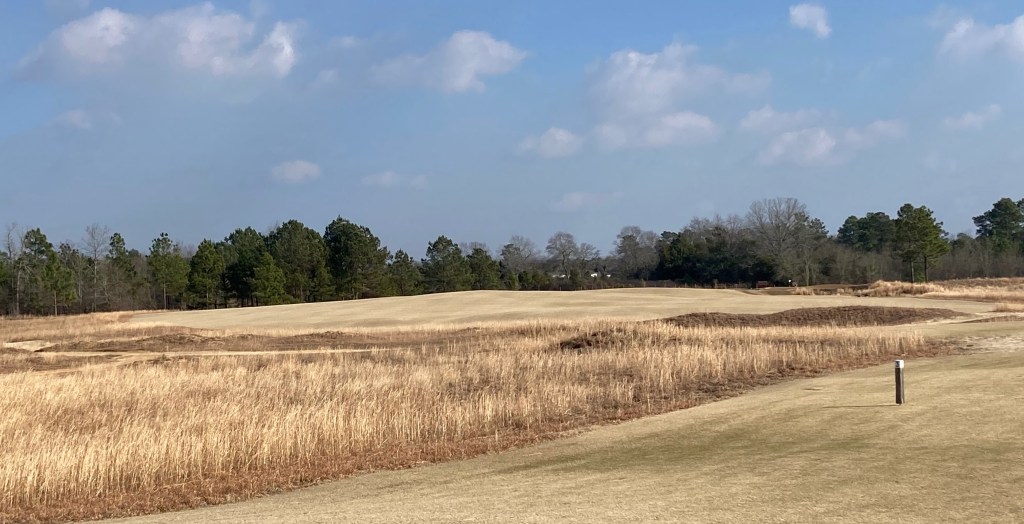
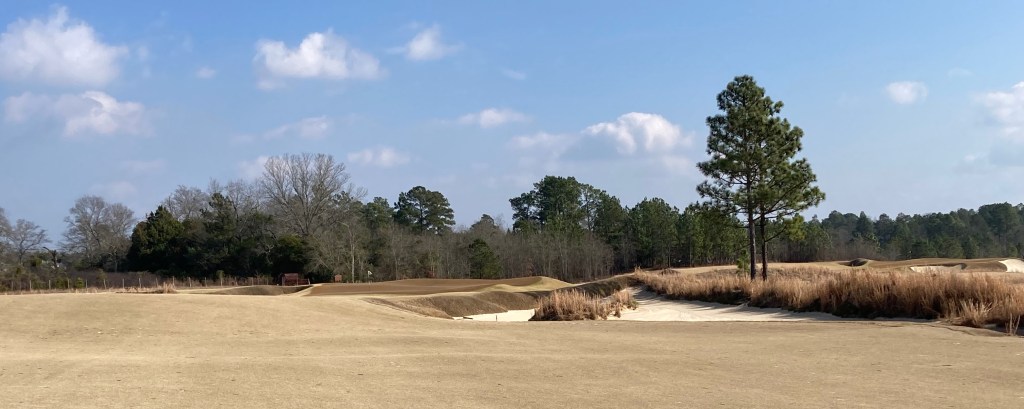
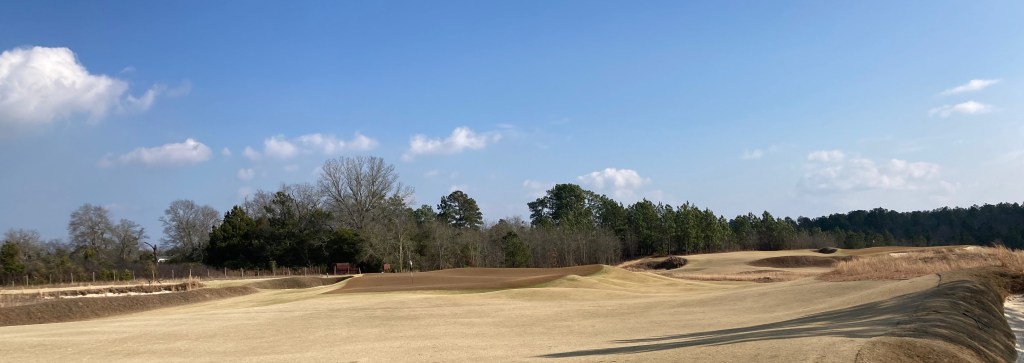
Four: This par three is beautiful. The built up sections in front frame the hole nicely and the bunkering is dastardly. Two big sand faced bunkers on the right and flat bottomed bunkers front left and behind offer good protection for anyone getting greedy. There’s enough room in front of the green to play it safe with a shorter club.
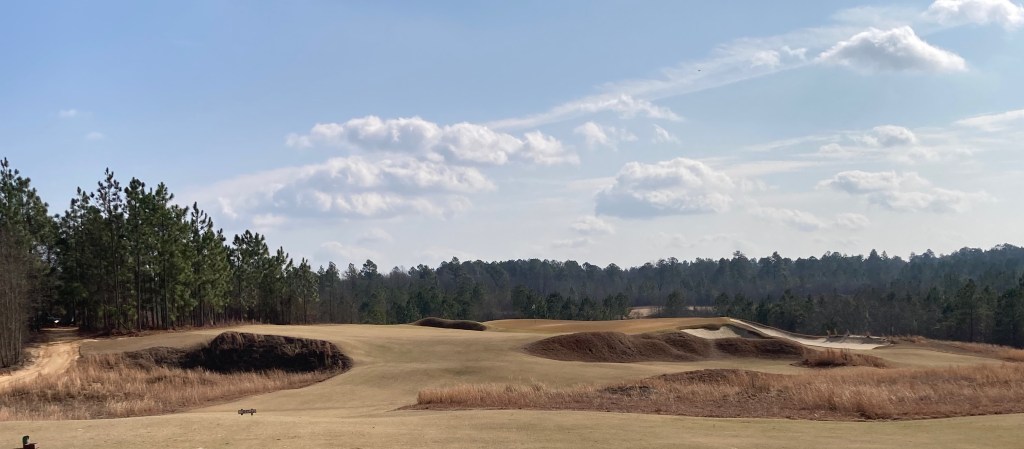
Seven: Deceit and camouflage abound on what, if not for the preceding hole, would be the burliest par four on the course. From the tee it’s obvious that there’s room to miss right and obvious that it might not be the best course of action. The bunker complex left is visually intimidating. Knowing that there’s room behind if it’s carried doesn’t change the subconscious pull of the other side. The green is guarded by a large front bunker and has distinct left and right sections with a ridge that can help running approaches reach the right side.
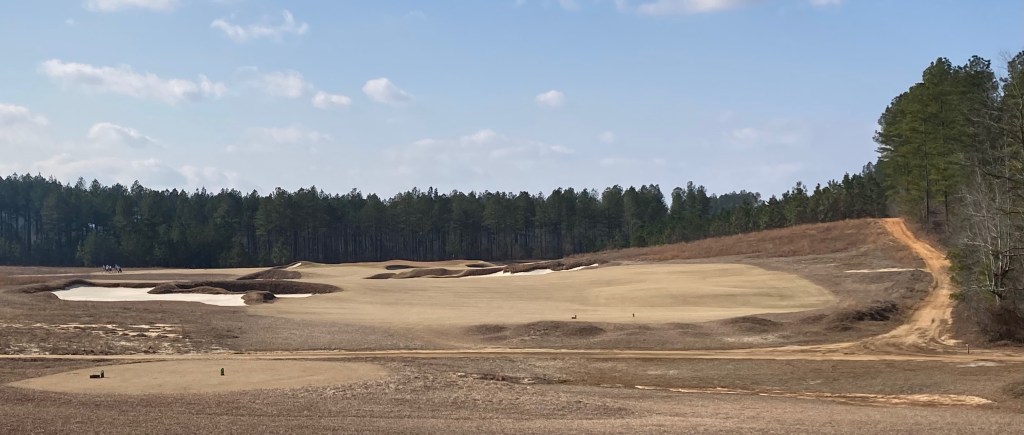
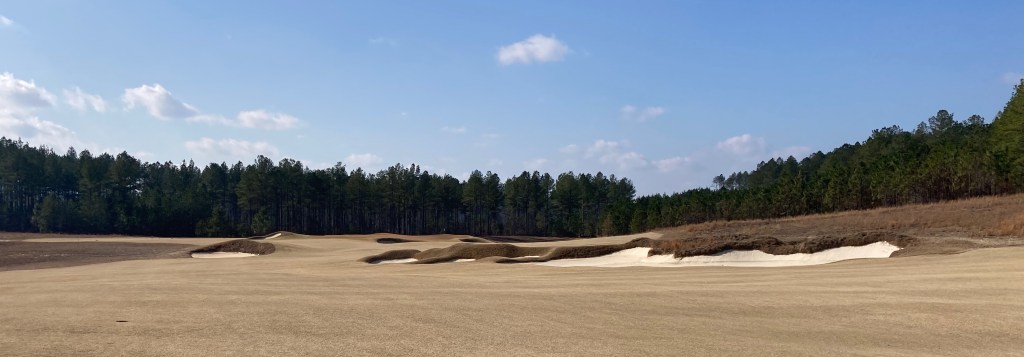
Eight: Done well, boomerang greens can’t help but be fun. Find yourself out of position but use the slopes to hit a big swinging putt towards the hole? Magic. On the eighth, there are mounds surrounding the green that can be used to great effect. Or great peril should one miscalculate and find the front left bunker. It’s a hole with a high side and a low side and knowing where the pin is should help you decide where to play as the mounds create difficult angles among their possibilities. The green a little like the 8th at Augusta or the 16th at the Jockey Club or the 7th at Crystal Downs. Hmm.

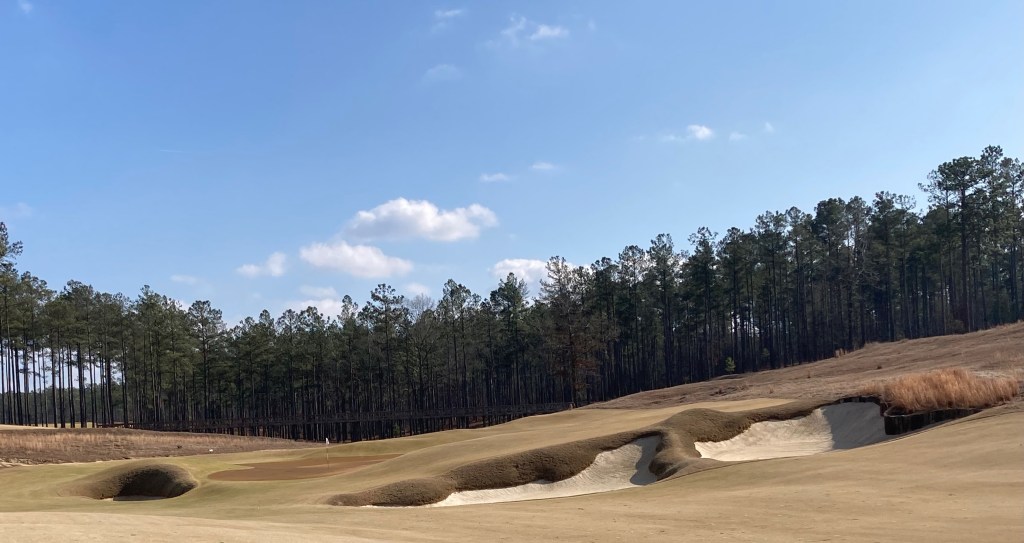
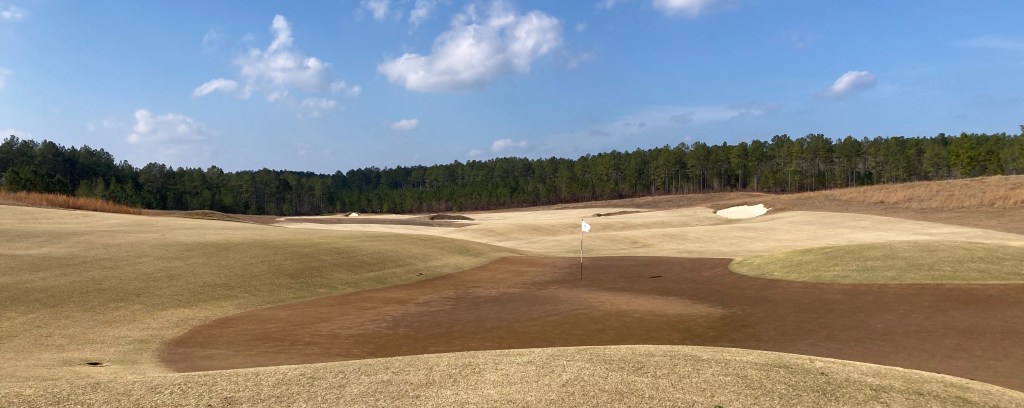
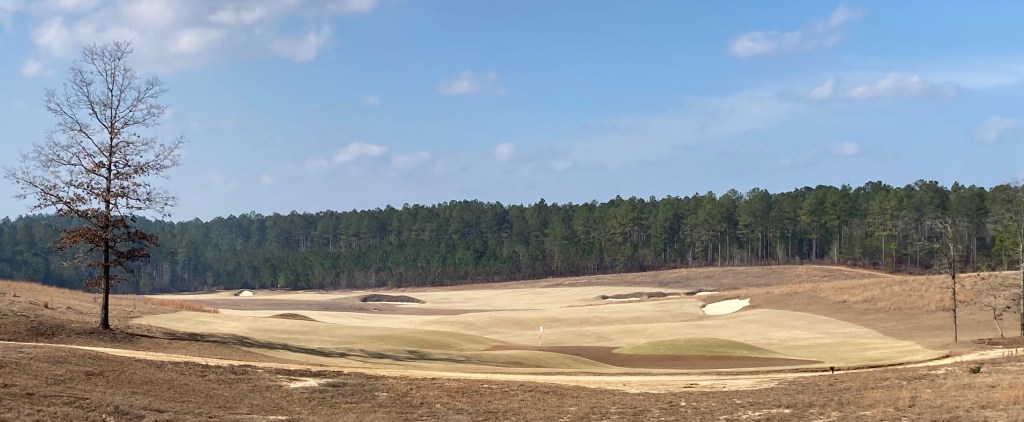
Nine: First off, we love a good bridge here at Layman’s. Second, we love a good short par four. It stands to reason that we love the ninth at Old Barnwell. The fairway sits atop a ridge and the green tilts hard back to front and is well guarded by bunkers left and right. A small centerline bunker warns against imprecise layups.
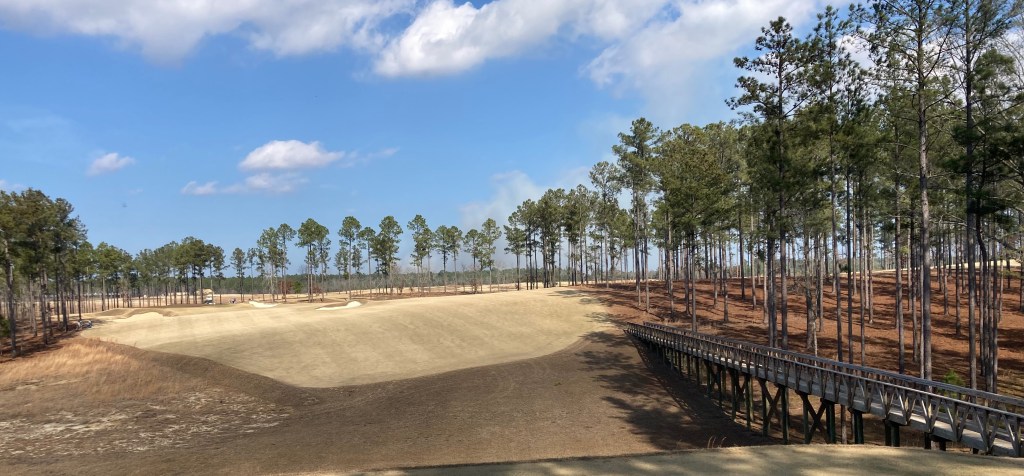
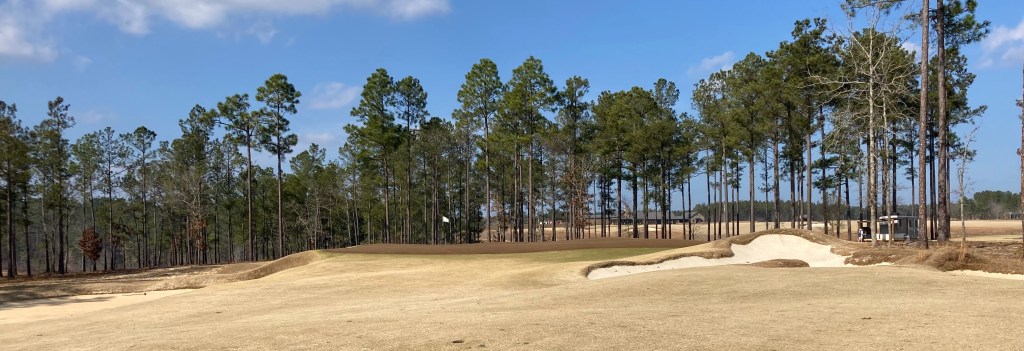
Eleven: A safe shot on the long par three is out to the right away from the bunkers. When the pin is right, this play offers a reasonable chip. However, the two tiered green has a dramatic fall off in the middle and two cloud-like bumps. A pin on the left is going to take some creativity to get to. If you feel confident with a long iron, attacking it is the best play and with a backstop to help keep the ball on the correct side, I’m not convinced that the bunker is such a bad place to miss.
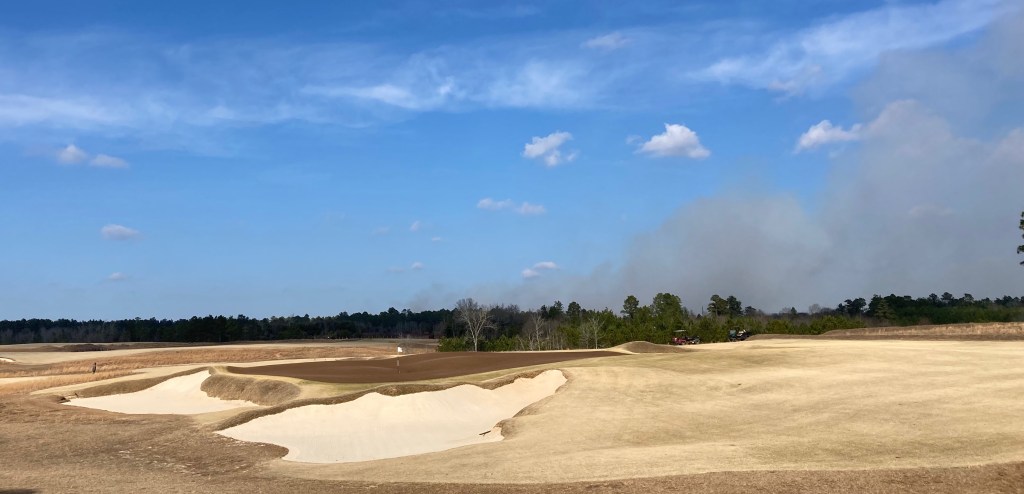
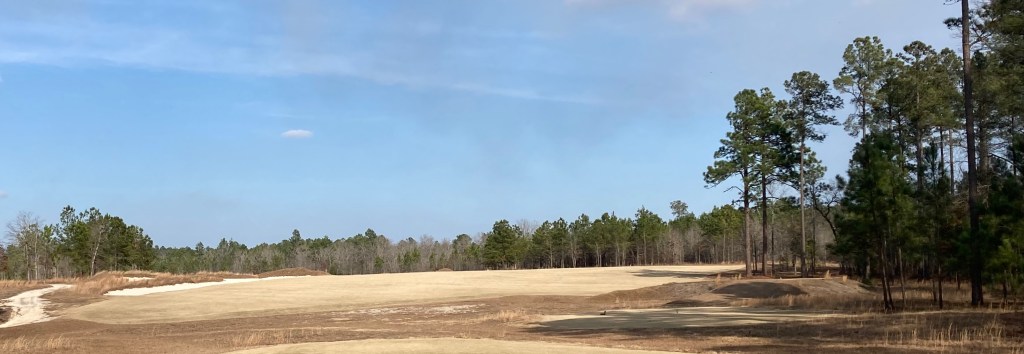
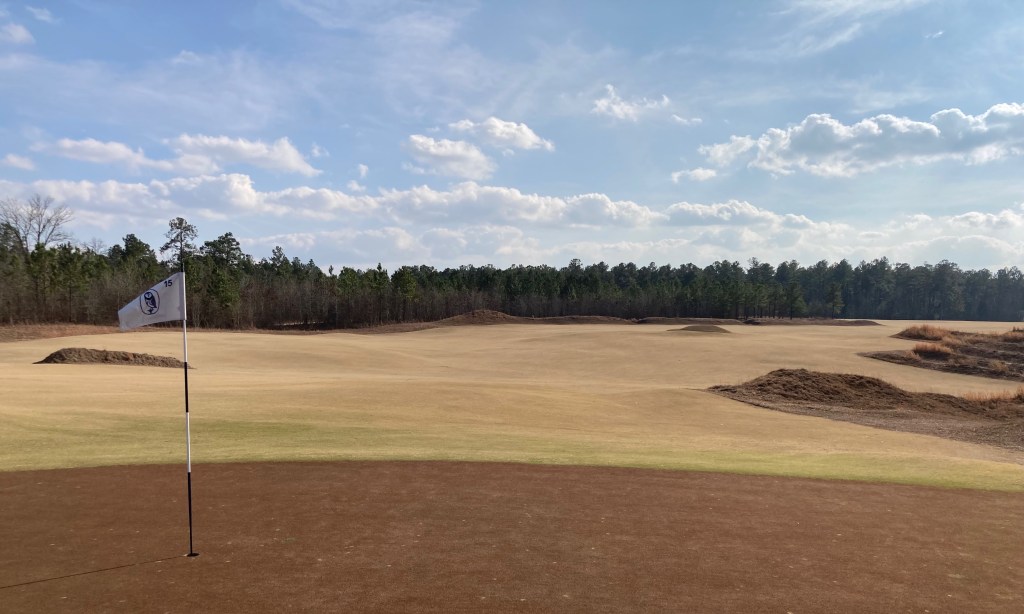
Fifteen: There is a lot happening on the par five fifteenth. It’s hard to gauge the line off the tee as everything – the left bunker, the hill, the diagonal look of the fairway – points you to the right. One member of our foursome was so convinced the hole went right that his ball found an unfortunate spot among the trees. Writing this I’ve realized I can’t do the hole justice, so I’ll leave you with a list of features and some photos. The hole has: two large bunkers that guard the landing area, each with its own berm, a small centerline bunker, stairstep furrows that catch golf balls and water, hummocks, and frilly mounds.
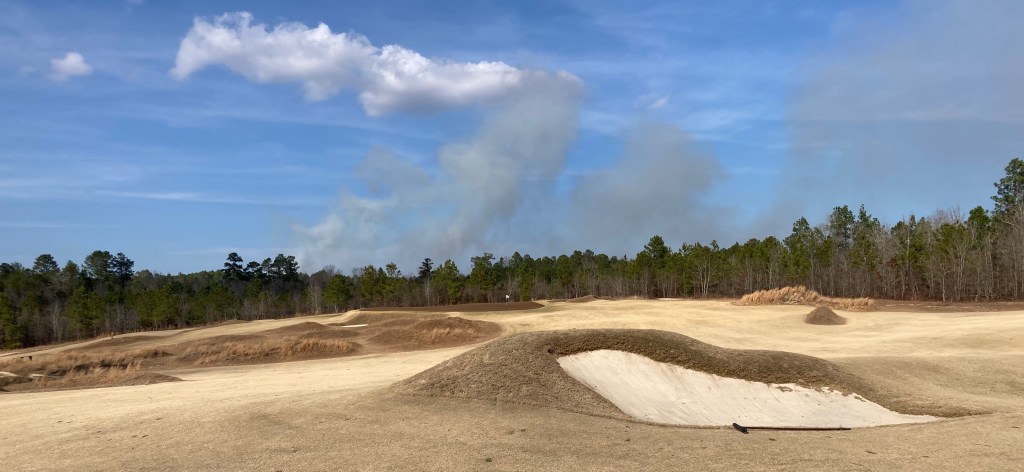
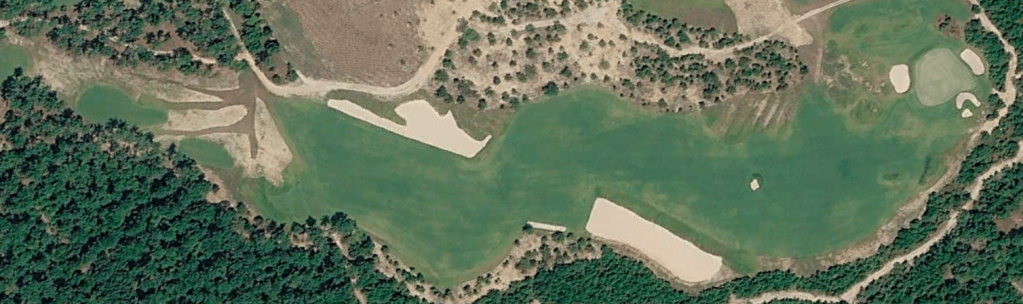
Sixteen: The second par five in succession, the sixteenth plays to the top of a hill before careening down to the right. The fairway is large, spacious, and continuous but the real star is the green complex. The green is perched with a large deep bunker in front. The left side slopes away leaving a difficult chip up and over a hump and strip of rough. The steep hill on the right would be a good place to aim and play the ball off of if not for tiny twin bunkers perched perfectly to give you fits. According to Conant, the green was inspired by the par three sixth at Cape Arundel which is set into a hill with a steep back to front slope. Comparing the two, it’s easy to see the similarity.
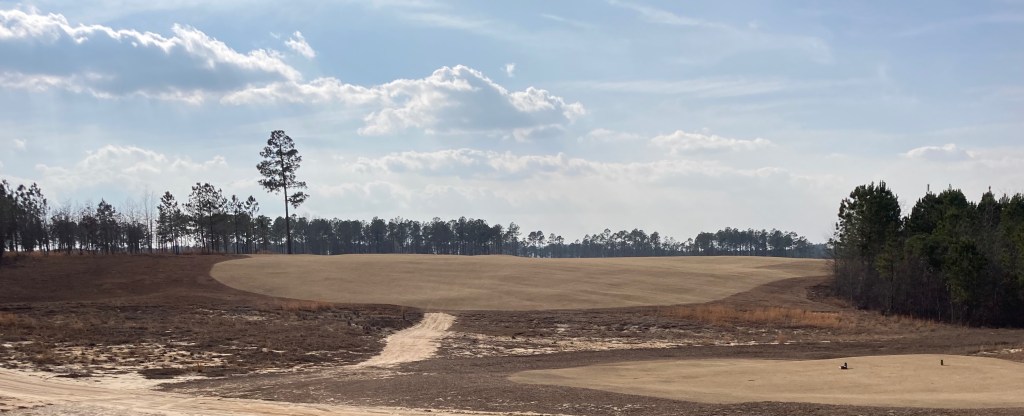


Seventeen: With their front bunker, Schneider and Conant were just showing off. The hole isn’t long but the green is skinny and golfers look almost down the barrel from the tee. The trade off with it’s length is that there aren’t any great places to miss. It’s a little like Troon’s Postage Stamp, perched up with a small deep bunker right, a bunker back left, a sizable piece of earth to the right, and shortgrass that runs a way aways to the left. The strategy here is simple. Hit the green.
Final Thoughts:
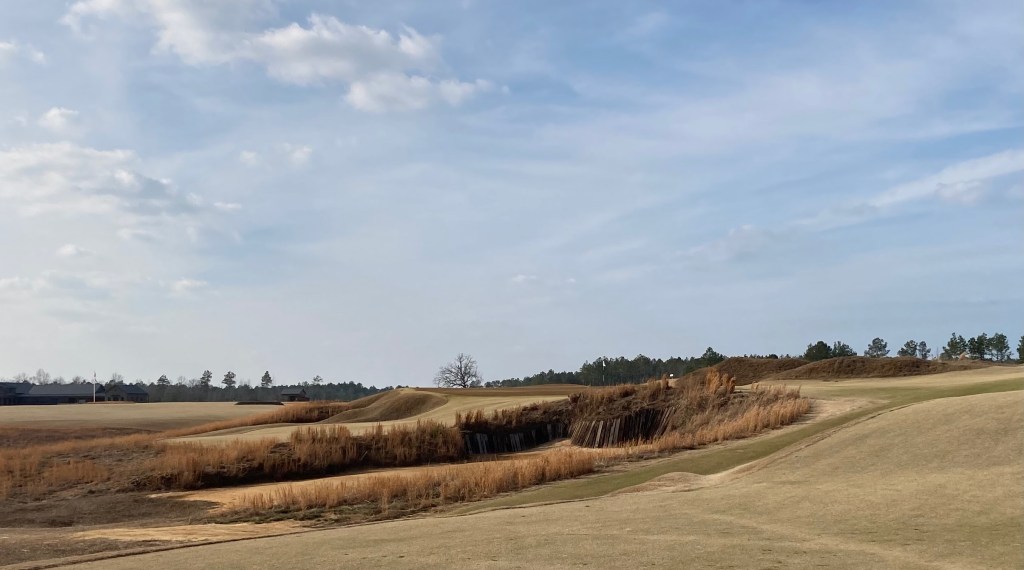
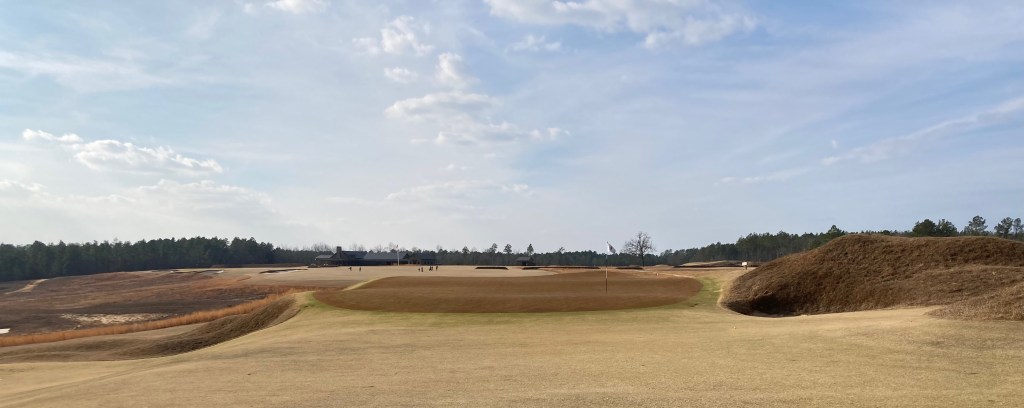
There’s a world in which the boldness of Old Barnwell’s features has a sizable impact on golf architecture. As Sand Hills represented a return to the pre-century naturalism of the original Scottish links, there’s a timeline where Old Barnwell marks a return to the creative intentionality of certain Golden Age architects. Where artistry isn’t necessarily blended into nature. But with the talent, knowledge, and opportunities that so many architects have these days, and their understandable desire to make their own mark, it’s possible we don’t live in that world. It may be too soon to tell. And at the end of the day, it doesn’t really matter. Anyone who plays it will see the passion that everyone involved has. They’ll see the composition, the lines, the options, the movement in every hole. They’ll be encouraged to experiment and learn how much fun it can be to play golf with fresh eyes. They’ll undoubtedly want to tackle the puzzle again.
As their motto says, Old Barnwell is for all who love it.
Mission and Partnerships
At Old Barnwell, Nick Schreiber puts an emphasis on the mission: Bringing People Together Through Golf. For him, this is more than just a motto, it’s an outline of the values that the club lives. They partner with Annika Sorenstam to support recently graduated college women in their pursuit of playing professional golf by providing housing, stipends, connections, and of course, golf. They’ve partnered with Voorhees University, a nearby HBCU, to create connections and opportunities for their students and athletes. Their most visible partnership is with the Evans Scholars Foundation which provides scholarships to caddies and has helped more than ten thousand graduate from college over its 96 year existence. Many of the caddies are local students from middle to graduate school who gain experience and work towards scholarships. Old Barnwell’s mission is partly funded by their public access period around the Master’s in early-April.
Further Reading
Old Barnwell – GolfClubAtlas
Old Barnwell Golf Club Every Hole 4k – Jeff Marsh
 Layman's Hall
Leave a comment