Architects: Mike Koprowski and Kyle Franz
Walkable: Yes, I believe it’s mandatory and the slow rolling terrain poses no issues
Highlighted Holes: 2, 4, 7, 8, 10, 13, 15, 17, 18
The story of Broomsedge is that Mike Koprowski wanted to build a golf course. And then he built a golf course.
I suppose it’s never that simple, is it? A number of golf publications have done good stories on his rise in the golf world and the full story is well worth reading. In summary: a long time golf and architecture nut, Koprowski was living near Pinehurst at the same Kyle Franz was doing restoration work on Southern Pines. After an introductory email, Franz agreed to let Koprowski join the crew while he also worked remotely. A quick learner, he quit his job and began to work in golf design full time, assisting with other Franz projects.
Like many of us, he dreamed of designing and building a course of his own. Unlike many of us, he took a leap of faith to make it happen. With an agriculture loan in hand, Koprowski bought the Broomsedge land near Rembert and got to work. He put together a routing and began shaping the course in hopes of drawing the attention of investors, who could make it possible for him to keep going. The plan worked. The result: 200 acres of golf laid across rolling Carolina earth; full of strategy and questions and most certainly a challenge.
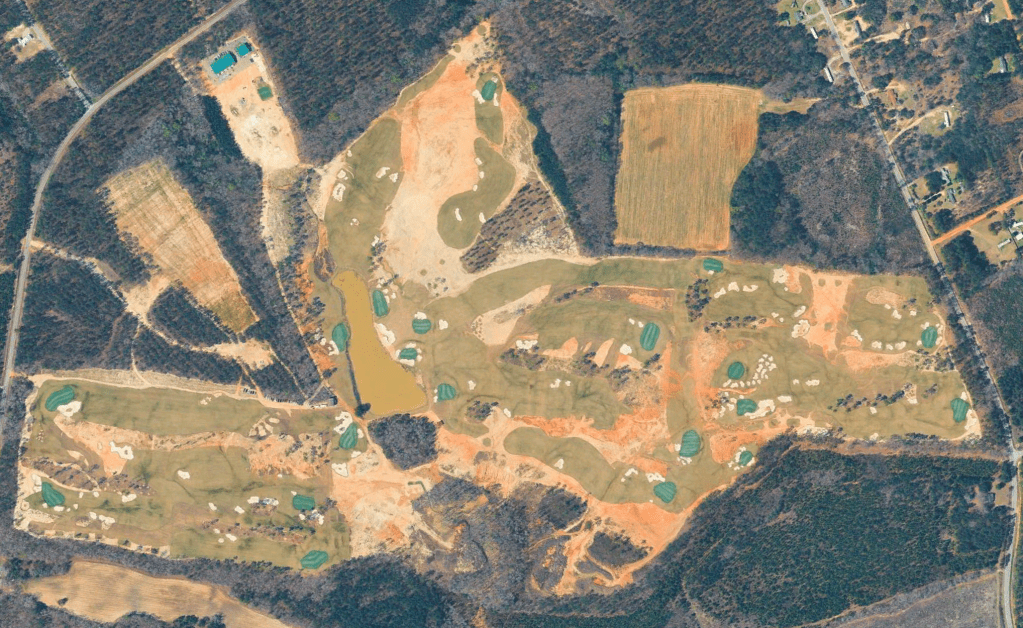
Even though it’s an hour and a half east of Aiken, Broomsedge is talked about in the same breath as Old Barnwell and Tree Farm as the newest courses built in South Carolina’s sandy soil. The routing squeezes into the parcel without ever feeling tight. Twelve holes run parallel to one another in clusters of four allowing you to see where you’ve been and where you’re going, often in the same view. The fairway width is inviting and two extra greens change the routing each day and create good variety for members.
For Koprowski, it was important to keep the club accessible even if it’s primarily for members. Like some of the more exclusive clubs in the UK, Broomsedge allows non-member play on select days to golfers who reach out to the course. He cites Dick Youngscap’s longstanding acceptance of a limited number of outside players to Sand Hills as inspiration.
Two: On the second of the two long par fours that start the round the big decision comes at the start. A centerline bunker splits the fairway into two sections. Take the high side left or the low side right? From the high side you have a clear view of the green. From the low side you may be a bit closer but with bunkers in the way. The green has a channel running perpendicular through it that offers a number of distinct pin positions.
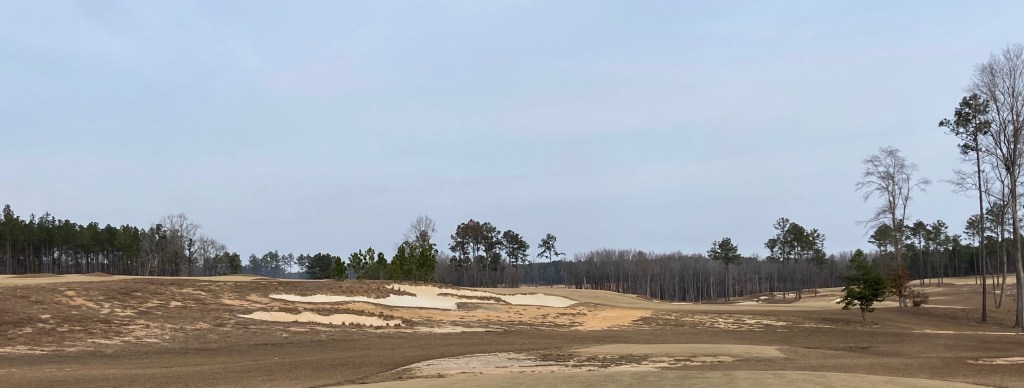
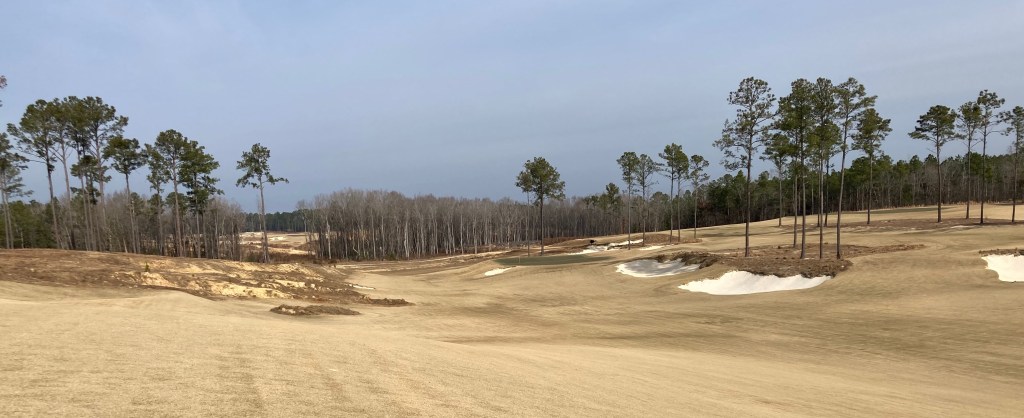
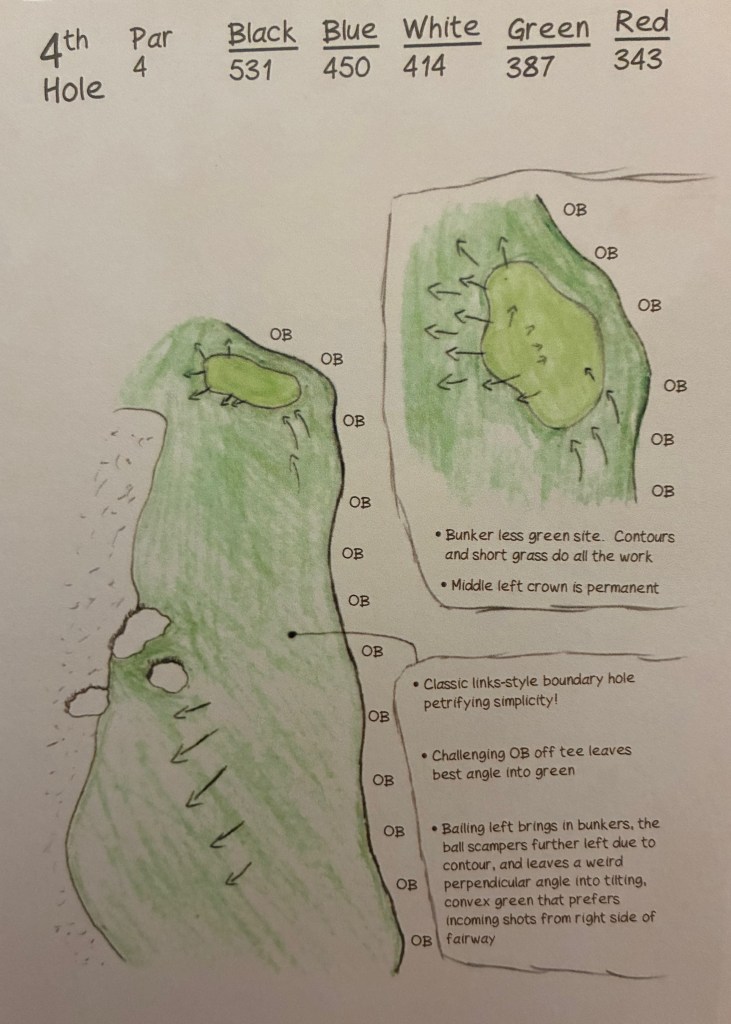
Four: Out of bounds is probably the most hated, least understood hazard. This is partially justified as going back to the tee is a pain for both the golfer and the folks behind, but that’s part of what makes it such a good hazard. In a world where bunkers are often preferable to rough, OB is a true penalty. The hard line of it is a tried and true strategic hazard across golf. Challenge the danger and you’re justly rewarded.
The fairway is flat on the right side of the hole but falls away on the left. Playing cautiously leaves you bunker bound or plain old out of position having to hit back towards the OB behind the right to left sloping green which is more receptive to shots from the right. Tough up and down from out of position.
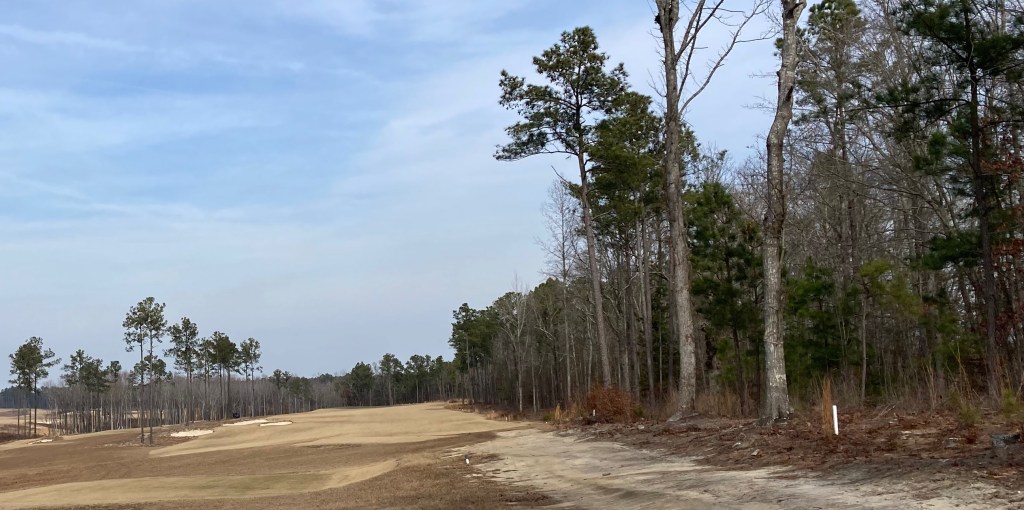
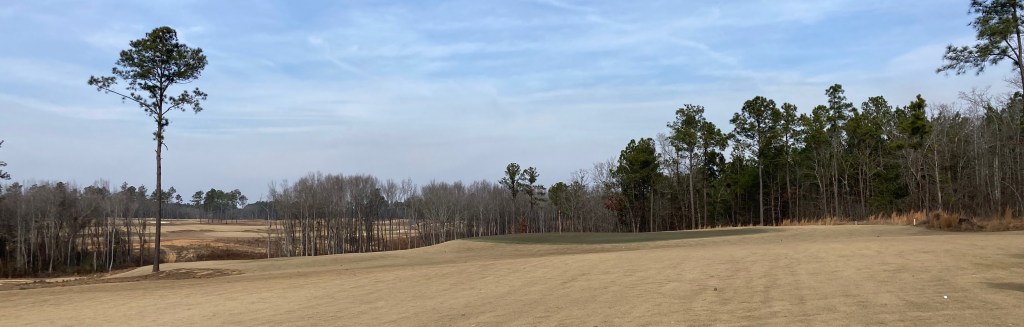
Seven: My favorite shot of the entire trip might have been a little bump and run on the wide open seventh. I found myself out of position: off to the left of two front greenside bunkers. With the pin on the left, there was a little slope in the ground that angled toward the pin. It was a small feature, completely unnoticeable to anyone who wasn’t where I was with the pin I had. It makes me wonder: how many spots like that are there to discover? Details like that make courses like Broomsedge the perfect place to play again and again.
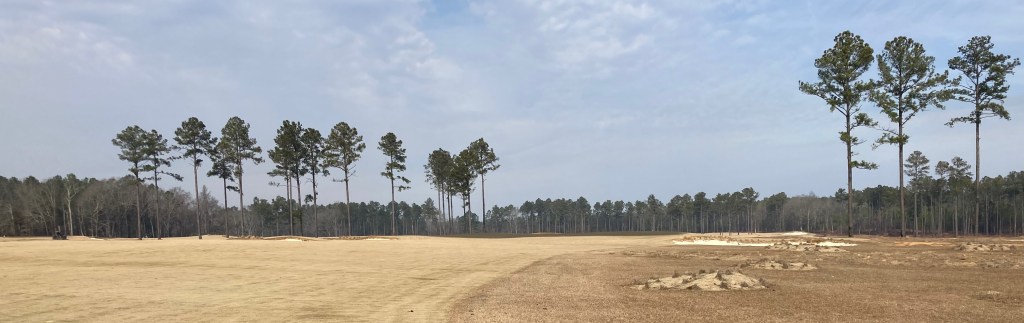
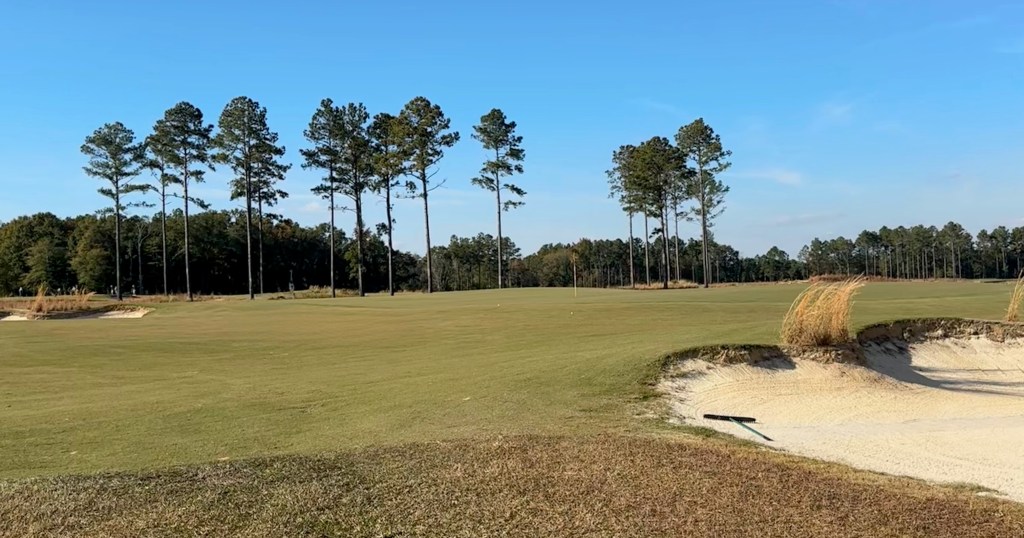
Eight: You’d be excused for doing a double take looking at the card. A par three? Three hundred eleven yards from the back? Two hundred forty three yards from the white? And then you see it and it starts to make some sense. The hole trundles down the hill through a valley to a green with more shelves than Rembert’s library. Wail away and enjoy the ride.
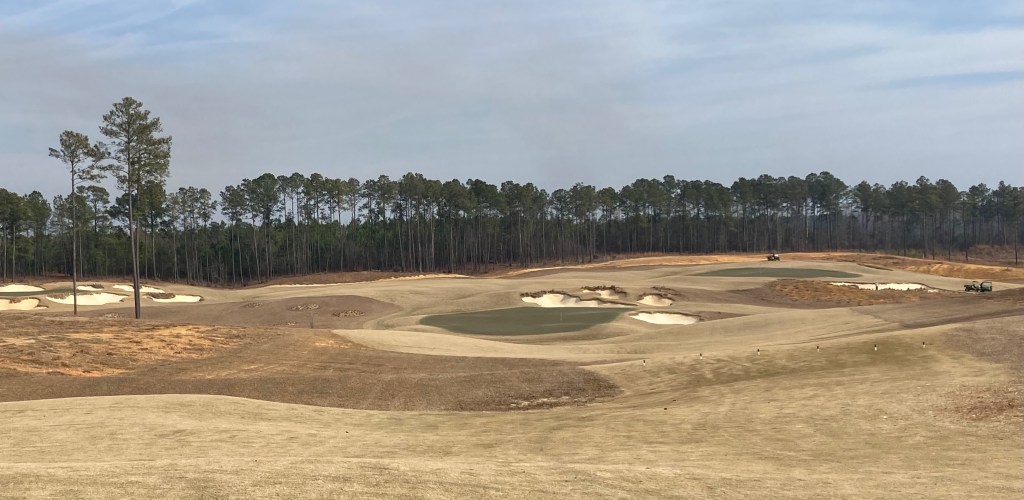
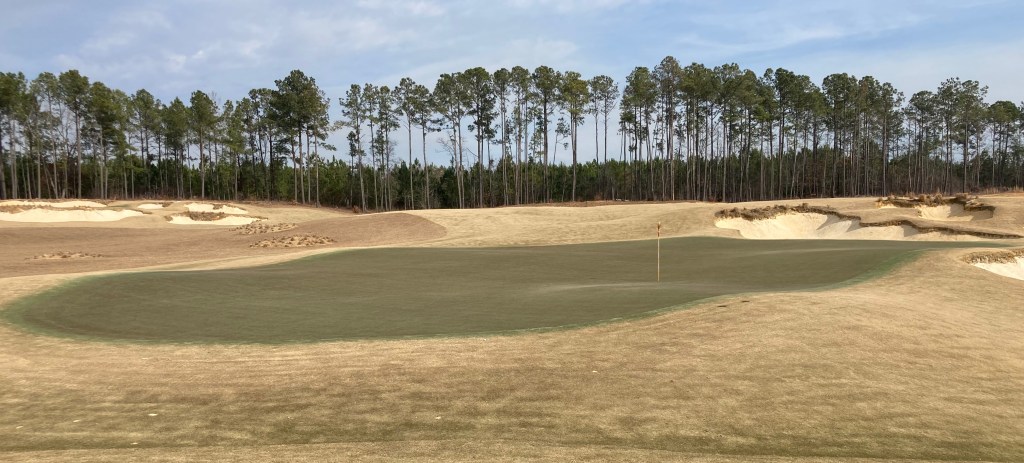
Ten: How do you feel about blind approach shots? With a wedge in hand? How do you feel about an all carry mid-iron approach? With everything in view? These are the questions ten asks. The fairway plummets where most people’s drives will end up, assuming they’re playing the correct tee. It’s here we’re forced to face our aforementioned conundrum. Maybe the bunker left of the green that collects shots short and left is scary enough to justify the shorter approach. It’s a hole with no easy answers and rewards trying different tactics each time out.
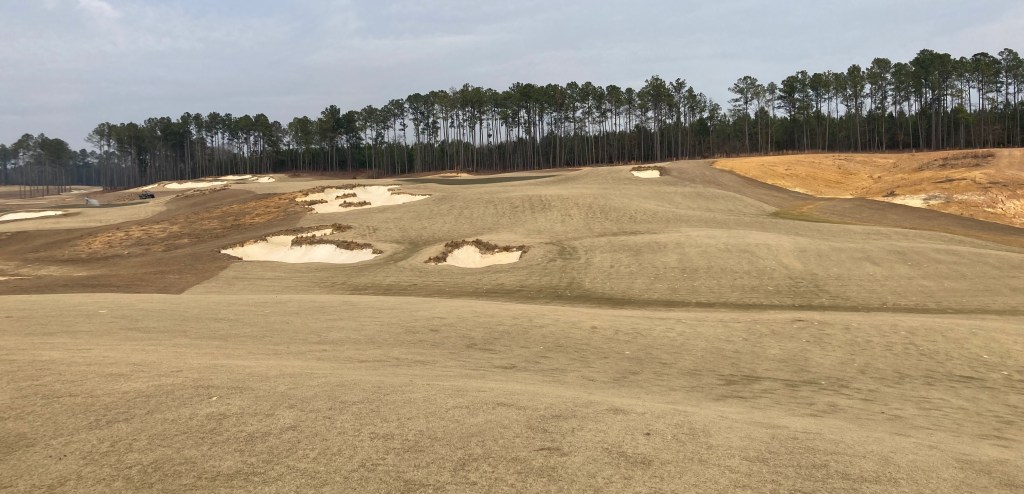
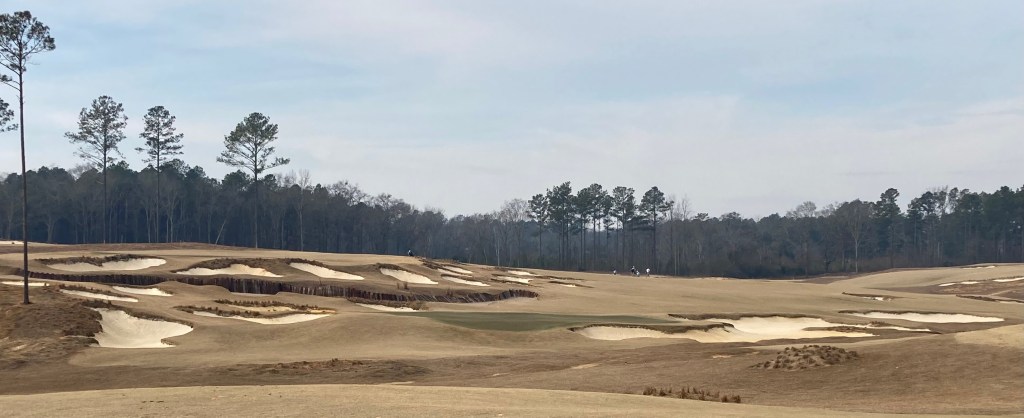
Thirteen: If you’d seen a photo of Broomsedge before reading this, there’s a good chance it was of this hole. The left green for the par three eleventh also serves as an alternate green on the low side of thirteen. To this one, two centerline bunkers need to be tangled with. Shots out to the right of them can follow the land down towards the green and open up access to a left pin. Drives to the low side shorten the hole and make a right pin accessible.
The Pine Valley inspired layered bunkering in the hillside ahead of the top right green is intimidating even though there’s ample room behind it. The green is flattish with, as Koprowski puts it, “one annoying pimple that creates intrigue.” In all, it’s a good demonstration of the flexibility of alternate routings that make use of existing greens. While it’s not as bold as the Loop or Silvies Ranch, it should make developers think about how they can add variety to the site day-to-day.
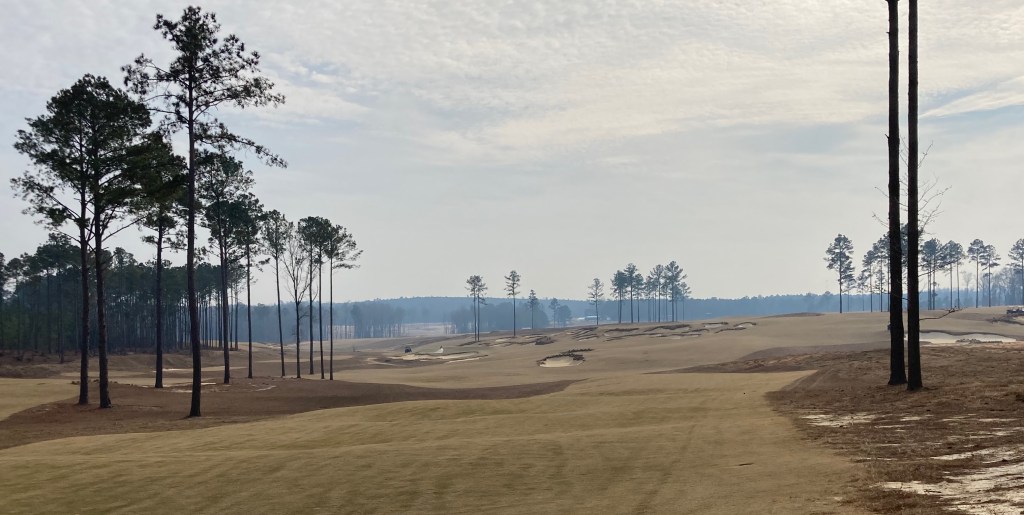
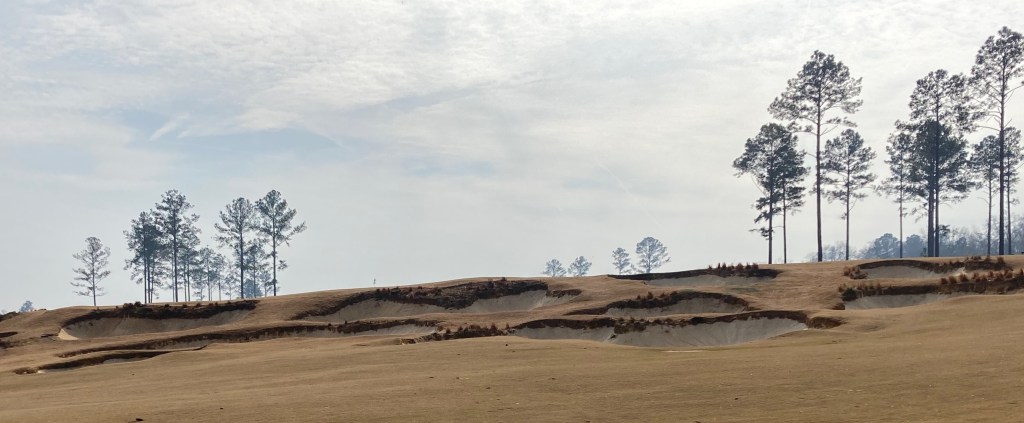
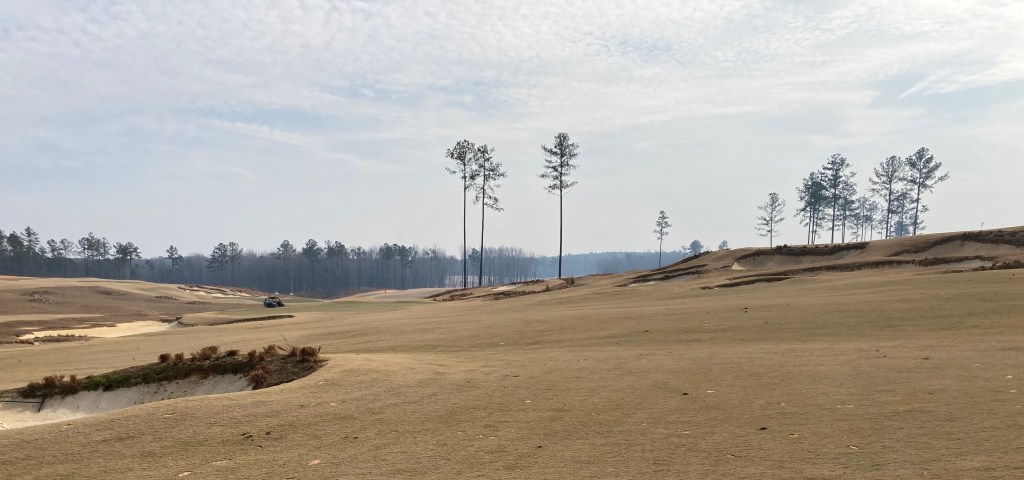
Fifteen: As with four, challenging the out of bounds right sets up the best angle. Here, there’s a longer carry over a bunker to get to safety which makes the shot that much more daunting. The wider left side looks much more inviting but playing out wide creates a new set of challenges. The angle in is now suboptimal with a bunker guarding the line to the skinny green. A high shot needs to stop past the bunker, but anything that’s misjudged and hit too far will be OB as the green pushes right up against it. Maybe just take the OB on to start.
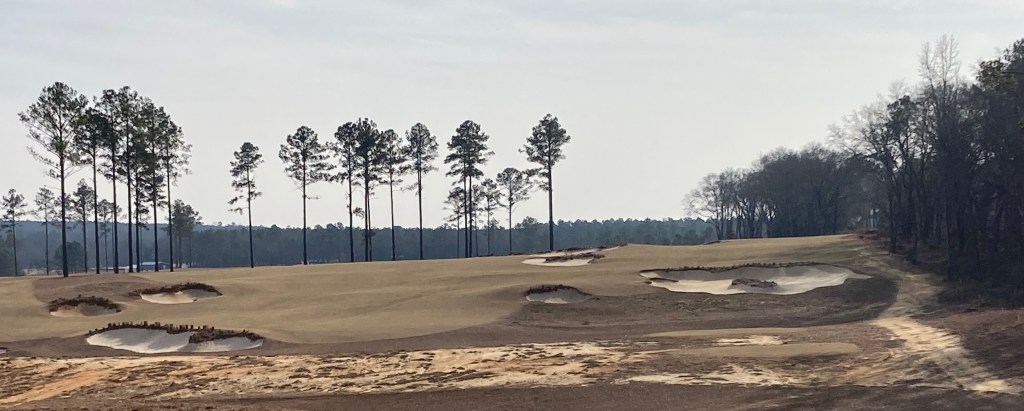
Seventeen: The par four seventeenth might be my favorite hole on the course. First, it’s flat. It’s a hole that could be built anywhere and doesn’t need any special piece of land. Second, it’s wide with rounder fairway bunkers positioned on the inside of the corner of the dogleg left and wide ones in the fatter front part. There’s room but these work together to trick the eye. The green is guarded by bunkers front left, front right, and directly off the back. Most of the front and middle sections of the green are flat with a slight back to front slope but the back pin position is perched on a shelf, the surrounds of which fall off on all sides. We were lucky enough to have this devious position and I got to witness an all-world shot from one of our playing partners. If you look closely, you can see where his second ended up.
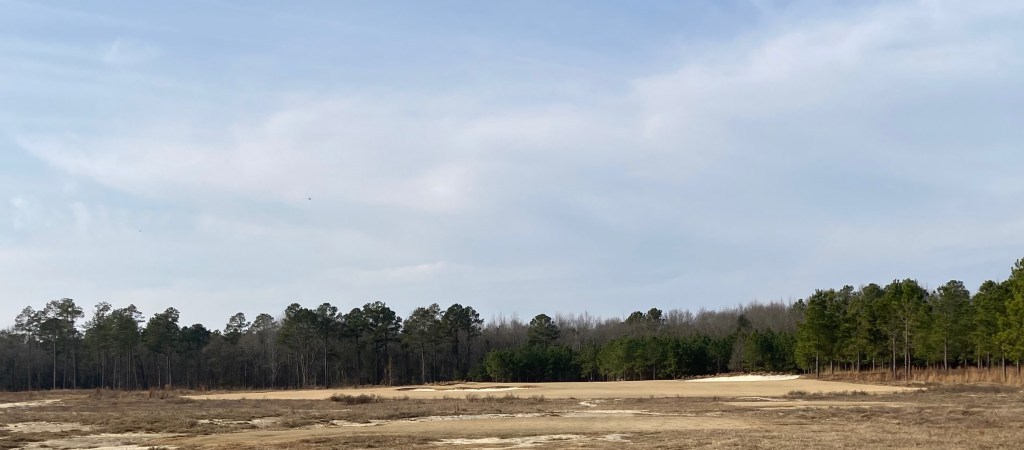
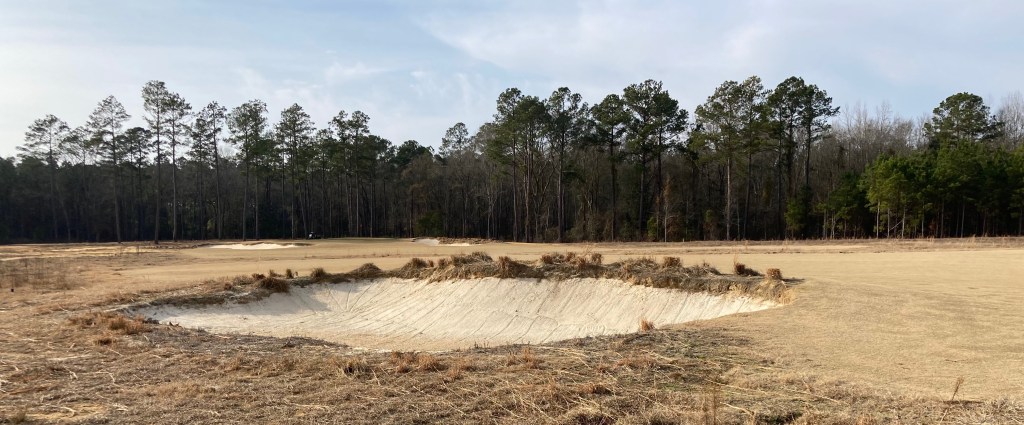
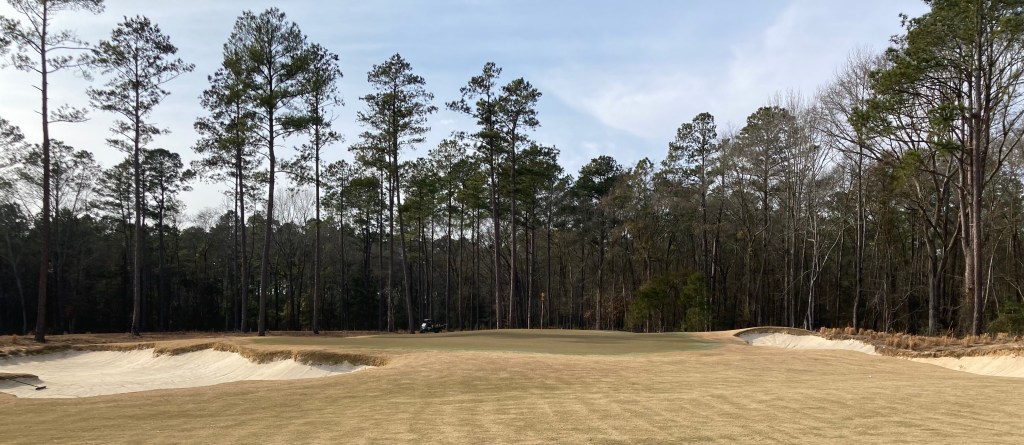
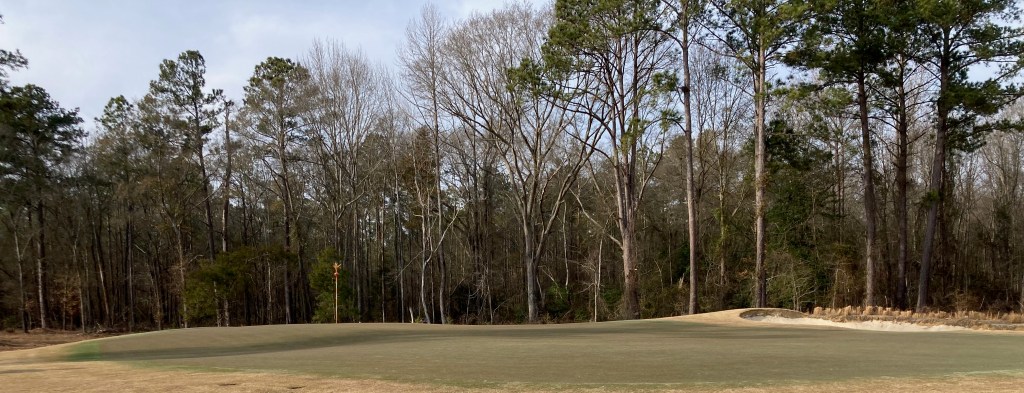
Eighteen: A stunner of a finishing hole. There was a discussion on GolfClubAtlas not too long ago about the quality eighteenth holes. On one hand, they’re the cherry on top of the course; the final chance to show off. On the other, they’re more or less required to get back to the clubhouse (in most cases) and thus are somewhat limited in how creative they can be. The limitations can be an opportunity or the course could shout for seventeen holes and mumble for one. At Broomsedge, however, the eighteenth is spectacular.
It’s a par five and due to the first couple of raised fairway bunkers, it’s a little tough to tell what’s coming. The aggressive line goes directly over them. A straight shot will find a flatter spot between another set of fairway bunkers and an open look at the green, albeit all carry over water. Playing out to the right all but ensures that a layup is the next play. The fairway runs into a boggy marsh on the right and a lake on the left which protects the green for the rest of the hole. Across the hazard the land kicks right to left which can be used as a way to sneak onto the green. It’s a marvelous finisher.
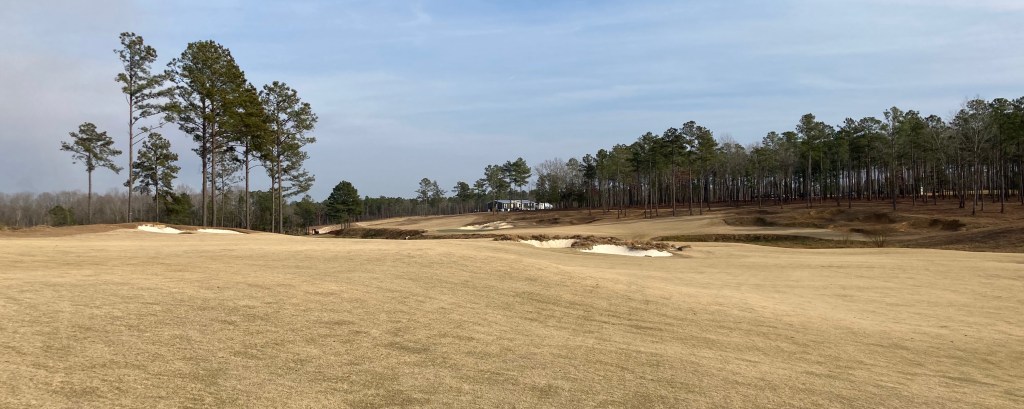
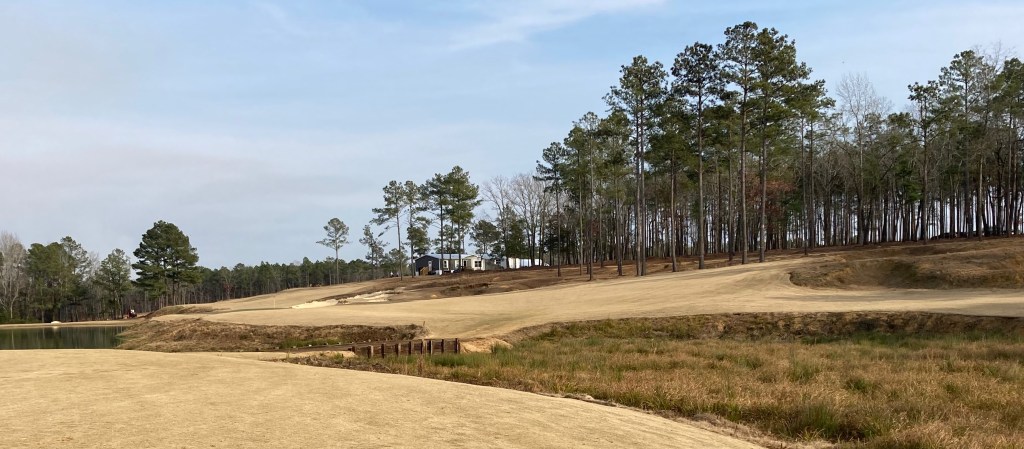
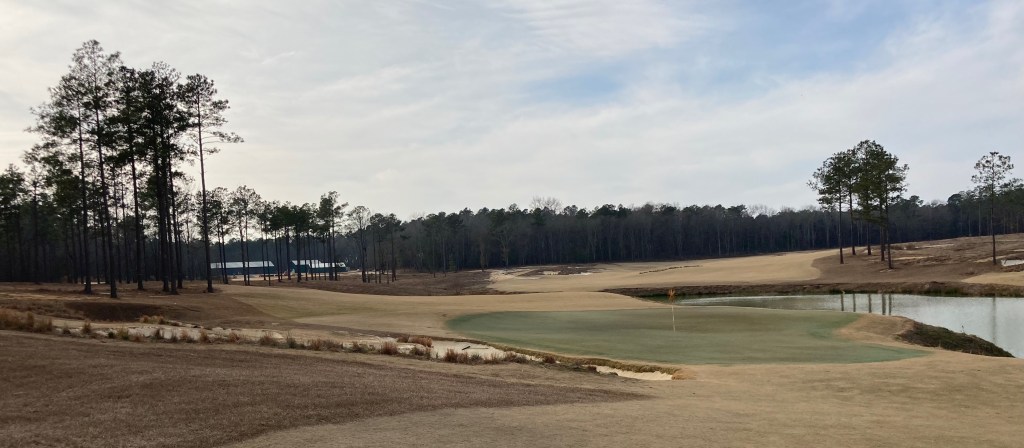
Final Thoughts:
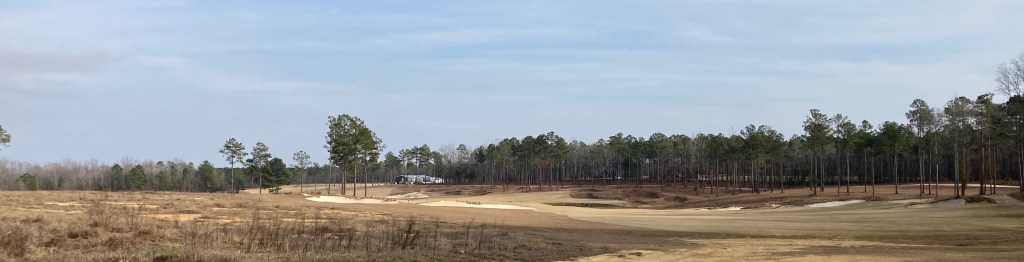
Broomsedge is a testament to what can be done with some land, a backhoe, and an active imagination. The generous fairways make position essential across the golf course. Koprowski and Franz make the pin position essential knowledge in how the golfer aligns their strategy. Across the course, there are positions that are simply inaccessible to approaches from the wrong side. This consideration adds complexity and rewards thoughtfulness throughout. The strategy isn’t always as simple as, “playing closer to the hazard opens up the better angle.” It’s makes it that much more fun, especially for a course with a somewhat limited budget. There may a few too many bunkers, but its lay of the landness and the subtleties throughout make it a wonderful place.
I’m a sucker for a good yardage book with intricate hand drawn renderings of the holes and Broomsedge delivers. Koprowski’s colored pencil sketches are a delight and his notes detail the strategy of each hole. I’ve seen criticism that they leave too little to be discovered, which I suppose is fair, but it’s refreshing to see an architect’s thoughts so well articulated. I’m including an example of the fourth, but to see the rest you’ll need to make the trek yourself.
 Layman's Hall
Leave a comment