Architects: Perry Maxwell and J. Press Maxwell
Walkable: Yes
Highlighted holes*: 1, 2, 3, 5, 6, 8, 9, 11, 12, 14, 17
*There’s not a bad hole on the course – each one is great in its own way
I’ve read that great sites produce great golf courses and it is hard to imagine a greater site than the 480 rolling, sandy acres northeast of Hutchinson, Kansas.
The drive to Prairie Dunes is inconspicuous. Nothing in the fields and flatness implies anything other than more fields and more flatness. It’s only when you get to the intersection of Inverness and East 30th that you spy the great landforms that serve as the course’s foundation. Known as a low-key welcoming club, there’s no gate or guardhouse at the entrance. Any anxiety I had about playing one of the greatest golf courses in the world was eased when I saw a guy teeing off without neither a tucked-in shirt nor a care in the world. My kinda place.
Prairie Dunes’ original nine-holes was built in 1937 by Alister Mackenzie associate Perry Maxwell. Similar to Nebraska’s Sand Hills, Maxwell stated that the holes were there and it was a matter of finding the best combination. The nine holes were complemented nearly twenty years later by his son, Press Maxwell. Press studied under the work of his father and seamlessly integrated nine more holes into the course creating a new front and back nine.
Again, as this is Layman’s Hall, without our excellent host pointing out the holes done by Perry and the holes done by Press, I would have been hard pressed to tell you which was which. Despite the success, Press was never able to match the work he did in Hutchinson. As I go through the highlighted holes, I’ll make no distinction between architects. They blend together perfectly.
The course isn’t long, and doesn’t need to be. The wind and greens and gunch (tall native grasses lining the holes) are enough to defend the course, but really, as there’s less emphasis on length, the Maxwells were able to create shorter, fun, reachable holes (3, 6, 7, 12, 14, 17, 18) complemented by longer more difficult ones that require serious effort (5, 8, 9, 11, 16).
How many courses have four par threes the caliber of Prairie Dunes? The one shotters demand real strategic thinking and are excellently framed by sand or trees. That each one plays uphill is irrelevant. They facilitate elegant transitions and move you back up onto higher ground atop the dunes. The second is the first transition uphill and the fifteenth brings you back from the low spots upwards in another indication of the routing prowess of the Maxwells.
One (Carey Lane): Incredibly, the first hole could be the “signature hole” on many other courses. The smooth dogleg left rewards a smart play to the right as a dune on the left leaves a shorter but totally blind shot to a complex green. You also get an immediate introduction to Perry’s famous rolls. There are four quadrants on the green and the breaks seem to go every which way.
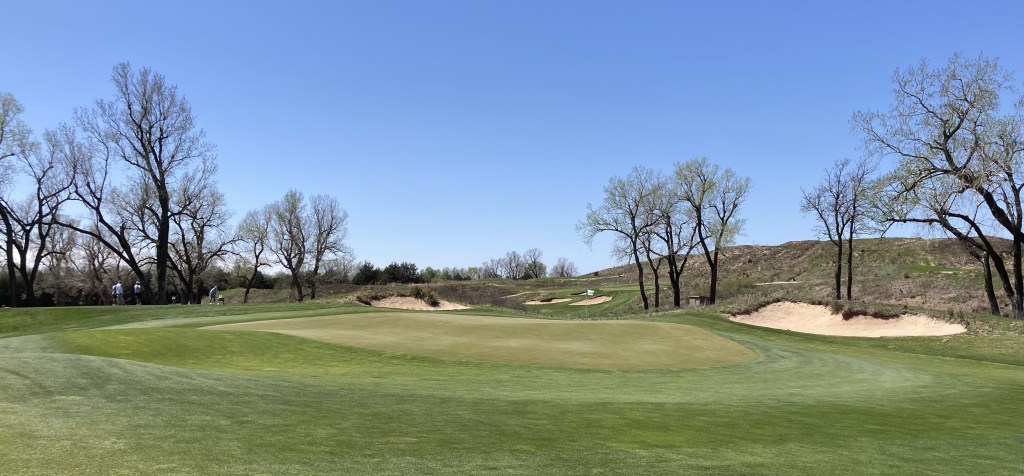
Two (Willow): My favorite hole on the course: the par three second. It plays slightly uphill, carved out of the side of the dune with three bunkers front left, one to the side, and another off the back. The green isn’t deep and slopes to the front left. To my eye, this is one of the most beautiful par threes I’ve ever seen. That it only takes a mid or short iron to play inspires you to take a shot despite the obvious risks. The front bunkers are deep and it feels like any shots out of the back bunker will give you the opportunity to see how deep the front bunkers are. It’s a perfect hole.
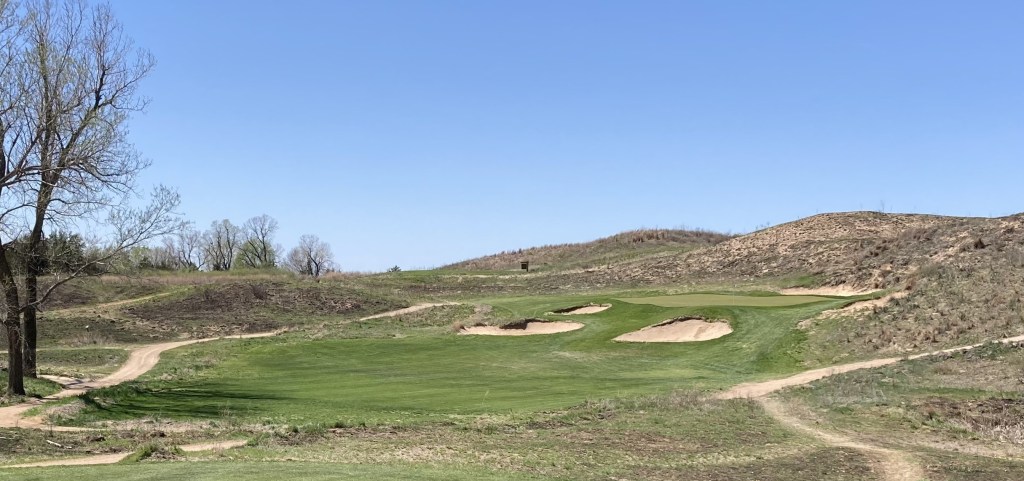
Three (Wild Plum): Thanks to the tip from our host, I laid back on the short par four. The wind was behind us and we were playing the course from the original tees (around 6200 yards). Obviously, the inclination is to go for it, but the issue with that is that anything that doesn’t stay on the putting surface presents a tricky up and down. On top of that, the dunes on the left obscure the left side of the hole. The best play is a long iron or wood into the fairway and then a wedge into the proper quadrant.
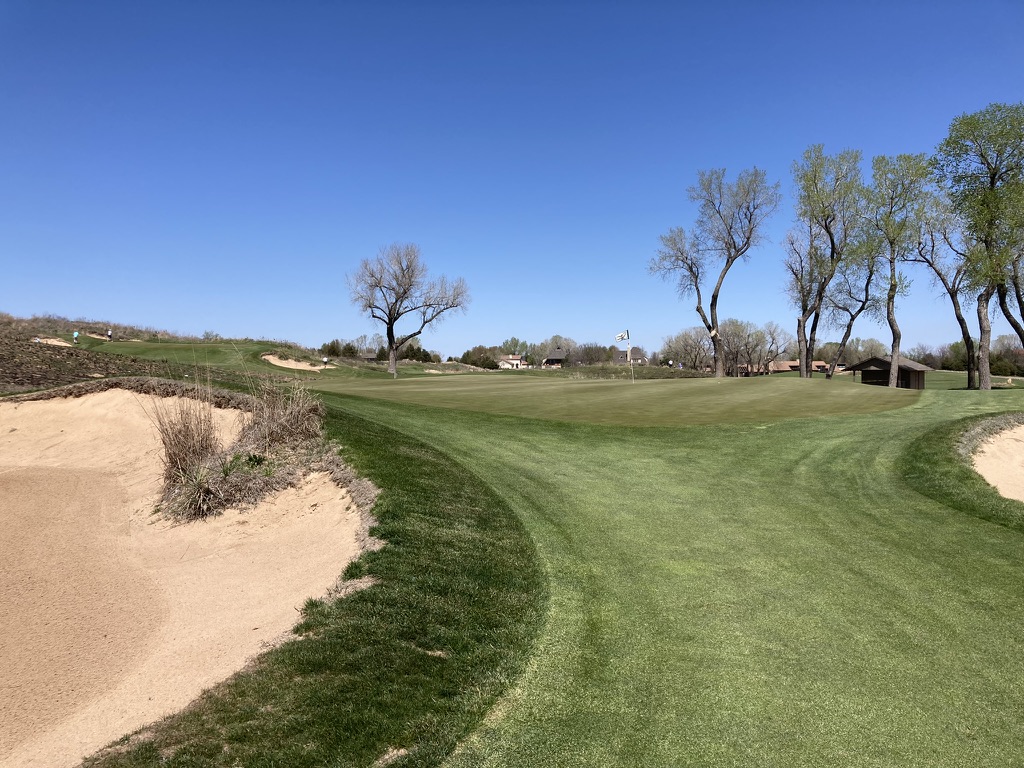
Five (Quail Ridge): The par four fifth has dunes left, out of bounds right, and a well guarded green that’s longer than it is wide. This is a hole that feels big. There is a premium on hitting a good drive as anything longer than a mid iron would need to be run up in the narrow alley between the front bunkers.
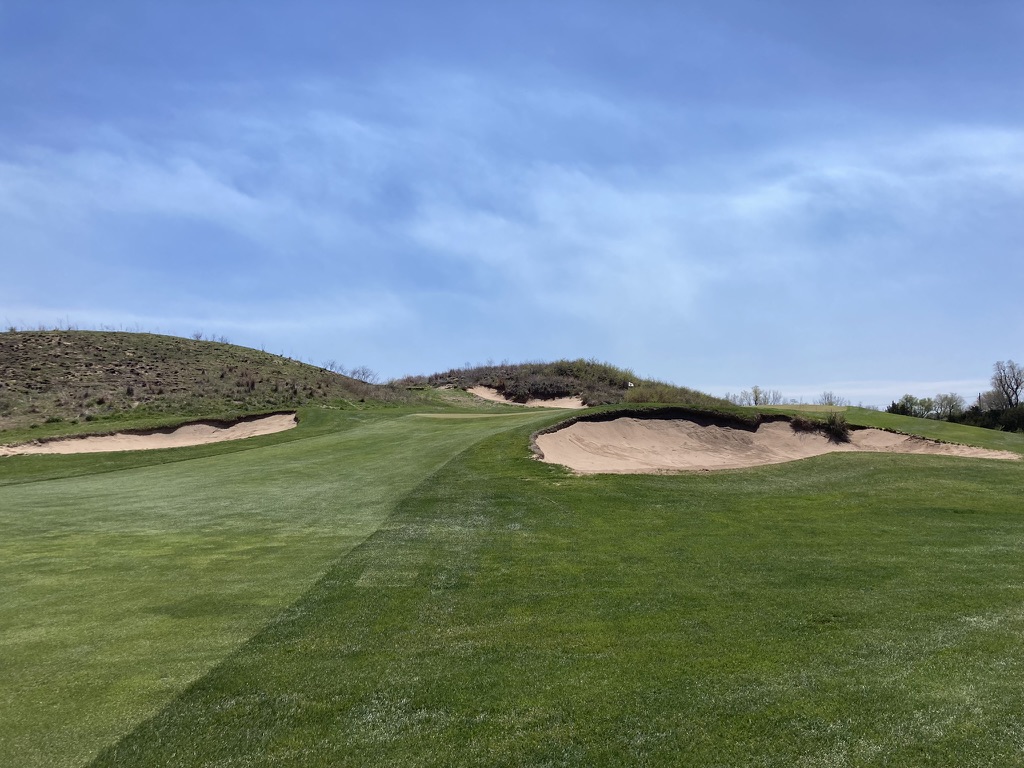
Six (Cedar): Dave Axland, one of the two architects of Wild Horse, is also the consulting architect here at Prairie Dunes which makes me wonder if he took inspiration from the sixth when building WH’s 15th. Like 15, the sixth is a short dogleg, meandering along the ground with a few bunkers that shouldn’t be in play. Unlike 15, the slight hills in the fairway and devious green and serve as excellent protection against overconfident shots. Both holes are all-world in my book.
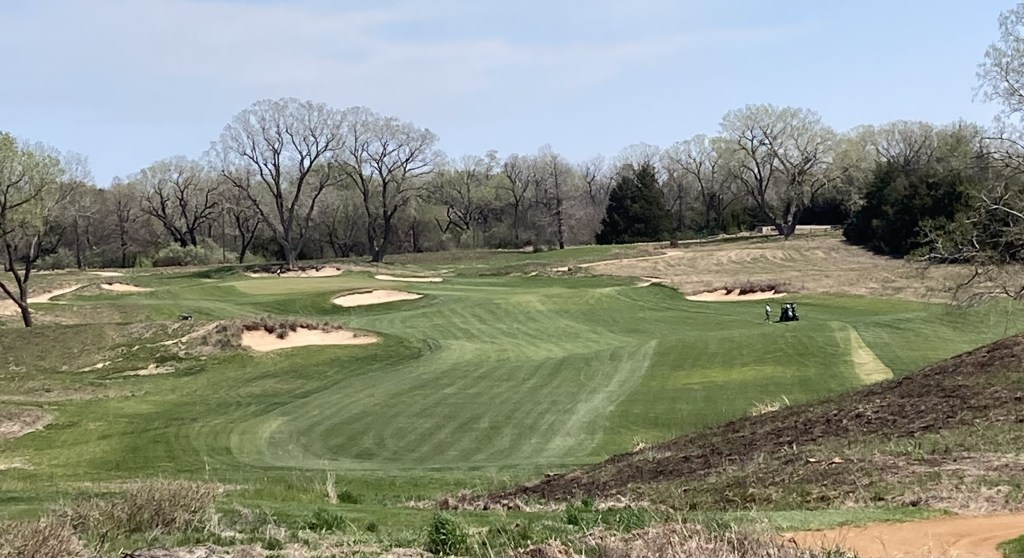
Eight (Dunes): As is often cited, the eighth was chosen by Dan Jenkins as the best eighth hole in the country. From the tee you can see an island of green off in the distance with trouble all the way. Looking back at the fairway doesn’t make the hole seem any more playable as the swells of the ground get progressively bigger. Mal Elliot’s Perry Maxwell’s Prairie Dunes calls the fairway undulations, “a terrain that rolls like a tempest-tossed sea.” If you manage to keep it in the short grass, the next shot is a long one to the uphill green with four bunkers in front eagerly awaiting a push. Depending on where you are when you make it to the green, there are breaks in all four cardinal directions – a misread away from having to approach it again.
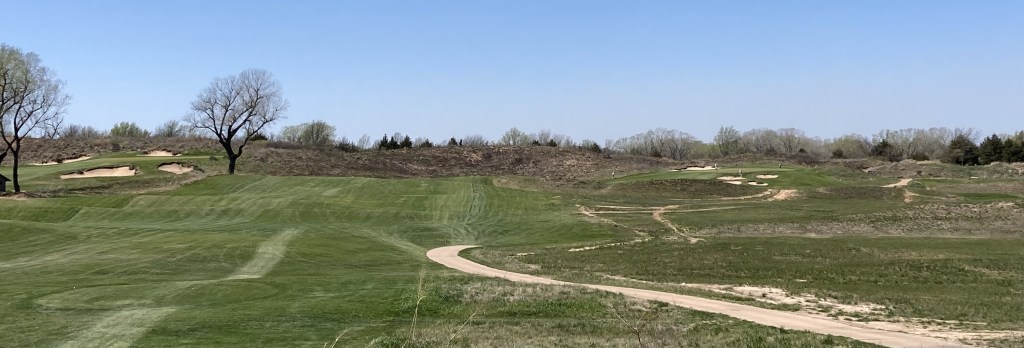
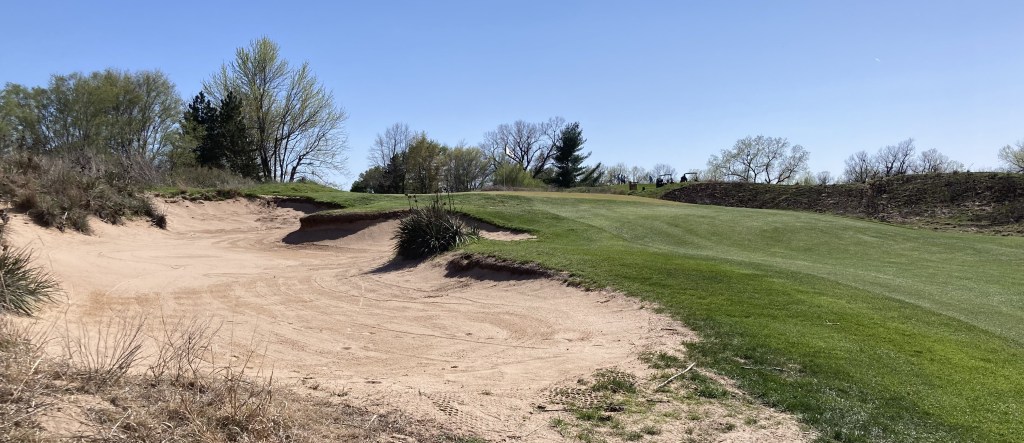
Nine (Meadowlark): Should you find it, the ninth fairway is rumpled. If you miss, don’t feel too bad: Jack Nicklaus took an 8 on it in his exhibition match with Arnold Palmer (the scorecard of which sits in the club’s trophy case). Here, as at different points throughout the round, when the wind whips the grass along the bunkers and you find yourself looking up at the green, you are excused for expecting the land behind to open up onto shimmering surf.
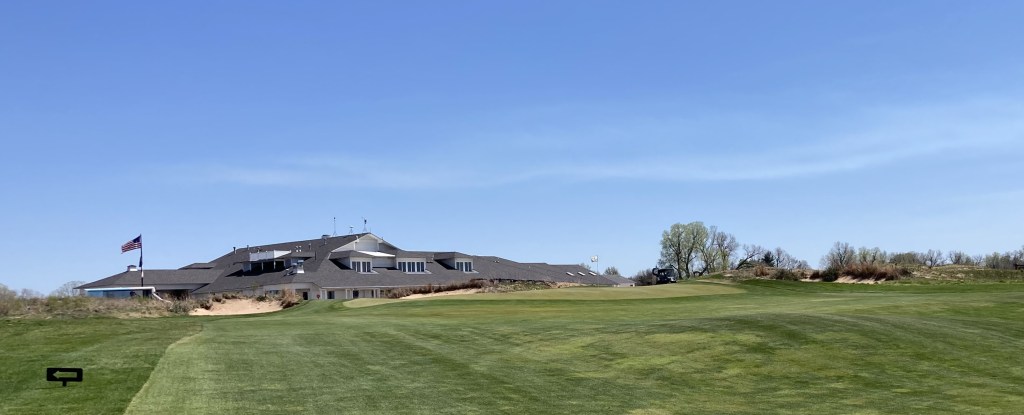
Eleven (Honey Locust): This is the first of two big, brawny dogleg left par fours on the course. Despite the wide fairway, the hard turn at the fairway bunker makes it feel easy to hit a drive that runs through the fairway at the corner. Press’ mound at the front of the green is worth mentioning as it deflects anything you try to roll up onto the green. It’s a hole worth taking your time on and one you shouldn’t be afraid to take a layup.
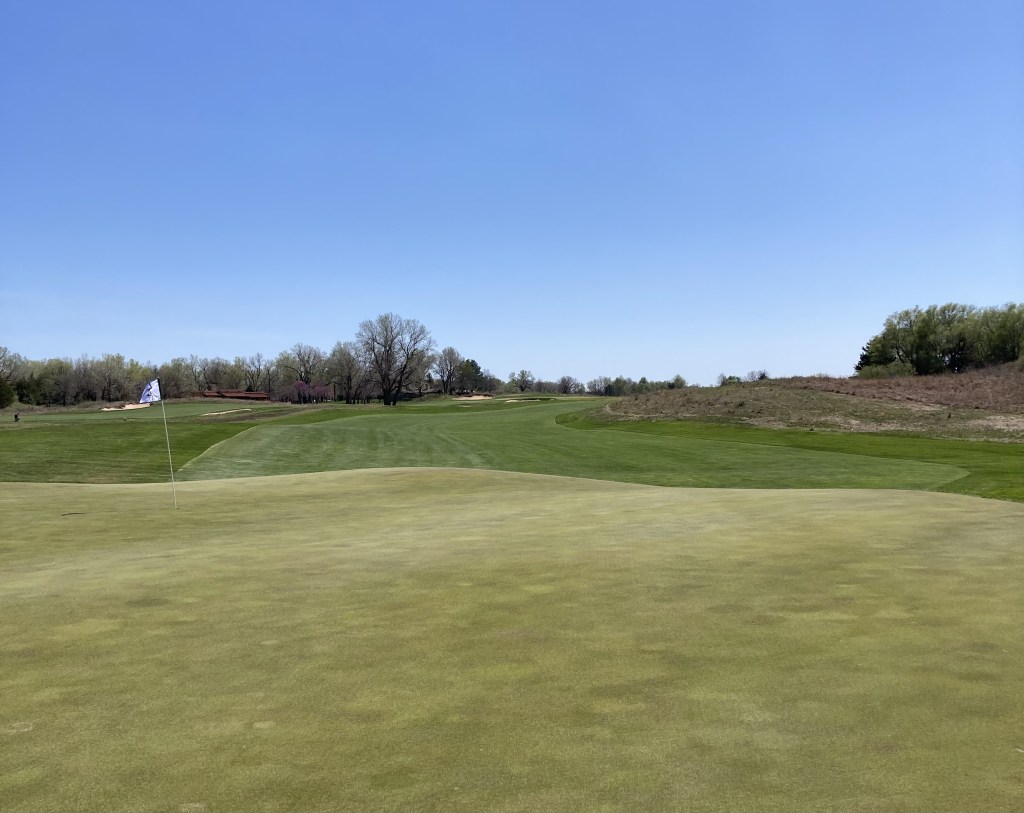
Twelve (Briar Patch): On a course known for its prairie grass, the twelfth is known for its trees. Tall cottonwoods frame the green on the short par four where position is everything. The loss of a large branch on the right tree closest to the green and a tree nearer the center of the fairway have made this hole easier over time, but as with many holes out here, the green is the defense. It looks smaller than it is from the approach with the surrounding bunkers obscuring pins and making it tough to get near the hole.
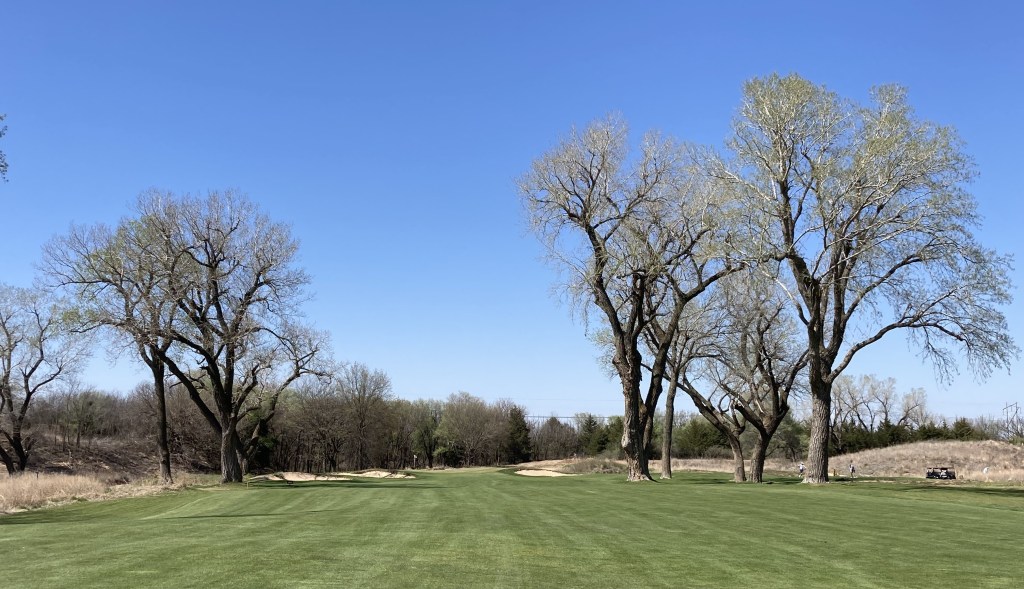
Fourteen (Cottonwood): This is another contender for best hole on the course – it’s certainly one of the most picturesque. Playing from an elevated tee box, the temptation is to wail away at the green, but with a narrow landing spot protected by beautifully sculpted bunkers, your best bet is to play out to the right, where the fairway takes a sudden dive down to the left. You can see to the left how abruptly the central Kansas land goes from dead flat to the miraculous sandy rolls that epitomize Prairie Dunes.
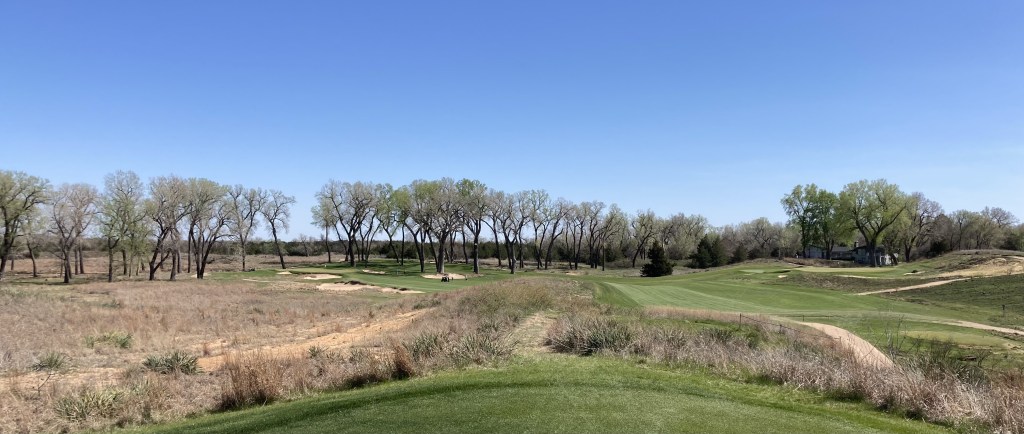
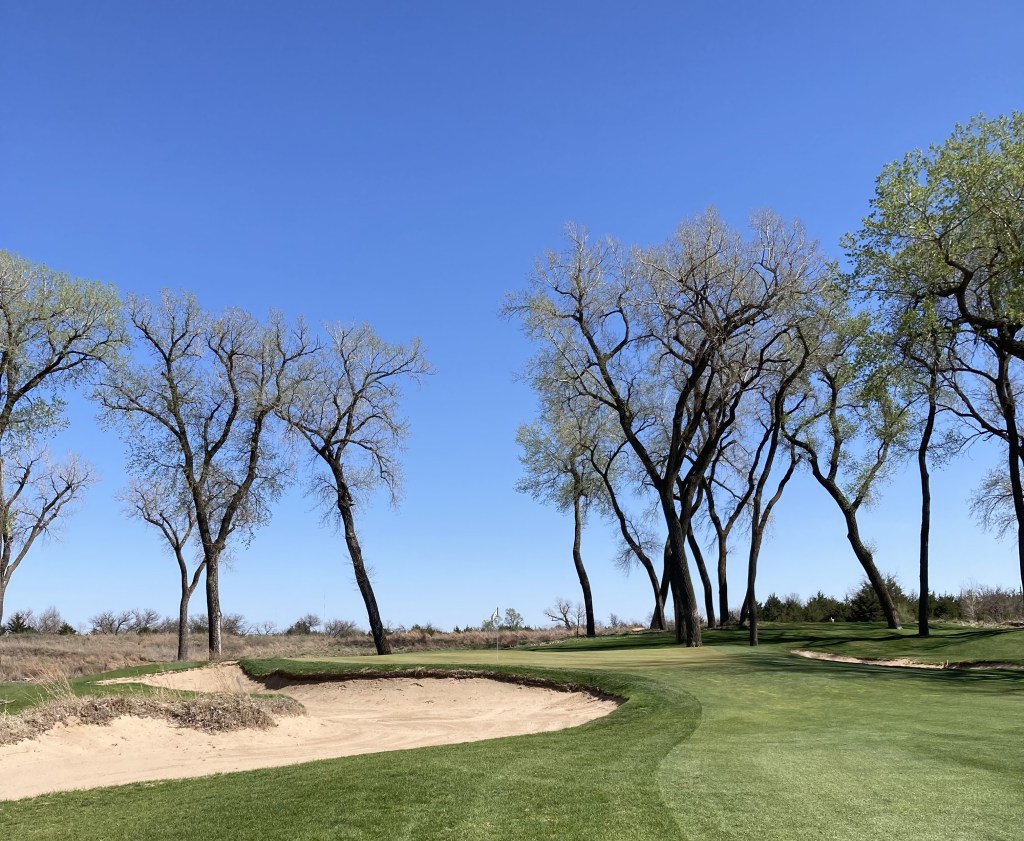
Seventeen (Pheasant Hollow): The hole gets skinnier and skinnier that closer you get to the green, which makes me wonder if it didn’t have any influence on Axland’s work on the 11th at Bayside in Brule, NE (review forthcoming). The differences end there as rather than sheer length and penalty off the fairway, the seventeenth is defended by a brilliant green site. To the left of the green is a sandy waste area and the right side of the green falls off sharply – anything left over there will fall off into the rough.
Final thoughts:
Prairie Dunes is without a doubt the greatest golf course I’ve been lucky enough to play. If it’s the greatest golf course I ever do play, I’ll have had an awfully charmed golfing life. Every hole is unique with greens that I want to play with the pin in every little section possible. It is eminently walkable and while the gunch had been burned down to start the season, you can tell by the myriad of balls laying in every ashen waste that it is punishing. Combined with the wind, the length has no bearing on the challenge ahead. However, it is not unfair. Smart shots from the tee will leave you in a good position. As long as you know where to miss, you’re fine, but some of those holes tempt you. I could play Prairie Dunes every single day and be a happy guy.
Further Reading/Resources
Perry’s Nine – The Fried Egg
ONE FOR THE AGES – PRAIRIE DUNES by Jon Cavalier
Perry Maxwell’s Prairie Dunes by Mal Elliot
Ran Morrissett’s Profile
Legendary Golf Clubs of the American Midwest by Anthony Edgeworth
GolfClubAtlas.com -> Search -> Prairie Dunes

 Layman's Hall
Leave a reply to scarletspidercomics Cancel reply