Architect: Unknown
Walkable: Yes and if there are carts, I didn’t see any way of getting one. Walking feels critical to the experience.
Highlighted Holes: 1, 2, 3, 4, 5, 7, 8, 9
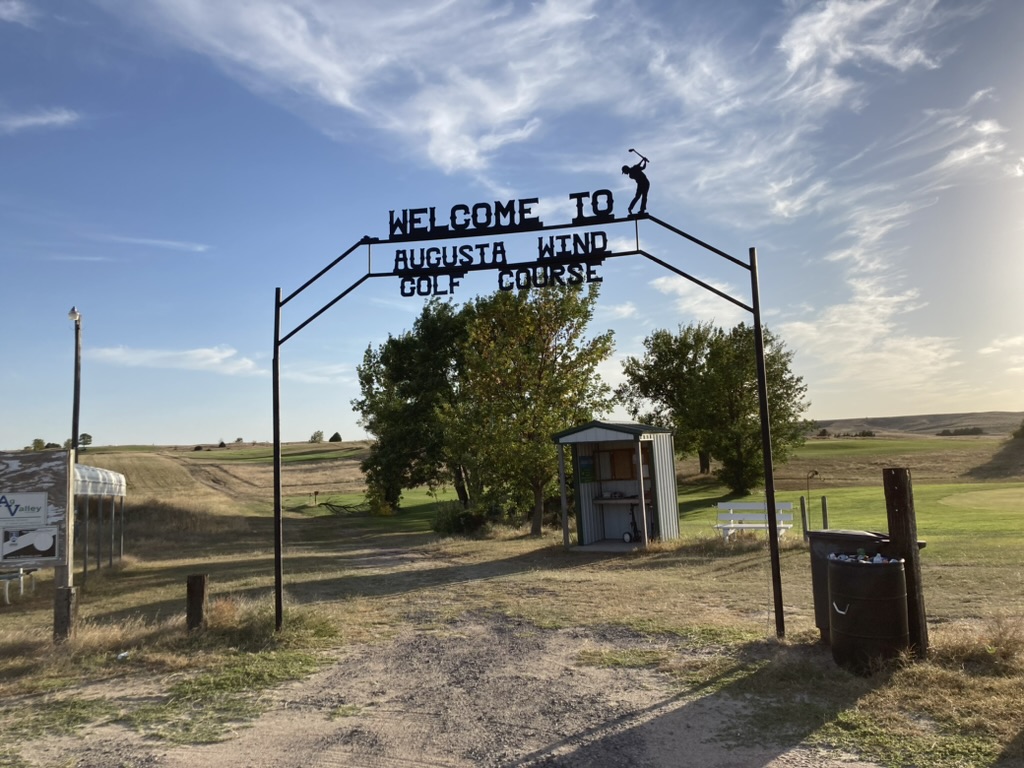
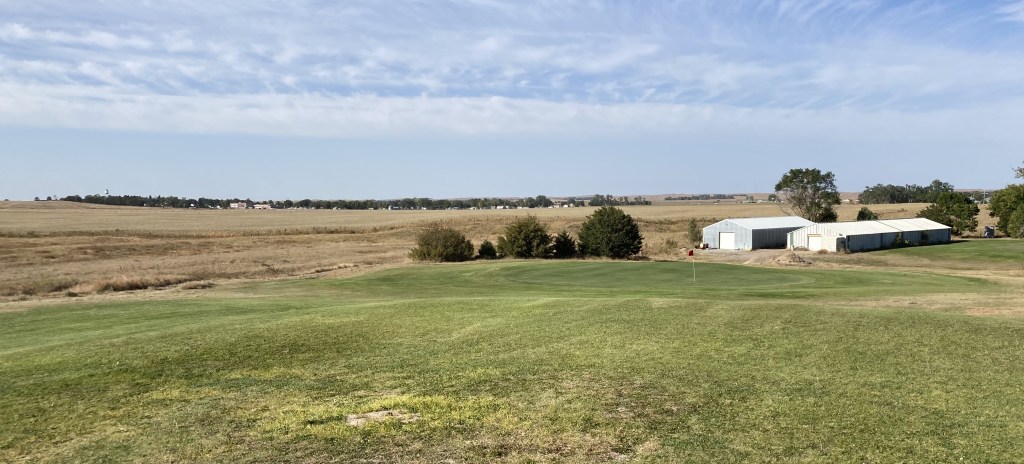
There aren’t many small town nine hole golf courses with the land, the charm, and the experience that Augusta Wind provides. It’s out in the sand hills an hour north of the interstate. It doesn’t have a website and the only phone number seems to route to a couple of folks in town. There’s a small hut past the gravel parking lot that houses and honor box for your $20.
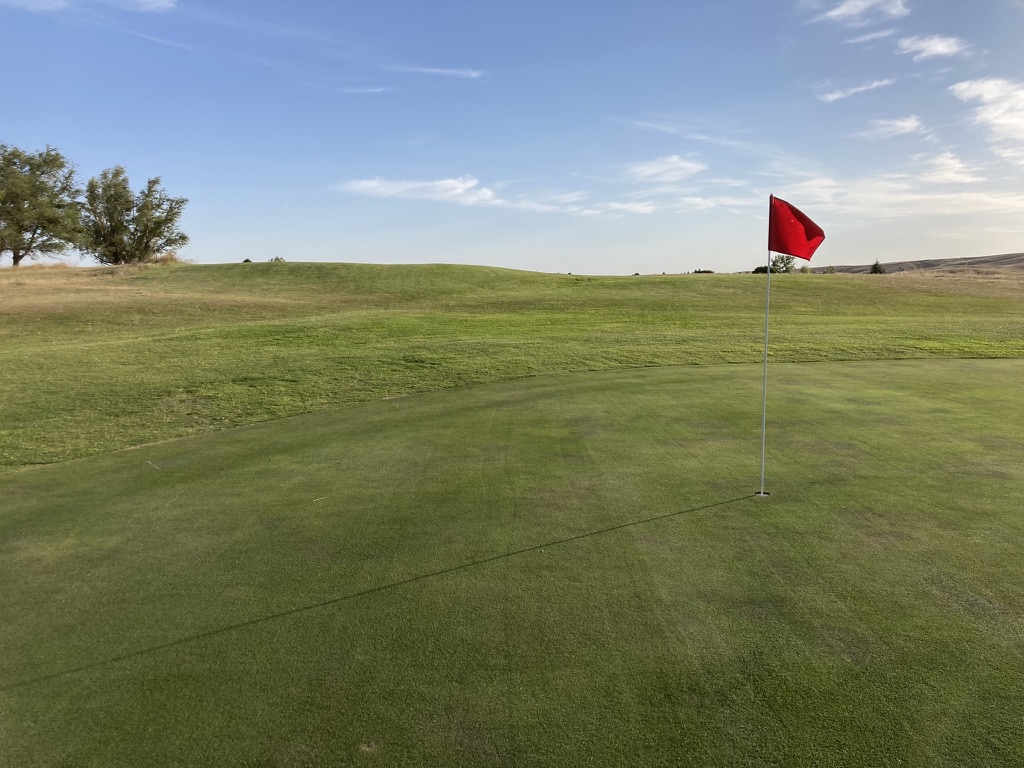
The fairways and greens are probably mowed a couple of times a week and run a little slow as a result. Shaggy clover-patched fairways don’t feel like they detract from the experience at all, but rather emphasize the community effort that is the course. The greens are a bit slow, but are in wonderful shape and run faster than some city munis I’ve played with much bigger budgets. Walking paths are cut between holes and help with navigation as it’s not always obvious where you’re headed. As the name suggests, the wind is ever-present and there’s nowhere to hide from it.
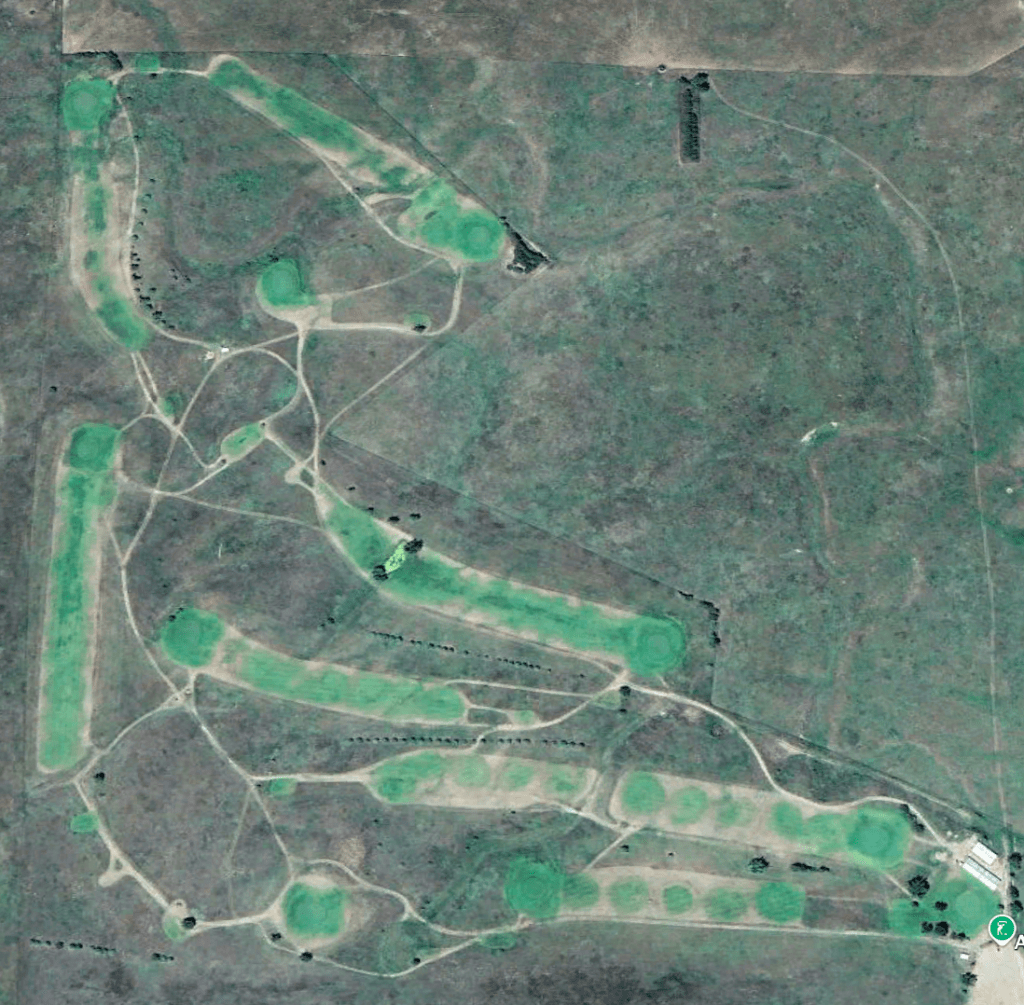
One: The first hole is a short straightaway par four that plays uphill with a blind tee shot. The flag peeking over the hill is about all you’ll see from the tee box. Most drives will end up short of the green on level ground from which you’ll approach the small, circular green that is sharply canted from back to front. All in all the first is an unassuming start to the round and, with two, serves to get you out to the more dramatic land.
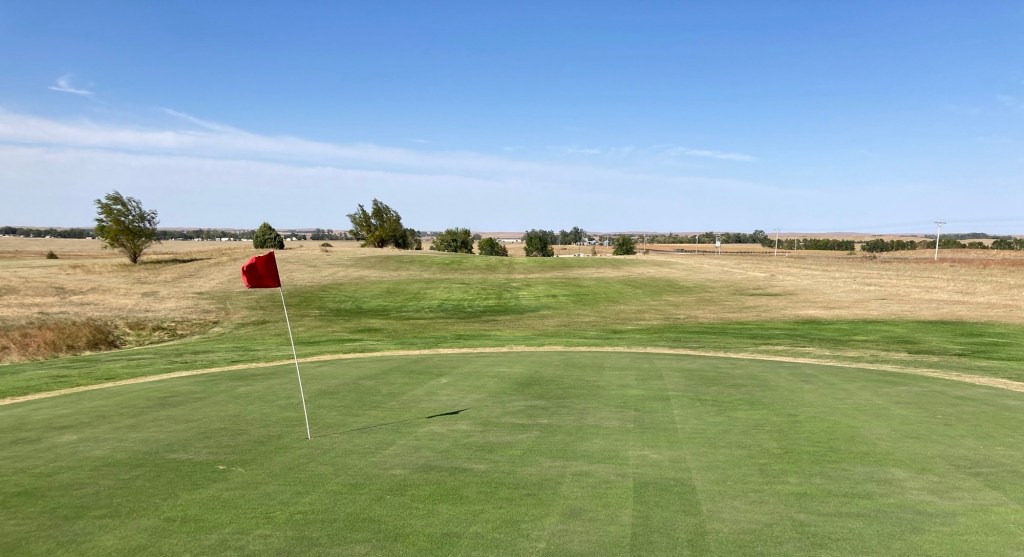
Two: The first par three on the course, two almost looms over you. From the tee you’ll have a 160 yard shot at least 30 feet up over a draw that cuts through the course. The green has some movement in it and you’ll want anything you hit up there to stay as the hill front and left will reject a wayward shot. It’s all carry here.
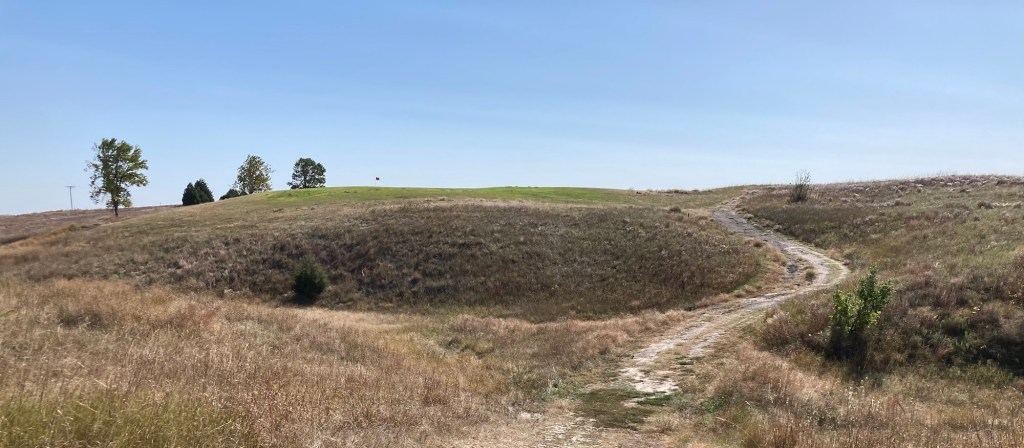
Three: This short par five is the first real introduction to sand hills golf, as from the fairway you’ll see miles of cow dotted dunes that give you the real sense you’re in the middle of nowhere. From the tee you can see the beginning of the fairway, the out of bounds fence left, and a drop off that could lead anywhere. The fairway slopes hard left to right and you’ll be hitting your second at the green totally blind. It’s a hit it and hope shot. The green is at the base of a steep drop and if you’ve never made an eagle before, you might want to pay the $25 for all day play to keep going around until you get one.
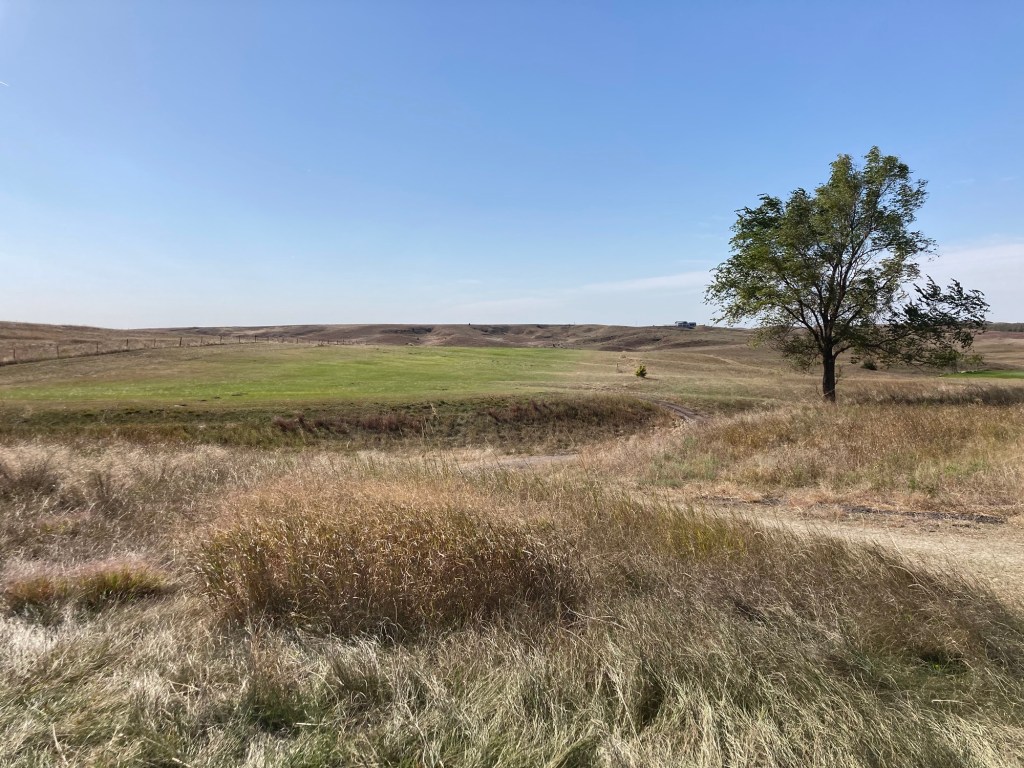
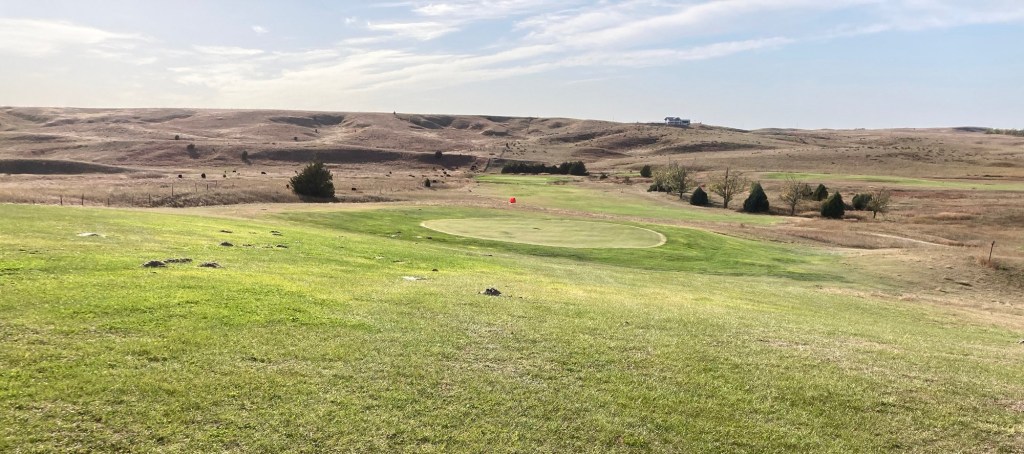
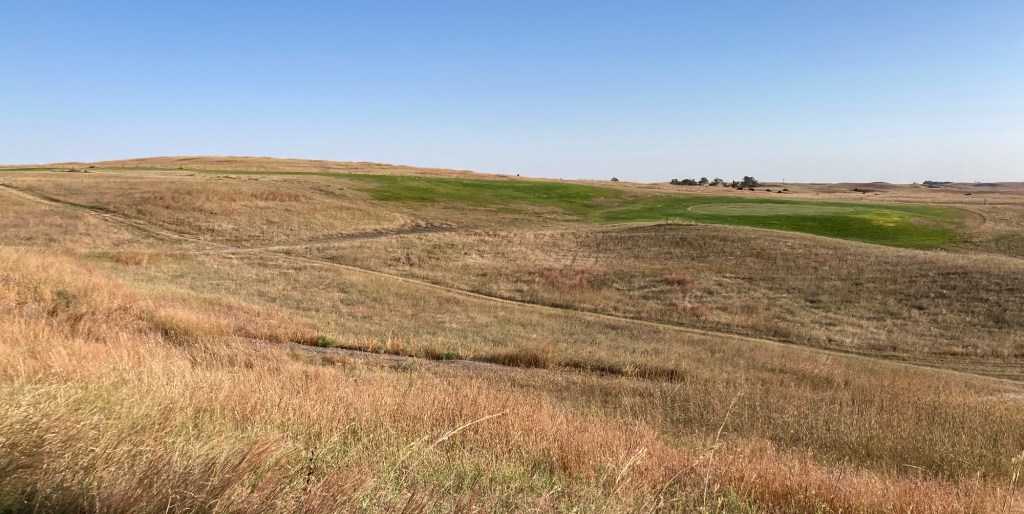
Four: Follow the path cut off to the right of the fifth green. You’re headed back up to the top of the dune. Don’t walk down towards the fairway – you’ll just have to double back. The fourth is a par four that feels like they found great land, marked off the tees, fairway, and green, mowed, and called it a day. From the tee it looks like it lays on some of the flattest land on the property, but there’s a dramatic hollow in front of the green that will catch a short shot and give you a blind pitch up. It’s a feature that would look right at home at any course in the sand hills.
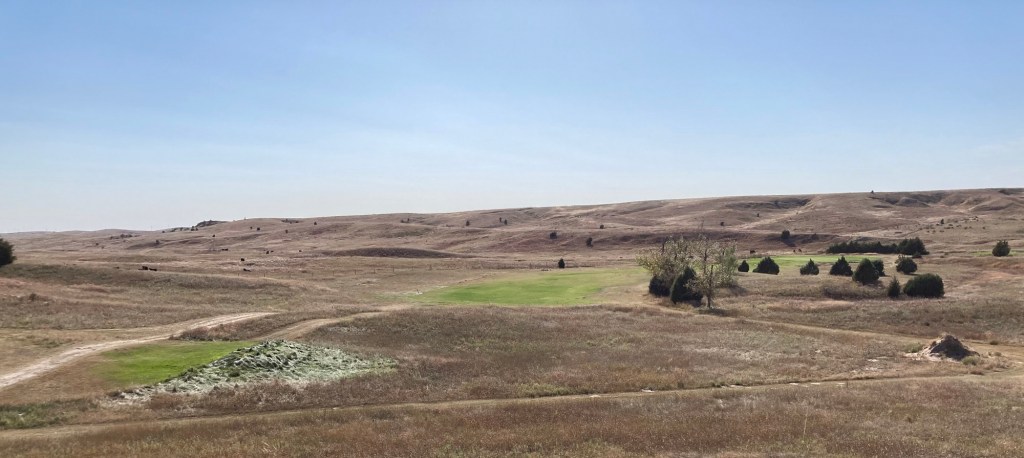
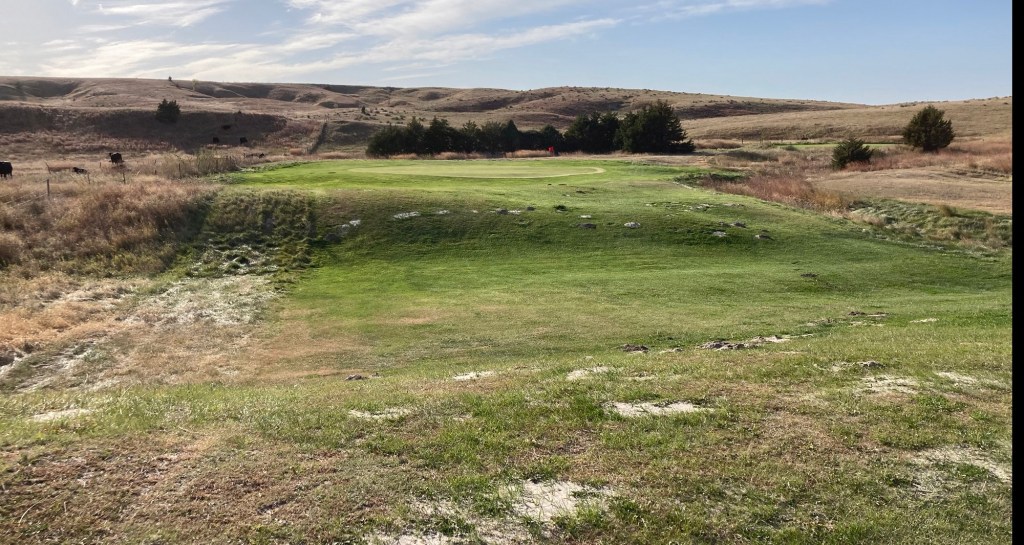
Five: The fifth is a bit of a trickster. It’s hard to pick a confident line as the hole drifts right and the hill in the first part of the fairway makes it tough to gauge a distance. Bite off as much as you can chew if you can figure out how much that’ll be. The approach is to an elevated green with contours at the ready to kick a ball anywhere. A patch of high faced long grass defends the right. You probably haven’t noticed by now that there aren’t any bunkers guarding things. Augusta Wind doesn’t need ‘em. It’s got plenty of other fortifications.
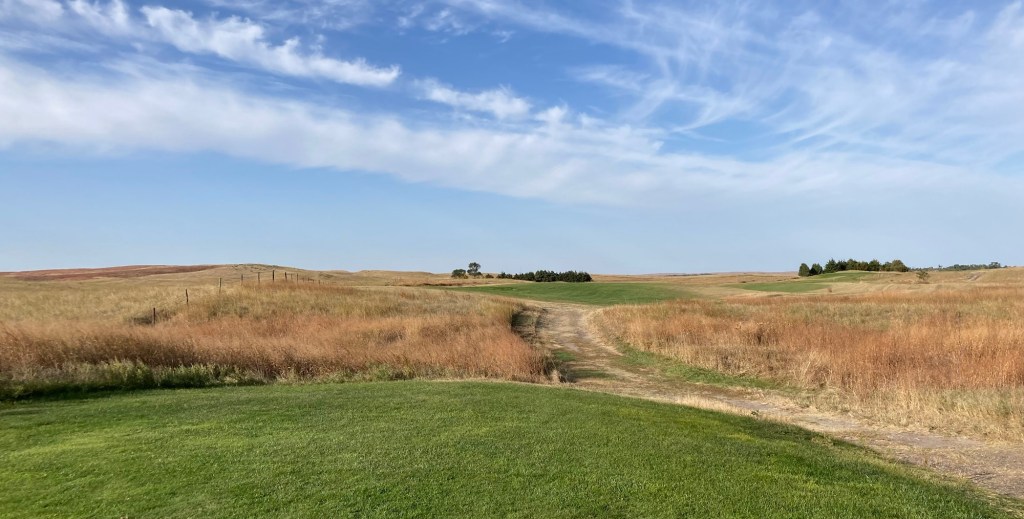
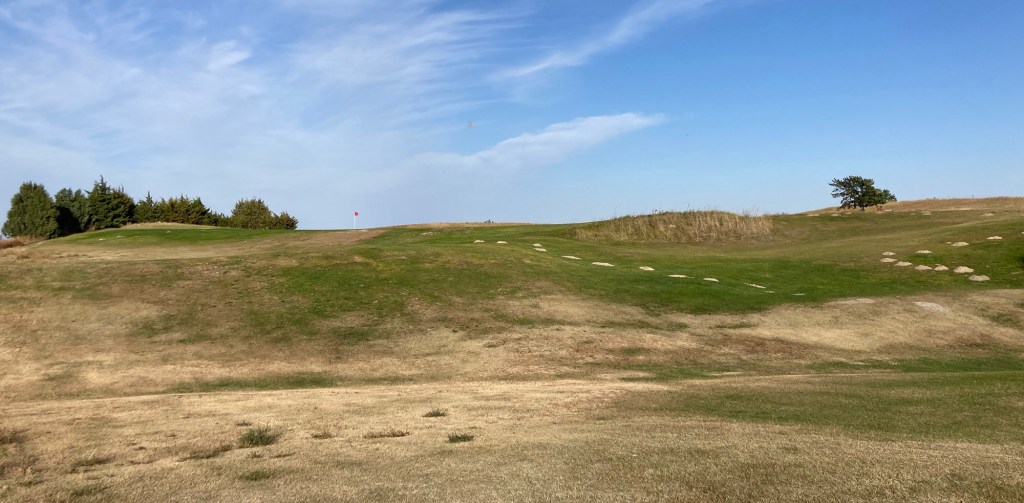
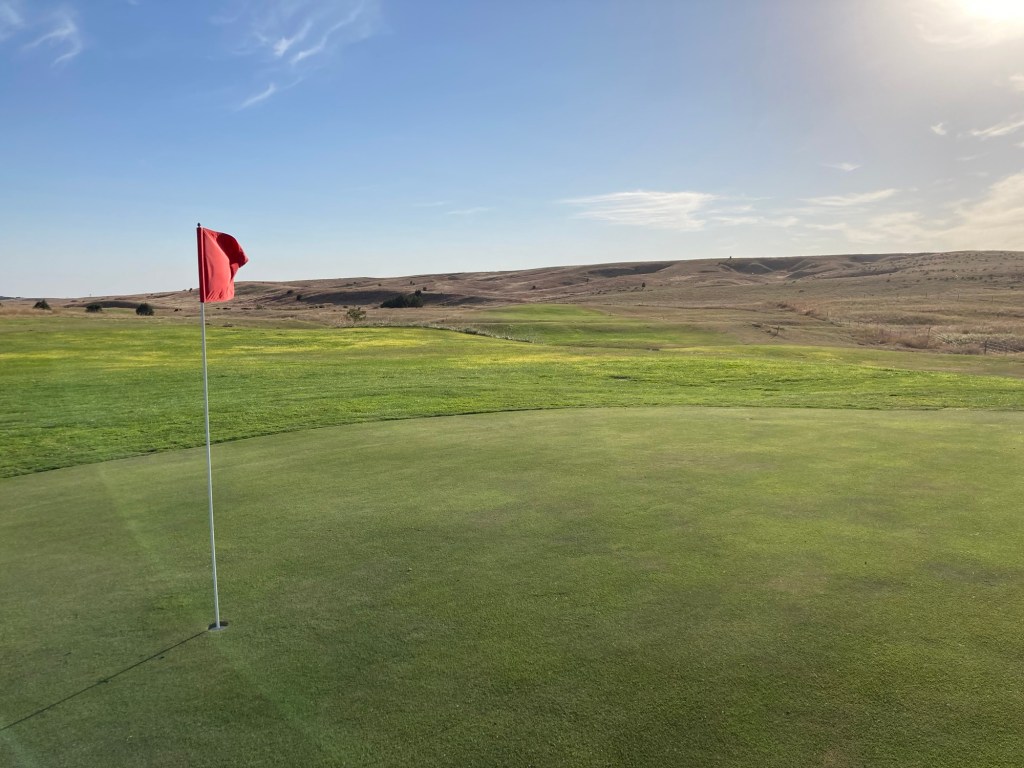
Seven: The seventh feels like a departure from what they’ve had going, at least off the tee. Its about a 180 yard carry to cover a pond and pair of trees that make up the beginning of the fairway which seems like nothing until you have 35 mph wind gusts in your face. From there, it’s back to interesting land movement to a fairway and green that slope away.
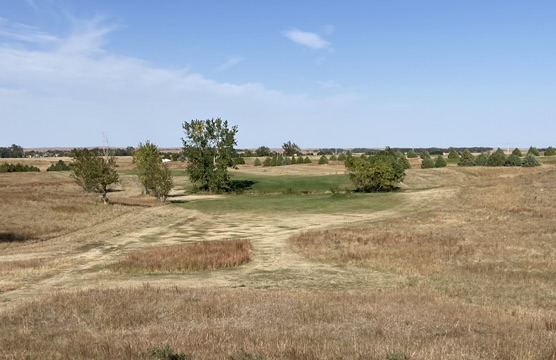
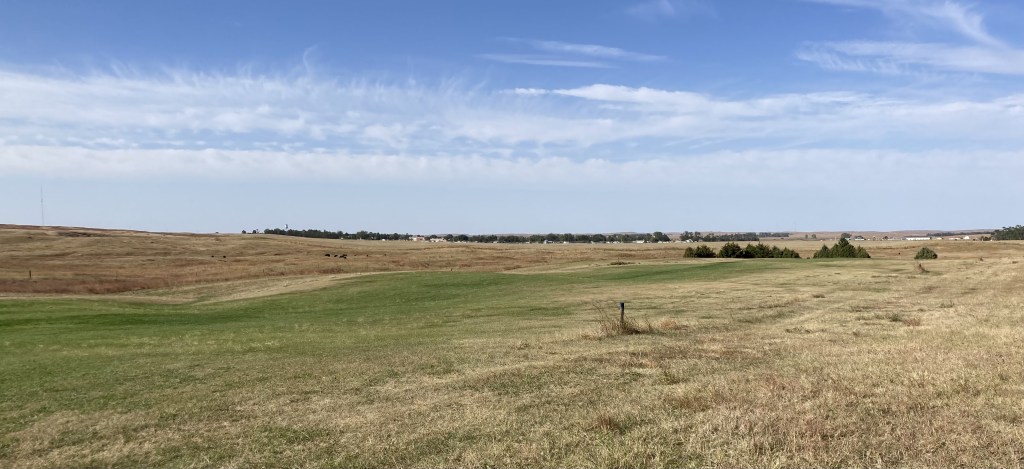
Eight: This is in contention with four and five for the best fairway on the course. The tee shot is blind and the fairway is farther over to the left than you might think standing on the box. There are four or five rolls with interesting spots for a ball to wind up. High and left offers a better approach into the green but your ball could roll down behind one of the folds leaving you a little stymied playing into a raised green.
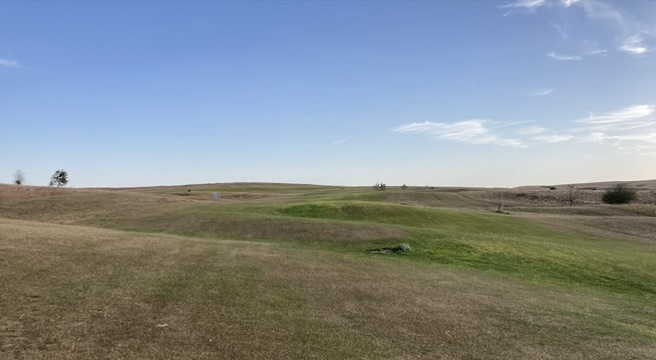
Nine: Two fairways are divided by a deep rut on this finishing par five that’s easily driveable if you’re not careful. It’s deep enough that you won’t get much more than a short iron up over the edge and back to the fairway. As you approach the green, the fairway stays high up on the right obfuscating the green and lower on the left with a look at it. This gives you some options that depend on where the flag is. These two features make it a fun finisher.
Final Thoughts
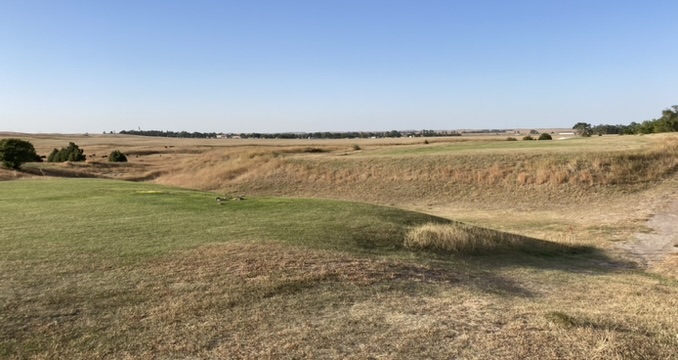
This feels as close to the kind of local Scottish links golf as you can get in America. It’s in the Nebraska sand hills and is maintained by community members who almost certainly don’t do it for the money. For as low as the budget must be, the greens are in good shape and the shaggy fairway adds to the experience. It’s the kind of course that feels like a miracle to even exist. We’re all the more lucky that it makes the most of its topography and has architecturally interesting holes – not something one might expect to find here. This course with a funny name, no website, no tee times, and no pro shop has to be as hidden of a gem as possible, but it shines as bright as any out there.


Leave a comment