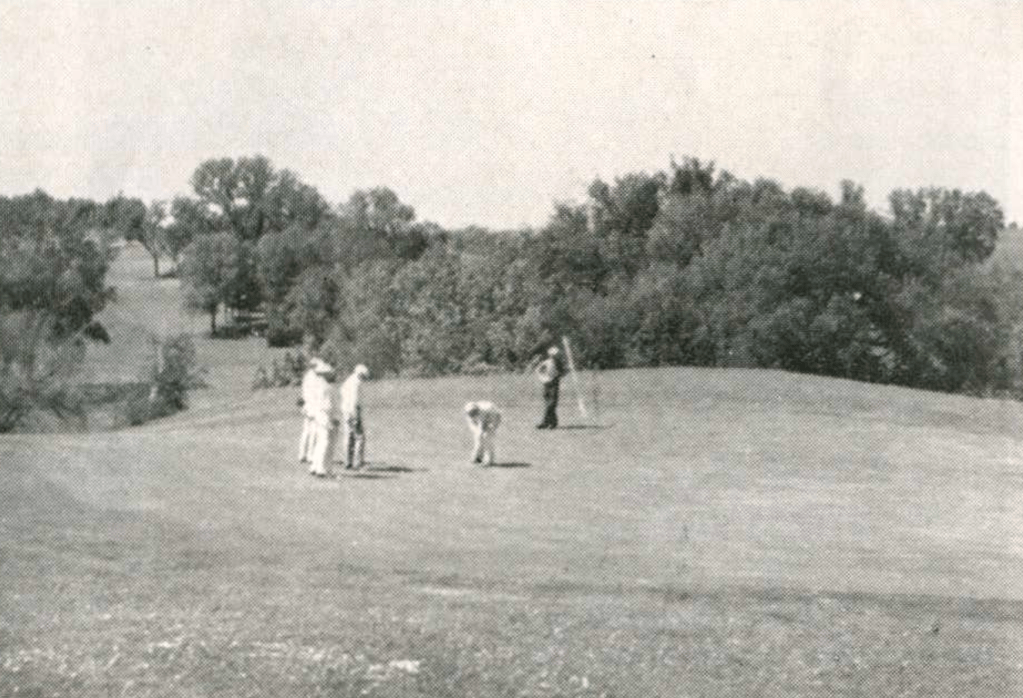
“Sloping hills that rear up to the skies, a meandering creek that winds its way across the course and an abundance of space make the latest Omaha course one of intense natural beauty.” – from the Omaha Bee, August 15, 1924
If asked, many golfers would reply that golf came to the Nebraska Sand Hills in the mid-90s with the construction of Bill Coore and Ben Crenshaw’s masterpiece, but they would be wrong by more than 100 years. In 1887, Scotsman Alexander Findlay journeyed to his friend Edward Millar’s Merchiston Ranch near Fullerton and laid down six holes of one of the first golf courses in America. According to the Grand Island Independent, “the course was played during the three-year period from 1887 through 1889 by Findlay, Millar, the ranch’s cowboys and visitors,” and counted the likes of Buffalo Bill Cody and Sitting Bull as guests.
By 1893, Findlay had journeyed to Omaha to lay out a nine hole estate course for the wealthy Patrick family at what is now Happy Hollow Boulevard and Dodge Street. Fourteen years later, Tom Bendelow, who is often referred to as the ‘Johnny Appleseed of American Golf’ for the hundreds of courses he designed across the country, took that nine hole layout and expanded it to eighteen for the newly founded Happy Hollow Club. But this iteration of the club wasn’t to last. Brownell-Talbot bought the clubhouse in 1921 for use as the school that still sits on the land today, but kept the course open first for members and later as the daily fee Dundee course. Happy Hollow club members began to search for a new home.
William Langford and Theodore Moreau were two of the Midwest’s premier golden age architects. Langford, a Yalie who played for the Bulldog golf team in the Northeast, was no doubt familiar with the work of C.B. Macdonald and Seth Raynor while Moreau was an engineer who helped bring Langford’s visions to life. The duo was known for constructing landforms to create strategic interest and their high faced bunkers and green complexes. The best examples of their work that still exist are Lawsonia Links and the West Bend Country Club in Wisconsin, Wakonda in Iowa, and Culver Academies and Harrison Hills in Indiana. Their work was largely underappreciated until recently and many of their designs were either drastically renovated or no longer exist. (The Sultans of Steam Shovel).
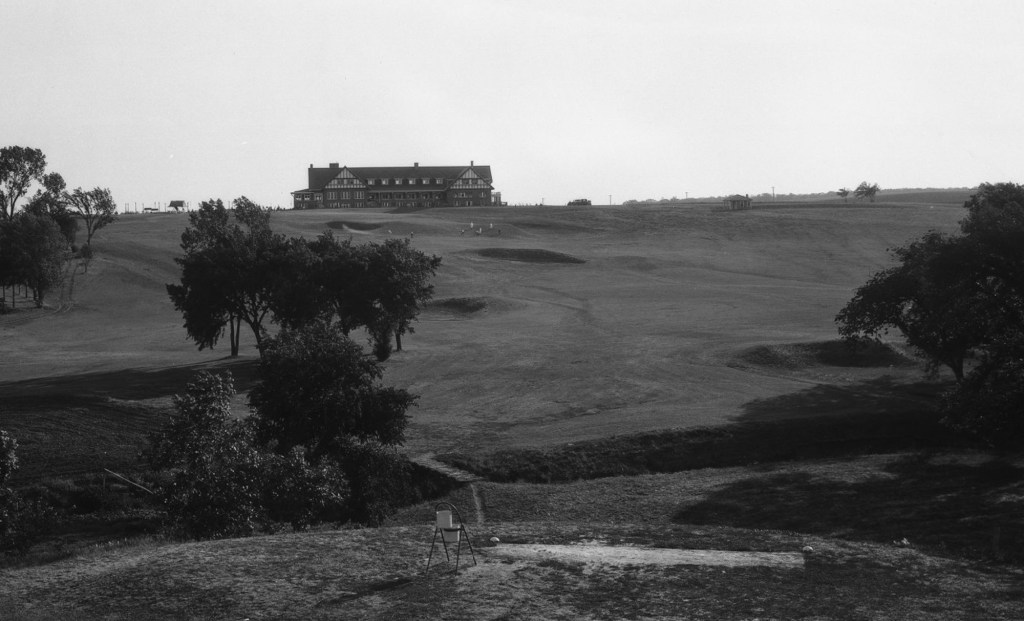
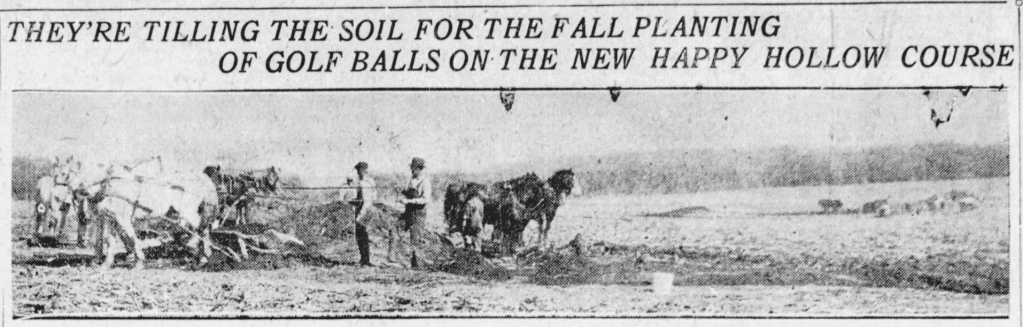
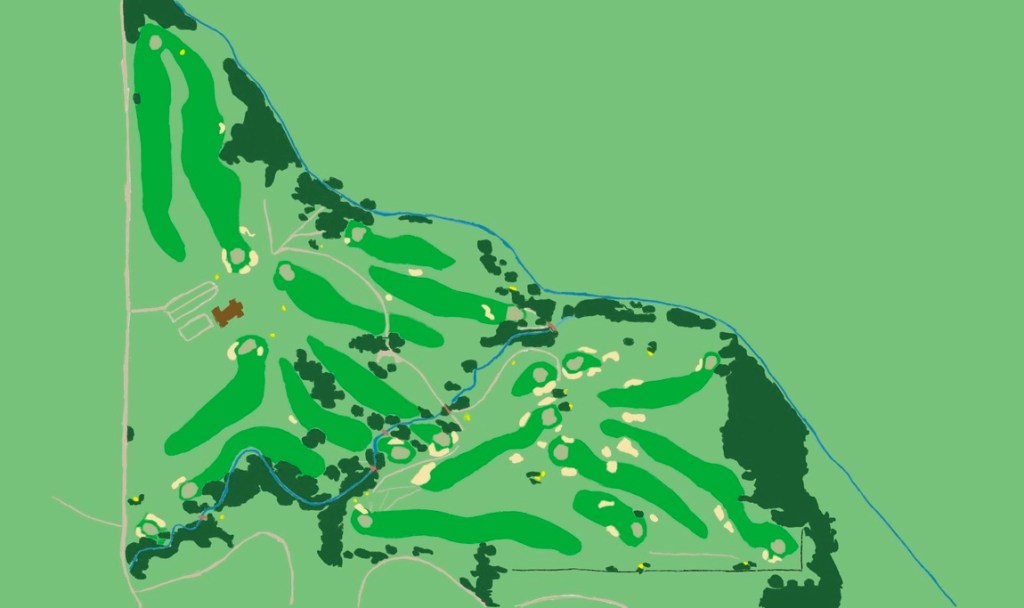
In 1922 the duo was chosen to build both the new Happy Hollow golf course and the Highland Country Club (later Ironwood, later the Tri-Faith commons and business park) just up the street. The new site was surrounded by cornfields at 105th Street between West Center and Pacific and sat atop 200 acres on both sides of the Papillion (Papio) Creek which were connected by the ominously named ‘Bridge of Sighs.’ The seventeen holes west of the creek ran up and around the prominent hill upon which sat the large, modern clubhouse and were bisected by the smaller tributary Rockbrook creek. The ten holes east of the river sat on flatter farmland with shots that played along and over the waterway. The strategic design with more than 120 bunkers contained much of Langford and Moreau’s signature shaping and land movement.
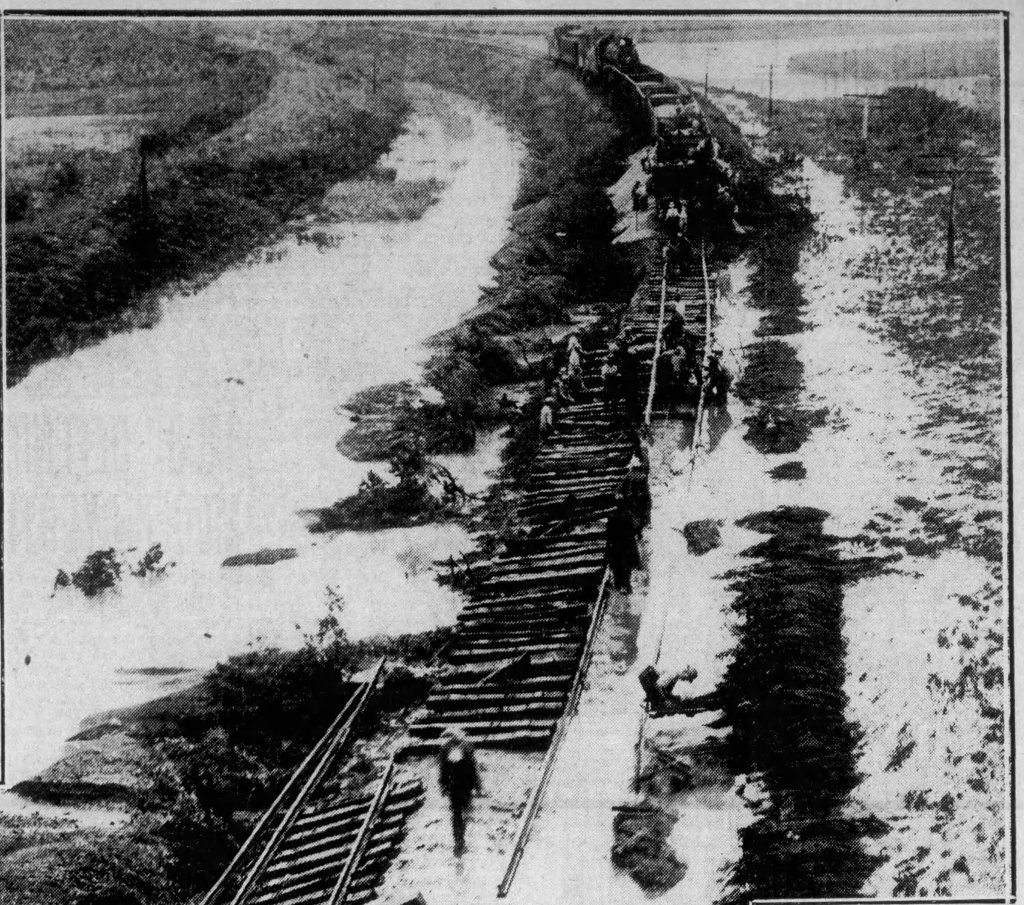
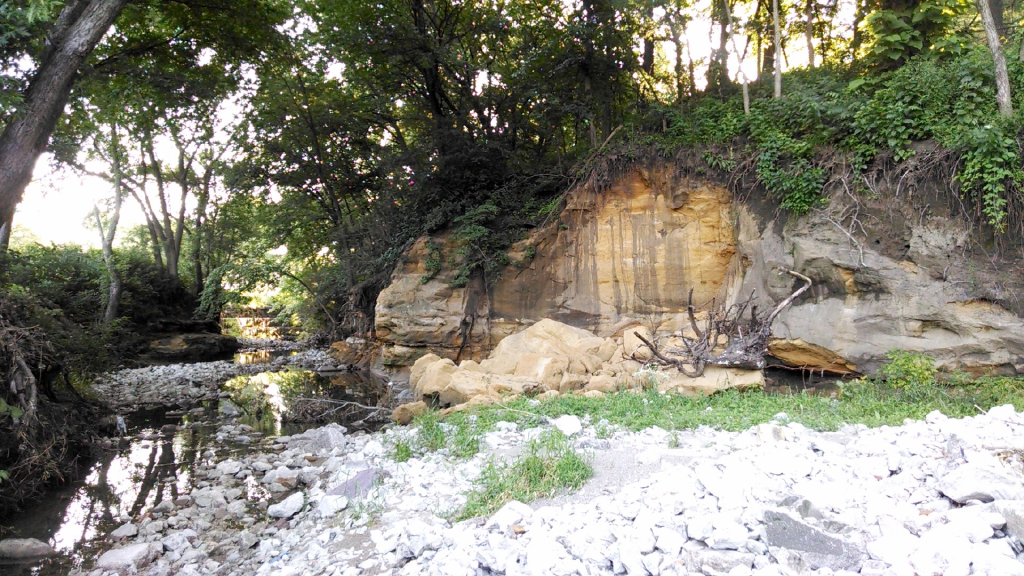
The Papio Creek starts in the middle of a field north of the Rose Hill Cemetery and west of Blair in rural Washington County before meandering fifteen miles southeast through the heart of Omaha where it joins the Missouri River near Bellevue. In all, the Papio Creek makes up 402 square miles of watershed that, according to a 2017 UNO Magazine article, forms “the most flood prone region in the state.” If Happy Hollow members didn’t realize this when the new course was built, they certainly did in 1932.
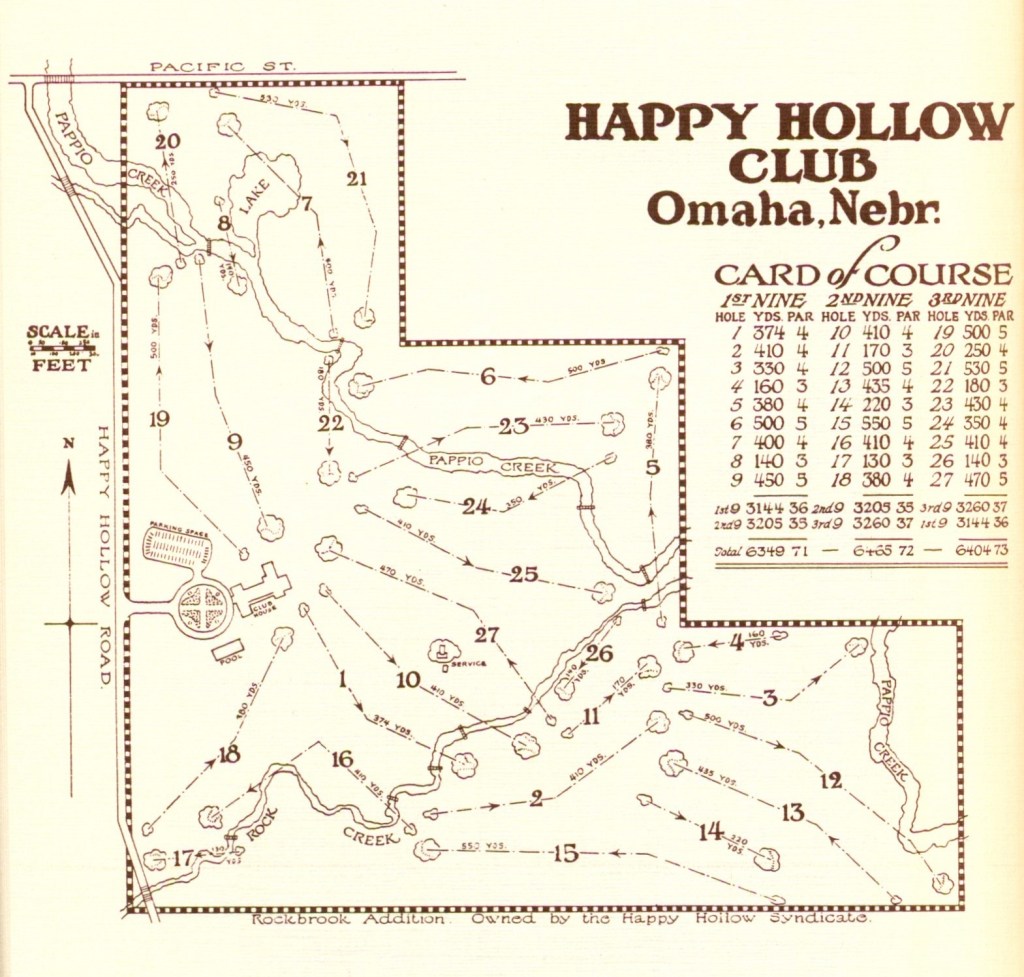
On August 11, 1932, Omaha was awash with storms. Overnight, the metro area received 7 inches of rain, much of which found its way into the watershed. What club members found in the morning was muddy, saturated ground that destroyed the east nine. Even if the damage was salvageable, the creek had yet to be engineered by the Corps to better sustain high waters when the inevitable flood happened again. By 1933 the decision was made to sell the land and reroute the holes around the hill by adding one along the creek out of the original 24th green and leaving the club a with a proper eighteen holes. I’ve been unable to find much information about the lost nine today outside of a line drawn routing with a card for each of the nines.
The crowning achievement for the original course came in 1936 when it hosted the 37th Western Amateur, one of the most prestigious amateur golf tournaments of the time. Omaha’s Johnny Goodman and Rodney Bliss were in the field as well as Chick Evans and Fred Haas Jr. Happy welcomed golfers from across the United States for a hot, dry June championship in which Paul Leslie beat Bob Frazer 2 and 1.
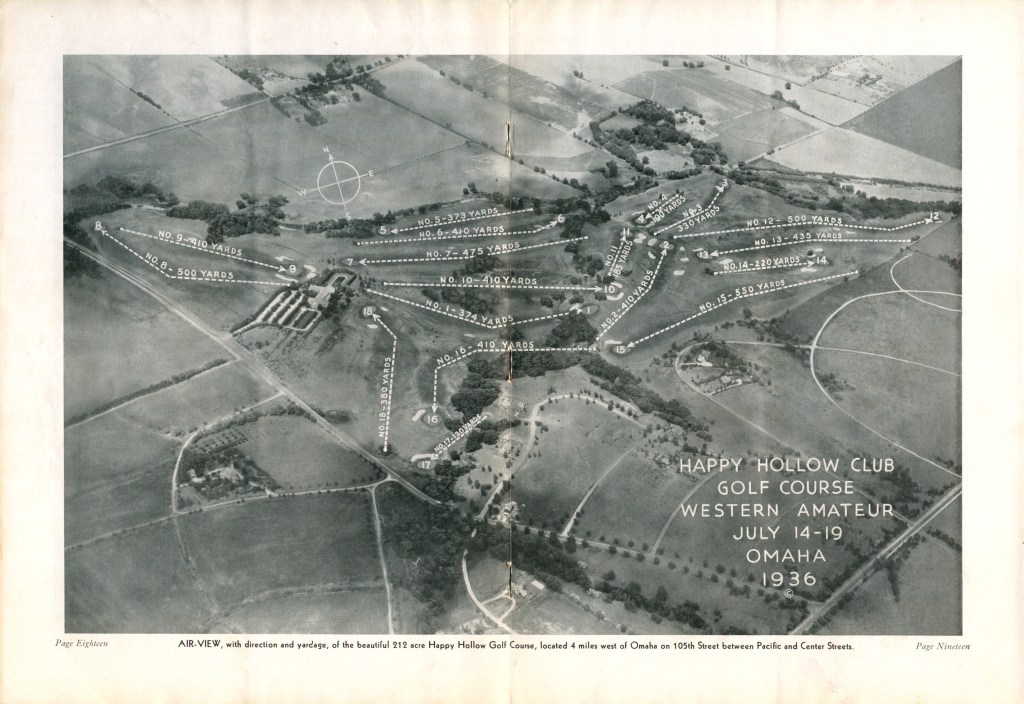
Happy Hollow Club – ca. 1936
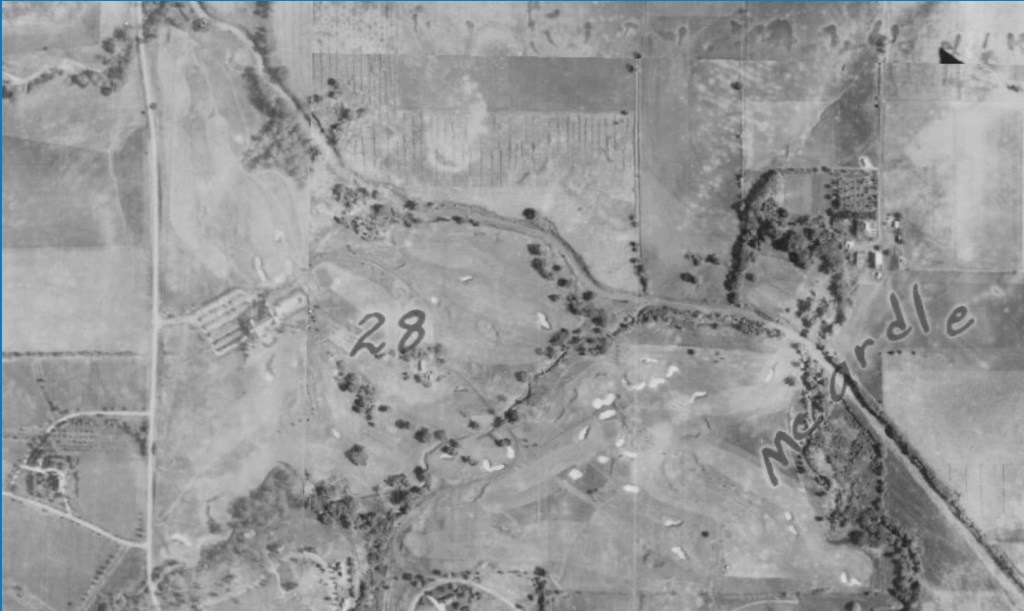
Note: Many of the individual hole photographs come after tree planting and bunker removal and represent the beginning of Happy’s transition away from its original design.
One: The round starts with a 374 yard downhill dogleg par four with trees left and long and an approach that must carry Rockbrook creek. There is a bunker on the outside corner of dogleg that does double duty with sixteen to catch shots flared right off the tee. With the built up nature of the bunkers, it may not be advisable to go for the green from there, but shots near it will have a more open shot at the green..
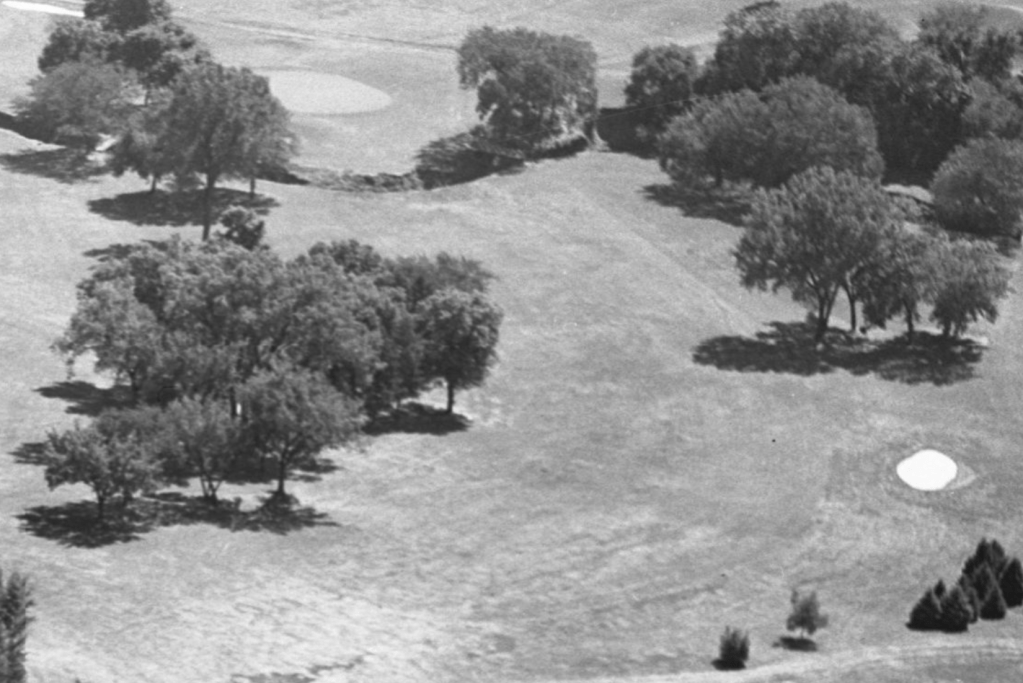
Two: The second hole is a beefy 410 yard par four with room to miss right off the tee but heavy bunkers guarding the sides of the fairway from approximately 150 yards and in. The bunker to the front left of the green is deceptive as it looks like a green side bunker, but is a ways away.

Three: After playing down away from the clubhouse, over and along the creek, the third hole is a short dogleg left with defenses in an assertive bunker guarding the front of a green that is perpendicular to the fairway. At 330 yards a good drive would leave a wedge in with accuracy at a premium.

Four: The fourth is a stout 190 yard heavily bunkered par three with sand that wraps around the left side to the back as well as short left and right. Little protection from the wind makes it just as likely to find a bunker as the green. It is the only par three on the front.

Five: The fifth hole was the only one that was built after the loss of the holes East of the creek. As far as I can tell the original 24th green was repurposed in building the 373 yard par four that runs parallel to the Papio with a sharp drop off on the right side. Playing it safe left could bring the fairway bunker it shared with six into play but guarantees the golfer a second shot. (Note: the fairway bunker had been removed by the time this photograph was taken.)
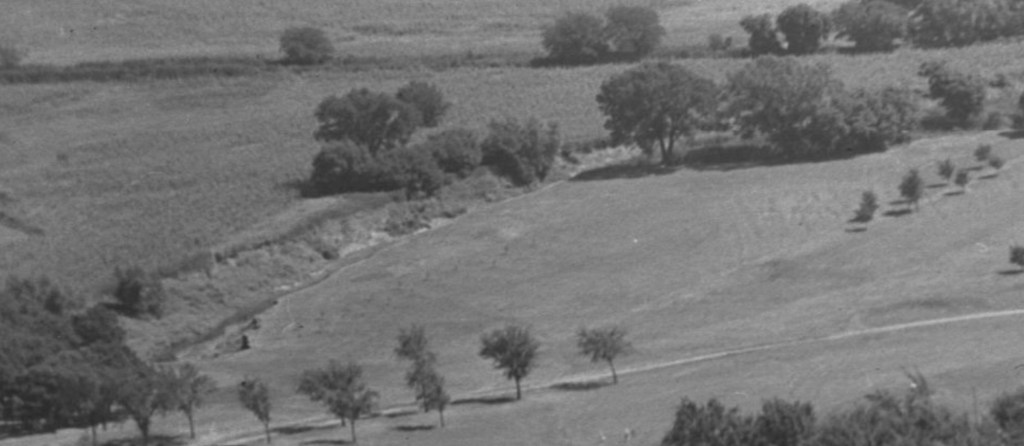
Six: The par four sixth plays slightly right-to-left with a couple fairway bunkers short left and right of the fairway – not in play for most. The second shot required navigating a large diagonal squiggle of a centerline bunker to a green surrounded by trees. Staying right off the tee leaves more room to miss, but brings the bunker into play. The left side is skinnier, but with a clear shot in.
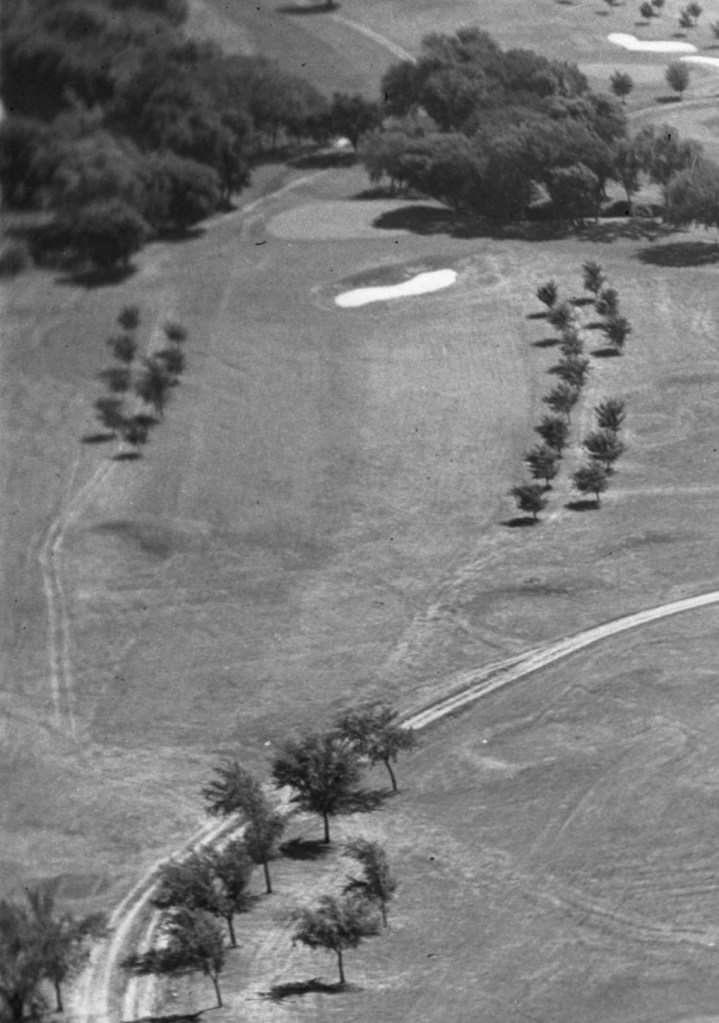
Seven: At 470 yards, the seventh plays as a par five, but the length is deceiving. It plays back up the hill toward the clubhouse with just one fairway bunker that it shares with six. There may have been additional bunkers along the fairway right and short left of the green when the course was built, but without the original plans, it’s hard to tell for certain.
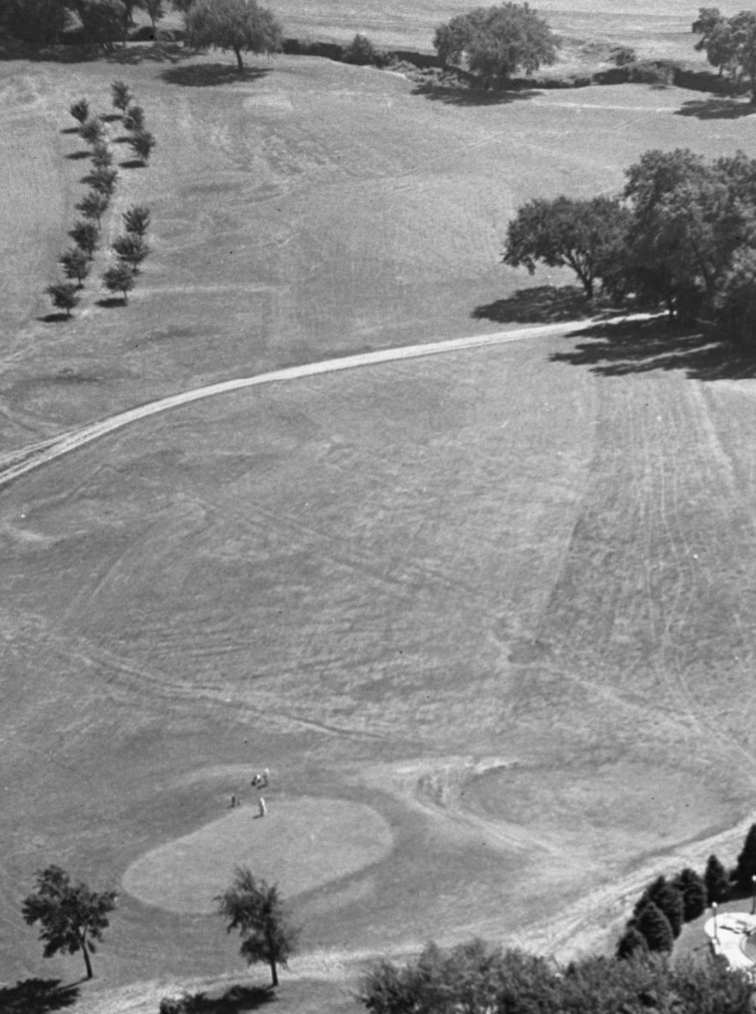
Eight: The 500 yard par five eighth plays down the hill that the current par five fifth dramatically plays up. With 105th street out of bounds left and internal out of bounds right, as alluded to by the Western Amateur program, this hole was bunkerless by 1936. Due to the size of the hill, a good drive could leave the strong player with the opportunity to hit the green in two.
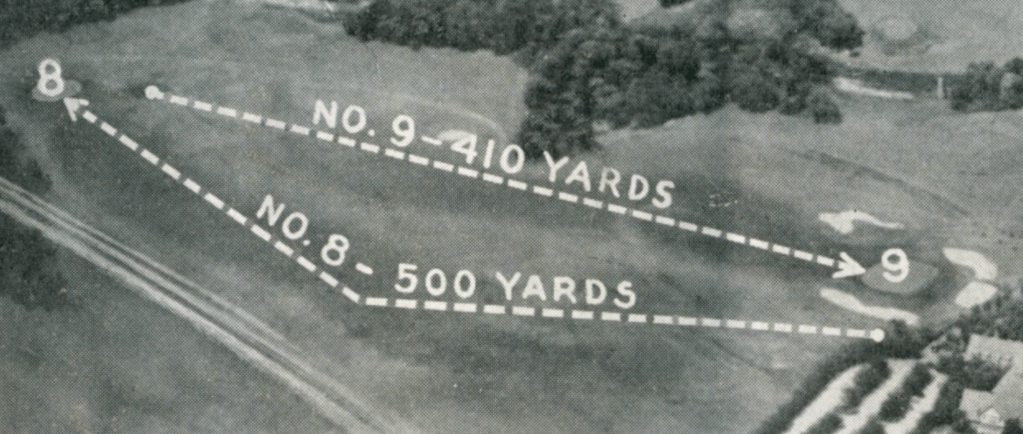

Nine: At Happy Hollow, what goes down must inevitably come back uphill toward the clubhouse in the form of a 410 yard par four. A grove of trees sneaks into the fairway off the left from the creek. Playing the ball close to this hazard leaves a much more straightforward approach to the green as shots farther right create such an angle as to bring the right bunker into play. The green also has sand wrapped around the back left of the green and a charming squiggle of a bunker short left. Bogey or worse was almost certainly a common score.
Ten: The 410 yard par four tenth takes us back downhill south of the clubhouse to a green protected by the Rockbrook creek in front and two imposingly sized bunkers long left and right. Shots that fall off the pushed up green will be tough to get up and down.
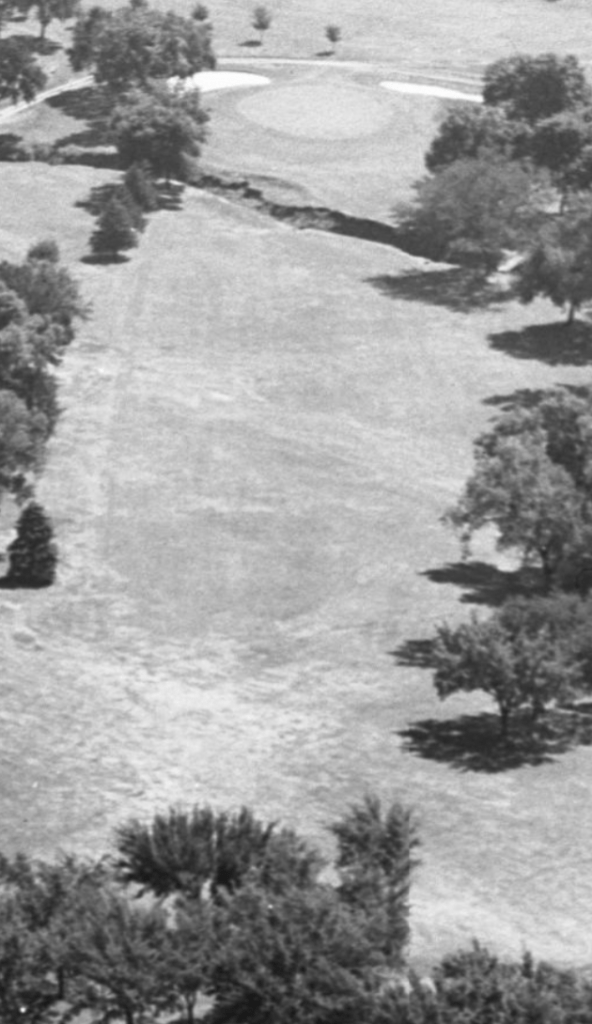
Eleven: This 185 yard par three plays directly opposite the fourth hole with a large bunker right that cuts the shape of an eight into the turf. We can see another indent that had likely been a bunker.
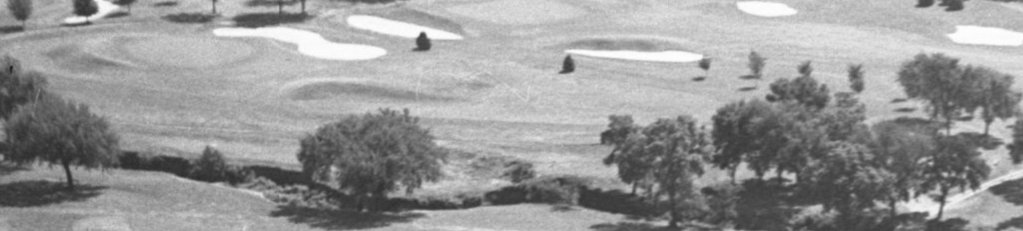
Twelve: This double dog leg plays across flat land, but at 500 yards, an attempt at the green in two demands a well placed drive that avoids the woods and creek left and internal out of bounds right. Two big fairway bunkers lurk some hundred yards or so short of the green demanding an accurate layup as well.
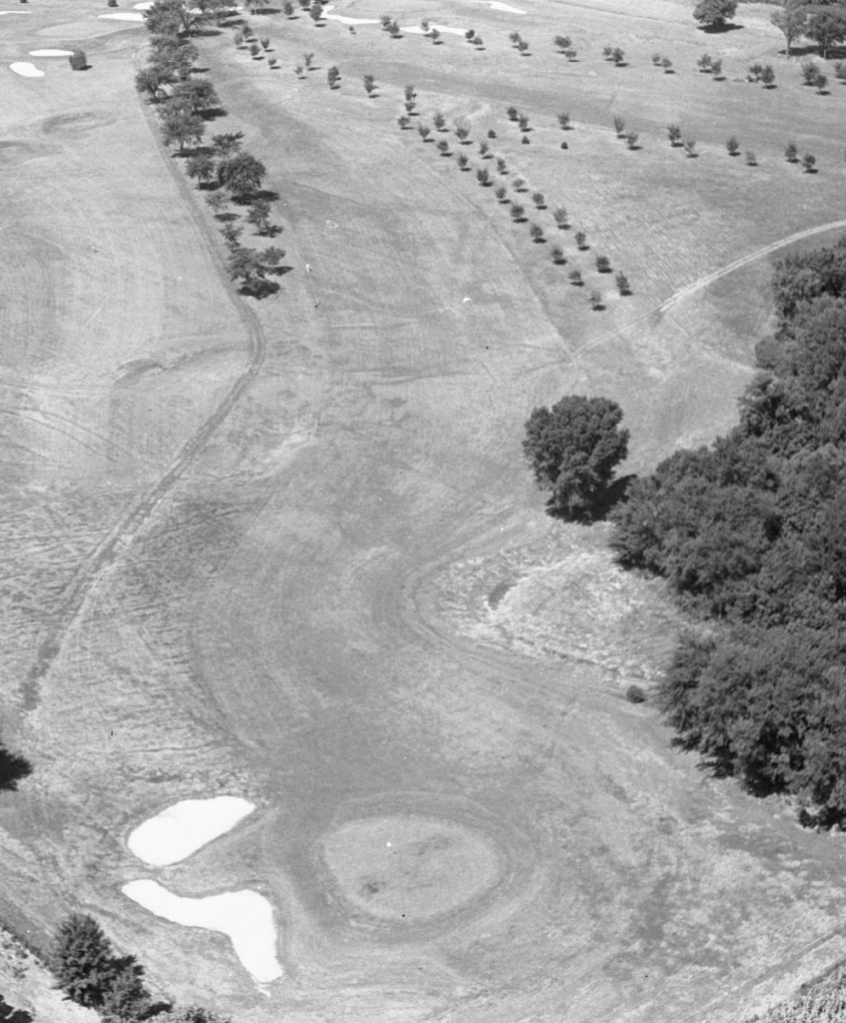
Thirteen: As we can see from the image below, the par four thirteenth had some of the strongest cross bunkering of any hole on the course. At 435 yards it is the longest par four on the course. While it sits on flat land, the high faces of the fairway bunkers put a premium on avoidance. Bunkers to the left and right of the green challenge the misses of better players.
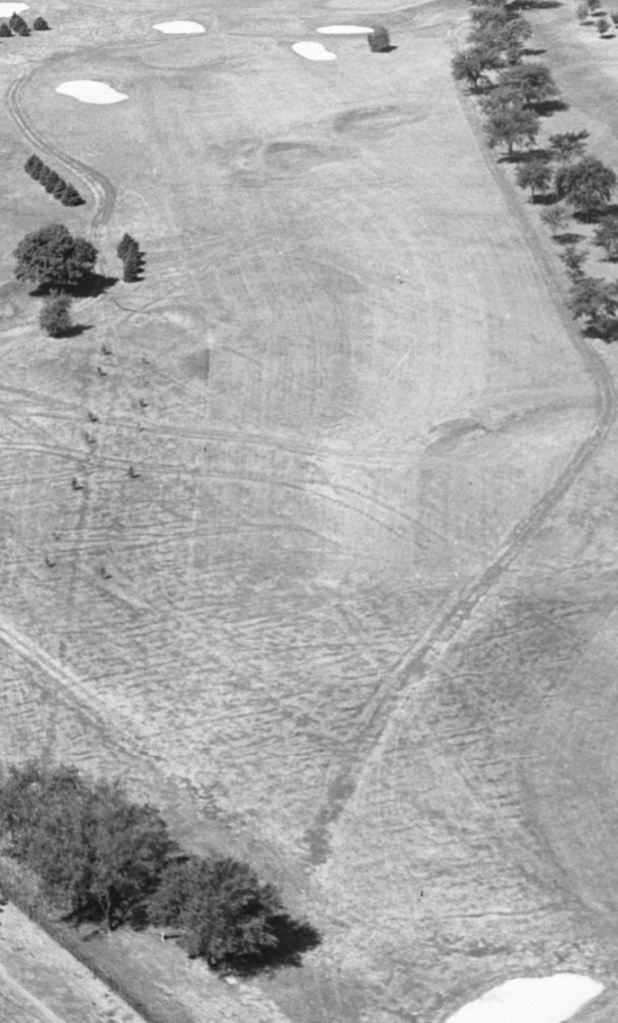
Fourteen: The fourteenth is the longest par three on the course at 220 yards. It was originally fearsome with bunkers short right and left under the tree, but by the 1940s it appears to be more of a long bunkerless punchbowl. Still interesting, but with less teeth.
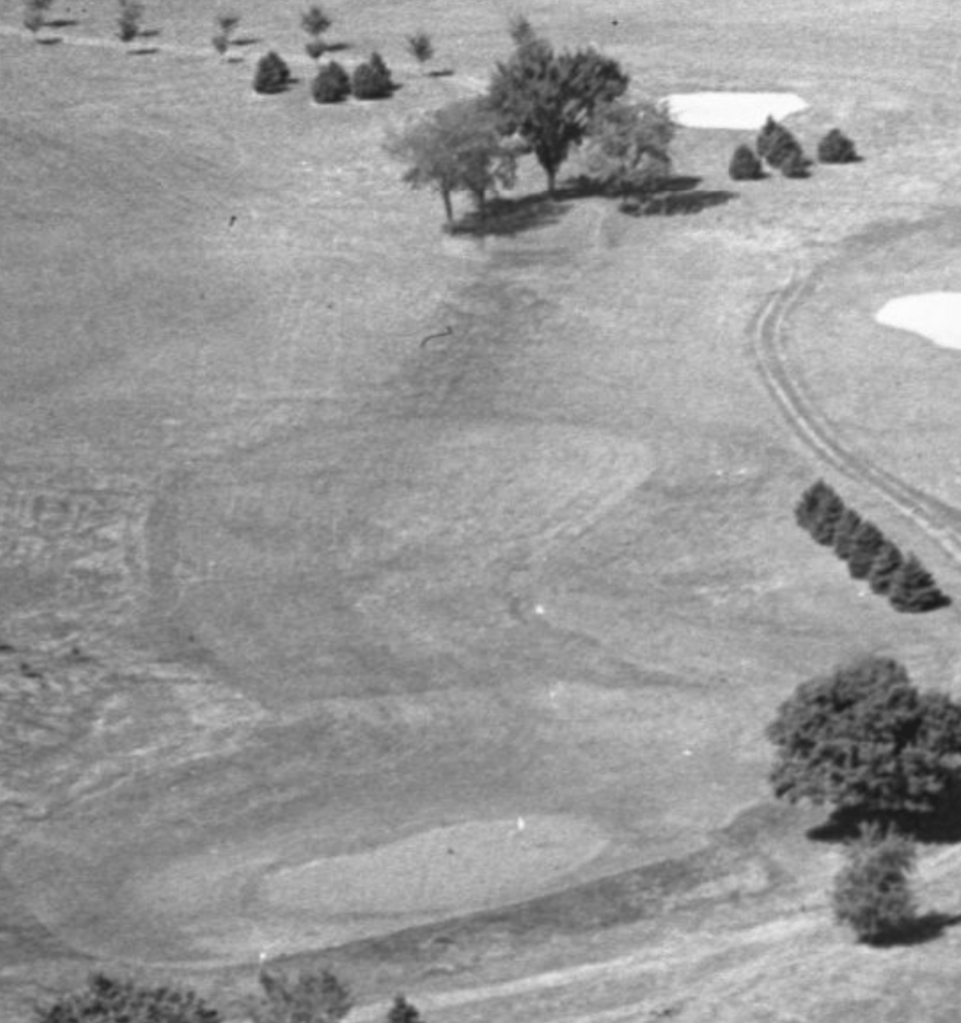
Fifteen: The final, and longest, par five on the course plays up a smaller hill 500 yards along the course’s southern boundary. To even see the green requires two good shots to prevent a blind shot in If the hill and the length weren’t enough, there was a fearsome bunker right of the green ready to catch flared shots.
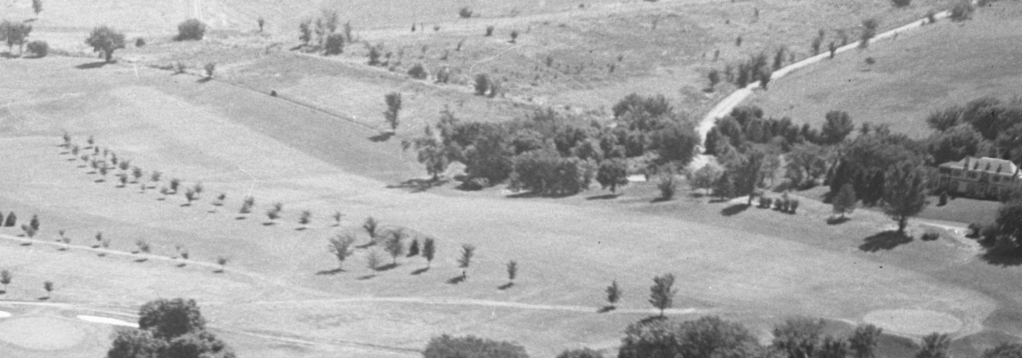
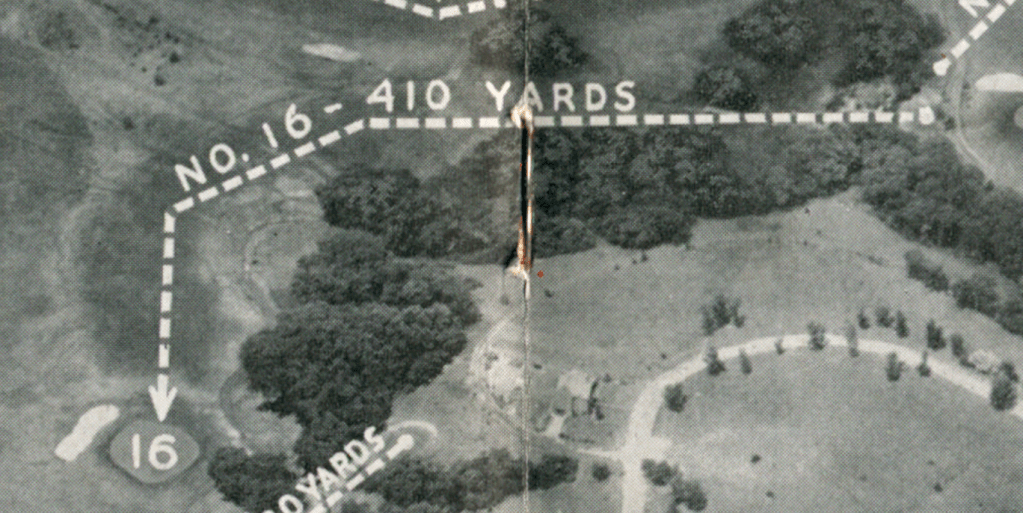
Sixteen: The Western Amateur program called the dramatically curling sixteenth, “one of the finest par 4 dog leg holes in the country.” The tee shot demands accuracy as anything hooked into the trees left is dead and if it’s in the fairway but short, there’s no going for the green. A punch out is all you can ask far, assuming you find the ball. The cherry on top was a pushed up green with a signature bunker right and the creek left.
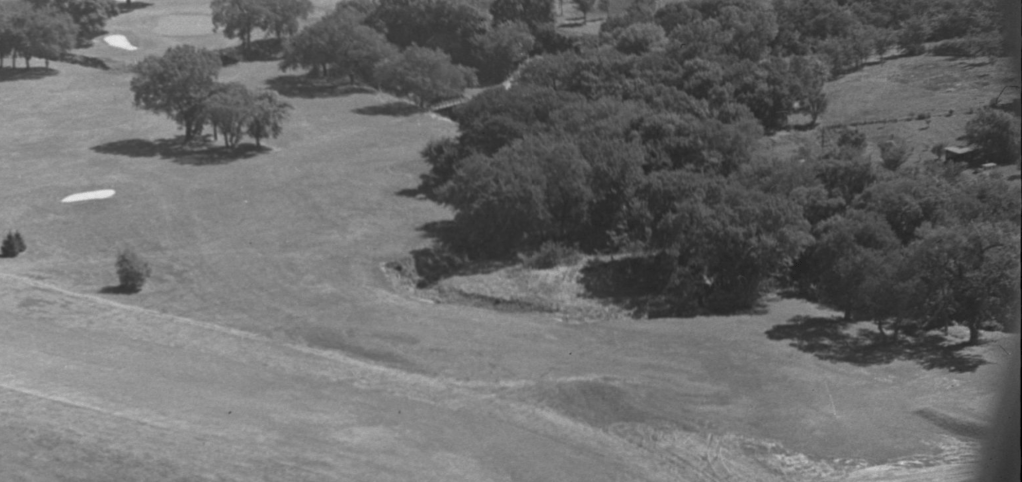
Seventeen: Seventeen is the shortest par three at on the course at 130 yards downhill from atop the ridge. Rockbrook creek meanders in front of the tee box and along the left side of the hole. A large bunker looms and follows the diagonal position of the green penalizing anyone short or right with the high grass faces.
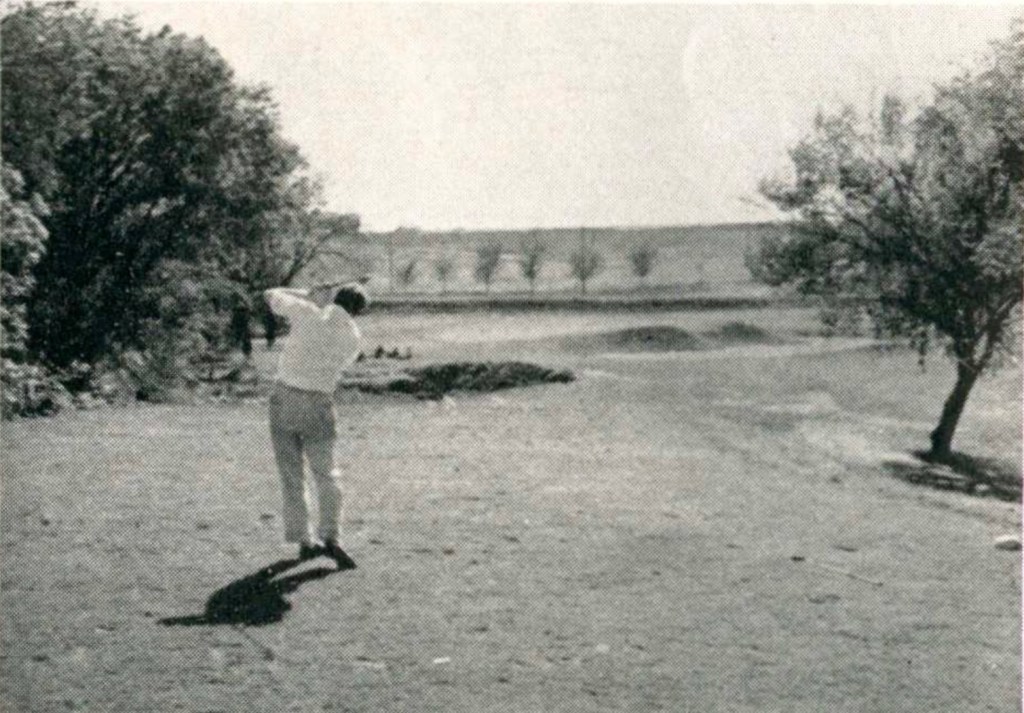
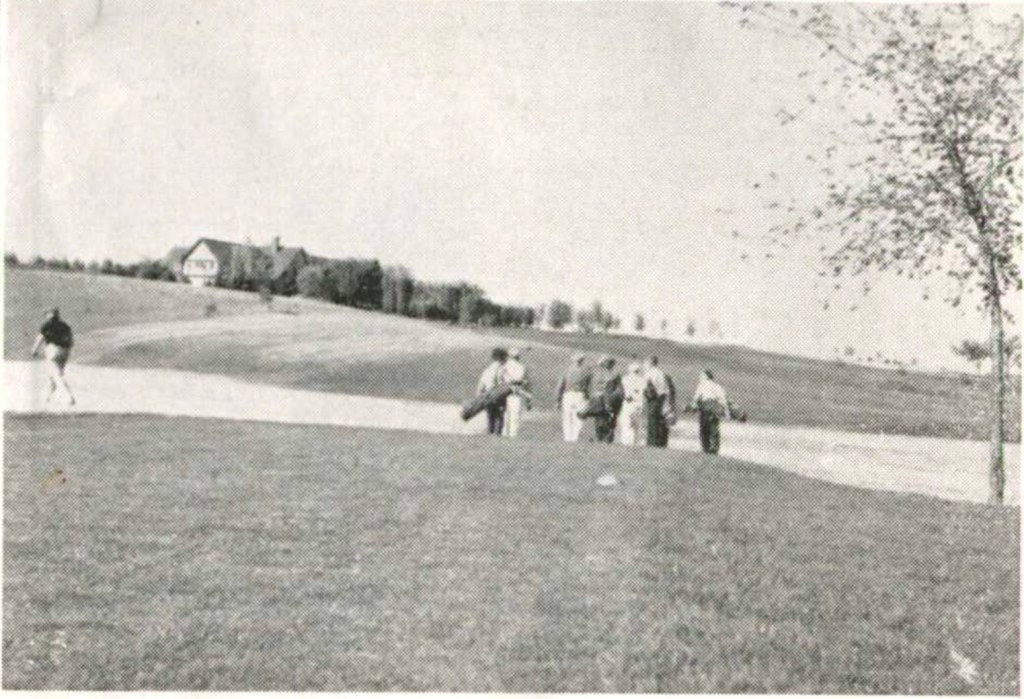
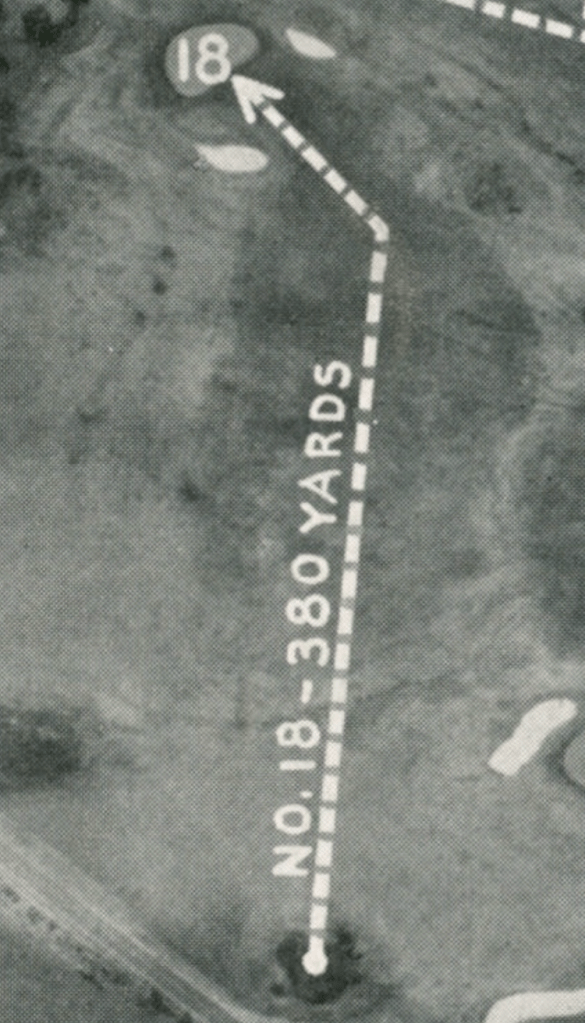
Eighteen: The 380 yard par four finishing hole plays longer than its yardage and rides the side of the hill back up toward the green. When it was built it was a fearsome hole with a bunker right and deep bunkers astride a built up green.
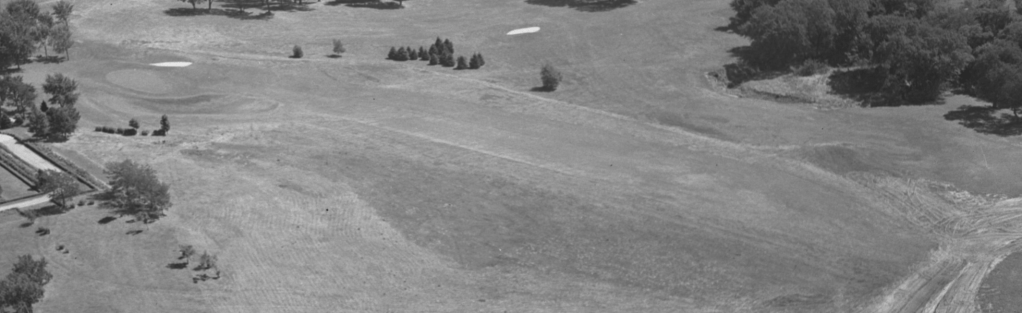
Change comes to Happy
In 1949, after much bunker removal, tree plantings, and other tunkering, the club made the decision to rebuild the course in a north-south configuration that marked the end of the original routing. More changes came in the 1960s to mitigate flooding risks and course was changed once again in the mid-90s and mid-2000s.
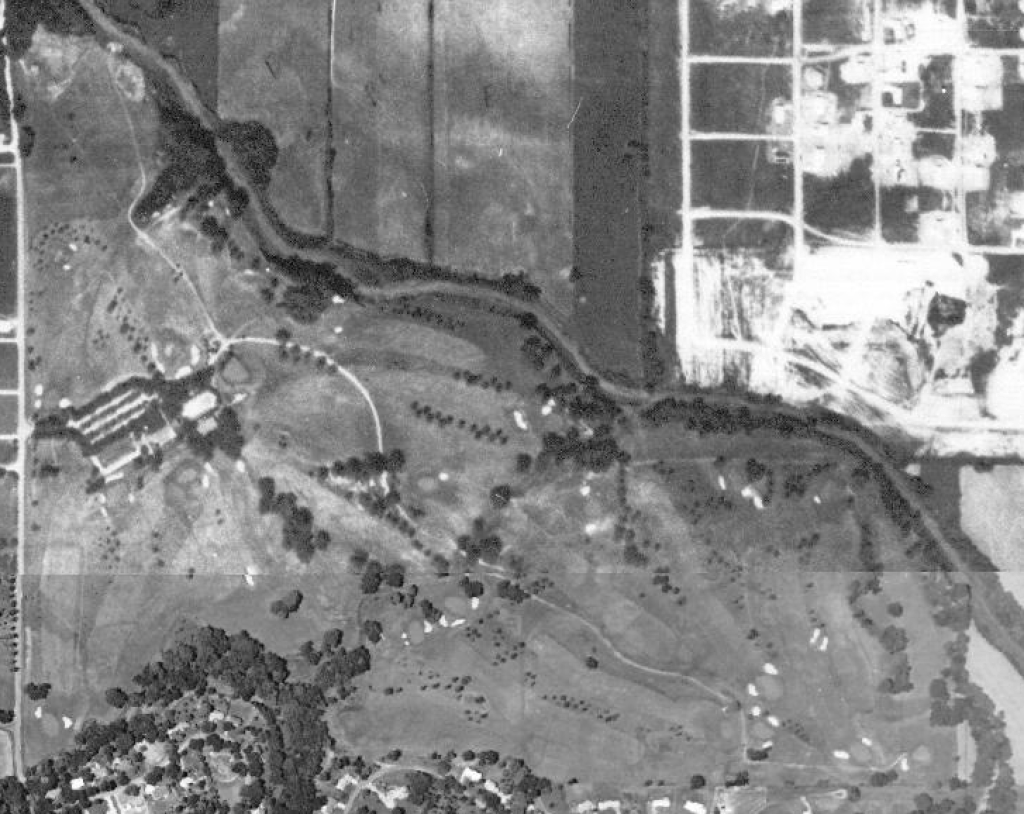
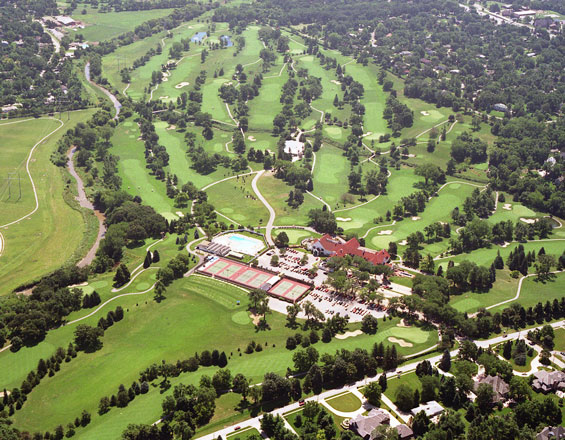
It’s been 15 years or so since I played Happy Hollow, but in its current iteration the land is still good with many of the trees having matured into the lining of a true parkland course. The new layout has a number of strong holes like the medium par three third, short par four seventh, uphill par four ninth, long par five twelfth, and long uphill eighteenth, and yet there are none of the telltale signs it was ever home to a L&M gem. Ten is probably the closest existing hole to one that was built in 1924, though the original pushed up green with dramatic bunkers are gone.
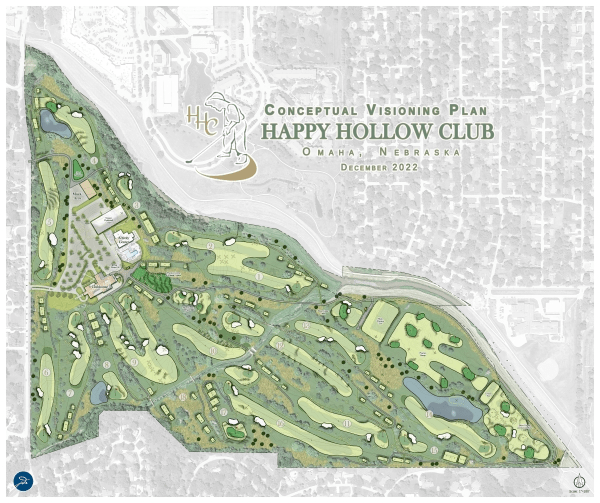
In 2022, architect J. Drew Rogers outlined a renovation that looks to reemphasize strategic play, widen fairways, and give the courses’ bunkers a fresh look. If his visioning plan is any indication of the future of Happy Hollow, it could reestablish its place in the already strong landscape of Nebraska golf.
Final Thoughts
William Langford and Theodore Moreau, most of whose output centered in the Midwest in an East and West Coast centered golf landscape, put their own spin on the manufactured look of Macdonald and Raynor. While none of their work in Omaha still exists, their legacy lives on in Wisconsin, Indiana, and Illinois where golfers can experience some of the two men’s genius. Their Happy Hollow was a special course with a long history in an underappreciated historic golf town, but nothing lasts forever. On their third course, the 118 year old club continues to evolve and thrive on the original site, but after spending so much time with the L&M design I can’t help but wish it still is what it was.
Sources:
(Photos are from the Durham Museum Photo Archive as Fair Use, unless otherwise specified)
Omaha Public Library
A River Runs Around It – Kent Walton
The Durham Museum Photo Archive
The Omaha World Herald
The Omaha Bee
Douglas County GIS
The Happy Hollow Club
Happy Hollow Visioning Plan – J. Drew Rodgers
The Sultans of Steam Shovel
Is Alexander Findlay the Founding Father of American Golf? – Links Magazine
America’s First Golf Course was Constructed in Nance County – Grand Island Independent


Leave a comment