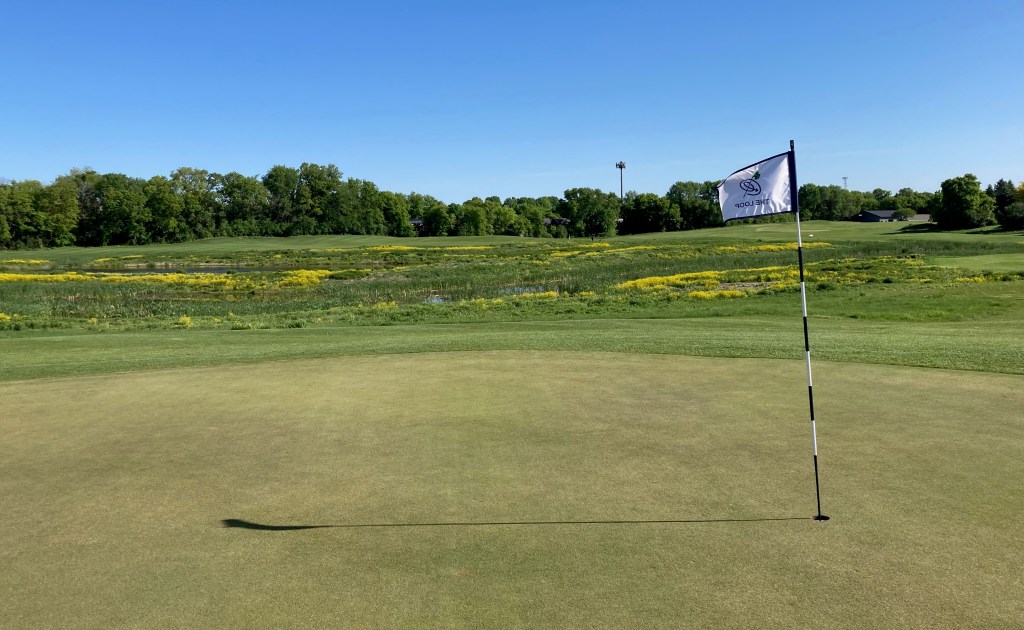
Architect: Benjamin Warren
Walkable: Yes. Accessible to golfers of all abilities and mobilities.
Highlighted Holes: 1, 2, 3, 5, 7, 9
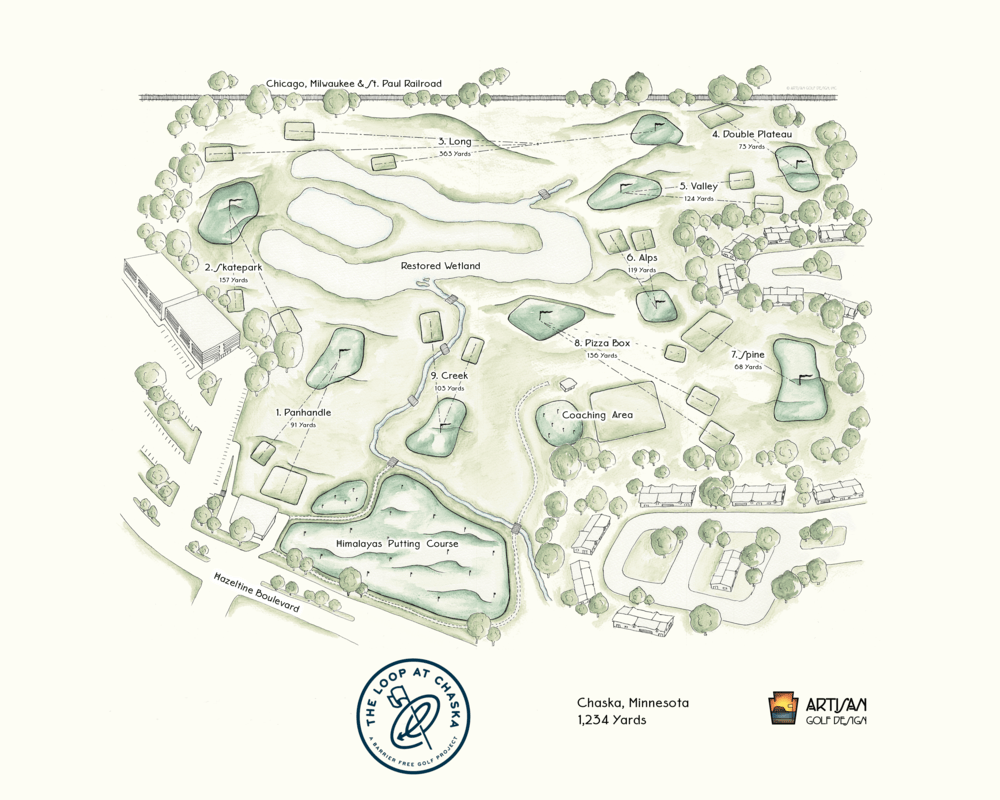
Par three courses are built to be fun. They’re what give architects the freedom to get a little wild with their greens, clever with their routings, and try things they might not on a proper course. They can wear their influences on their sleeves taking liberally from famed par threes like the redan, postage stamp, and Biarritz while incorporating homages to longer holes. The Loop takes full advantage. The Loop plays the hits.
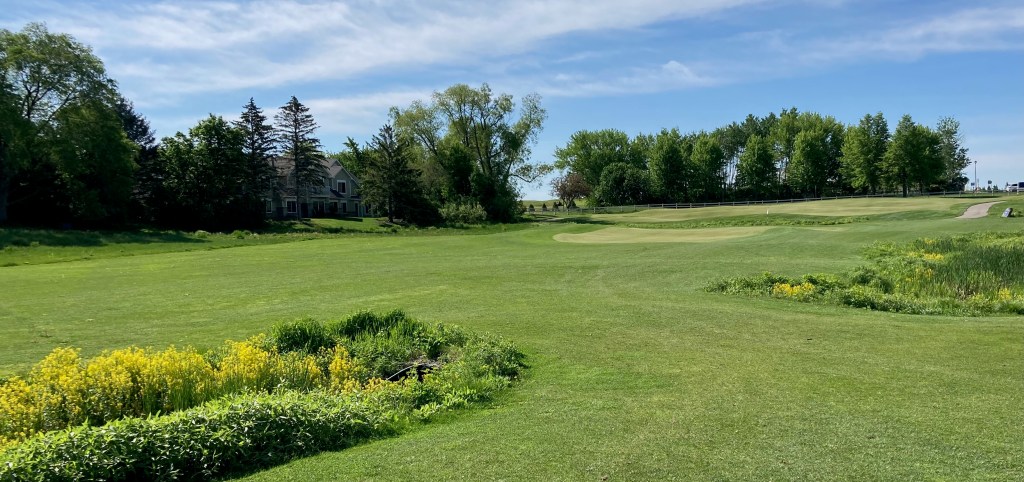
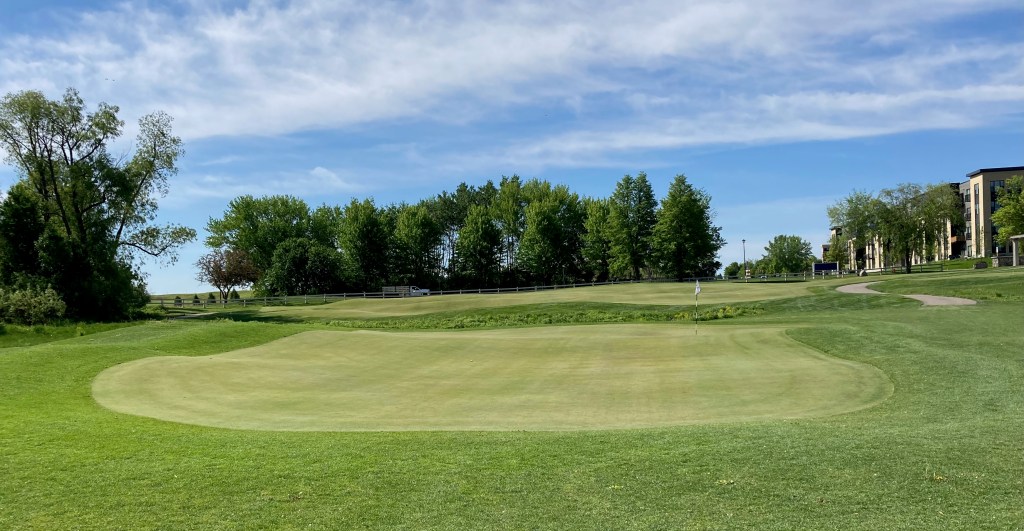
It isn’t technically a par three course. The 363 yard par four third with the tongue in cheek name ‘Long’ pushes it into executive course territory, but it embodies all of the playfulness and creativity inherent to modern short courses. Built around reclaimed wetland, the Loop is almost entirely manufactured allowing for bumps and burrows through the fairways and into the greens that are more akin to ground you’d find in the UK than central Minnesota. There are no bunkers which helps with pace of play and accessibility for golfers with limited mobility.
The course sits on the former site of the nine hole Chaska Par 30 down the street from Hazeltine west of the Twin Cities. Minnesota non-profit Barrier Free Golf partnered with the town of Chaska and raised funds to convert the site into the Loop, a course with four principles: accessibility, environmental sustainability, financial sustainability, and fun.
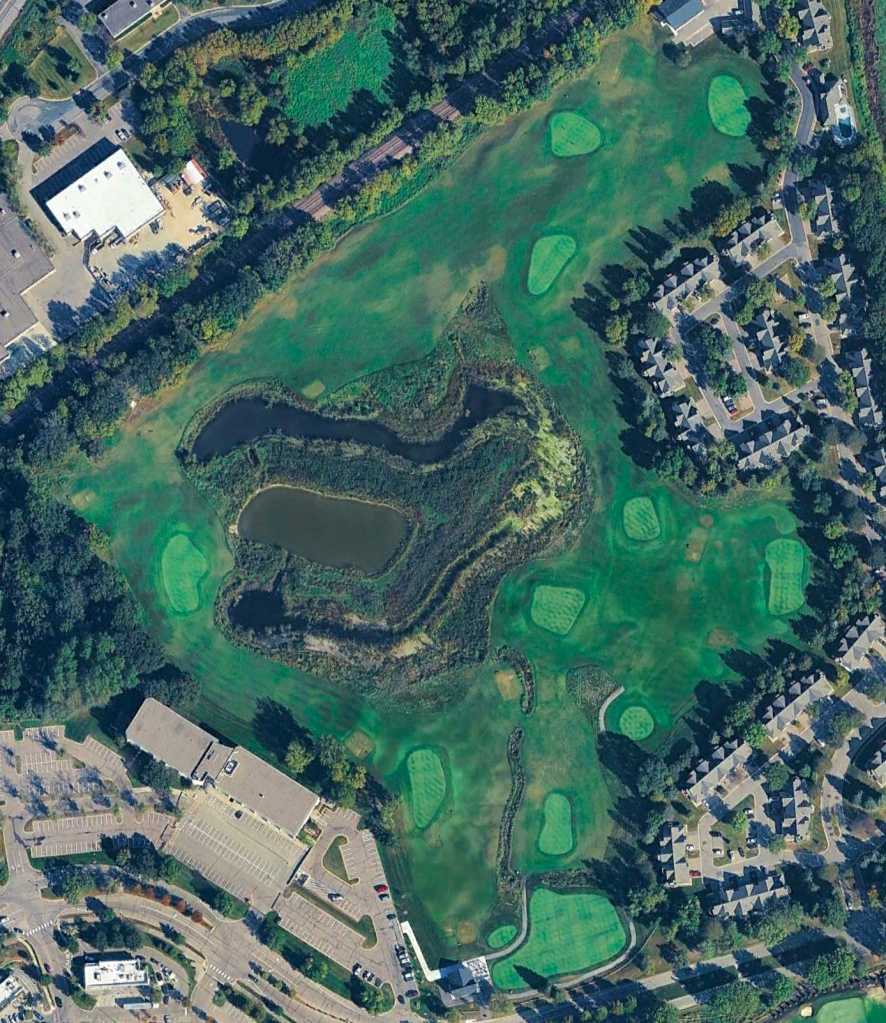
Architect Benjamin Warren routed the course and leaned on template hole concepts throughout. The hole by hole tour on the course’s website combines good descriptions with clever diagrams highlighting the greens and crediting the shapers: Jimmy Craig a longtime Coore and Crenshaw associate, Brett Hochstein, an independent architect, Dan Bieganek from Dye and RTJ’s design groups, and Jonathan Reisetter, who’s worked with Tom Doak’s Renaissance Golf. Reisetter also built the Minnalayas putting course modeled after the famed Himalayas putting course at St. Andrews.
One (Panhandle): The first hole is a preview of what to expect from the Loop. Humps and bumps leading up to the green? Check. Distinct sections that are important to find for a two putt? Check. Slopes off of which to feed the ball on and onto the green? Check.
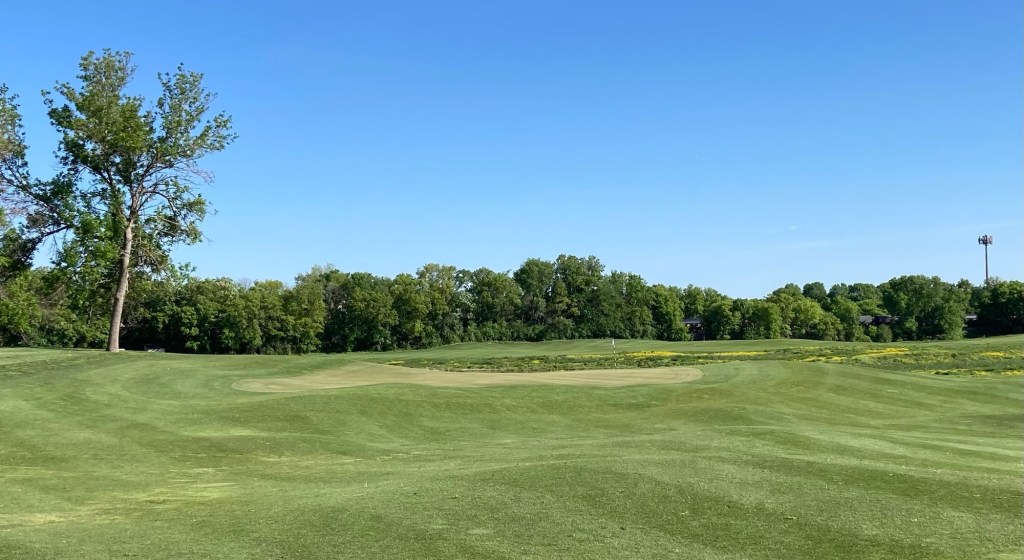
Two (Skatepark): This green has everything. Tiers, plateaus, a blind back section, side slopes off which to bank shots. It’s one of the most severe greens at the loop and one which you’ll want to spend time finding routes to the different sections. The most prominent feature is the ridge that runs through the center, affectionately known as the ‘buried elephant.’
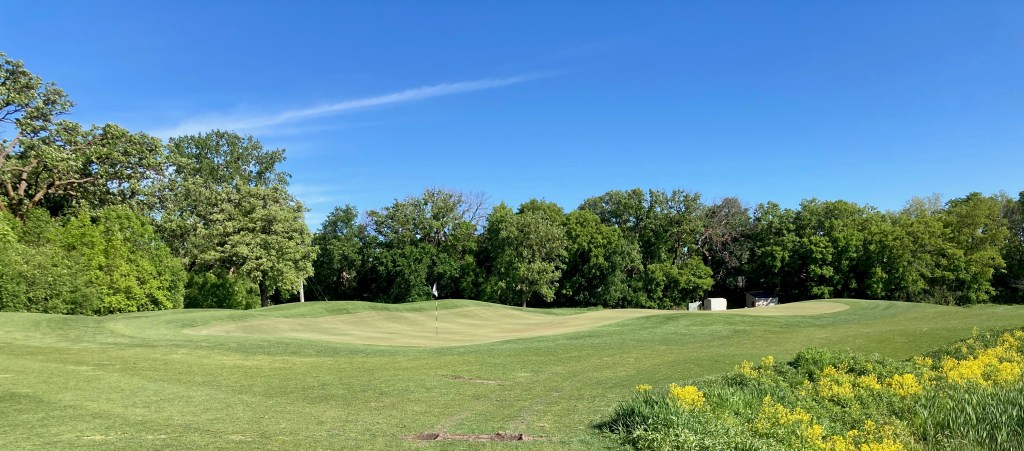
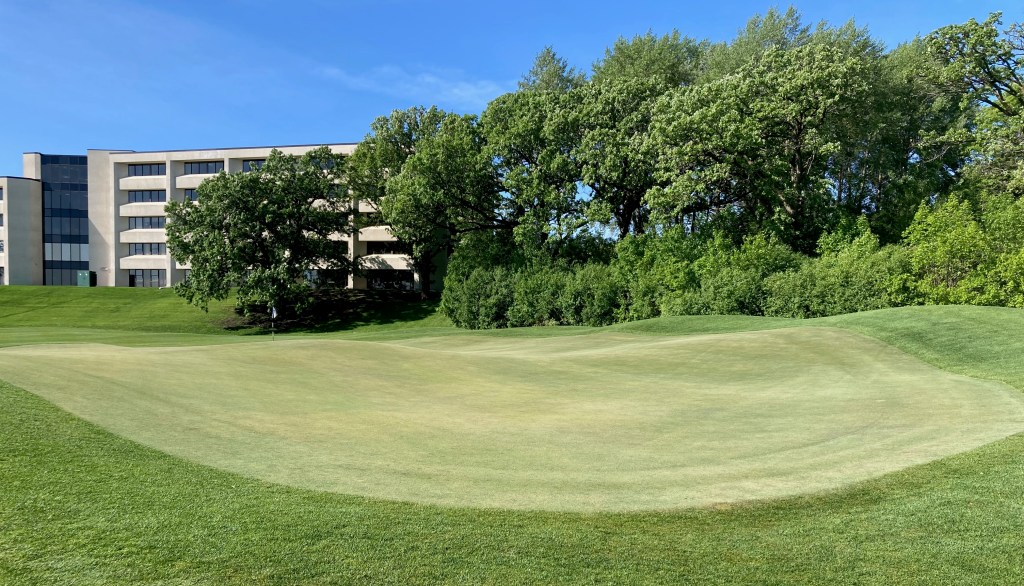
Three (Long): The name is fitting as the par four third is more than twice as long as any other hole on the course. At 363 yards, the bunkerless fairway is wide with a ridge 210 yards from the tee. Hugging the left side for golfers brave enough to challenge the gnarl provides the ideal angle to approach the green but leaves a blind shot in. As with the rest of the course, the green here is a highlight with pockets front, left, and back right with a small backboard at the very rear of the green. According to the course website, “the external contours were inspired by two bunkerless green complexes at Palmetto Golf Club in Aiken, South Carolina.”
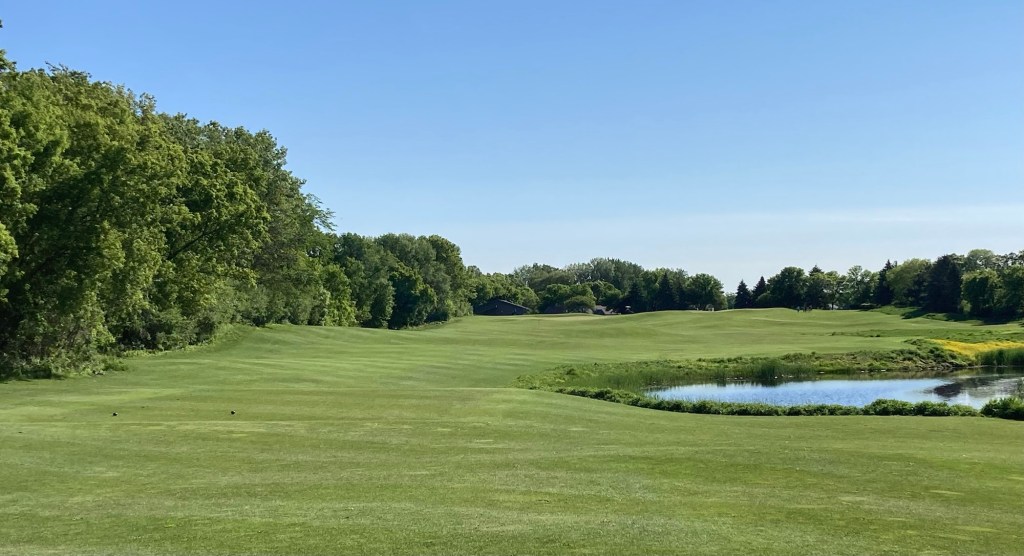
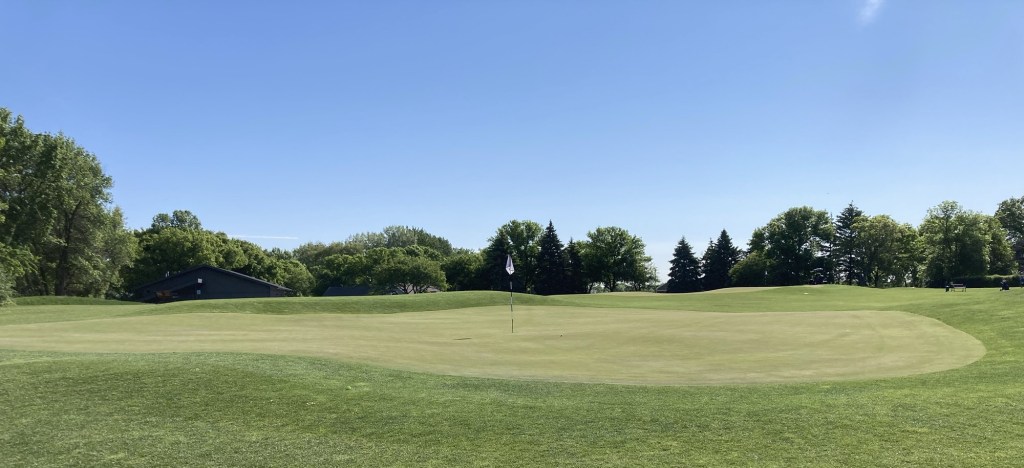
Five (Valley): Ah, the redan. A classic template. Sorry, ahh the valley, a classic template. Wait. This clever little hole combines several inspirations for its design. A high right ridge can be hit to feed the ball to pins on the left and a wicked little shelf at the front demands precision lest the ball find the Loop’s very own Valley of Sin. Perhaps you want to end up in the valley so you can get creative in your escape? Maybe you lob one to the right ridge and feed it back or bump an iron into the bank to skip the ball onto the green. There’s lots of fun to be had here.
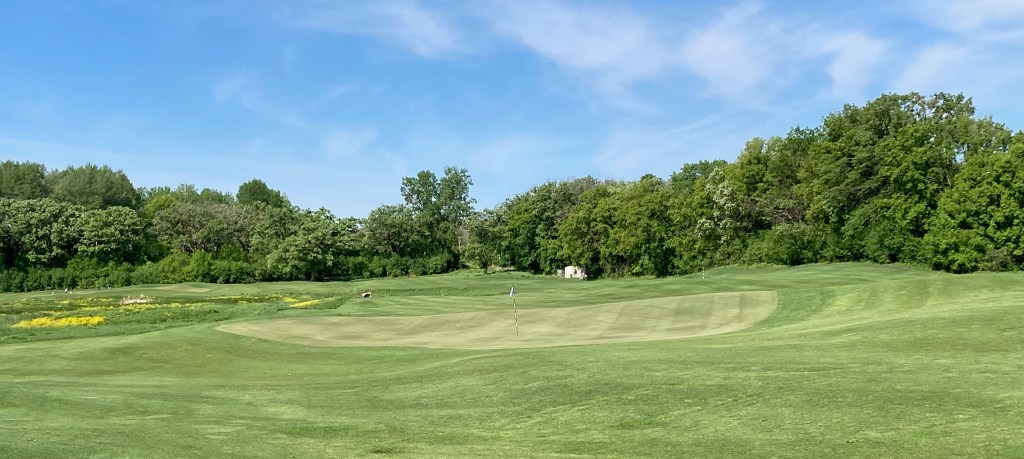
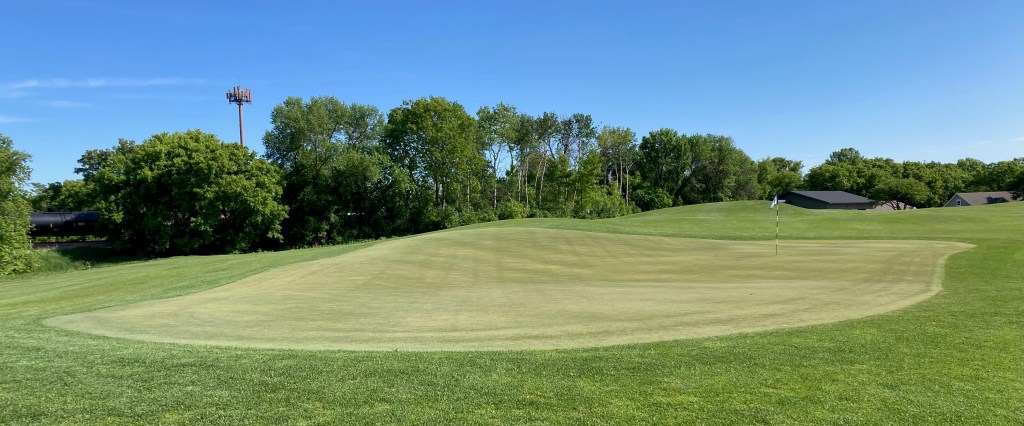
Seven (Spine): Ridges run through this wide green, the most prominent of which runs through the middle and back towards the tee. There are multiple options that run the width of the holes and, combined with the large number of pin options, can create vastly different looks.
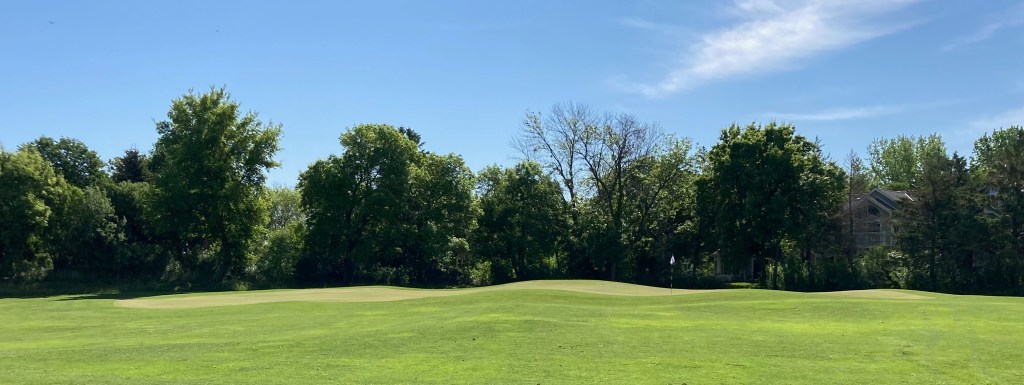
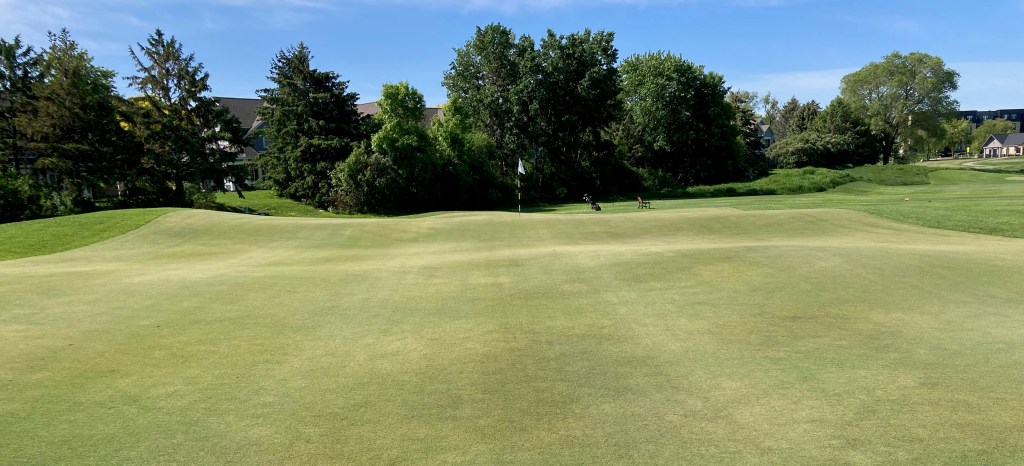
Nine (Creek): The green is contoured so that well struck balls will feed to a back section or gather in the front. Its defense is an angle to the tee box that rewards precision but leaves misses with a tough (fun) chip. By running the creek under part of the fairway, the ninth hole remains accessible and guarantees that there are no forced carries on the course, which benefits golfers of all abilities. Fun fact: inspiration for the creek comes from the ones that cause mayhem at Oakmont.
Final Thoughts
The ideal time to play the Loop is without anyone behind you. Drop a few balls in the fairway and play shots along the ground or get some pitches in the air. Drop a few on the green and hit to different spots using the contours to see your ball duck, dive, and weave. It’s brilliant fun and truly a spot for everyone. Youngsters will have a blast learning the short game and learning feel. Architecture nerds will geek out and everyone else will appreciate the variety and playability. Hopefully the concept is taken up by more cities around the country. Everyone deserves a loop.
Further Reading
Hole by hole tour – an excellent overview of each green from the course’s website.
Flyover – twincitiesgolf
Why this pioneering golf course is focusing on access just as much as design – Golf.com
Breaking Down Barriers With The Loop at Chaska – USGA
The Loop at Chaska – Barrier Free Golf


 Layman's Hall
Leave a reply to crusadejoyfully48003ea7f3 Cancel reply