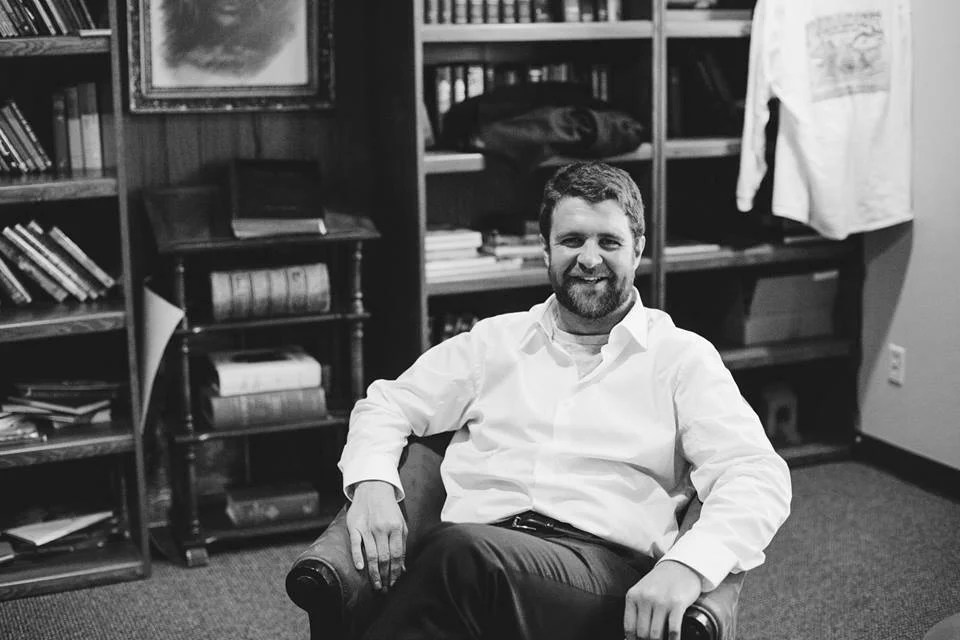
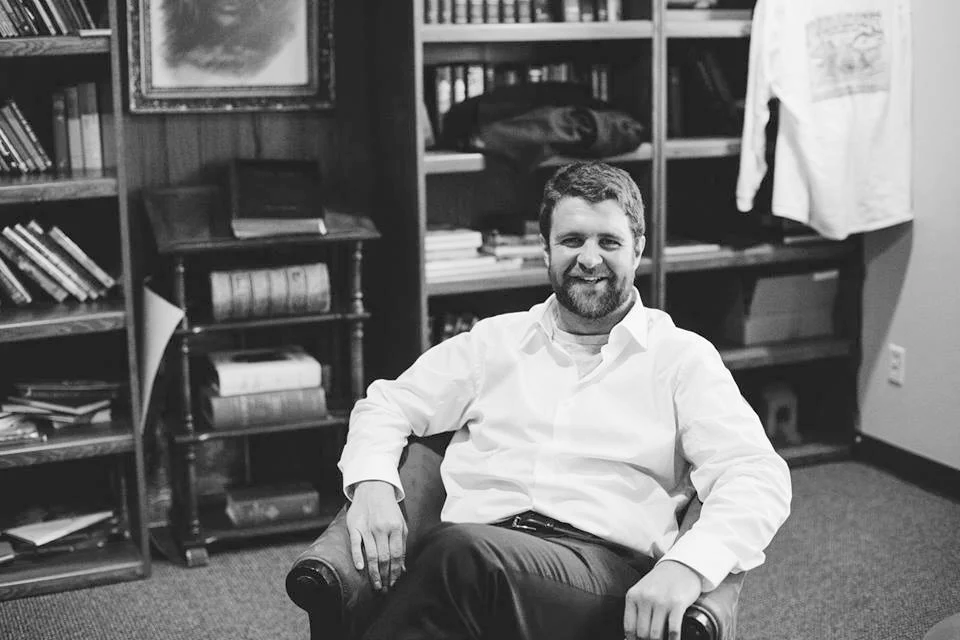
Conant is an Omaha native and, along with Brian Schneider, architect of Aiken’s Old Barnwell, one of the most impressive new courses built in the last decade. His resume includes work for Renaissance Golf and Bel-Air, Dornick Hills, and Llanerch. He runs his own firm, Dundee Golf and was kind enough to sit down for an interview.
Edited for clarity
Can you talk a bit about your background growing up in Omaha, playing golf, and how you got into architecture?
I worked at Schmidley’s driving range, which is between 120th and Maple, and it was child labor basically, because I would play baseball at Keystone, Little League, and I think I got paid like three and a quarter, something like that. I’d pick range balls and do odd work around the shop and whatnot, and it was cool to be around golf. I played a few rounds at the Knolls. My mom got us lessons when we were like 10 or 11, but I really started playing when we started doing little twilight rounds with my stepdad. He belonged to Highland Country Club, which later became Ironwood Country Club, which later became the Sterling Ridge development out on 126 to 132nd and
Pacific. And it’s an old Langford course, but it had been butchered, and even if there was any Langford left, I didn’t know what I was looking at at the time. It was cool to go to a club and play nine holes and then have dinner afterwards, and my stepdad, he wasn’t good at golf, but he was passionate about golf and I’d say that is what gave me the bug to continue playing.
After high school, I went to UNO for 2 years and I worked at Deer Creek at the Players Club, and I did a number of jobs there, mostly just in an effort to get free golf. I had a bunch of friends who worked there. It was close-ish to where I lived, but Northwest Omaha has just grown exponentially. The homes around the players club were getting built, but A: there was nothing else out there and B: it wasn’t built out the way it is now.
Two guys who were there who were golf people who stayed in golf and were fun to have as leaders were Chris Jacobson, who we call Jake, who’s now with landscapes management, and he’s a VP in their management department, and then Tim Halpine, who was the pro, then became the GM at players club. Now he’s the GM out at Lost Rail. And it was just cool having guys that were open to the line cook playing more golf than any member played. I seriously think one year I had more rounds than anybody else there at the club, so that probably gave me the bug more than anything and it was around that time that I started realizing that there’s people that build golf courses and that’s a profession and started looking into that a little bit more.
So from there I spent 2 years at UNO and then I finished my degree at the University of Montana. I’ve got a Bachelor of Fine Arts and painting, but after those 2 years at UNO had this itch like, ‘golf architecture would be kind of cool.’ There’s 3 kinds of skill sets you need to be good at golf architecture. It’s the creativity component, being decent at math and engineering, and loving golf. I fit those qualifications, I should do this. By the time I got serious about it I was so close to finishing my painting degree that I figured, get some paper in your hands and then decide what you wanna do.
From there, I took a year off. I went to grad school for landscape architecture, which is a gateway that a lot of golf architects take to get into golf architecture, because there’s a lot of overlap as far as site planning, plants, turf, engineering, storm water management, things like that, big scale, macro, hundreds of acres of dealing with the site. Now, that being said, there’s no degree, there’s no qualification, there’s no certificate that says, you’re a golf architect. It’s essentially if somebody wants to give you millions of dollars to build a golf course. You’re a golf architect. Everybody comes about it in a little bit of a different way, but landscape architecture in grad school for me was a good choice at the time. It was 2009 or 2010. It was the height of the recession. Nobody’s hiring painters with a fine art degree for jobs so going back to school was a good choice.
Once I got to school, I started emailing golf architects and calling them and writing them and getting advice. Tom Doak emailed me back and he was positive. There’s only one or two guys out of the twenty people I talked to that were positive about the outlook on the golf architecture landscape at that point. Tom’s thinking is there’s always room for talent, golf’s never going away. If you’re talented, there’s going to be room for you in this business, even though things might be slow now. So I hooked up with him for an internship a year and a half later at Dismal River out in Nebraska, and from there, that was a jumping off point of working on a lot of renovations and restorations and helping on new builds and basically spending a lot of my time shaping on those projects. That’s how I cut my teeth – Tom’s a design build guy. We were in the bulldozers and excavators building greens, building bunkers, building all the golf features that people play. And we prefer that way rather than drawing a bunch of plans on paper and then giving it to a contractor to execute. There’s just too many lines of communication there, and hey, it’s fun to be in the dirt, out on the big equipment, building stuff. There’s less room for error, and less room for misinterpretation, for executing the style we want, or the features we want.
It feels like there’s a pretty big distinction between thinking about landscape architecture and designing a course, and actually being on the equipment and and doing the work. Was there a big learning curve there or did that come pretty naturally?
For me, it came naturally. I don’t think it’s that way for everybody. I’ve seen guys who don’t take to the machine. One of my mentors, Eric Iverson, who’s worked for Tom for 30 years has always said, ‘I can tell if you’re gonna be in good shape or not [on the equipment] if I can play catch with you with a football or a baseball.’ If you can throw decently, if you have good hand eye coordination, you’ll basically be able to pick up the machine pretty well, and it’s also like, I don’t know how old you are. I’m 39. I grew up playing video games and every kid who grew up with any type of video game controller or joystick is probably going to be fine on an excavator or bulldozer because it’s basically, it’s the same thing. You’re looking out in front of you, controlling something with your hands that you’re not watching and you’re making the thing move.
Now the scale of what you’re doing is big. And that appealed to me from an art standpoint because shaping is a lot like sculpture or drawing. It’s just using a different tool in a different medium at a larger scale. So that really has scratched my itch for the creative component. Wanting to actually make stuff and build stuff is getting in a machine and building a green or building a bunker. Being able to do that scratches my creative itch. If I weren’t able to do that, I’d probably have a painting studio in my house or I’d have some type of other creative outlet, but my job provides that for me, so I don’t need to occupy any more square footage in my home.
One of the things I really appreciate on your website is your list of courses to see, and courses you’ve seen. Obviously there’s a lot in Nebraska on there. Some of the the local courses are wonderful and fascinating. Could you talk about some of the Nebraska courses in that you think about the most? Either when you’re thinking about designing and building or just that that scratch that itch for you.
There’s a lot that’s been built since Sand Hills that is nationally or internationally renowned, and it starts with Sand Hills Golf Club. They paved the way for places like Dismal River and Wild Horse and Bayside, and GrayBull, Prairie Club, CapRock, all these places with that the model. Dick [Youngscap] went through the brick wall and showed people how it could work. And now, not everybody has taken all the lessons that Dick taught them or that they should have learned from Dick, but golf still exists, these new models taking advantage of our geography. The sand hills are just so unique. They’re unlike anything else in the world and we’ve discovered that, hey, that’s actually really good ground for golf. I wouldn’t say I use them as inspiration when I’m working somewhere else because I’m very place-based and want to want to build stuff that fits the landscape that I’m in, but it’s hard not to be inspired by the idea that golf could be put on the sand hills and be executed at such a high level that people are coming from all over the world to see these courses.
The funny thing is, golf in Nebraska did not just start in 1996. There’s been golf since the roaring 20s or even before, and a lot of these rural 9 holers cropped up very similarly to how links golf courses cropped up over in Scotland in the UK. It’s very organic, very blue collar of, hey, we have a ton of daylight, we finished our work. We have this piece of land that’s close to town that’s not good for much, but it’s good for us hitting this little ball around, so let’s just put a 9 hole golf course there. I really love the small 9 holers in the sand hills like Augusta Wind and Thedford and Pelican Beach, that have cropped up more recently, but, but older ones like York and Ord, Dannebrog, where, I think their 2nd hole has the green in the cow tank. All those are very inspiring in their own way, and I see parallels between them with how golf in Scotland started, and I think that’s kind of cool, and I try not to be overly romantic about that, but you could get romantic about that, if you wanted to.
Golf in Omaha for a large part was dominated by OCC and a couple other clubs like Happy Hollow and Ironwood or Highland before it went away. Then you’ve got your municipal courses that are underrated, like Benson’s underrated, Johnny Goodman’s underrated. They’re never going to get national love or even state love but they’re very good golf courses. Then you’ve got old places like Elmwood or Field Club that are tight, they’re narrow, they’re short, but they still provide. If they went away, there’d be a golf desert in that part of the city. So they still serve a purpose. I wouldn’t say we’re a great golf state, but the top is very good and can compete with anybody.
This is a bit of a tangent. Feel free to call me crazy. The blog is named Layman’s Hall after all. The 5th hole at Augusta Wind has that, that perched up green, that feels almost like there’s a castle rampart in front of it, and it’s up there. Sixteen at Barnwell felt similar to that kind of perched green with the big land.
You know, there was no inspiration from Augusta Wind at Old Barnwell.
Rats. I thought I had a scoop there.
I like how steep a lot of those greens at Augusta Wind are. That’s pretty cool. Sixteen at Old Barnwell. There’s a lot of inspiration taken from, I want to say it’s the 6th green at Cape Arundel. It’s on a super steep hillside. You need something to hold up the low side. The Mae West hole at Bel Air, number 12, uses just a giant knob that is, uh, you know, reminiscent of the anatomy of a female and is thusly named the Mae West. They’re simple tricks you pick up as you see golf courses, and when you’re looking through the lens of why did they do this or this? Does this serve a purpose of strategy or functionality or just window dressing and, the Mae West hole, I think everybody thinks it’s probably just window dressing. But no. That’s pure functionality. He had to do that to fit that green on the hillside. So when we’re building something like 16 at Old Barnwell, Brian and I are going through the Rolodex of our our lexicon of golf courses we’ve seen, and who had to deal with a similar problem? And does that apply to what we’re thinking about right now?
You worked with Tom to restore Dornick Hills. Can you talk about the research process for that and what it takes to be faithful to the original design? I love digging in to the history of courses and old photos and that kind of stuff. And I’m curious how that looks in the field versus in in preparation.
The more ground level photos you have, the better. That’s the gold standard of any restoration because you can get as close to that spot as possible and you can see what it looks like from the ground. A lot of times old aerials, 1938-39, the USDA or the Department of Agriculture, one of the two was flying over a lot of the Midwest trying to measure farmland and how much food can we support for this country? What you’ll find when you’re doing restorations is there’s a lot of really good aerials from like the late 1930s. The problem with that is, depending on what time of year they took it, were there leaves on the trees or not? Was the grass dormant or not? Did it rain the previous day? All those things have to go through your head when you’re trying to faithfully restore something, so I’m constantly being a skeptic with the information that we’ve got. First thing you’re trying to do is try to pull as many data points, as much research as you can do. Compile all the information. And then our job is really sussing through it and deciding, okay, we know this for sure, we think this is true. We need to cross reference it with this other aerial photo or this ground level photo and see if you can see, the ground level photo, maybe of hole 3, but you can see three or four other holes in the background, and you can start to cross reference things.
With Dornick, we had a handful of ground level photos from all different eras. He [Perry Maxwell] built nine holes, then he built four holes, then he built 9 holes. Then I think his wife died, and he went to Scotland, then he built 9 more holes. And then they tweaked it a little bit because they were hosting the state am. There’s a gentleman by the name of Chris Clouser, who wrote the book, The Midwest Associate, and he did a lot of research. He had a lot of these photos of his book, and he drew sketches of what he thought every golf hole was, and you look at them, and you’re like, ‘oh my god, this is awesome, like, here’s this huge bunker over here.’ He had for the first 9 he had drawn inspiration from National Golf Links and things like that, template holes and for the second 9 after his trip to the UK there was inspiration from links courses, and you could see that in his drawings, but after looking at aerials, and after deciding, here’s what we actually know and can prove, and here’s where this might be a discoloration of the grass, or I know this area that he thinks is a bunker is this low spot that could have just been dirt and rock, and not a formal bunker. Knowing the club and how much money they had and the type of people they were, they wouldn’t have had 100 formal bunkers. They would have just had patches where grass grows and maybe it doesn’t. So we met with Chris, we talked to him a lot. We used his drawings and his his research quite a bit, but we ultimately had to start from scratch and do our own research and under and use that as just one piece of the puzzle. He was a huge help, but ultimately we’re not gonna put these drawings back that Chris had made and just build that and leave them with 100,000 square feet of bunkers. We just don’t think that that was the case. I think we’ve got 20 or 25 formal bunkers out there and then there’s some areas where there’s no irrigation. If grass grows, great, if it doesn’t, great. If it’s seasonal, that’s probably the way it was.
Then there was the added dimension that they had rebuilt the golf course, they had rebuilt the greens in 2 different iterations. The guys who built the greens were very much design-bid. So they they were architects who drew plans, detailed plans, and then they gave it to a contractor to execute. So we were able to get in touch with the architect who did that work, Jeff Brauer, and he was nice. He sent us his old plans that had the original topo underneath his grading plans, so we were able to see, here’s the greens that hadn’t changed. Here’s what the 10th green was. We’ll put Jeff’s work aside for the grading plan that he chose to do, and what do we need to do to get it back to this, and so that was a good jumping off point. A lot of that stuff you can see in the dirt anyway. It’s like, here’s a mound that’s 6 feet high. That’s obviously artificial. We need to get that out of the way. That’s that added piece of information of okay, I’m gonna trust my eyes that we need to get rid of this mountain, but also, the architect who built it, his grading plan is saying that’s exactly what they did. So we know that that’s something we need to do to restore this green site.
That’s fascinating. Was he resistant to y’all undoing some of his work?
No. Kind of thought he would be, but, we approached it from a very practical [standpoint]. This is the work the club wants to do. We’re going to try to faithfully do this work. Do you still have the plans and if you’re willing to share them, it would be helpful to us so that we could better do our job. I’ve talked with Jeff on the phone. I don’t know him personally. I don’t think I’ve ever met him in person, but he’s the most professional dude and would in no way take it personally or begrudge us for doing a job or get emotional about it. It was like, yep, here’s all the stuff I have for Dornick Hills. We’re lucky he still had it because he did the work like 30 years ago. He was great about sharing and did not begrudge us one bit. So we were really appreciative.
Moving to Old Barnwell. What were the early discussions with you and Brian and Nick like, and were you always set on doing the kind of project that that resulted in what Old Barnwell is now? And if not, what did different iterations look like?
Nick did not have a piece of land when he engaged with us. He was nice enough to let us be a part of that process and help find a piece of land, which I think was to his benefit and obviously to our benefit. I think he said he might have gone to 60 pieces of land or looked at 60 and went to 20, something like that. Brian and I made visits to 3 pieces of land. Nick would send us the land.com listing and it had photos or video or topo and there were several sites that we considered before we landed on the Old Barnwell site, the current site. I was not on the trip to the site where we built the golf course. Brian went there. He called me immediately. We’d had the topo for it and were like, this is pretty good. Let’s see if it’s as good as it looks. He called me when he was there within 15 minutes of arriving and he’s just like, I’m going to tell Nick that we should pull the trigger on this one. It’s really good. This valley’s really cool. It’s sandy. There’s a lot we could do with it. That’s how it came to being.
From there, we didn’t have any preconceived notions about what the golf should be. It was only after we had the site picked out that we started tooling around with the topo and getting into more of the golf decisions. We found other land that we wanted Nick to buy because we had topo for the surrounding area. We’re like, ooh. There’s some really good land over here and over here. Would you mind reaching out to the owners and see if they would be willing to sell some of their land? So we ended up convincing nick to buy two other parcels. One parcel had the third, fourth, and fifteenth greens, and the other parcel is basically ten through fifteen. Those were additions we thought were going to make the golf course demonstrably better and we’re glad he got them.
Throughout, you use some very intentionally manmade features on the course and across the property, especially the earthen mounds that you have on one and eighteen that looks very Victorian. Can you can you talk about the thought process behind being more explicit about the your work in there rather than trying to get it to blend in as naturally as some other courses?
Brian had a renovation project in Philly at a place called Llanerch Country Club. There’s a lot of good golf courses in Philly and a lot of people who choose to renovate go with the William Flynn style because he spent a lot of time in Philly, he built a lot of golf courses there. It’s a very pleasing aethetic. Brian talked about wanting to do something different at Llanerch. This golf course isn’t on a great piece of land and the only way to make it stand out is by doing something different. We tinkered around with some similar kind of land forms. That place evolved quite a bit. We had two years to spend shaping and tooling around. How can we create strategy without doing just another William Flynn golf course? Llanerch turned out cool. It was fun to work on that kind of stuff.
We realized, hey, it’s a hell of a lot cheaper to maintain a berm than a bunker. It’s something that you don’t see at a lot of golf courses, but it’s very effective and we always have a need to lose dirt. We’re digging this bunker out here. We’re digging this green out. We have ten truckloads of dirt. What are we going to do with it? The old golf architects in the twenties like Donald Ross or Walter Travis or others were like, ‘just plop them here and we’ll build a field of mounds and we’ll turn that into a feature.” We took that same mindset of, ‘lets use every part of the buffalo.’ We could get rid of this dirt over here, blend it into the landscape and no one would think anything of it, but we could also plop it nearby and turn it into something cool. Trying to be efficient and functional and purposefully trying to do something a little different was our goal. We ended up with a bunch of different kinds of features out there, some of which are the berms that people don’t like.
A lot of our favorite golf courses have a myriad of different bunker styles and there’s not one prescribed look or consistent theme throughout. The bunker theme is that there is no theme. What fits that place and what fits the landscape. That gave us permission to do the same thing at Old Barnwell. It’s like, ‘we want something here for strategy, a bunker doesn’t really make sense because we have a bunch of water coming this way so instead of doing a lot of work to redirect the water, we can put a berm that’ll then catch the water and redirect it where we want it to go and it’ll still act as something that provides strategy for the golf. We were open minded to any kind of application that could direct golf strategy, but if it was different, it was ok.
Especially on 15 with the stair berms on the left and and the hard line across. It’s kind of refreshing to see. It’s something I’d not seen on a golf course.
The other thing is, it was a big canvas. The scale was really big. Three little pot bunkers would have looked weird there. It felt right to do bigger things there. It’s not like the site was these beautiful sand dunes and a golf course was just sitting there. It’s a good site that we had, but it’s not a great site. Doing things that were linear, that stuck out from the landscape was okay.
There is a unique ethos to the club. Is that part of what attracted you to the project and can you talk about how you relate to to Nick’s concept of the club?
At the end of the day, I’m a golf architect. I don’t know how I’d feel if the Saudi’s came to me and asked me to build a golf course. There’s a moral threshold that I won’t cross, but at the end of the day, does the club have decent intentions and does the owner have decent intentions and is the piece of land cool. My involvement is more about, is the land good and do I think the golf course could be good. That being said, it was really refreshing to hear Nick’s ideas for what a golf course can be because ultimately golf courses and the institution itself and this collective group of three hundred people, the reach that they have, the six degrees of Kevin Bacon, with an entire golf club, the impact they can have is huge.
I think Nick’s idea that was different than a lot of other stuff that we were hearing at the time was, ‘how can I pull the most good from this collective group?’ Nick’s a young guy. He’s my age. That’s who a lot of people in the golf development world are. They can build out a business model on paper very easily that’s like, ‘ok, we just need two golf courses and six hundred people and x price point and we’ll be able to get an ROI for our investors in x amount of years.’ This all works out on paper really well. Golf is gonna be cool. Nick had to work all that out, but it’s never what he talked about. He’s always very mission focused and asking, ‘how can we involve people while we’re building the course,’ and ‘how can we set up partnerships before the thing’s even open to get this thing up and running. He didn’t want to wait around to start that. That was incredibly refreshing. Probably would have worked on this project if it was a regular guy who wanted to build a golf course, but it did add something to it and added to the culture of it early on, especially with the first people Nick hired and us because we were there everyday building it and they were working out of a little three bedroom mobile home that turned into the clubhouse for a couple years. There was a sense of camaraderie and culture and everyone was working towards this main goal. It’s a huge credit to Nick and the people he hired. It’s a fun environment for me to be involved with.
Moving to the kids’ course, what was that site like before you started, and how did you approach building it? I’m wondering because a lot of it is so overtly manufactured? It feels like the opportunity to be creative was everywhere. When there’s nothing to go off of, how do you draw inspiration for building holes like that?
It was flatter. Our goal was to create a grading plan that got it to drain. There’s a road that bisects it about halfway down. It’s an out and in routing kind of like the Old Course at St. Andrews. It goes out for nine holes and then it comes back in for nine holes. Or, really, out for eleven holes and then back in for seven. Our parcel that we landed on for the Kids Course was the same, we just needed to get it to drain. Our first stab was creating a grading plan that gets us to drain and then we can start coming up with funky ideas for golf holes and how we put golf on this ‘new piece of land.’ It was free reign to do what ever we want and we challenged ourselves to do things a little bit differently. It needed to be something that could provide for all these things that Nick wanted to do like being a gateway to golf for beginners and kids and being somewhere the First Tee of Aiken could come but also, it needs to be fun. Sometimes people’s idea of fun is, ‘let’s just build some crazy greens and get really wild with contours.’
Brian deserves a lot of credit because he has four kids and he’s like, my kids love hitting driver, they don’t like putting, they’re going to hit one putt and if that don’t make it they’re going to pick their ball up and go to the next tee. They want to hit driver and they want to see how close they can get to the pin and they’re kind of bored when the get to the green. And that’s how I am when I’m playing a short course! I don’t spend any time reading a putt, I surely don’t want to have a green that’s so wacky that I’m going to have three putt after three putt so we tried to build a lot of, this is a fun shot, this is a fun shot, this is a different shot. We have a couple of holes where the greens are pretty wacky, but there’s fifteen greens out there and a lot of them are small and provide a different approach shot or aerial shot or cool recovery options to give people that side of golf. Hit something different than you’re going to hit anywhere else.
Moving back to Nebraska. You mentioned Elmwood and the Field Club. The Field Club has been pretty significantly altered since it hosted the U.S. Amateur with the hospital moving in and all that. And then Elmwood, It’s always been a quirky little course, but both of them are so interesting. Have you given any thought to how you would approach renovating or restoring those courses to keep their history and sense of place while also maybe making them a little more playable or changing them?
I was actually approached by a developer in town and another guy who I know through one of the clubs in town that had an idea for Elmwood and was like, ‘Elmwood needs a facelift overall. What can we do?’ There are these cool things that we attach ourselves to like the grotto and whatever else, but ultimately, Elmwood could be a lot better.
So we came up with a plan for the golf course that would have reduced it to 9 holes, made those 9 holes better, added a little par 3 course, a driving range, and I think there’s a lot of pushback with the guys who play every day. If you told them you were reducing it from 18 to 9 holes, would have a conniption fit. And I understand that. I get that. You’d rather play an 18 hole course that’s 5200 yards than play a 9 hole course that can be 3400 yards, and whether I tell you there’s multiple tees so it plays differently, or you could do something weird like what they do in Japan where you have 2 greens for every hole, because of the different seasons and the different grasses, and we’ll just take that application to: I want to build 2 greens for every hole, so the hole plays differently. And we’re not going to have the tee shots feel different, we’re gonna have the approach shots feel different.
So, there’s things like that you can do that still keeps it fresh. It keeps the footprints smaller, but I think ultimately that is spending the time to evangelize to a group of people of like, ‘no, this can be done, and here’s how you would do it.’ But it’s a lot of effort to go and change the minds of folks.
With Field Club, the work they’re undertaking, they’re slowly picking away at work that’s sort of helping the functionality, but every time they do work, they’re blowing up the 100 year old shapes that make the place cool in the first place. They just did work on two green and it’s like, yeah, there’s a drainage issue there but the people they’ve hired to do the work are like, I’m gonna put a catch base in here, and I’m gonna trap all the water here, and then we’re gonna trap more water here, and we’re gonna make sure it goes into a pipe.
There’s ways to move water with surface drainage and gravity because gravity’s free, and there’s plenty of fallout there to do anything you need to do, and you can do that work while keeping intact the character in these shapes that are more than 100 years old and that’s the face of the golf club, it’s the steepness, and it’s the green sites.
A little bit of that is being lost for the current work that’s being done, but ultimately that’s a Band-Aid on the bigger problem they have, which is that it’s too steep and it’s too narrow. They need to take a bunch of trees out, and if you do that, people are worried that you’re going to be hitting into other fairways, and it’s going to be a firing range, and it kind of is because you have too much golf packed on too small a piece of land. Full disclosure, I belonged to Field Club for a few years because we lived in Morton Meadows. I know a lot of people who were there. I’d talk to their GM about all this stuff.
They want to get Woolworth Road closed and they have some ideas of what should be done there. Ultimately, I don’t know if they’re another club that could say, make the best 9 hole course we can make or 12 hole course we can make. Let’s have a proper driving range. It’s like, how do how do our members use the golf course and want to use the golf course? There’s a bunch of people that want to go to the driving range or have trackman and I think they’ve done a good job of listening to their membership and what they want.
But at some point you’ve got to pull the trigger on a big decision that set you up for the next 100 years. If you keep tinkering and piecemealing, you’re slowly eroding the character that it currently has to bandage up problems. And at the end of the day you’re not doing anything to not have a 5400 yard golf course on 85, 90 acres of land.
So right now in its current form, is it as good as it can possibly be? No. To make it as good as it can possibly be, I think you need to do something demonstrably different. And ultimately, I think that’s probably a bridge too far for most of their members, and that’s okay too.
You’re currently working on the 3rd course at Old Barnwell, the Gilroy. Can you talk about the idea behind it and what your thoughts are while building it versus, say, the Kids Course or the main course?
The idea started as, we should do a Mama Bear, Papa Bear, Baby Bear scale of golf courses, and the kids’ course was the baby bear. The first course we built was the papa bear. This course could exist as some type of holiday course like 5000, 5500 yards, par 67, really engaging on a different piece of land than the 1st course.
And as we started working on a routing, we realized a couple things. A, why limit ourselves to that? Why not just start with, let’s build the best golf course we can build? And B, Nick’s ideas were shifting at the time like, should there be a public component to this? He really wants to engage the community. I think he he realizes that there’s an irony to trying to be an inclusive private club and I think he wants that public component. He wants to give people locally and regionally the opportunity to play great golf and have access to great golf.
So that that started giving us ideas like, does it need to start at the clubhouse? Could you build a little satellite clubhouse or a little shop? The idea morphed into, let’s build the best golf we can. He actually got another piece of land that allowed us to start in a different location.
So we’ve got the 1st hole, the 2nd tee, the 17th hole and the 18th hole over on this different piece of land and that gave us more space to stretch out some of these holes that we really liked and to find some new holes. Ultimately it’ll be a golf course that we want to be every bit as good as the first one. We want it to play a little bit differently, to aesthetically be a little bit different, but ultimately the standard of good golf architecture and building good golf is that the bar is the same.
It inherently feels a little bit different because the land is a little bit different over there. We found some different types of green sites that will lend itself to building greens differently over there. It’s early days, so we’re still stylistically having conversations about what it should look like, and we’re tinkering, and we’re in that trial and error phase, which is really cool when you’re figuring out what the place wants to be and look like.
So what’s next for you looking forward?
I just want to keep working on cool golf projects that give me some creative freedom and allow me to work with cool people and work on cool pieces of land and build great golf. That’s the very 30,000 foot view of the stuff I want to work on.
I’m lucky to be in a position where people call me or call us about opportunities rather than me having to sell myself or cold call folks or try to hunt for work. A lot of it is picking and choosing which jobs you want to be a part of that’s a mix of new work and renovation work. Renovation work can be interesting, but I don’t think it’s as fulfilling as building a golf course from scratch, but there’s an idea that if you can make a place demonstrably better, then it’s worth doing. And that’s that’s where I come in. That’s how I gauge if I want to be a part of any type of consulting work.
All that being said, the Gilroy takes us through August, maybe, and then I’m gonna be helping Doak on a project. He’s doing a different thing now where he’s got a co-design for all his projects going forward. So I’ll technically be co-designing it with Tom; a project in Florida called the Hill, which is between Tampa and Orlando. That’ll theoretically be starting late fall, early winter of this year and going into next year if all goes well.
That’s the other thing too. The opportunity to keep working with Tom and learning from Tom as long as he still wants to build golf courses and have me around. He’s on the Mount Rushmore of golf architects. So if I can keep learning from him and working with him, I’ll continue to do that for as long as he’ll have me.
To the extent that you have time, where do you play most of your golf?
Not any one place. I probably play Old Barnwell the most, even though it’s 16 hours from home. I’ve got a buddy who’s out at Lost Rail who will have us out a couple times a year. We try to go on a dude’s golf trip once a year to a place like Pinehurst or Sand Valley or something like that, so we’re going to Sand Valley this year. And then I’ll still play the Players Club. Some of my friends are members out there so I’ll try to get out there a couple times a year too, but if I get 10 rounds a year and I’m doing pretty well. It’s probably 10 rounds a year at 8 or 9 different golf courses.
If I won the lottery, would you help me restore Happy Hollow to its Langford original version?
I actually interviewed for their consulting architecture gig, and I don’t think they were prepared to stomach what I had to say, but I basically argued for putting back as much as possible. I think 4 and 5 are the two worst holes out there and I don’t understand why you wouldn’t just have the driving range north of the clubhouse, all the all the golf south of the clubhouse, get rid of that satellite driving range that you have to drive down to.
I know parking’s a huge issue with them. They need more parking. It’s like half the staff parks halfway down the hill on one or ten. There was an infrastructure need that was driving some of their decision making and they needed to act fast because it was a problem that was happening now.
For me, it was more like your golf course could be way better if it was all over here, and then if we moved your driving range all over here, and then you’ve got like 16 or 18 acres for a driving range over there. You could add a sweet short game area. You could do all the parking you want to do. You could expand all the cool social creature comforts that they have and they’re so well known for. The blueprint is sitting right there of what to do. It’s a big ask to do it. I think you would probably phase it out, but it could be done. There’s nothing stopping you from not doing it.
And I think I figured you could restore 13 or 14 of the original Langford holes. It’d be a valiant effort. The closing stretch could be so good. You could restore 16, 17, 18 to the way they were. There was a tee across the creek for 17 that played to the current 6th green.
And it’s actually a funny story. It’s in the backyard of my wife’s anesthesiologist who I met while she was getting her epidural and we got to talking about random stuff and I realized that oh, your backyard is where the old tee for 17 is, the old 17th. He’s like, yeah, I’ve started clearing it out. I’ve got a pathway down to that little pad. He was all about it.
I was like, we need to put a little mat over there so people could see how awesome it is because the club still owns that little deck for where the tee was. They own that little bit across the creek.
And 16 was this awesome dog leg from, I think, where the current 17th green is at. And it dog legged sharply around the creek and there’s all that exposed limestone that you could clear out a little bit. So I’ve had all these conversations. I think there’s an assistant superintendent on he’s a carryover from the the previous staff and this dude’s like all about the history and he’s unearthed like old irrigation plans and old Langford plans. I live right across the street from them too.
So with Happy Hollow, I was disappointed when I didn’t get hired because it’s the only job I would have ever had where I get to sleep in my own bed.
Huge thanks to Blake for his generosity. Check out his website Dundee Golf and keep an eye out for the Gilroy, which is slated to open in 2027.
 Layman's Hall
Leave a comment