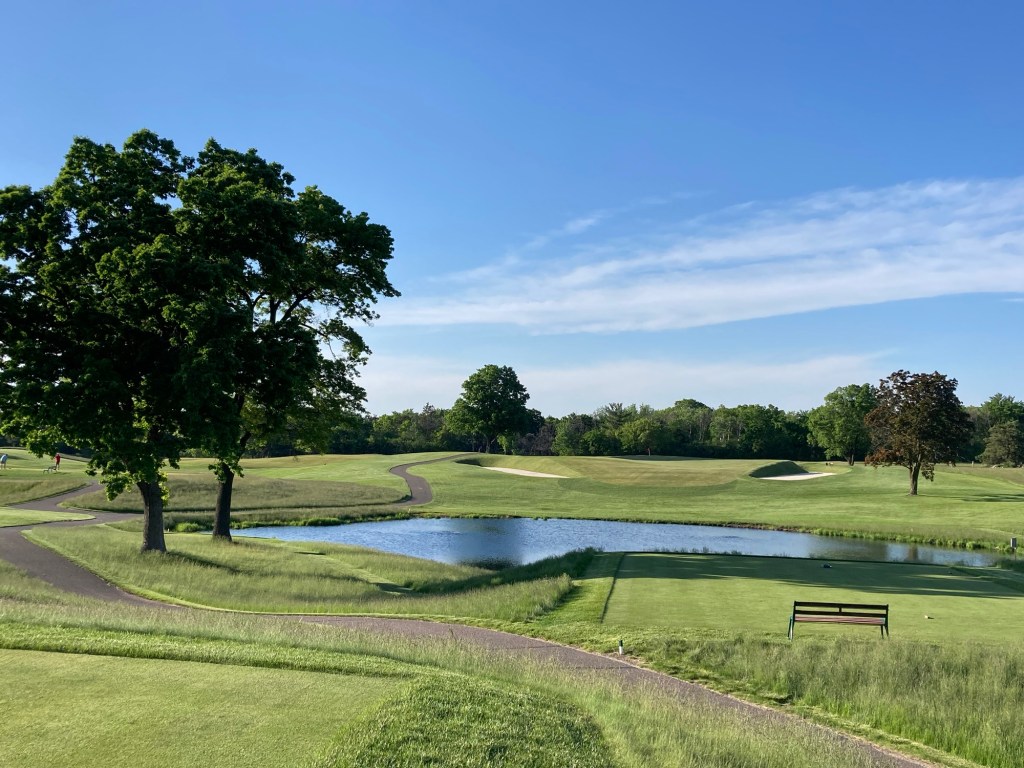
Architect: Seth Raynor
Walkable: Yes
Highlighted holes: 2, 8, 9, 11, 12, 13, 14, 15, 16
Midland Hills Country Club was designed by the legendary Seth Raynor, whose Yeaman’s Hall provides the tongue-in-cheek inspiration for this site’s name. Debates about course rankings aside, a quick glance at Golf.com’s top 50 courses in the United States shows at least eight courses that Raynor designed, routed, or contributed to, making it hard to overstate the influence he and his mentor, C.B. Macdonald, have had on American golf. Along with West St. Paul’s Somerset Country Club, Midland Hills is one of two courses that Raynor verifiably designed during his brief stint in Minnesota.
What started as a wide open routing fell victim to many of the same postwar 20th century ills that plagued Golden Age courses across the country. Trees grew up around the property, lining the fairways and crowding out the width that gives these holes their variety, and the signature bunkers were removed or rounded, relegating the course to more traditional parkland fare. The bones were there in Roseville’s rolling hills and Raynor’s tight, walkable routing, but years of changes impacted the course.
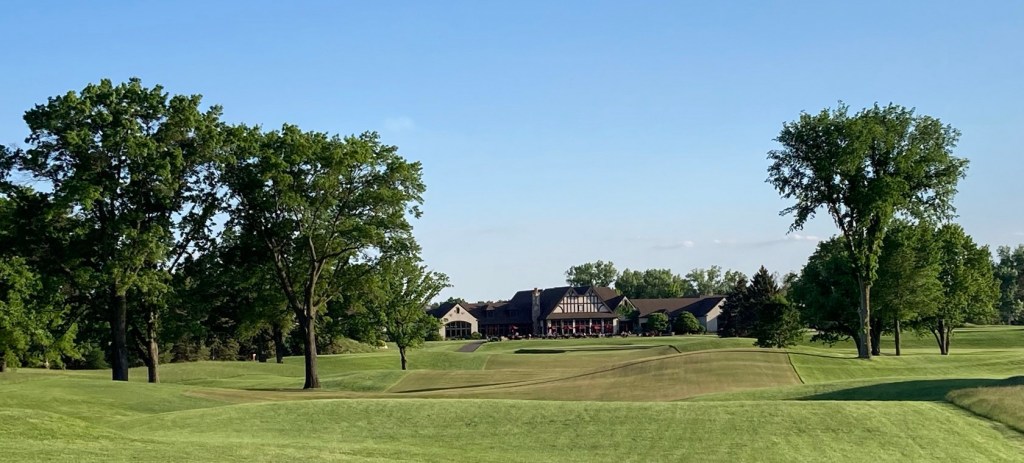
It wasn’t until the club announced an overhaul, and superintendent Mike Manthey found the original plans for the golf course tucked inside the ceiling of his office, that golf geeks began to take notice. The map provided clarity for longtime Doak collaborator (and co-designer of Bandon’s Old Macdonald) Jim Urbina’s development of the the restoration. His experience rejuvenating courses like Yeaman’s Hall, Mid-Ocean Club, and Blind Brook Club made him the top candidate for a full scale restoration.
In its journey back, Midland Hills has removed more than a thousand trees which widened the playing corridors and fairways. Urbina rebuilt the tee boxes and expanded the greens, creating more classic shapes and adding room for additional pin positions. The bunkers were brought back in line with the original intentions, both in shape and placement. Josh Berhow’s excellent 2020 article, The lost routing: How stumbling upon a century-old course map led to architectural gold at Midland Hills, offers a good look at the history of the club and the project, and incorporates before and after comparisons of each of the eighteen greens. As you can see from the images below, the work was truly transformational in its return to glory.
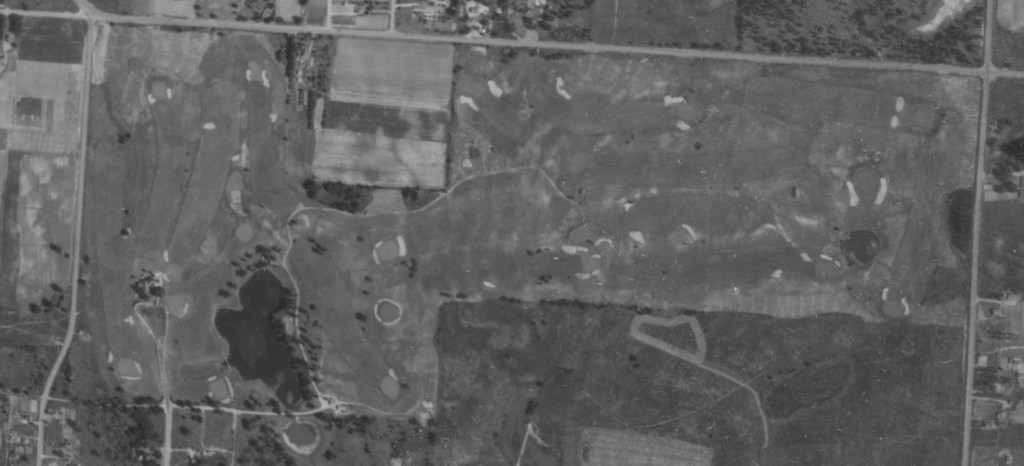
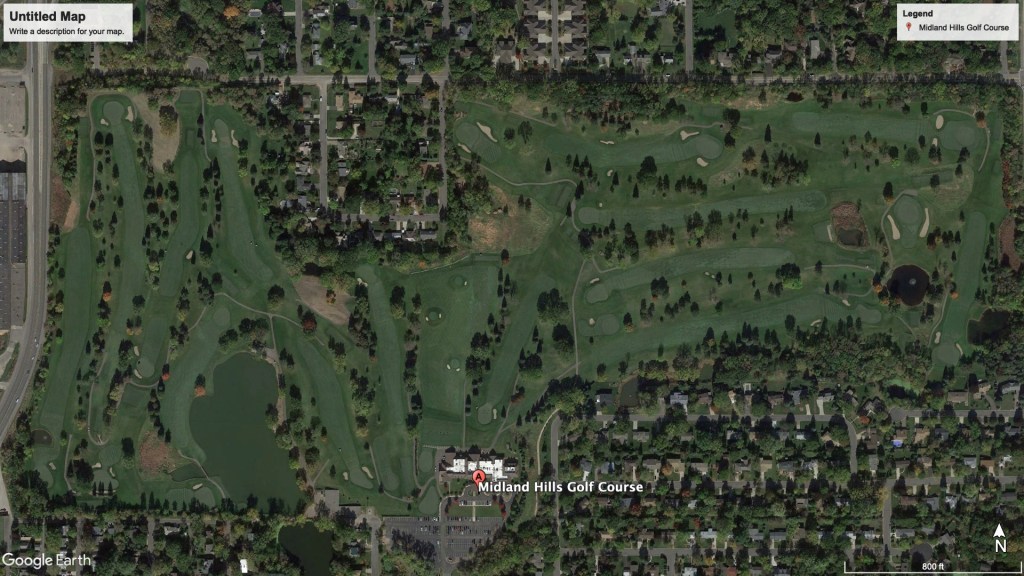
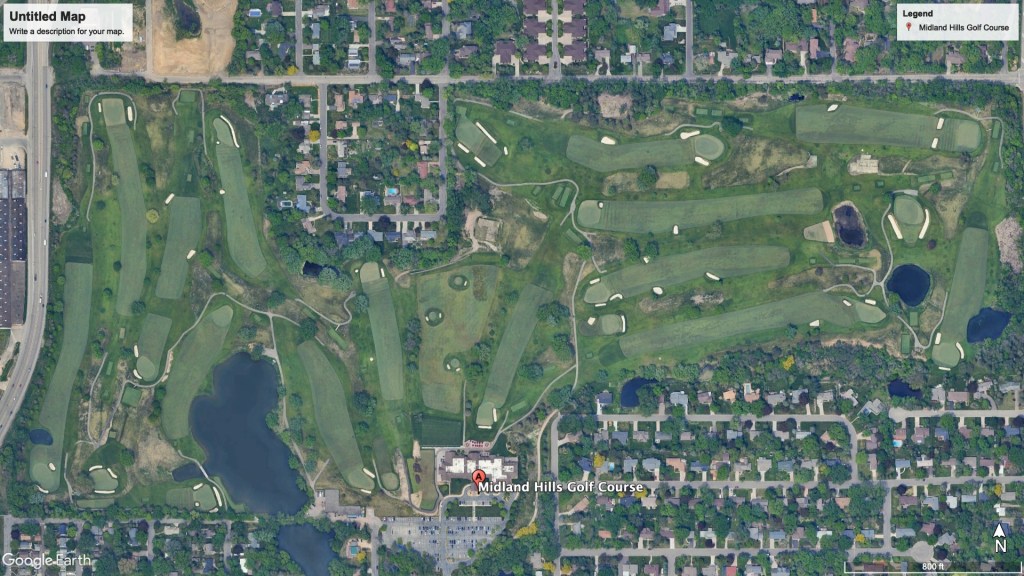
Throughout his career, Raynor used Macdonald’s design philosophy of building courses using template holes. This method guaranteed that golfers would come up against tried and true strategy and intrigue as they played. Who wouldn’t want to play variations of some of the greatest golf holes of early 20th century designs? Adapting them to the land and placing them in different places in the routing ensured that no two were exactly alike, but the astute golfer would enjoy discovering them as they played.
The billowing land of Midland Hills’ front nine twists these templates and their strategy like on the road hole second and the knoll eighth while the back plays atop and around the hill whose Southern and Eastern edges give the valley tenth, alps fourteenth, and pond fifteenth such character.
Two (Road): While the original road hole at The Old Course is relatively flat, this second hole demands a tee shot into the valley and and an uphill approach back to the green, offering no room for error right and the dreaded road bunker front left. With OB right classically guarding the ideal line, it’s a fun challenge comes early in the round.

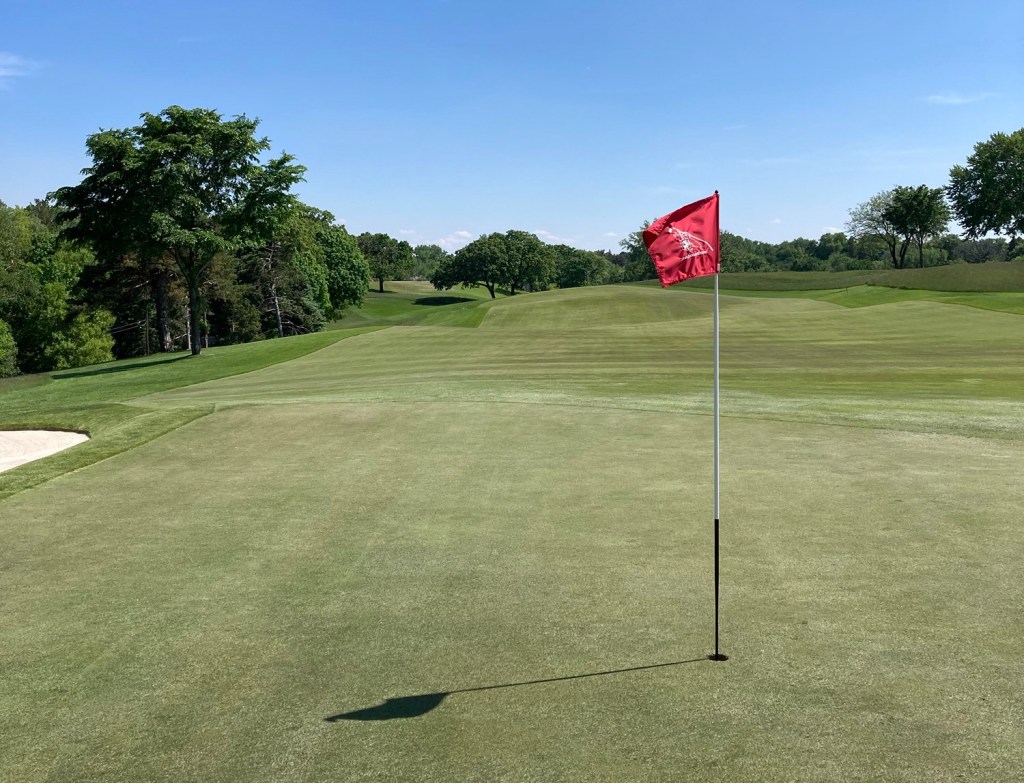
Eight (Knoll): While the eighth could be (and has been) mistaken for a cape hole, in truth, it’s the knoll. Crossing the lake from the tee box invites you to take on the large hump that dwarfs the fairway on the rise up to the green. Off to the left of the fairway are grassy zipper mounds courtesy of Urbina’s interpretation of the original design. Taken in total, and with the removal of a tree from the land that juts into the lake, this is a one of a kind variation on the theme and the only hole on the course without any bunkers. Bite off as much as you can chew, but it’s all uphill from there.

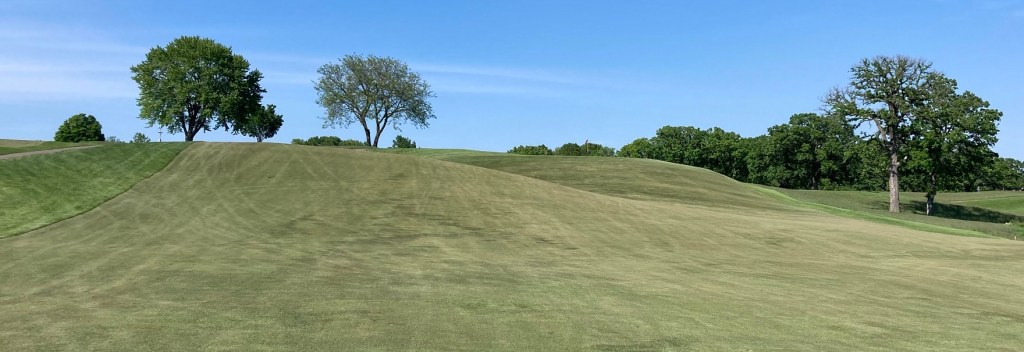
Nine (Cape): A MacDonald original, the cape hole (or a version of it) can be found on many courses, whether golfers realize it or not. It’s a “bite off as much as you can chew” concept, often over water or another hazard. Here, the fairway is elevated and shots short of their intended line will fall into the rough on the right leaving a blind approach to the green, which is spectacularly expanded with good movement and pin positions.
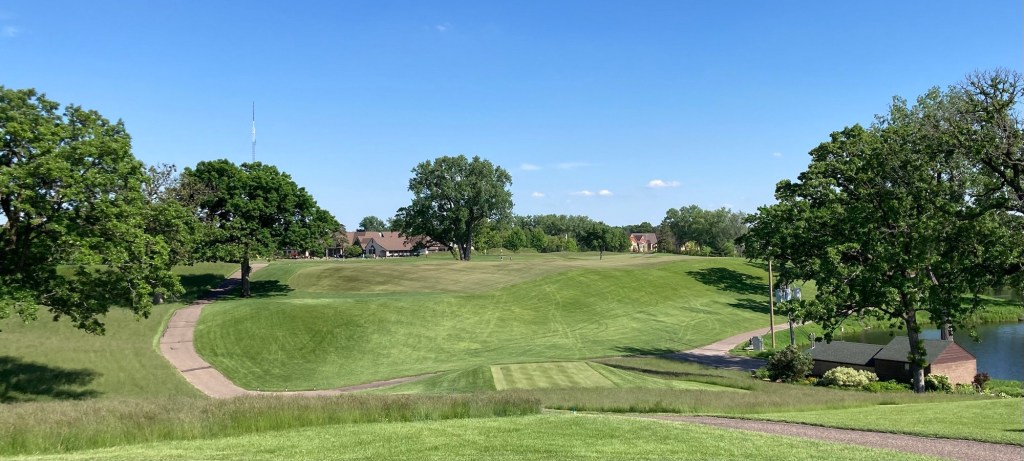
Eleven (Westward Ho!): Directionward Ho! Is there a better naming convention in golf? The eleventh has some of the best bunkers on the course that ride the sides of this long par four. Combined with the threat of having to take a wedge out of the deep fairway bunkers is more excellent rolling fairway to a green that drops off at the back and sides.
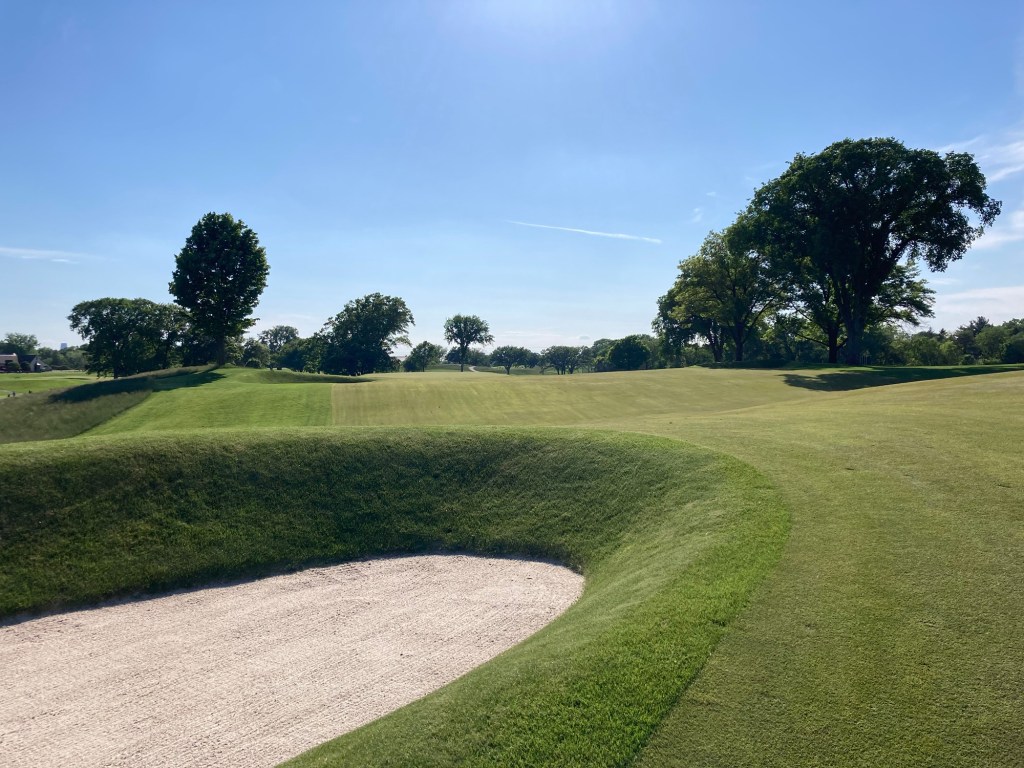
Twelve (Biarritz): What fun! This was my first true Biarritz. Four Mile Ranch and Highland Meadows have somewhat similar rotated versions, but at Midland Hills the front half is fairway and the back is green with a swale in the middle that is more reminiscent of a skate park than a golf hole.
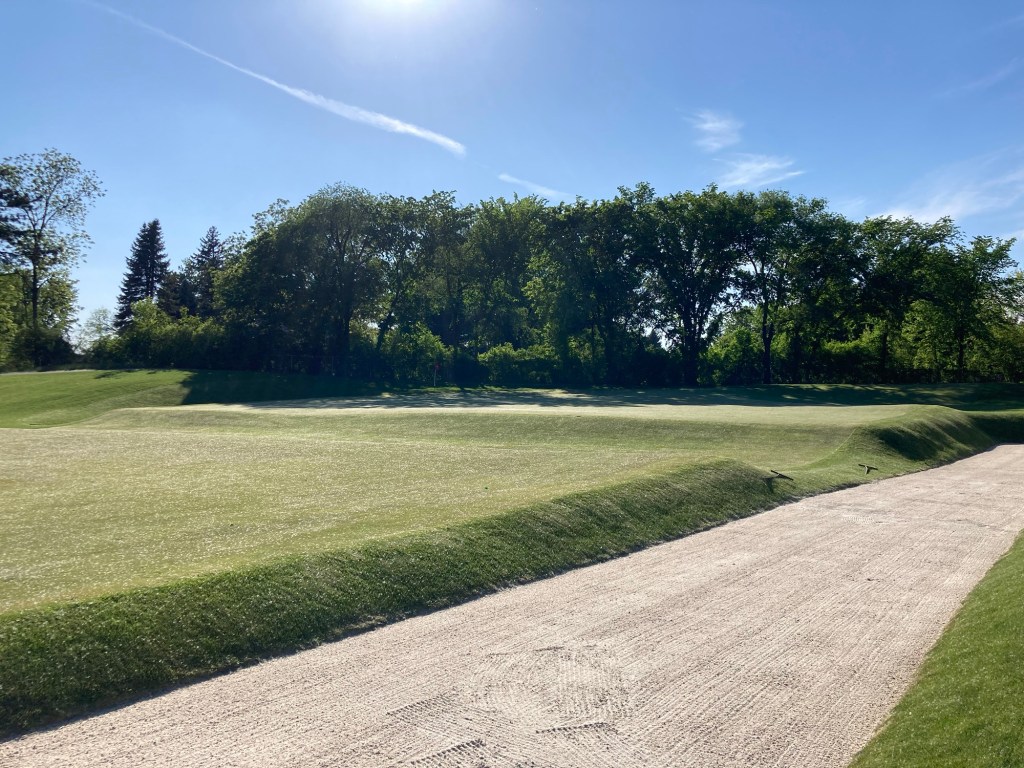
Fourteen (Alps): All you can see from the fairway is the back of two bunkers on either side of a flag peaking up over a ridge. This alps is more of a cliff than a mountain and hides most of what turns out to be an extra tall pin. Where the ball ends up is anyone’s guess as it careens over and down. On top of the fun that is your approach, the green has some of the best contours on the course, expertly crafted by shaper Joe Hancock.
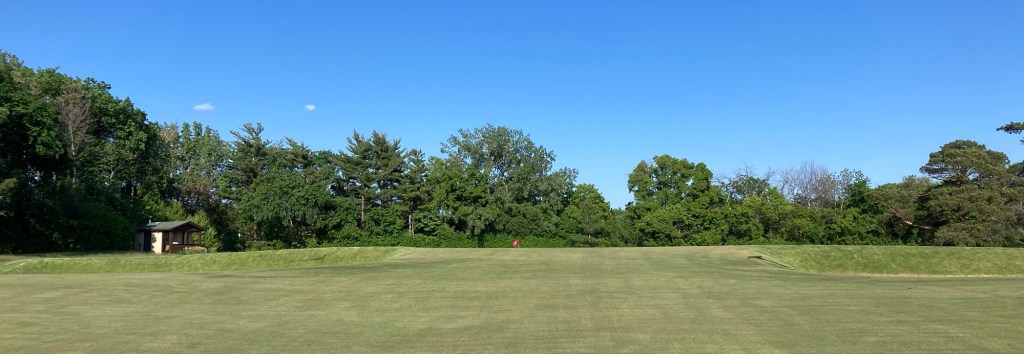
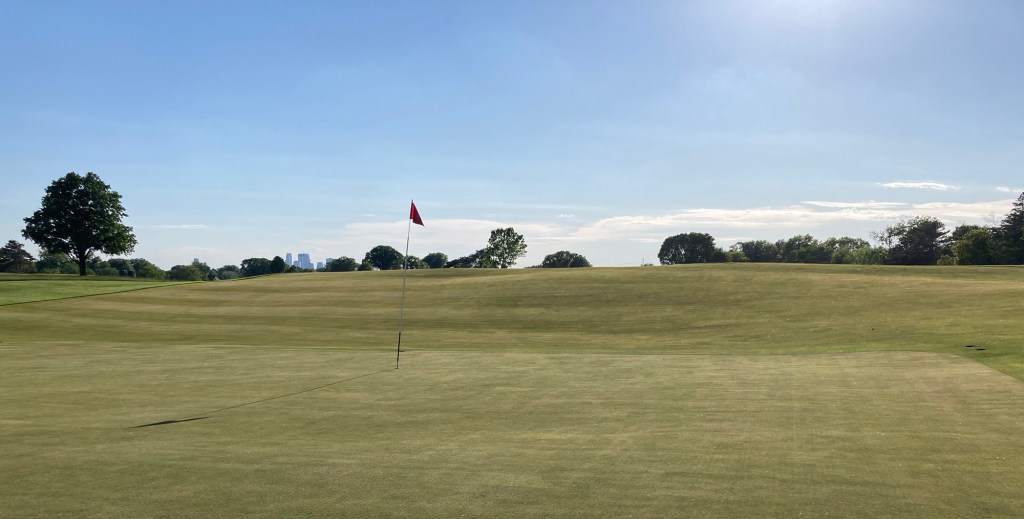
Fifteen (Pond): A wedge runs through the right side of the fairway toward the pond and any drives that end up on it require a shot to be played from above your feet. Challenge the pond and you’ll have a level approach into a green that was significantly expanded to include space for a pin behind the rectangular right front bunker.
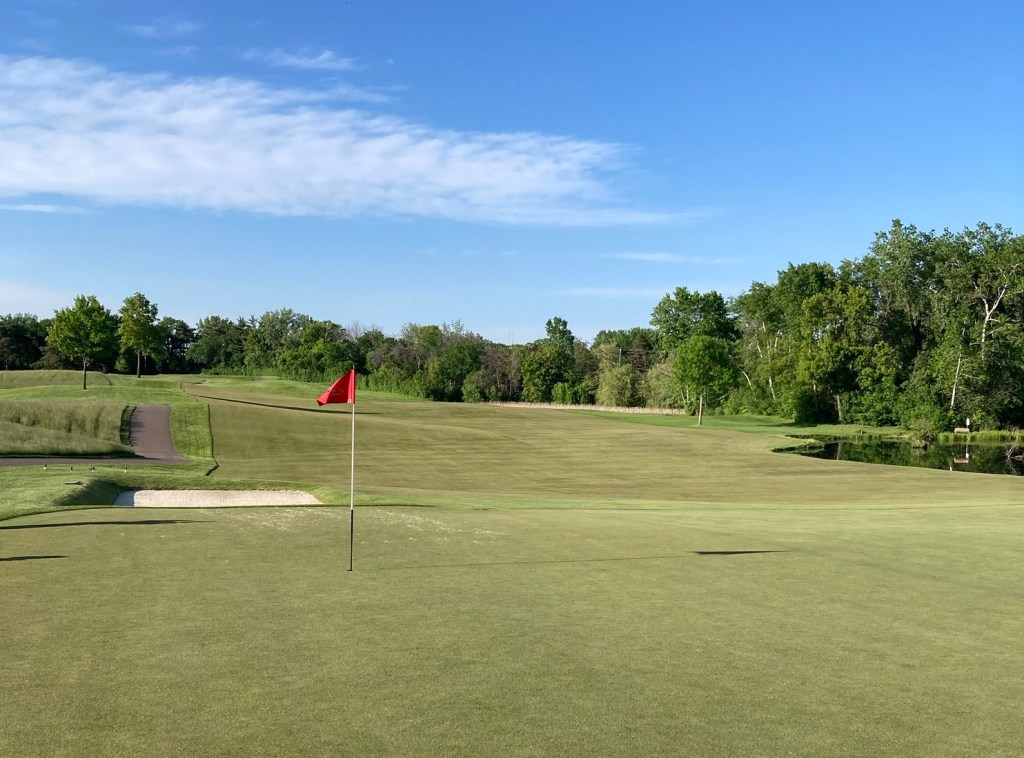
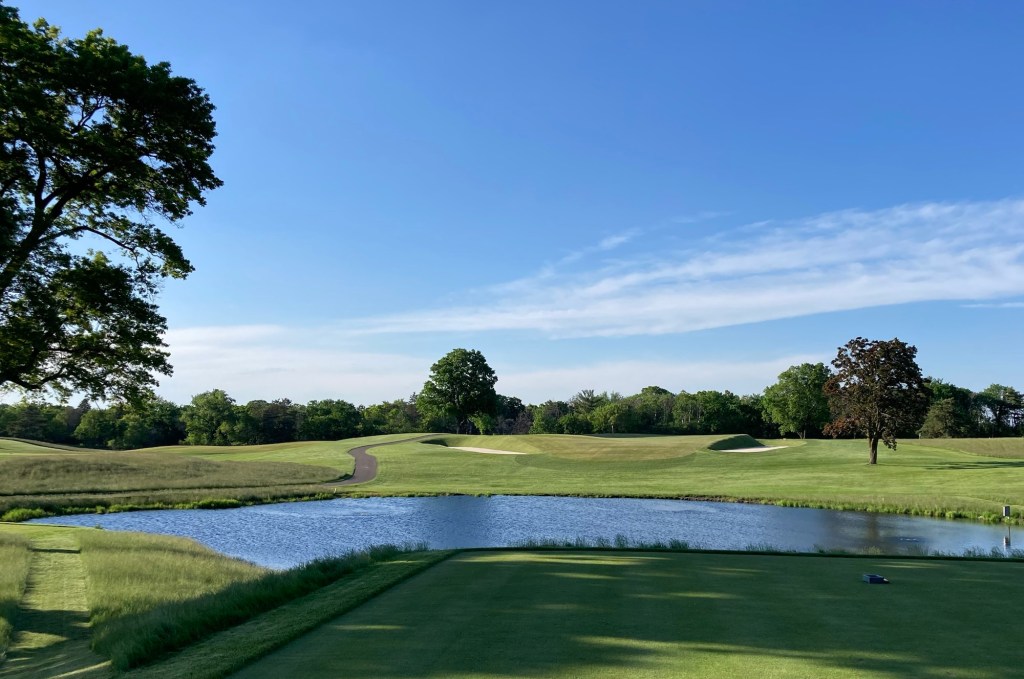
Sixteen (Redan): The water adds to the visual appeal, but isn’t really in play. As with any Redan, the right side of the green acts as a kicker off which a ball can run down to a back left pin. On the left side, however, is another mound that obscures part of the green and adds a twist to the classic par three template.
Final Thoughts
In a metro full of Golden Age championship golf like Interlachen and Minikahda, and classic jewels like White Bear Yacht Club, North Oaks, and Golden Valley, the return of Midland Hills Country Club is a welcome one. Jim Urbina and the Midland Hills crew’s work shines in the amount of open land that gives each hole room to breathe while leaving the golfer with decisions to make. The course is hilly in a whimsical way that affects shots but isn’t hard to walk. The trees that remain are well placed and feel like they’ve been given room to stand out. All of this is complemented by tracts of wispy native grass. The restoration marks Midland Hills’ return to the upper echelon of Minnesota golf.
More
Midland Hills Country Club – Our Story
Jon Cavalier, Michael Wolff, James Sitar – The Golf Courses of Seth Raynor
George Bahto – The Evangelist of Golf
Midland Hills Turf Blog


 Layman's Hall
Leave a comment