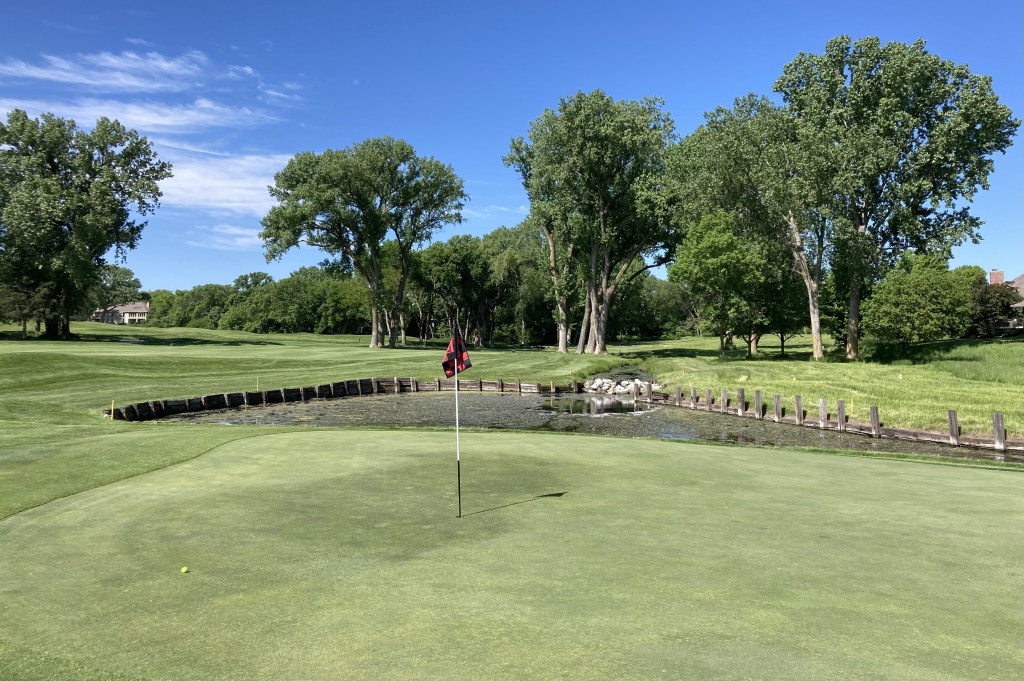
Architect: Pete Dye
Walkable: There are moderate hills, but each hole flows well into the next.
Highlighted Holes: 2, 3, 4, 10, 11, 12, 13, 14, 16
“Firethorn is on rolling farmland south of Lincoln, and Pete really maximized the site. He had some template holes himself, and if you’re looking, you can see them at Firethorn.” – Jim Urbina, Golf Digest
The Firethorn story is a Nebraska story. Though best known for the Sand Hills Golf Club, architect Dick Youngscap’s first foray into golf course development came in the 1985 on the outskirts of Lincoln. The story of Firethorn really begins two decades earlier with a fortuitous investment in his hometown. “In 1965 I had the chance to buy sixteen acres of land which is now adjacent to the 11th fairway at Firethorn,” he said in a 1997 Nebraska Golf Hall of Fame article. “My sole motivation as an architect was to preserve some beautiful land from high density urban development.” Youngscap named the land ‘Ikiru’ which is Japanese for ‘The Joy of Living’ and the title of director Akira Kurosawa’s 1952 masterpiece film.
Son of former baseball star Peter Youngscap and Lincoln nurse Alice Youngscap, Dick grew up playing baseball and caddying at the Lincoln Country Club, but didn’t pick up the game of golf until he was nearly thirty. When he did he was hooked and became a member, and eventually vice president, of Lincoln’s Hillcrest Country Club. Throughout the 70’s he continued to add to the original sixteen acres of land with the intent of building a housing development and golf course, then known as Sunterra. In 1983 he chose Pete Dye as the course’s architect for his first and only Nebraska design. At the time Dye was already known for his work at Harbor Town, TPC Sawgrass, and Crooked Stick and was attracted to the project by the space he would be given and. distance from the neighborhood.
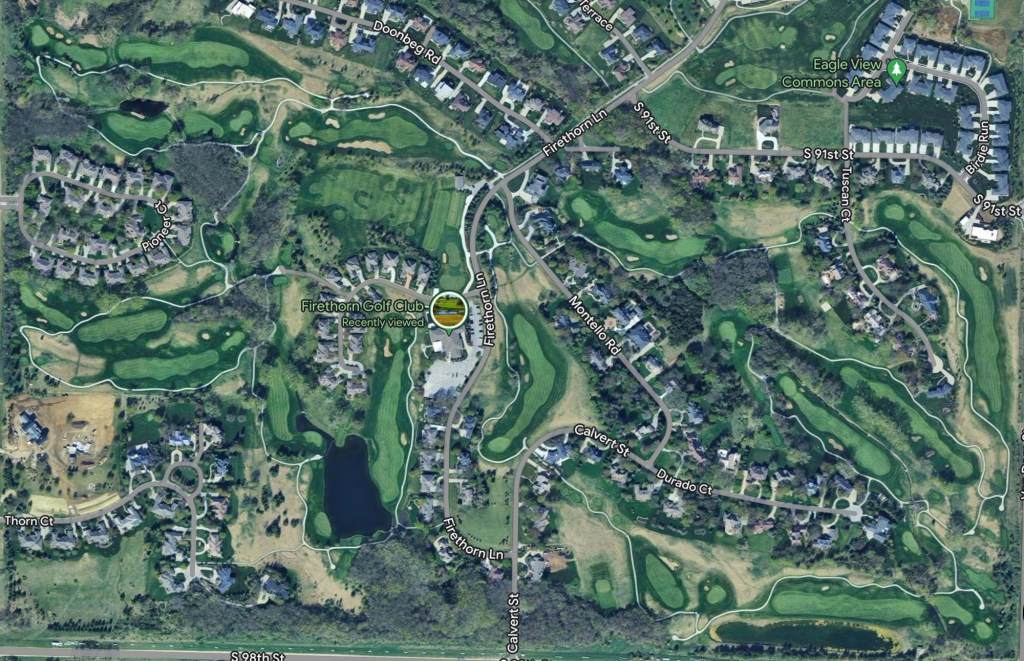
On the course the homes fade into the background and aren’t particularly noticeable. With mature trees, prairie grass, and constant bird calls, the acreage that Youngscap prioritized feels like a nature preserve that we’re lucky enough to play through. The course is routed through gently rolling hills and clever mounding enhances the flatter front nine. Eleven through fourteen occupy the hillier parts of the property which Dye said, “…may be the best consecutive four holes I’ve ever designed.” The round ends with more of his traditional fare: railroad ties, water, and an amphitheater surrounded green at the last.
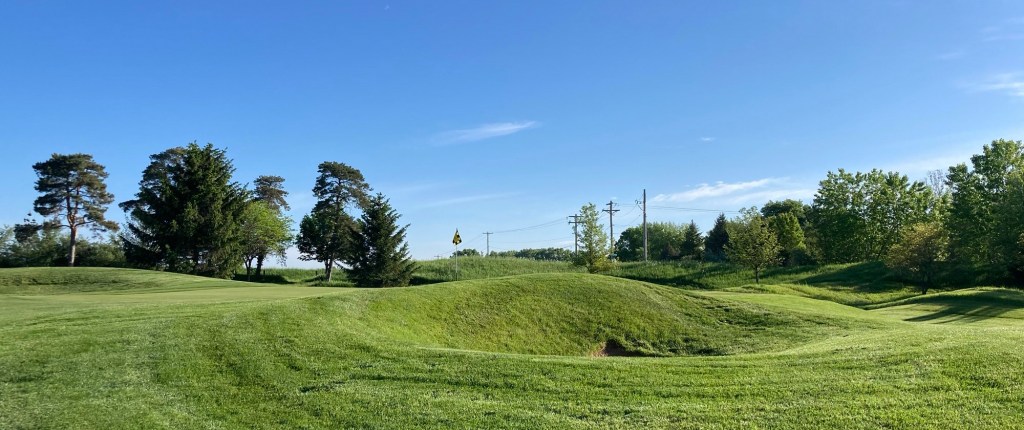
Two: One of my favorite holes of 2024, the second is a short par four that plays 327 from the tips. All you can see is a gash of fairway to the right of a sizable bunker with moderate dunes behind. Without the map on the scorecard to lean on, you might think that the hole goes right, to the end of the fairway. Instead, it’s something of an off-kilter alps hole. An aggressive tee shot can be taken directly over the fairway bunker with hope that the ball is A. findable and B. not in either of the greenside bunkers. A layup to the fairway leaves a short shot in that is still blind.

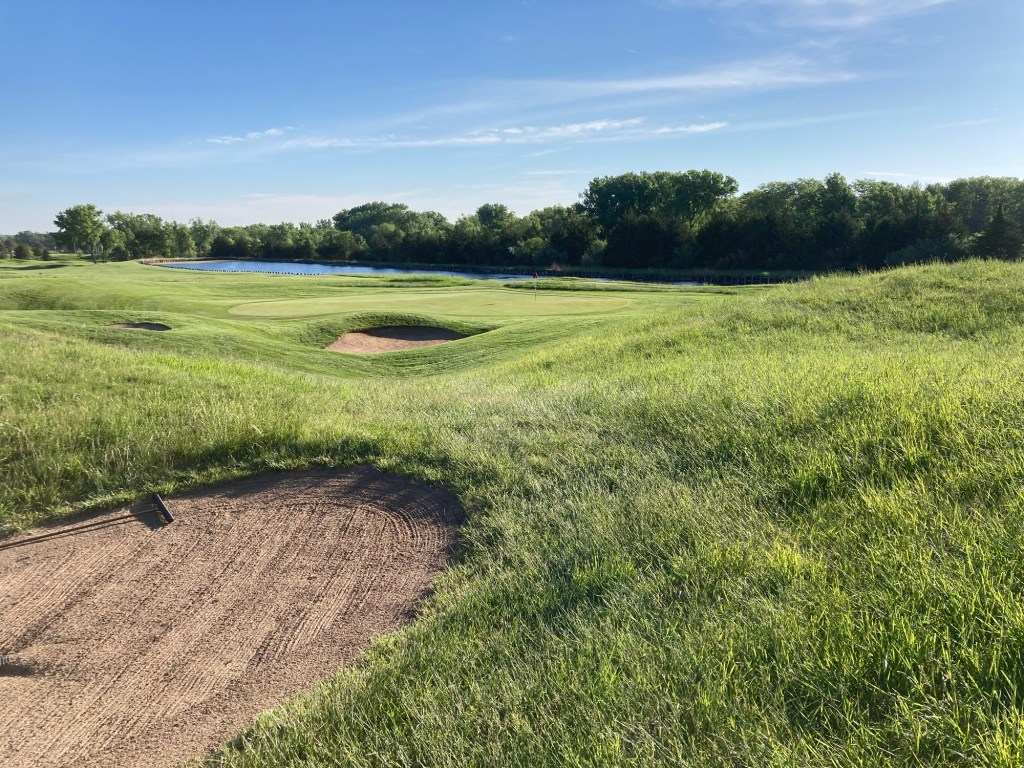
Three: This is a big, burly par five from start to finish. A 300 yard lake, lined with railroad ties stretches from the tee and looms. Once you’re past it, the decision to lay up may be prudent as two large trees on either side of a creek guard the approach into the green. Hook or flare a wood and a recovery will be hard. The green is protected by the built up grass face of a small round bunker that surely catches more than its fair share of balls. Unless you’re approaching from the left beyond the creek, your approach will need to carry to the green.

Four: The first par three on the course, the fourth is tricky. The creek winds back in front of and along a green that just about matches the direction of the tees. The safe play is long and left, but end up in the bunker and you’re left with a shot back towards the creek with a green that feeds toward it. One has to wonder if Dye had the 12th at Augusta in mind for this ‘template’ hole.
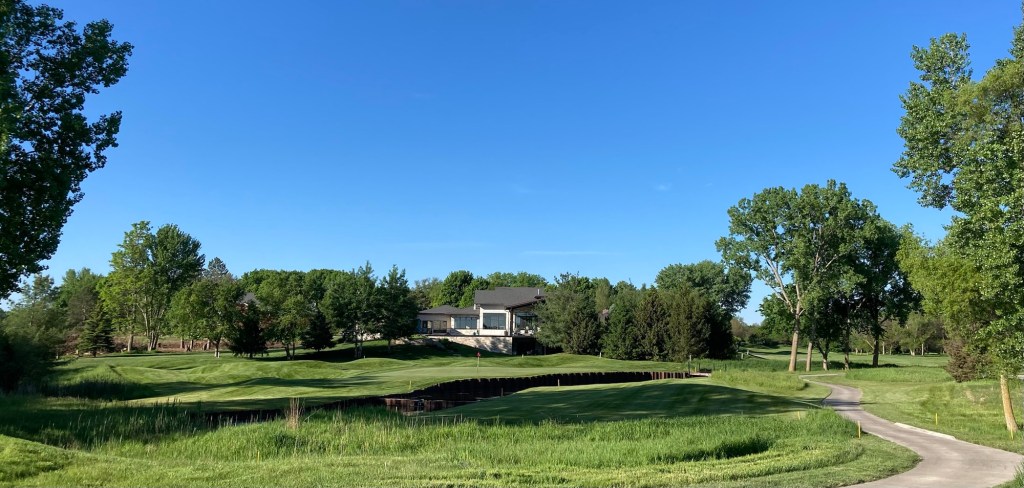
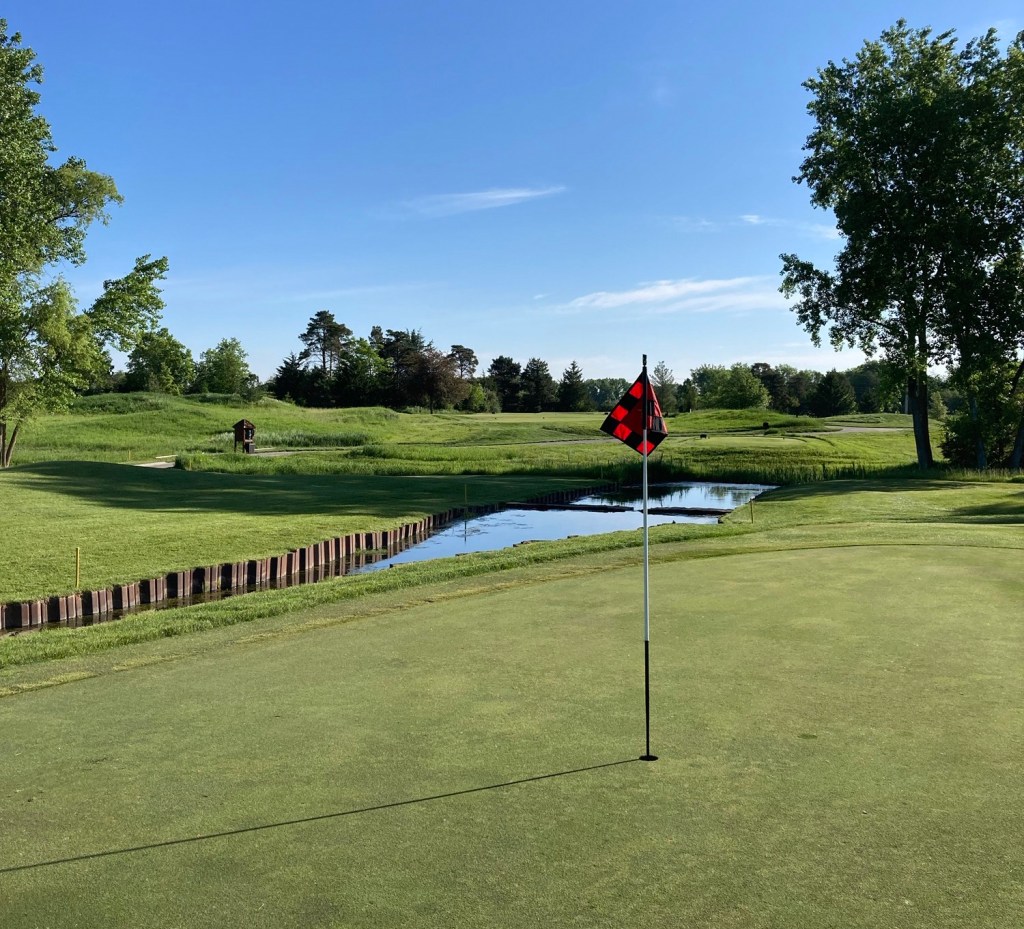
Ten: Dye didn’t mince words about his love for the eleventh through fourteenth holes, but I can’t for the life of me figure out his exclusion of the tenth. To my untrained eye, it fits right into this run of greatness. The tee shot gives you the option of laying back to the widest fairway on the course or taking a long blind drive past it as the short grass rapidly narrows. A 90 yard long fairway bunker runs up the left side and two others guard the right. The approach is to a green that slopes front to back, making the aggressive drive into a more manageable approach. Hollows mark the front right and bunkers loom on the left. This isn’t a long hole, 375 from the tips, but demands respect on every shot.


Eleven: So begins Dye’s stretch of favorites. The fairway starts by gently sloping toward the green before running into untamed rough that covers a creek. It’s possible to try and sling a shot at the green by cutting over the bunkers as the hole curls to the green, but this is a low percentage shot that could leave you in the enormous fairway bunker or one of the smaller ones that protect the right side of the hole. Laying up left allows for a clear shot to a green that rides the next hill back up.

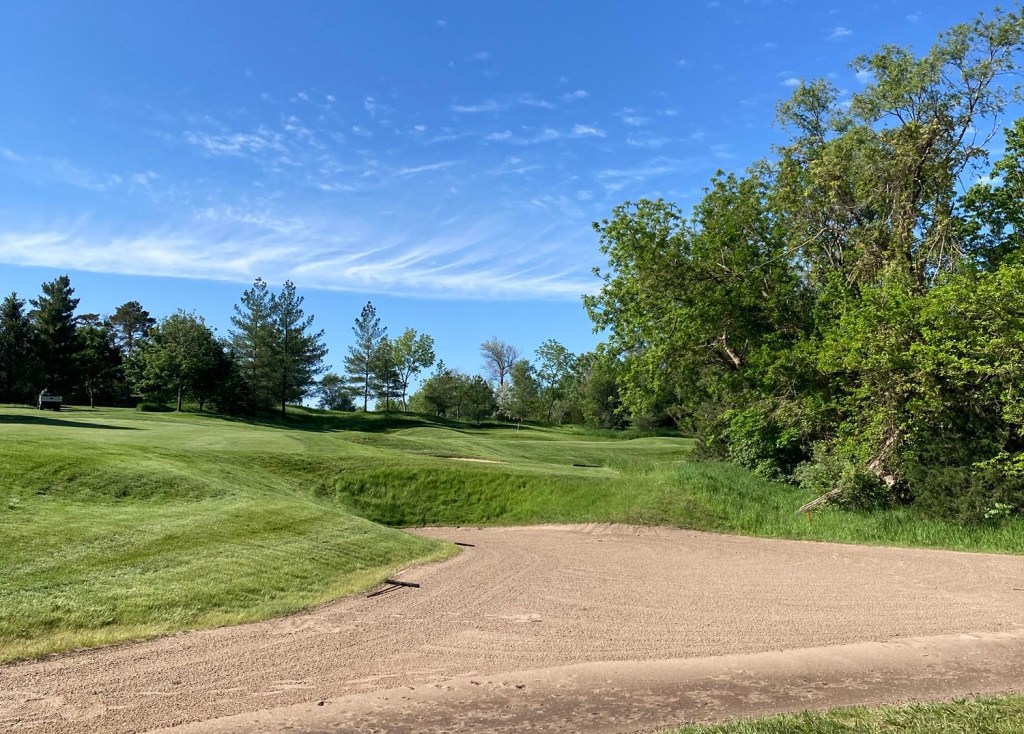
Twelve: Like the eleventh, the twelfth starts atop a hill with a drive into a valley before playing back up to an elevated green, but that’s where the similarities end. To have an open shot to the green on this long par four, your tee shot must hug the lake on the left. Anything right – safe and open – will be boxed out by mature trees. Hitting driver will put most people square in the creek that bisects the hole. Assuming you’ve left yourself in a reasonable spot, a deep pot bunker guards the approach to a road hole-like green that leaves no room to run one up. No shame in playing this as a 3 shotter and settling for bogey on the hardest hole on the course.
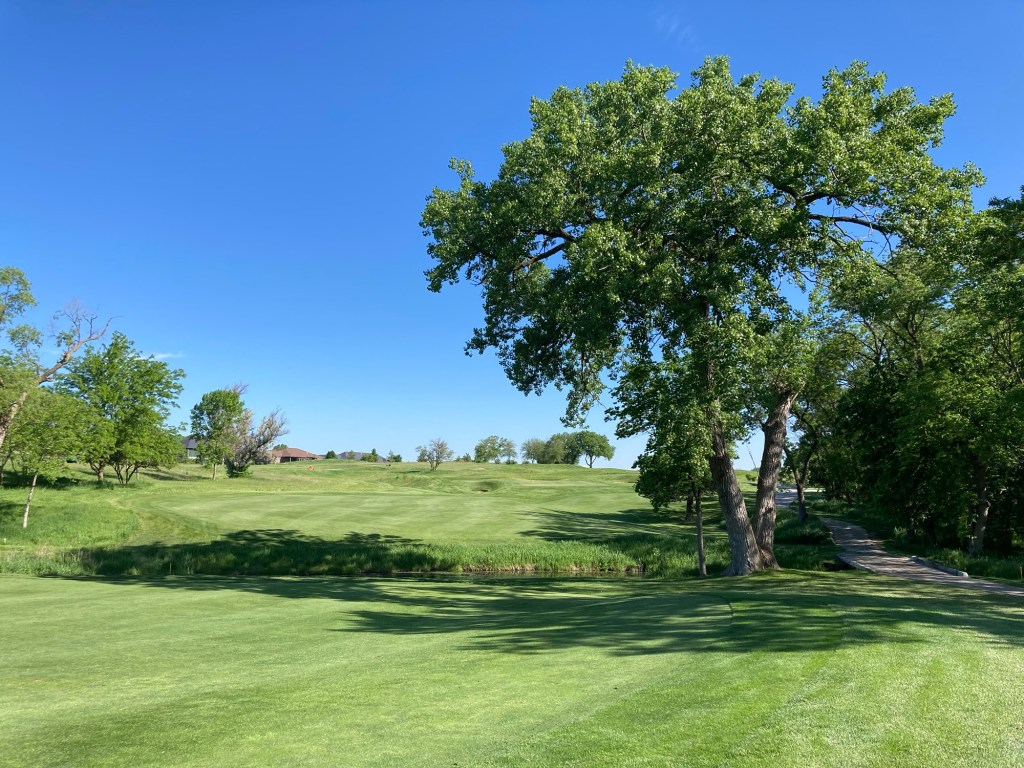
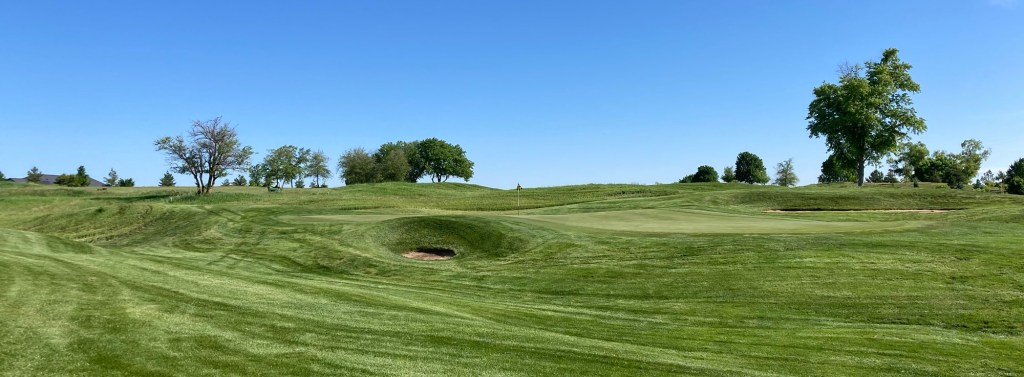
Thirteen: This long par three is a mirror of the fourth and angled uncomfortably, though this time favoring a cut. If a back bunker and green that feeds down toward the creek weren’t enough the trees framing the green look like they could easily knock a shot down. This hole is picturesque.
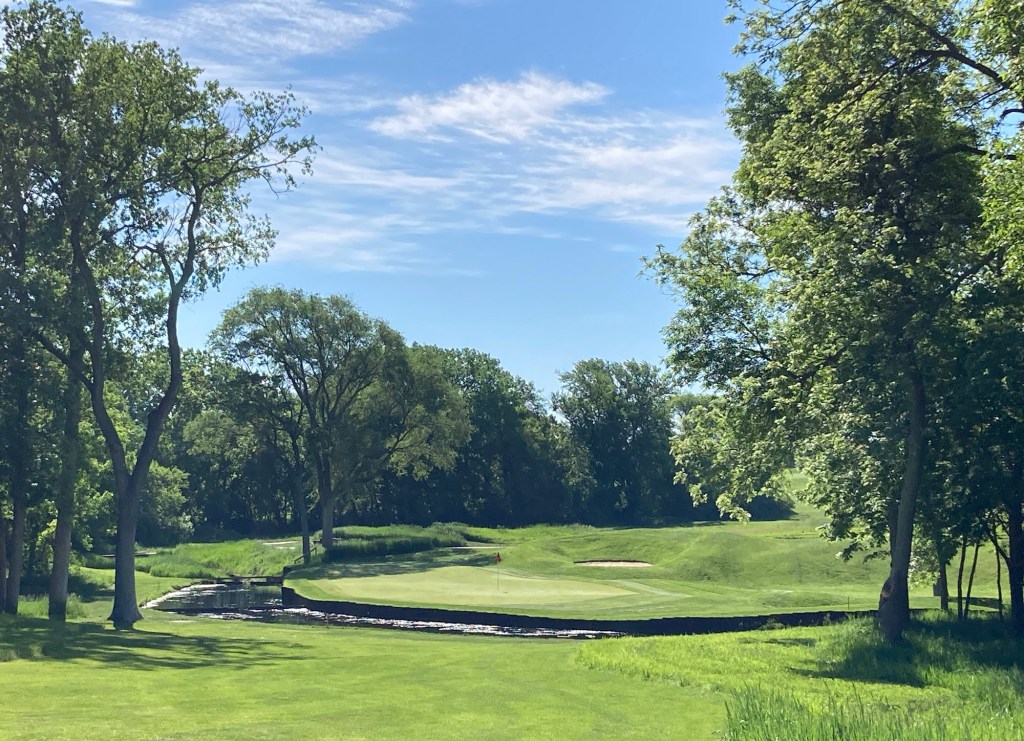
Fourteen: From the tee, a grove of trees boxes out any hope of cutting the corner, but you can decide how close to them you want to get. The hole plays uphill with all the land flowing to the right. Not only that, it’s the longest par four on the course, but the trade off is that there’s not much trouble save for the trees. The true brilliance of the hole comes on the green, easily the best on the course, with its rolls and ridges offering at least five good pin positions.
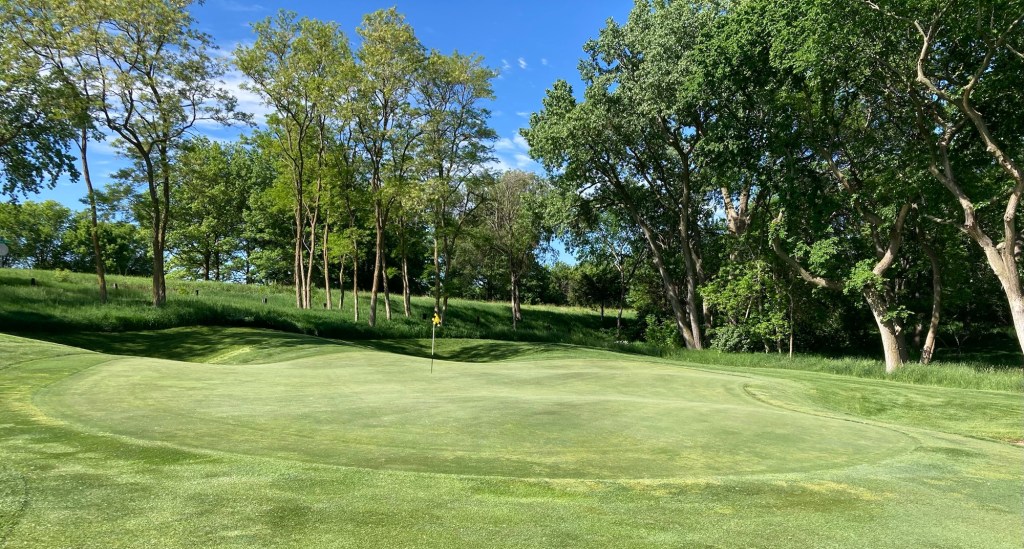
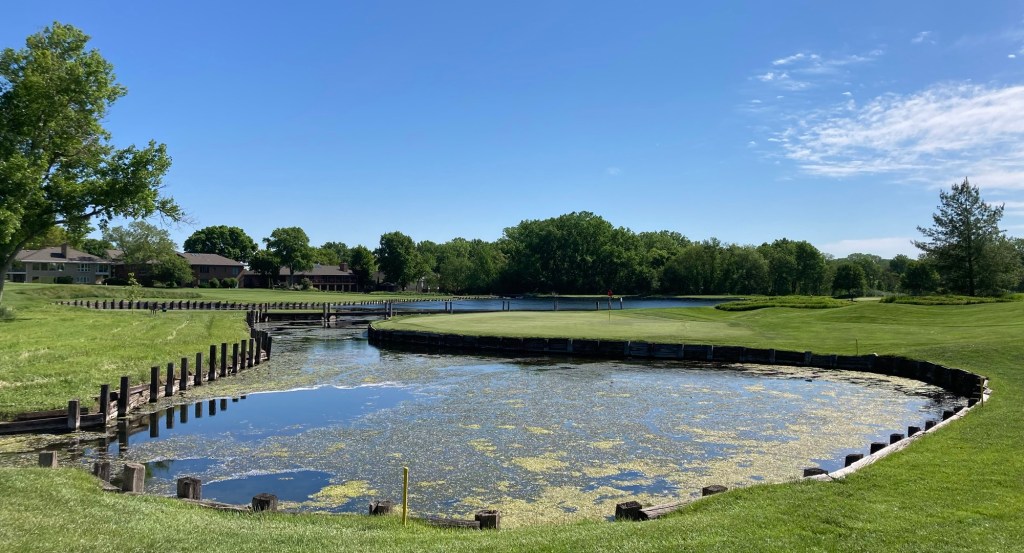
Sixteen: The short par four sixteenth feels especially Dyeian(?). Tall cottonwood trees block the green left and offer only a narrow lane through which to hit your tee shot, undoubtedly a wood or long-iron. A creek meanders between the trees before meeting the lake that fronts what looks like a peninsula green. Your wedge shot needs to be precise as the green is cut right up to the water. Railroad ties and precision golf around a lake? It could only be Dye.

Final Thoughts
One could make the argument that without Firethorn there would be no Sand Hills, without Sand Hills Mike Keiser wouldn’t have built Bandon, and without Bandon the second coming of golf architecture in America wouldn’t have happened. Beyond that towering influence, Dick Youngscap’s vision gave Lincoln a championship golf course (host of the 1996 U.S. Women’s Amateur) and preserved the land he found in 1965 to be so special.
You can find photographs of the course from when it was built here. While charming, the tree growth makes the front feel somewhat tamed. The photos show that the original wide, prairie landscape fits more with the design for the front, though the back appears to look largely as it did when it was built. This is a small complaint in the grand scheme of things as the layout and features of the course haven’t changed in forty years. It’s challenging, as many of Pete Dye’s designs are, but cleverly routed and a real joy to play.
Resources:
Discussing Pete Dye’s legacy and his most underrated courses
Lincoln Journal Star archive
Nebraska Golf: Out of the Shadows by Stu Pospisil
Firethorn Golf Club
Pete Dye Golf Courses: Fifty Years of Visionary Design by Joel Zuckerman
Richard Youngscap – Nebraska Golf Hall of Fame


 Layman's Hall
Leave a reply to scarletspidercomics Cancel reply