Architects (chronological): William F. Peet, George McCree, E.J. Frost, Ben Schurmeier, Jeff Mingay
Walkable: Severely hilly but really well routed on a small site
Highlighted holes: 1, 2, 3, 5, 7, 8, 9, 10, 13, 15, 16, 17
Golf in Minnesota began with a lie. The Town & Country Club was a five year old social club formed as a dignified response to the raucous St. Paul Winter Carnival clubs when gossip columnist Charles Hawkes paid T&C founder William Peet a visit looking for meat. All Peet had for him was that a new game was taking hold in the country: golf. Needing content, Hawkes decided to report that the club was taking up the sport. Peet wrote, “that announcement brought in to my office the next day George McCree, an importation from Scotland, who expressed high approval of my alleged plan and offered to help me.” Days later, Peet’s mower met the heaving land on the east side of the Mississippi River and birthed five holes: the state’s first golf course.
Two years later five holes became nine, courtesy of golf enthusiast E.J. Frost. In 1897 members reached out to the legendary C.B. Macdonald who had already constructed the first iteration of Chicago Golf Club and would become one of the greatest golf architects in history. Macdonald declined the offer, however, and sent his associate Robert Foulis, a Scot who learned the game and design under Old Tom Morris at St. Andrews. His influence on the club far surpassed his influence on the course and in 1907, Ben Schurmeier expanded Town & Country to make it the first eighteen hole golf course in Minnesota as well.
Tweaks and minor routing changes continued after the expansion and by the mid 1920’s the layout and design that exists today was in the ground. Over time the course was encased in trees, many planted by Schurmeier. It wasn;t until the mid 2010s when club hired Canadian architect Jeff Mingay to help restore the golf course that this was rectified. What started with small changes became a total overhaul in 2024 with the removal of the vast majority of trees that crowded the fairways. The result is one of the quirkiest, most fun golf courses in the Midwest.
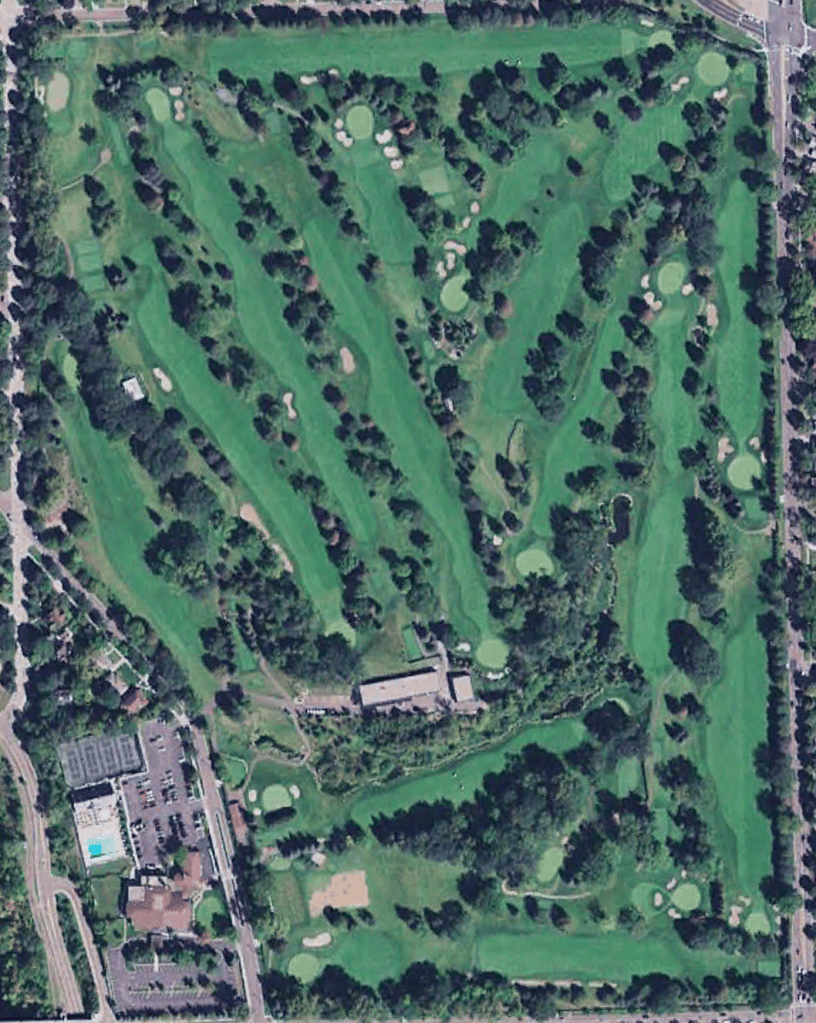
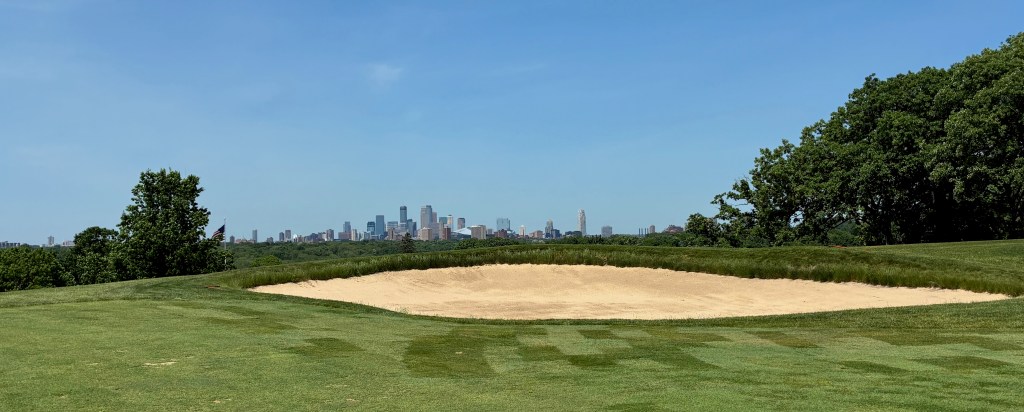
And it’s on 92 acres! This massive golf course with wide fairways and grand scale glacial valleys sits on only 92 acres. It’s got big movement full of climbs and drop offs, expansive views of the Minneapolis skyline, and it’s almost as old as golf in America itself; all on 92 acres.
The clubhouse, tennis courts, pool, and practice putting green all site across Otis Avenue from the golf course. A 170 yard long driving range climbs a severe hill on the same property as the course. Everything secondary to the golf course is tightly packed. The course is given the run of the land. Remarkably, the holes never feel cramped or like they’re sitting on top of one another.
Nearly every green is receptive to a run up with wide tightly mowed aprons. Knobs, humps, and bumps to make the ground game especially interesting on holes like 3, 12, and out to the right side of the fairway on 13. The interest extends into the rough with compelling moguls to the right of the sixth green and to the left of the 14th.
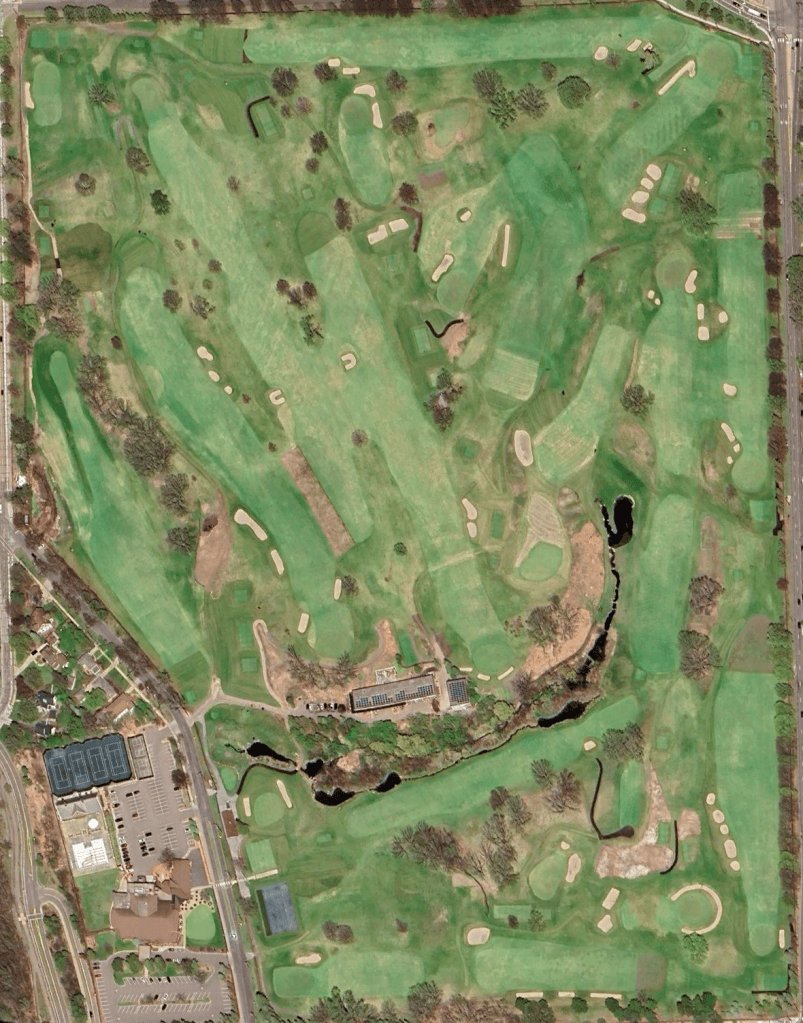
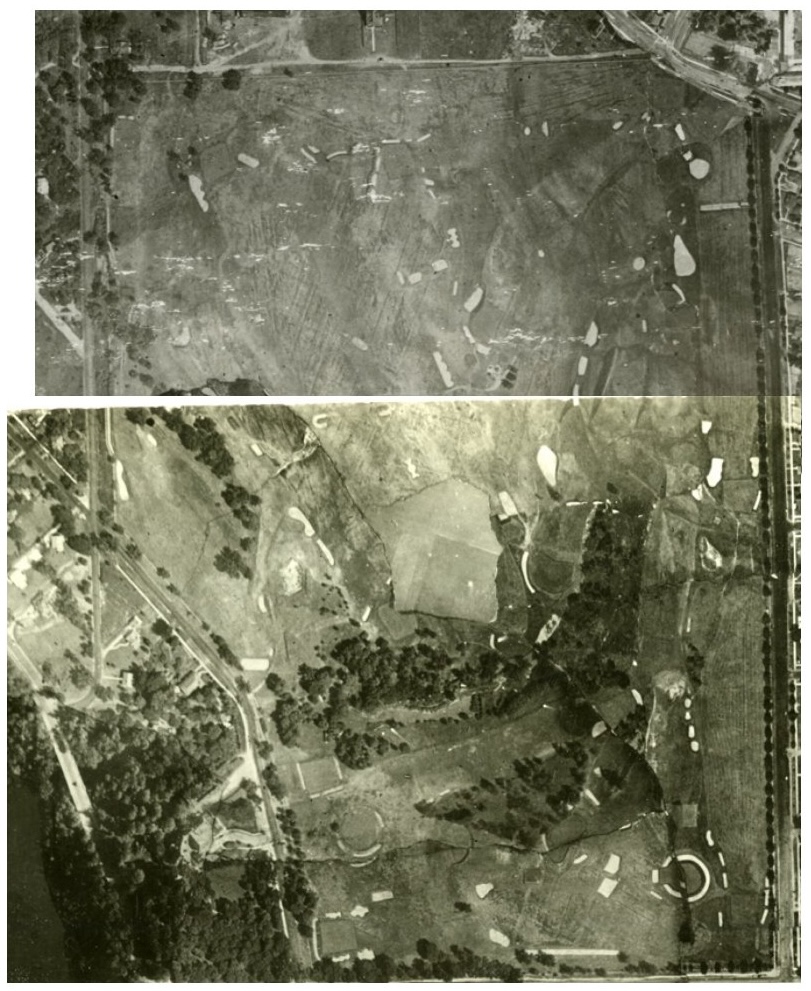
The quirky layout is a result of the constraints of the land and an early century willingness to embrace the site they were given. The second and third are back to back par threes, neither particularly long. The fifteenth, sixteenth, and seventeenth are consecutive par fives, three of four on the back nine. The course has five par fives, five par threes (including the eighteenth), and eight par fours.
The restoration got a false start. Bunker work was done between 2013 and 2014 that changed the character from uninspired circles to puzzle piece Pokemon outlines, a step in a direction, certainly. In 2015 the club’s retention of Mingay to do long term work was the move that elevated the historic course back into the upper echelons of Minnesota golf.
One (Birches): A creek runs up the left side of this par four on which the ground cants from right to left. A tee shot hugging the creek takes the front right bunker out of play but is obviously risky. The green slopes severely from the back right to the front left and golfers still playing with non-conforming grooves have a good chance of spinning the ball off the front.
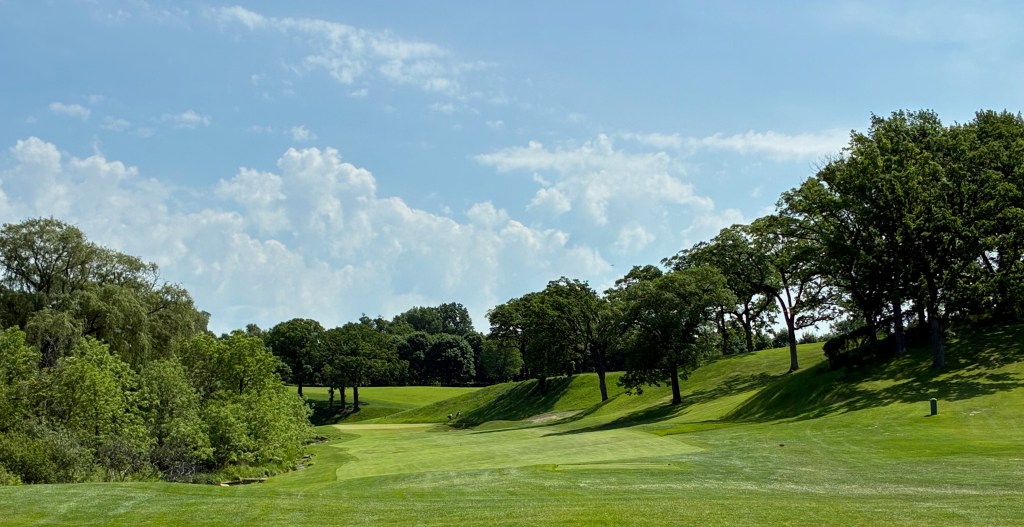
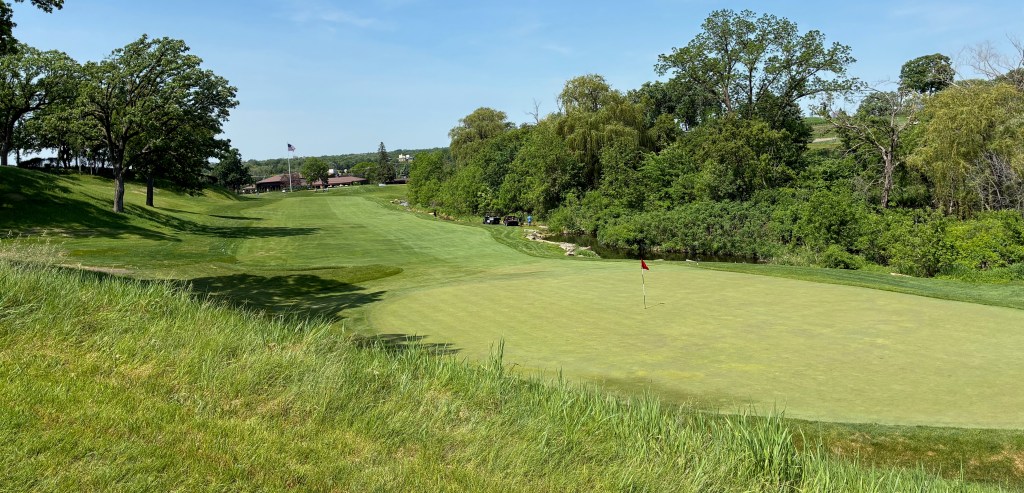
Two: The first of back to back par threes, the second is perhaps the strongest (and certainly my favorite) on the course. At approximately 120 yards from the back, it isn’t long but is perched up on a pad with two front bunkers and a devious green with fallaway edges, a false front, and a bold raised left portion funneling shots to the back right and front. This is a chance to get a good start or kick yourself for leaving one on the table.
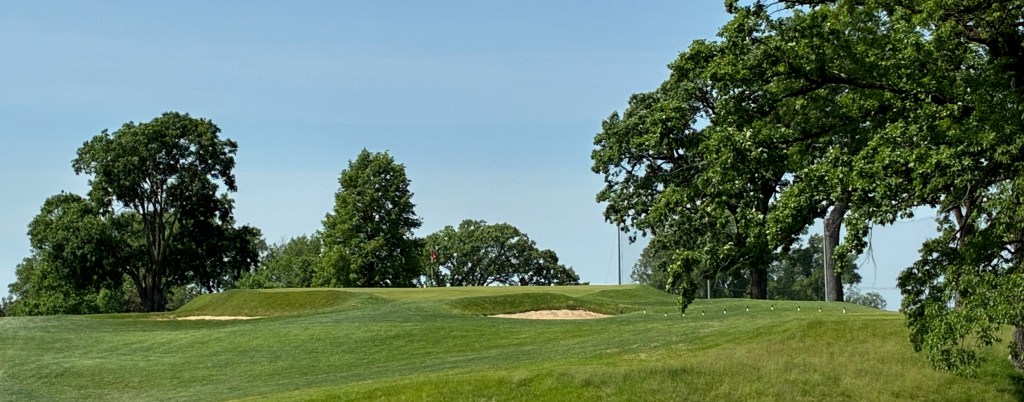
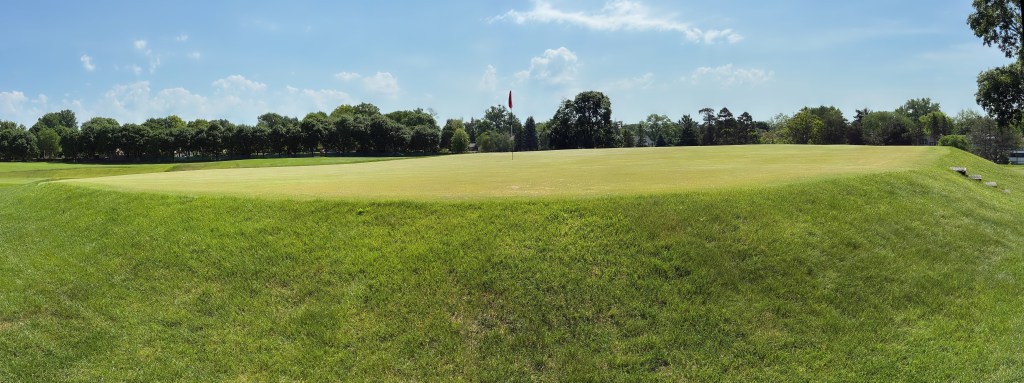
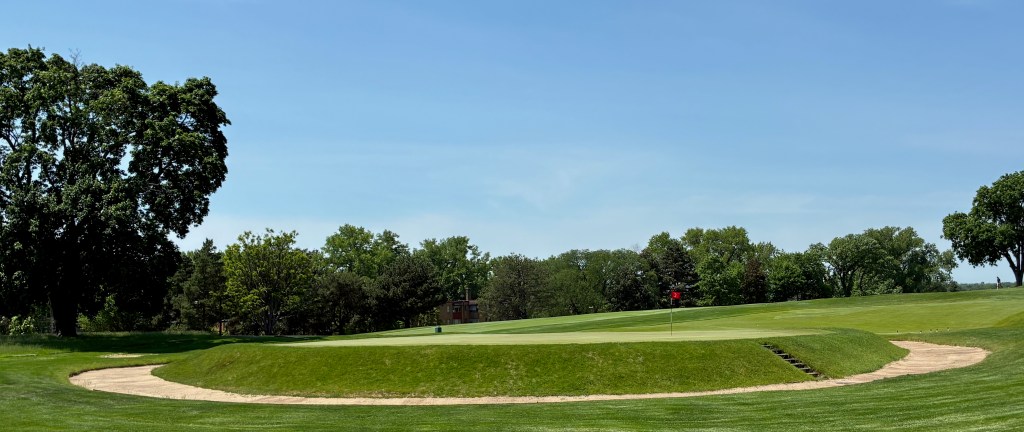
Three: Jeff Mingay found the two front bunkers in the ground on the par three third and, while they aren’t necessarily in play, they give the impression that they’re greenside. The bunker really worth being mindful of is the horseshoe bunker that wraps around the left, back, and right sides of the green leaving a wide opening to run shots up onto the green. But wait! In this open front right position is a rather large pimple ready to kick the ball any number of ways (including left onto the green). Compared to the rest of the hole, the green is mercifully simple, sloping back to front.
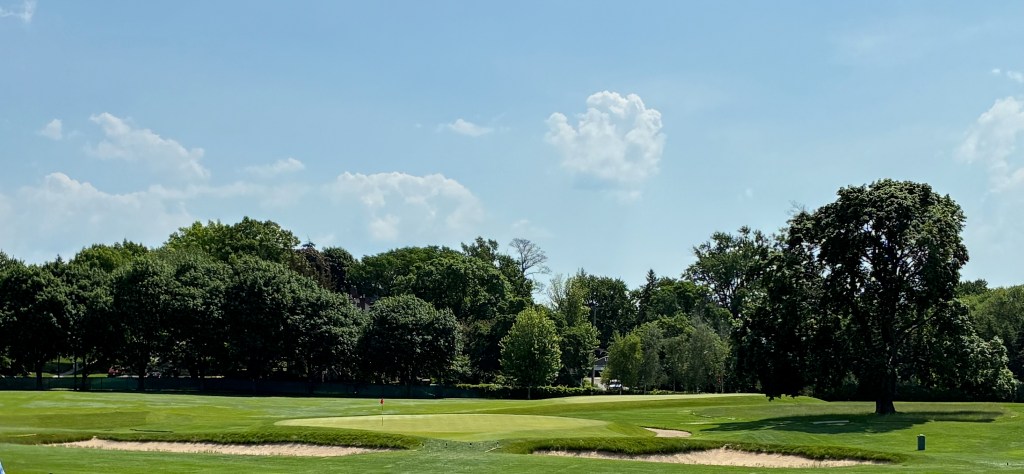
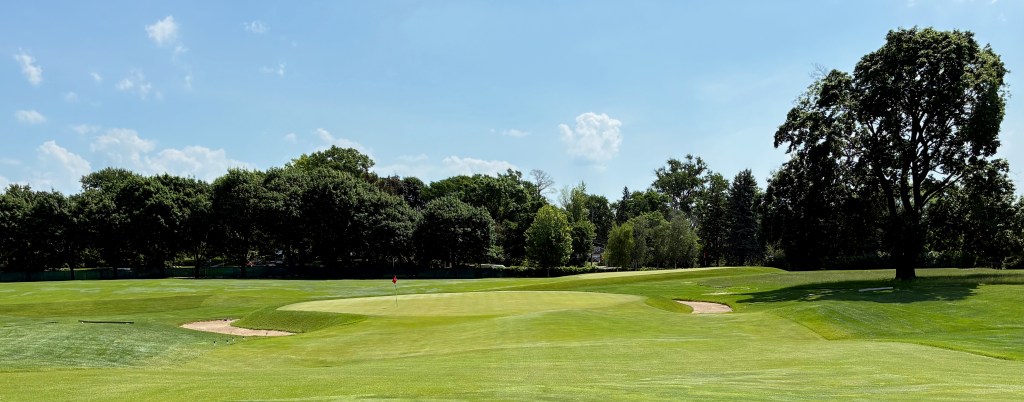
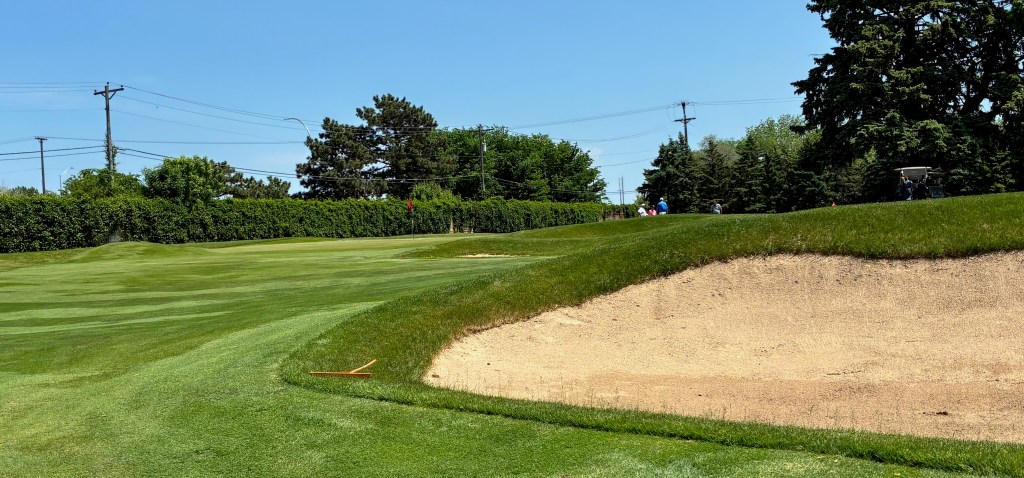
Five: The short par four fifth has undergone one of the most significant changes from its inception to the present day. Mingay took a tight treelined hole that went down then up to a flat perched green and transformed it. He removed every tree on the hole, added a large bunker on the right at the flat, and cut ten feet out of the top of the hill to create a punchbowl.
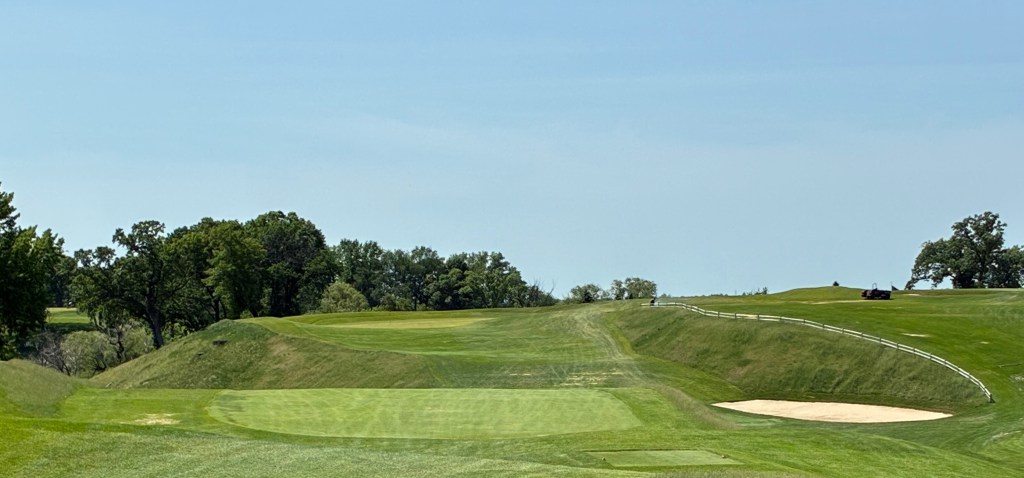
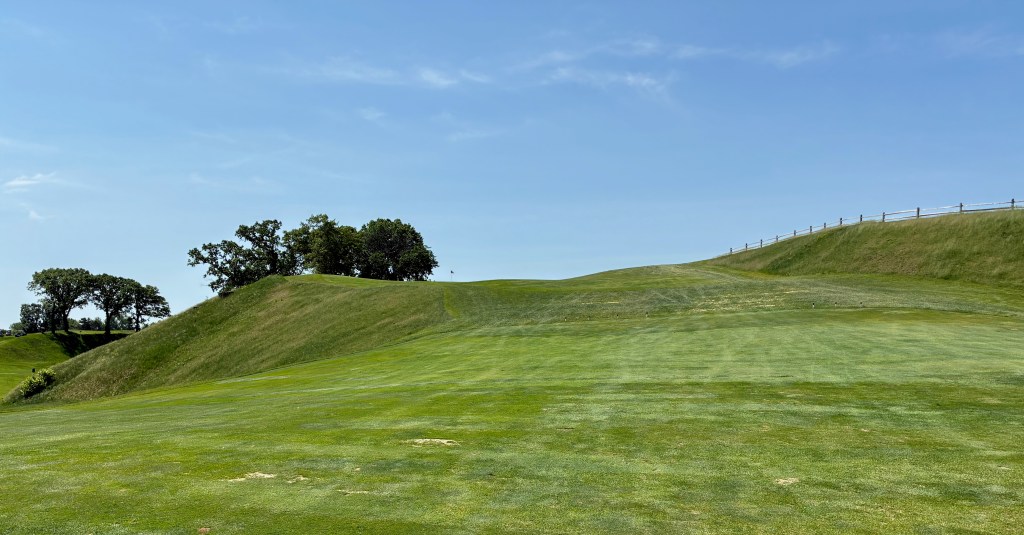
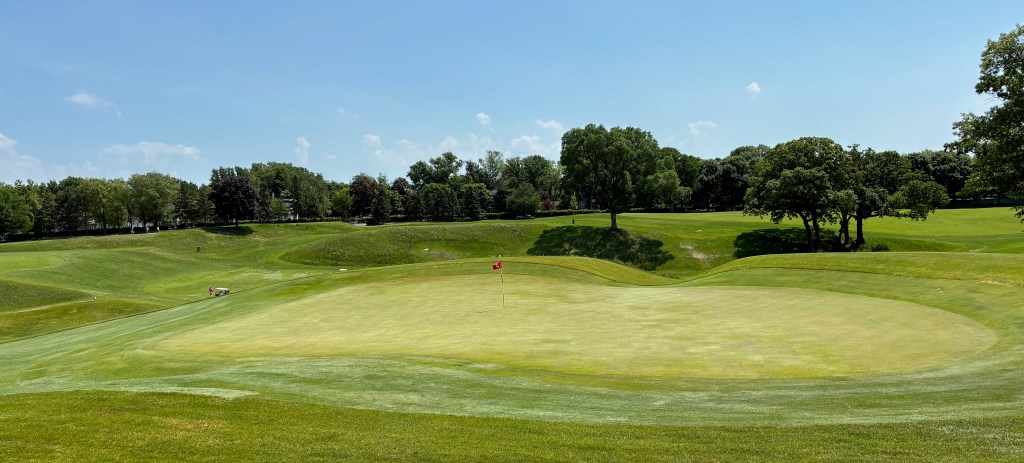
Seven: This par four plays along Cretin Ave sharing bunkers and a fairway with the fourth. Hugging the trees and OB on the left opens up the green while the attractive new bunkers lurk right.
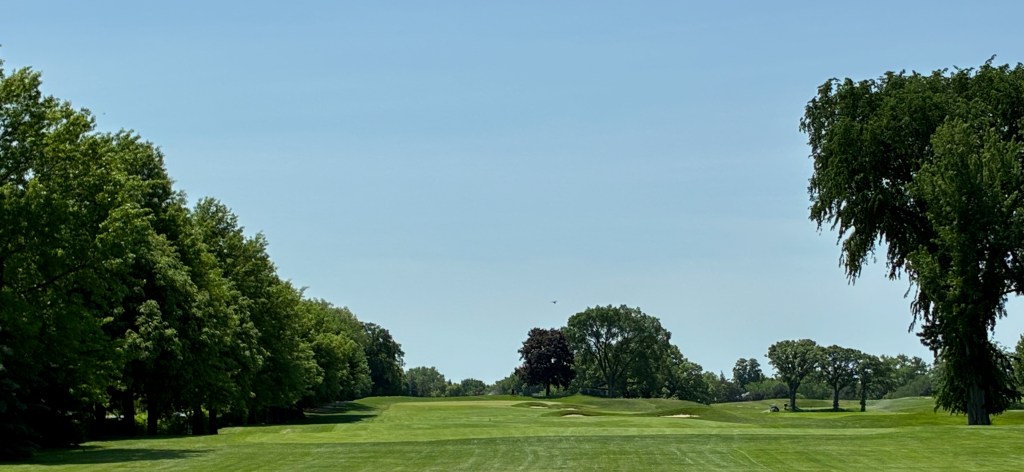
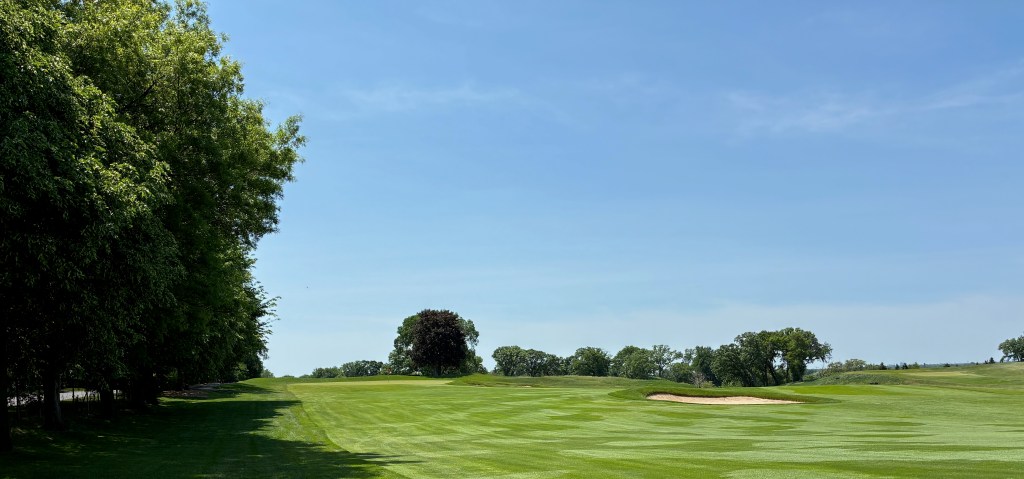
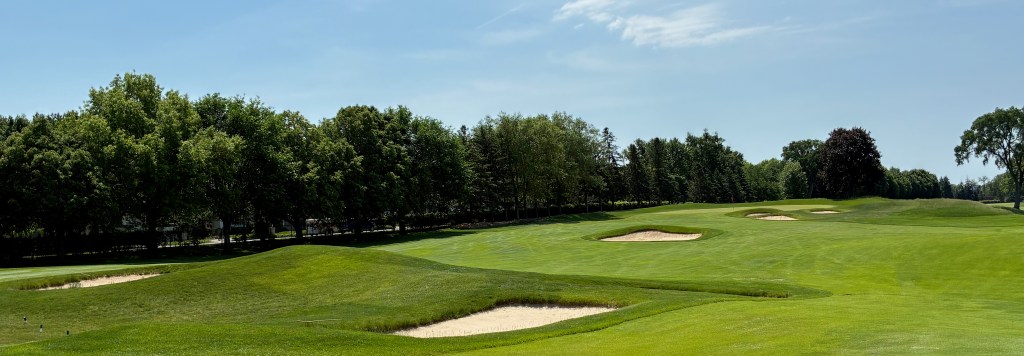
Eight: The strategy is brilliant. One of my favorites in golf. Similar to the fourth at Bayside, the fairway is mowed down the hill on the right side and pushes shots hit there down to the bottom, or if hit far enough, into a row of bunkers. Longer shots that crest the ridge will be propelled forward for a short iron or wedge into a receptive green.
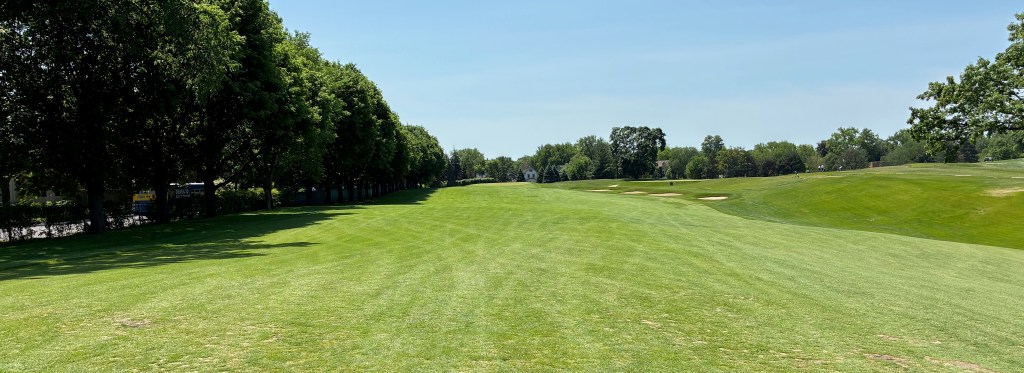
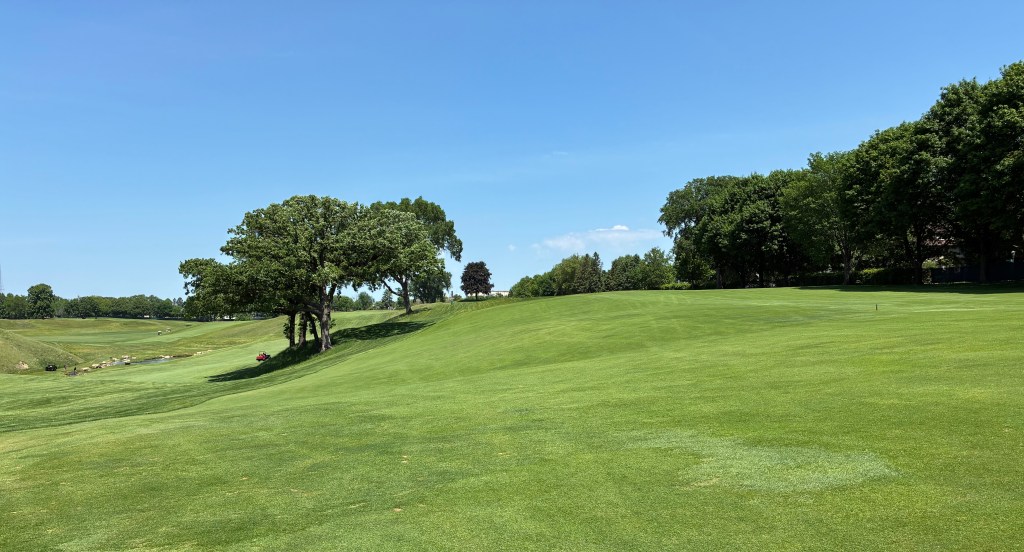
Nine: From the tee, this par four plays out to the top of the hill between a pair of fairway bunkers with a rather excellent view of downtown Minneapolis. A long drive that carries the ridge will careen down the steep hill toward the front of the green whereas anything atop the hill requires navigating the sudden drop. The green itself is subtly contoured with a rise in the middle and an obvious expansion that includes a slight lip at the back.
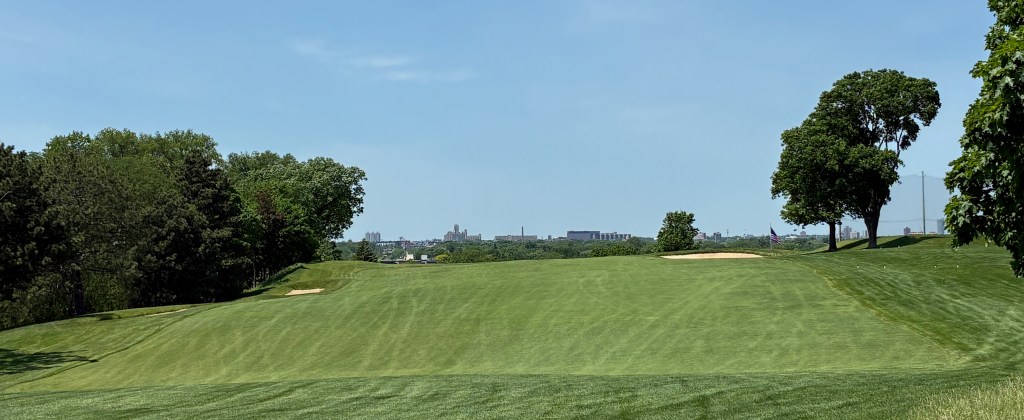
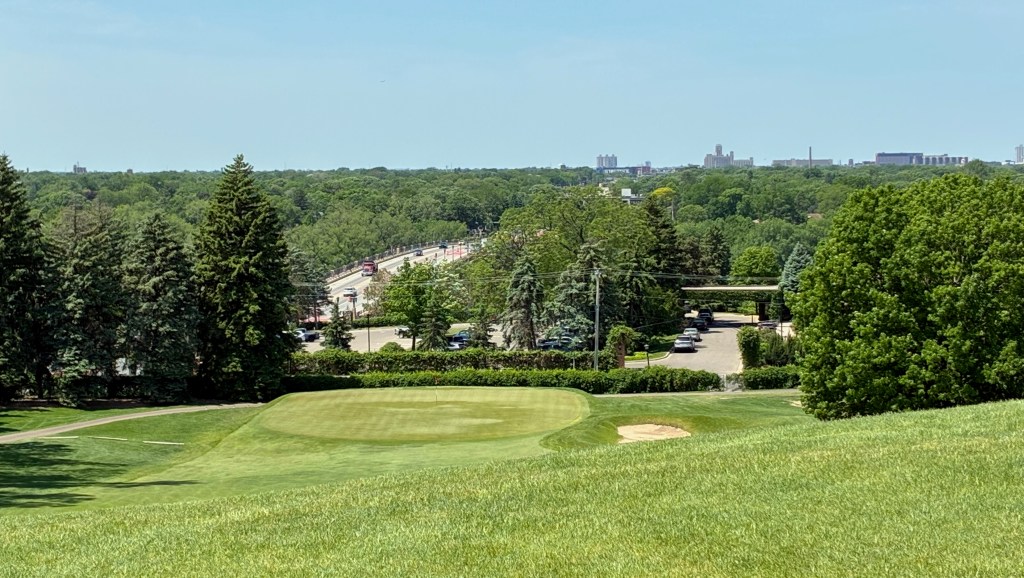
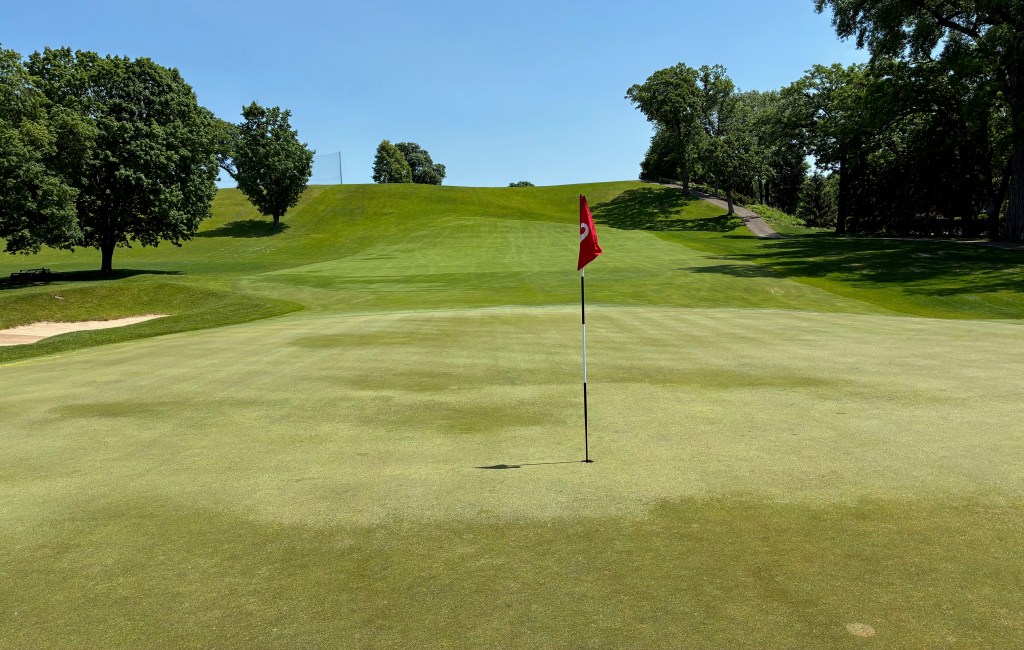
Ten: Here in Colorado there’s a place called Ault that refers to itself by the acrostic: A Unique Little Town. Town an Country’s tenth could be called AULH: A Unique Little Hole. The long, skinny green is perched up against a steep hill thick with grass that likely wouldn’t let a ball run down. There is a lower section to the hole that is a good fifteen feet below the green that requires a high blind pitch back up.
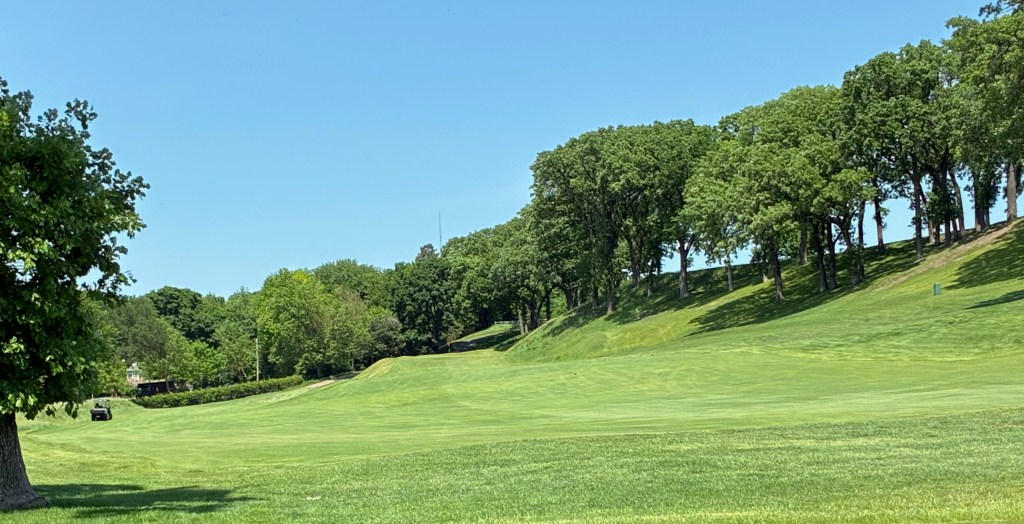
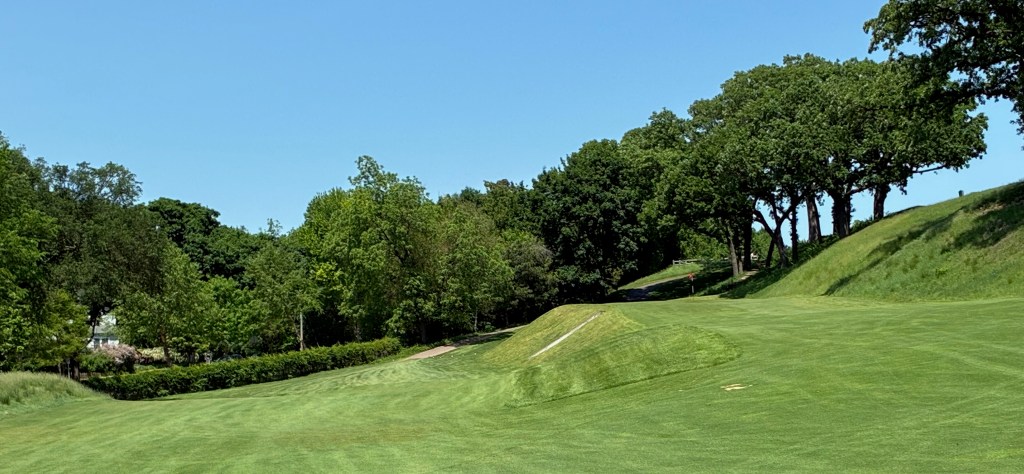
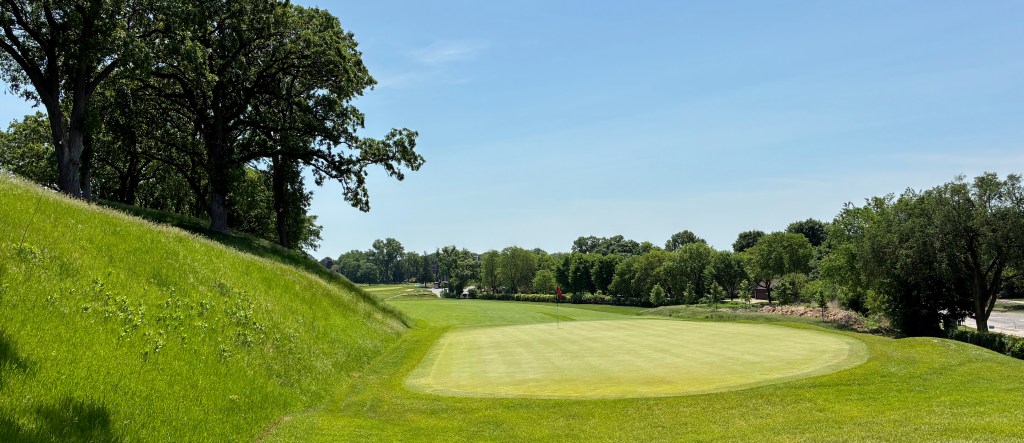
Thirteen: This is up there with the best short par fours I’ve played. At just slightly over 300 yards from the back tees there are options here. The new front bunker is wide and easily found by any aggressive shots that stay short. A new pot bunker right guards a high safe spot to the right that would leave a view of the green. Just over it are a set of moguls that complicate an aggressive layup. This is one of the biggest transformations with the pre-rennovation version. Mingay has worked wonders.
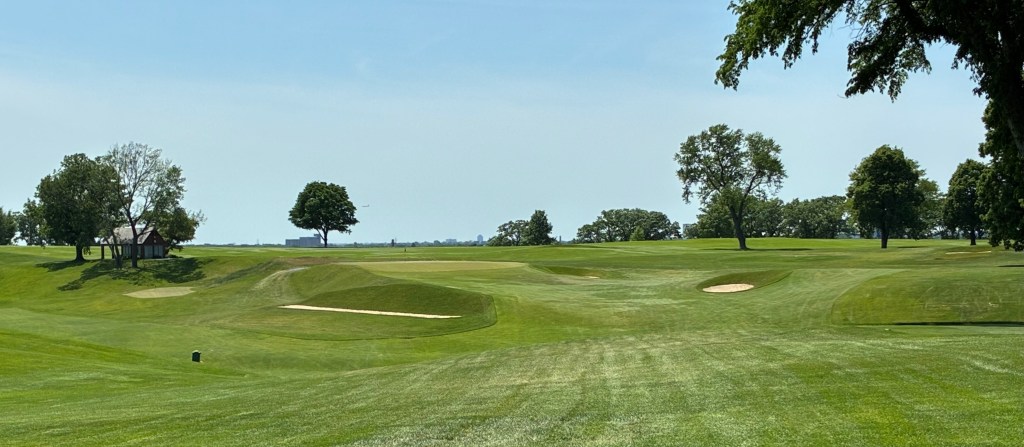
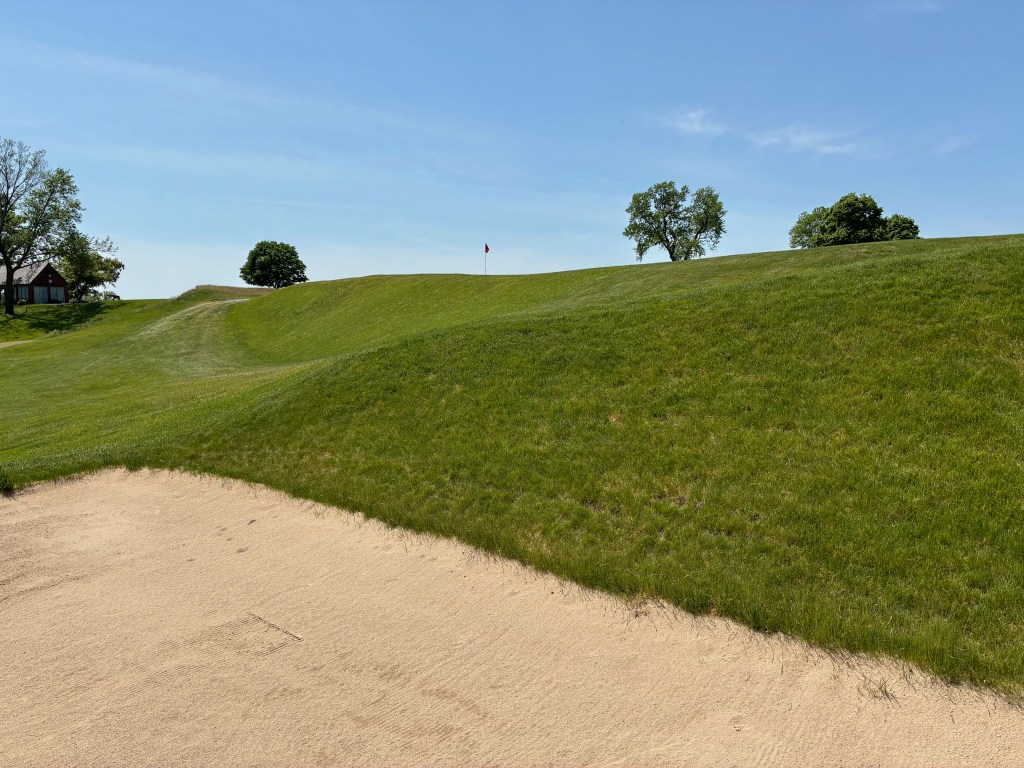
Fifteen: Quirk and strategy collide on the first of three consecutive par fives. Sharing a fairway with sixteen, the fifteenth has a magnet bunker out to the right and a prominent knob in center of the fairway that could kick the ball left down the slope into the rough, into the bunker, or forward for a “look” at the green. While big hitters might not notice it, it adds a bit of randomness to the result. The fairway disappears 75-100 yards before the green as it goes screaming down a sharp decline. Blind approach shots are left to the mercy of the bounce as the right side of the drop feeds to the green while the left drops off even more for a sharper descent.
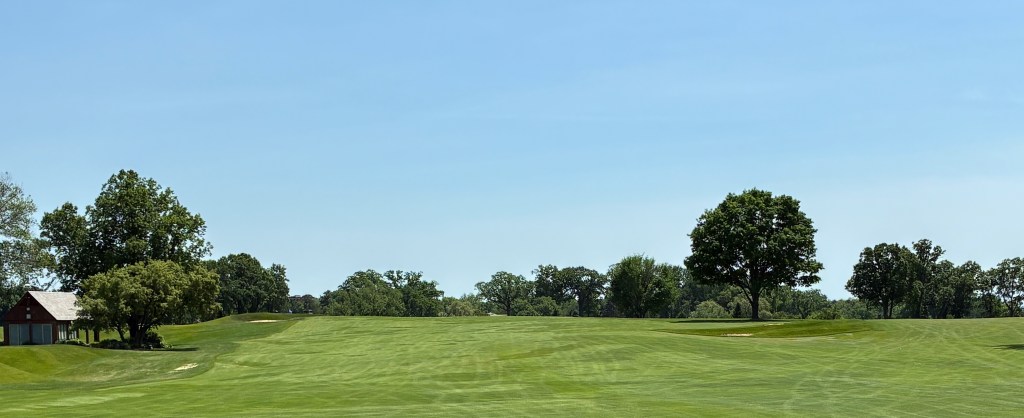
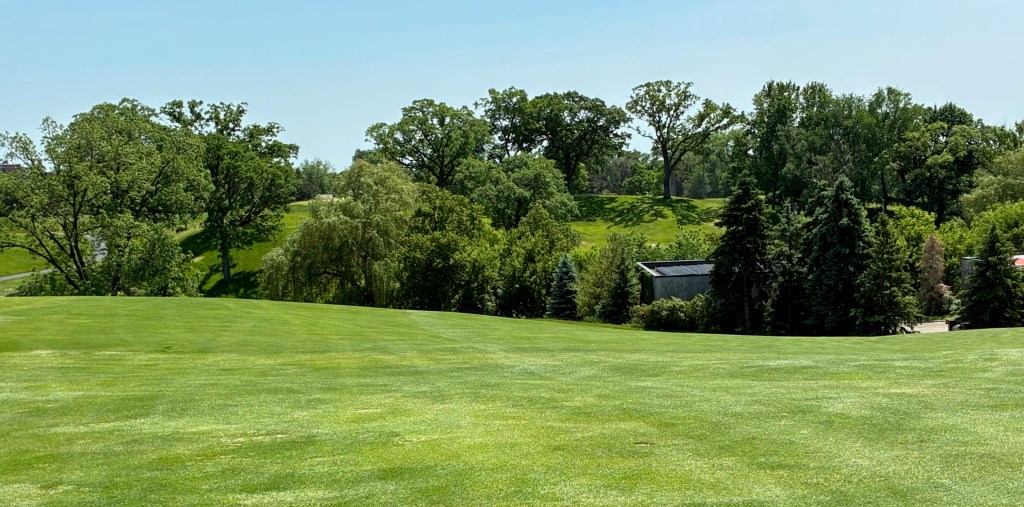
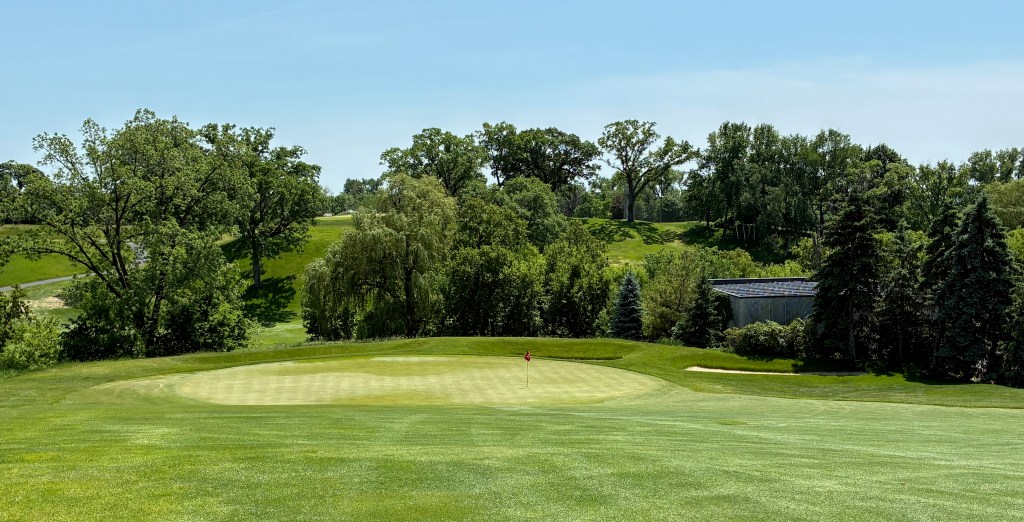
Sixteen: The second to last par five plays back up to the top of the hill we came down before descending once more. This time we must play between the set of magnet bunkers ideally using their polarity to keep the ball in the center. The fairway falls down to a perched green pad that makes for a tricky chip.
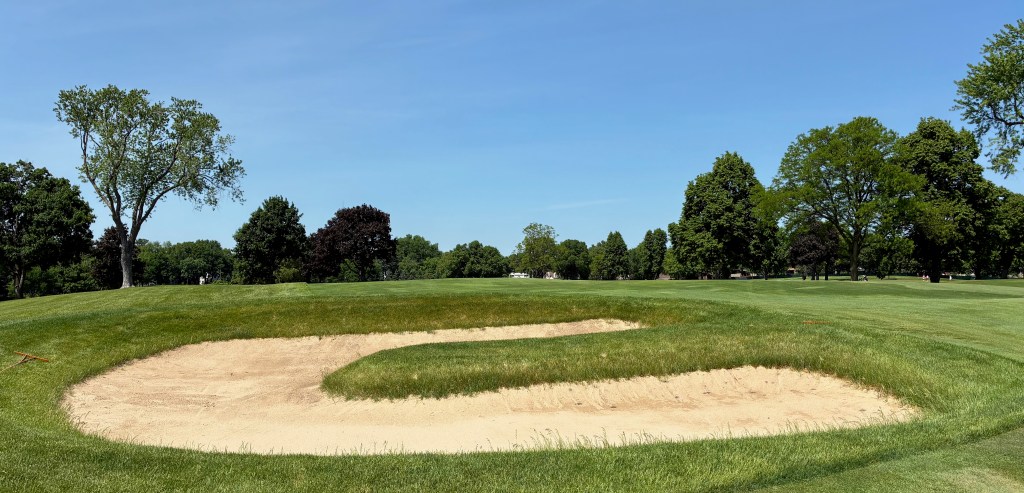
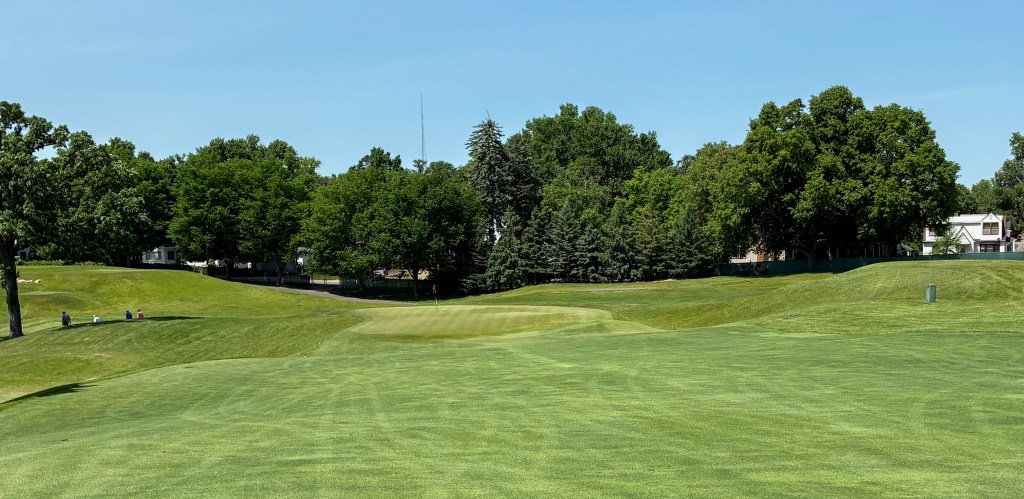
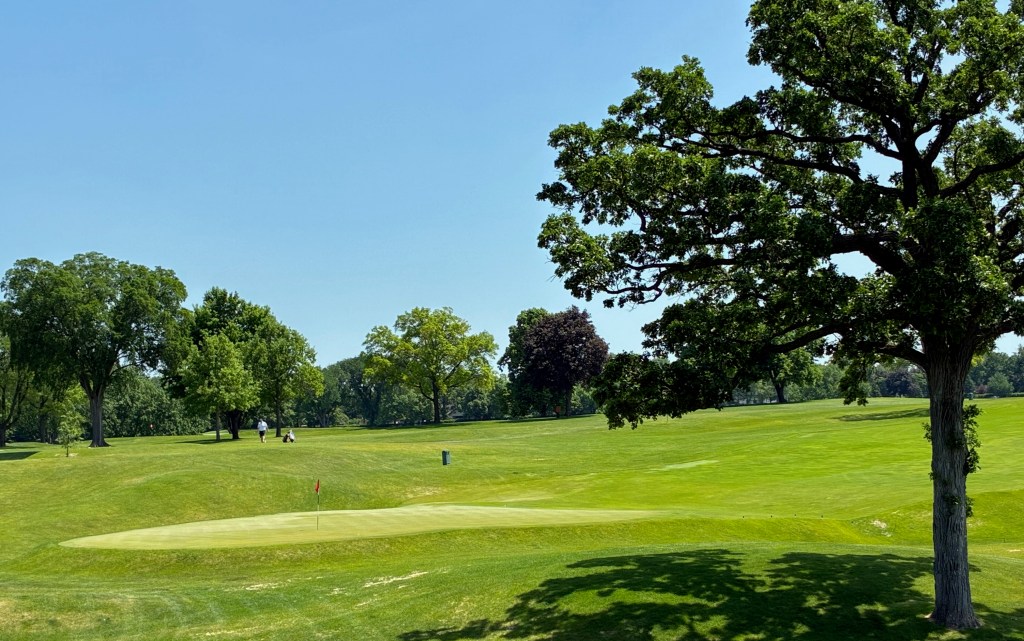
Seventeen: Once again, we rise to the top of the hill, navigating a blind tee shot towards a grove of trees. Cresting that reveals the hole that has a pair of fairway bunkers right and a steep back to front green perched atop yet another hill.
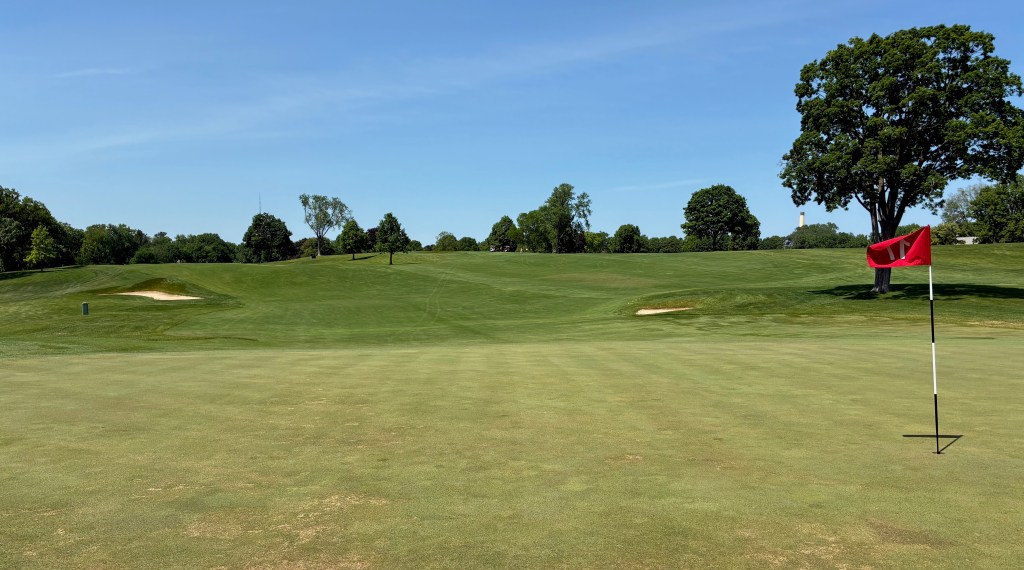
Final Thoughts:
I rarely comment on amenities, but T&C has water on every hole. Water jugs. For hydration. For a walker, that’s as good as it gets.
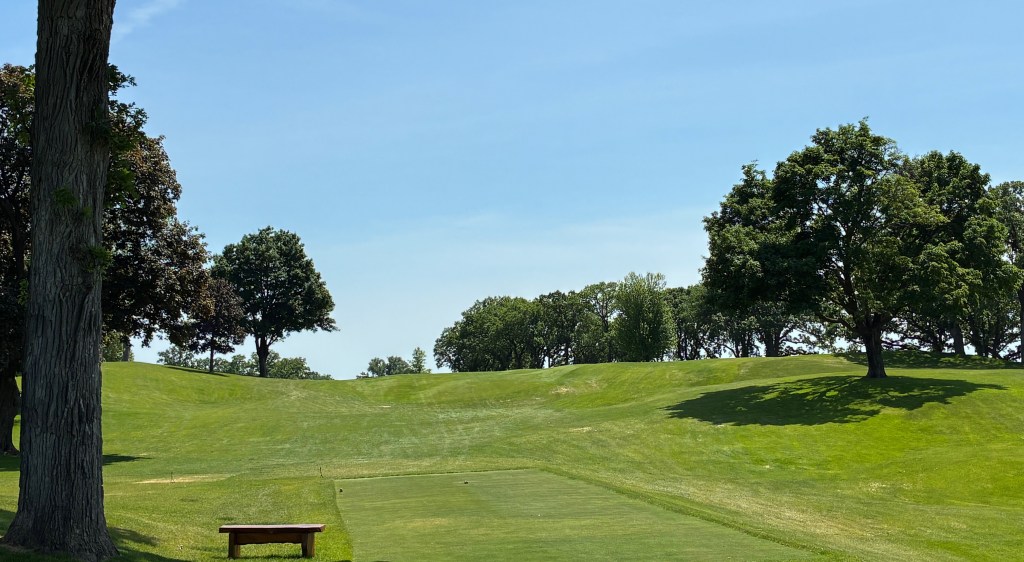
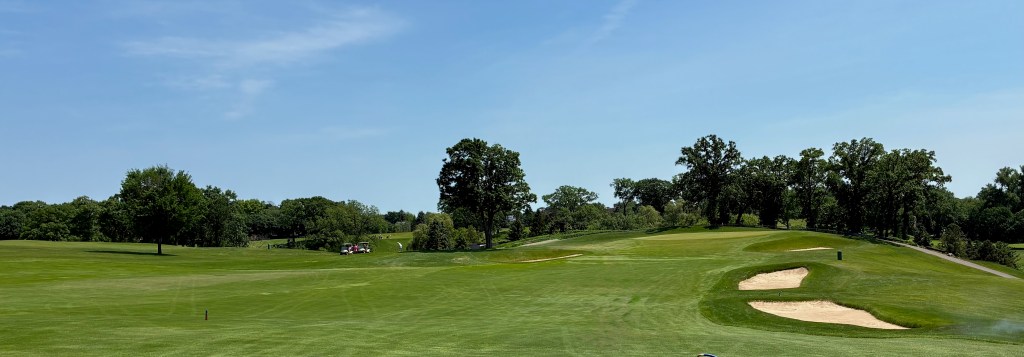
Due to so many factors: the history of the club, the number of hands that have touched it, the eclectic mixture of large land forms on a small site, and the playful character of each hole, there aren’t many courses like Town & Country in the United States. Left for dead for decades, buried beneath well intentioned but woefully misguided tree planting efforts, the resurrection of Town & Country Club should, for folks who like to play the rating game, find itself squarely in the top ten courses in the state.
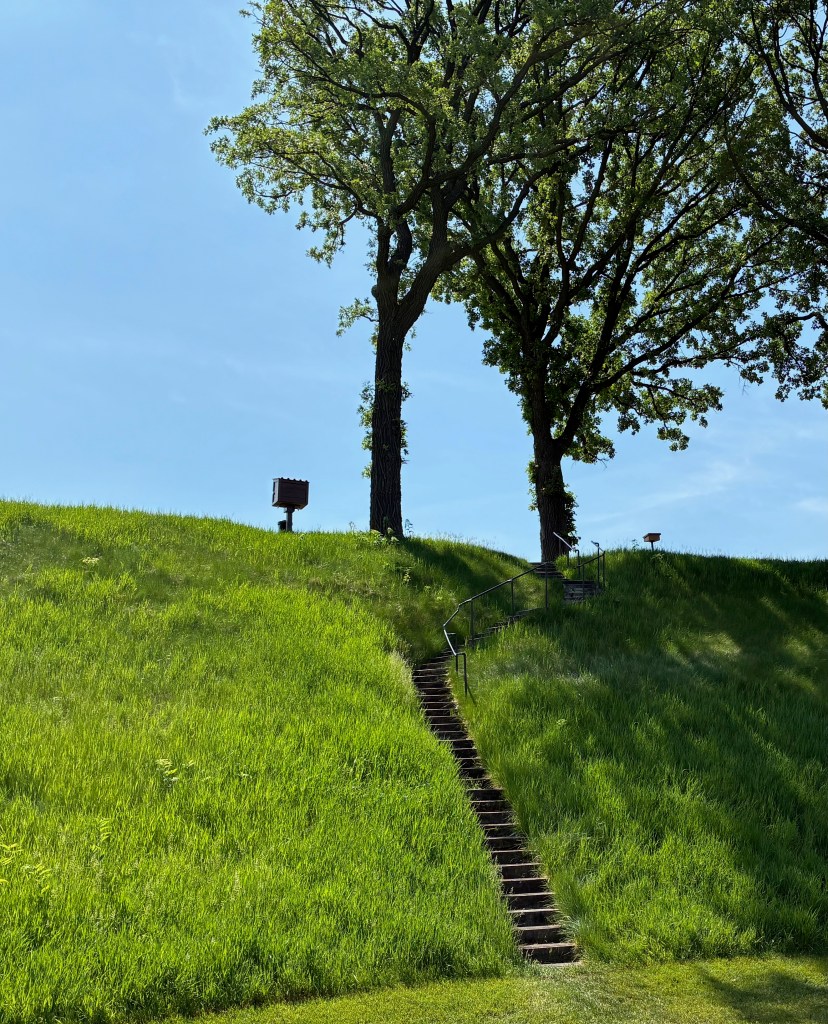
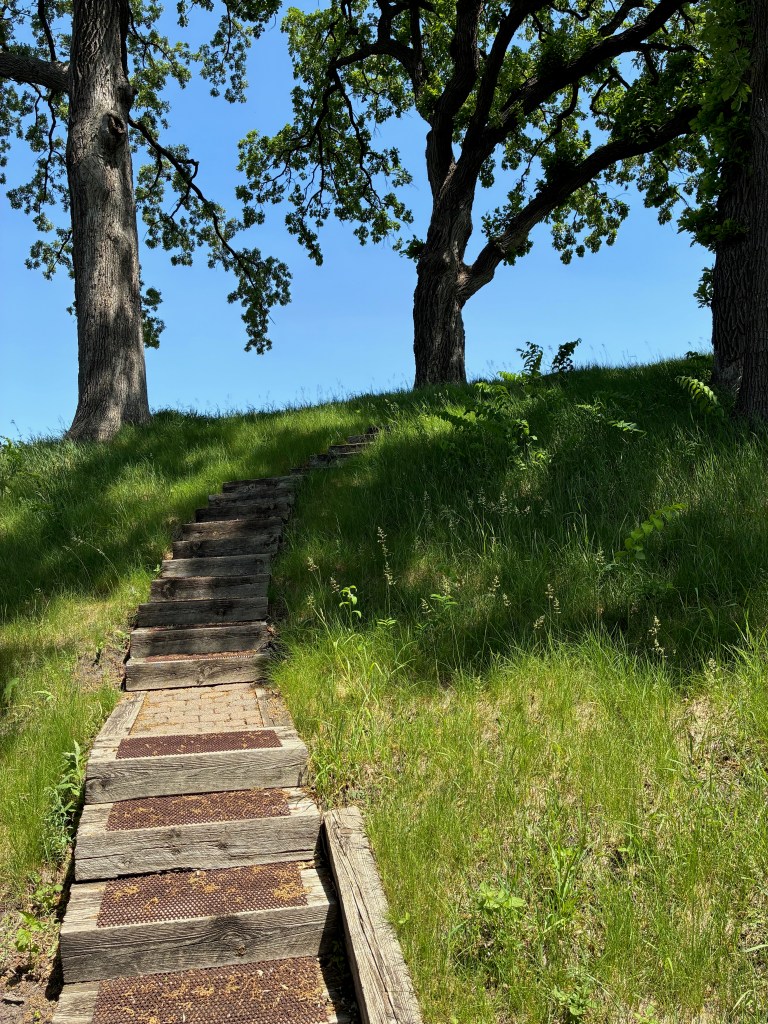
I love wooden staircases on golf courses. I love stairs benched into the sides of greens or bunkers for easy access. This course has both.
Further Reading:
Course Tour
Golf.com Article
The Fried Egg – good photos
GCA Discussion
Rick Shefchik‘s From Fields to Fairways
William F. Peet’s The beginnings of golf in St. Paul and detailed history of Town & Country Club


Leave a Reply