Nick Schreiber founded South Carolina’s Old Barnwell in 2022. Three courses later he hasn’t slowed down as he continues to expand the club’s mission and impact on underserved groups as well as the communities around Aiken. The Gilroy, designed by Brian Schneider and Blake Conant, is open for preview play and offering limited public tee times.
What kicked off your interest in golf architecture? The Chicago area, of course, is just flush with courses by incredible designers and how did you get fascinated with it?
I would love to say that I knew how lucky I was to caddy at a place like Old Elm when I was a kid. I didn’t. I didn’t start playing till I was 13 or 14 when I started caddying. I had held a golf club before and been to the driving range, but I didn’t start getting obsessed. It’s one of those things where I fell hard and it probably wasn’t until after college when I hadn’t played for a few years. And then, when I started playing again, I was so much less concerned with what I shot and how I played and so much more concerned with the opportunity to walk outdoors with people that I enjoyed being with. I wish I could tell you there was a moment. I will say that I had the good fortune of playing National Golf Links when I was probably 22.
I certainly was not somebody who deserved to play such a great place at that point in my life, but I do remember thinking to myself as we played there, “this is like playing on the moon.” I’d never experienced or seen anything like this, and it made me very very curious. And that’s probably when I started to find things like Golf Club Atlas. And once I fell, I fell pretty hard.
National Golf Links. That is quite the education.
It’s just so different. I haven’t been back since, but having caddied at Shoreacres a little bit in college, to see some of the templates, I didn’t fully appreciate what those were, and now having had a little bit more experience with C.B. Macdonald or Seth Raynor courses – it’s in my mind. I don’t know how accurate this would be if I went back, but it was just bigger. It was like everything was bigger. I haven’t been to Yale, but I think Chicago golf is probably the closest in terms of the green sites, but it still looms very large, literally and figuratively in my mind.
I know that NGLA and Lido had an impact on the design of Old Barnwell. You’ve got the framed layouts in the library there. Was that part of your thinking when you approached Blake and Brian? Thinking about NGLA and thinking about that kind of style or that bigness?
I came to them with no preconceived notions about what I wanted to build.I had a nebulous concept around the mission, and kind of a general idea that if we could build 36 holes, that would be great, not knowing fully what that would cost, and all the details that are pretty important in that. But in talking with them, it was clear that there’d be no inspiration to cull from until we found the land. They didn’t want to make any decisions. They certainly have their own kind of inventory of great holes that they’ve seen that they want to utilize in some capacity, but until we found the land, they were pretty hush hush on any sort of concepts from a design perspective.
I know that some developers, especially ones with an interest in golf architecture, want to have their hands all over everything.
I’ve never been a great player and when I first met them I was probably 36 and I had had some success, but I wasn’t like a 60 year old CEO who was used to getting his way or her way. I was very aware that just because I liked these things didn’t mean I knew what I was talking about. And to some extent, as a fan, and as somebody who was interested, it was great for me too, because I could (and I did this more effectively with the Gilroy than I did with Old Barnwell) ask questions and basically get a front row seat to see how they do what they do, and, um, why they do what they do, right?
Joe Bausch has a great kind of online archive of course tours. Jason Way has some. I remember going through and looking at all these photo tours of courses I’d never been to and I saved images of things like scorecards and clubhouses, anything that I thought was really neat. I saved them thinking that at some point, ‘wouldn’t it be cool if we did this?’ And I realized that, no, that’s not a good idea. I should really let them do what they do best. And again, experts can be wrong and I understand that, but at the same time they’re very good at what they do, and they’ve seen a lot, and it was more fun to be a spectator than a participant in that regard, and certainly turned out a lot better too.
What were some of the things that you learned? Some of the stuff that popped out at you that you weren’t expecting? How did that process look to you as a layperson?
I’d say there are a few things early on that stood out. One, I was very surprised at how collaborative they were. With the first seven holes that they completed, what we called the upper loop at Old Barnwell, which is holes one through five and 17/18, we got those done and grassed and open for preview play December of ‘22. And those seven holes took them a pretty long time, and they did because they went back and forth a bunch. I remember the 5th hole in particular: a wonderful green. A big green. And it went through a bunch of different iterations. They were kind of two ships passing in the night as they were working on those holes. One would be in town for a week and then the next one and they would basically erase what the previous visitor had done and then start over. And so I think it took them a bit of time to coalesce or kind of get a sense of what they wanted their shared design to be. So that was really interesting to see.
The other thing, going back even further, I’ve told the story a lot lately because the 16th green at the Gilroy is the first green site that Brian showed me. I used to tell the story and joke around about it, but it’s pretty much true. He brought me in and this is a part of the property that had very mature pines and there was this big rise and he brought me there and he’s like, ‘this is a green site.’ And I remember, ‘ha ha ha, like, totally. Why do you think so?’ Pretending like I had any concept of what he was talking about. And to see the vision that exists, not just because of topo maps, but because of what they’re feeling under their feet. It still blows me away. I don’t understand how they have that vision. I think they had a good concept based on the topo maps that we had, but they’re not 100% accurate and things change, You cut a tree down and you remove the roots and things change, and and to see how they could get a sense of that while there were still trees there, it was just mind boggling to me.
If I remember correctly, you all added additional acreage nearby to the par five 15 and 16 to get that corner? Is that right?
We had like 444 acres to begin and we added three additional parcels at the time for Old Barnwell. One parcel was 75 acres and includes basically 10, 13, 14, and 15 green. And then another parcel that includes 4, 5, 15 and 16. Those were really key components and it’s funny because the original routings, most of them went over where the Gilroy is now, but because we were able to get some of these parcels and we weren’t able to get another parcel, they kept going back and forth about where they wanted me to try and buy land, but also if we couldn’t get additional land, where they would end up. And so that was also an interesting part of the process and one where we got very lucky from our neighbors who understood what we were trying to do. I was very honest about building a golf club, but they were interested in the mission. It’s a business, don’t get me wrong. We bought land at a price, but it was a reasonable price, and I think that they’ve been great partners with us since then and understanding and cheering on as neighbors.
Do you have favorites out there? Do you have favorite holes? Do you have favorite green sites?
I tend to look at things from the perspective of where are the shots that are most fun to hit? I love the second shot into 10 or if I miss it right, the 3rd shot into 10, with the green slopes away from you. The 14th is not everybody’s favorite hole, but it’s one of mine. It’s a Sahara template. I do love hitting that. I love the 2nd shot into 16 and there are a bunch of those that I find really compelling every time I get the chance to hit them. I generally find myself in trouble for some reason around green’s a little bit more on the front 9 and so I like the recovery. You have to be really good or really creative to make it work when you miss some of those greens on the short side. And again, I’m not a good enough player to care about my score, but I do love hitting the shot. Thinking of a shot and then actually executing on it when it rarely happens. If I can do that 2 or 3 times in a round, I feel like I’ve got a good day.
You live in Charleston, is that correct?
Yeah. Suburban Charleston.
Do you play most of your golf at Old Barnwell, or do you play most of your golf in the Charleston area?
I do. I don’t play around here really ever. I’m not a member anywhere. Old Barnwell’s the only place I’m a member at. And public golf here is either really expensive or really hard to get on or both. I love the muni, but I’m in Mount Pleasant, so I’m like a 30 minute drive and it’s really hard to get on there. I’ll accept an invite to any number of the wonderful private clubs around here, but maybe play 3 times in Charleston a year, maybe 4 if I’m lucky.
Can you talk about how the Gilroy came to be and the process for it? And I know that it has a different feel to it from Old Barnwell. It’s sort of a Heathland inspired course. Is that right?
I would say so. I don’t want to speak for Brian and Blake. There’s certainly aspects of Old Barnwell that have Heathland characteristics. I say that as somebody who’s never played authentic Heathland golf. So I’m basically pretending I know what I’m talking about. But as it relates to the Gilroy, originally when I went to them, I wanted to build a 36 hole facility. The idea was what became Old Barnwell, whatever you want to call it, a championship or a kind of a regulation 18 hole golf course. And then they had this idea of wanting to do what they referred to as a holiday course for the second 18 if we ever got the chance to build the second 18.
It turns out that in the early stages of Old Barnwell, Brian and Blake brought up the idea of a kid’s course. And that really fit so much of what we were trying to do on the mission side. And I love the idea of this whimsical 20 acres that we could really put our money where our mouth is in terms of delivering something that was for families and was for kids. I think a lot of people think that when we talk about creating a place that’s welcoming to those folks that are generally underrepresented in the game, they think I’m only talking about women or folks of color, which is a huge part of it, but I also feel like in a lot of private clubs, women, families, and kids are also set off to the side. And so that scratched that itch for me, frankly.
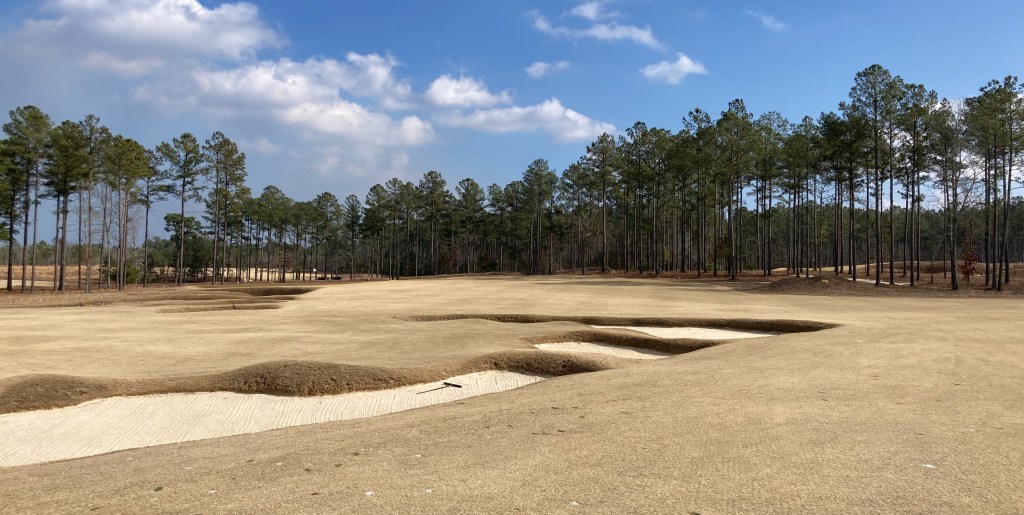
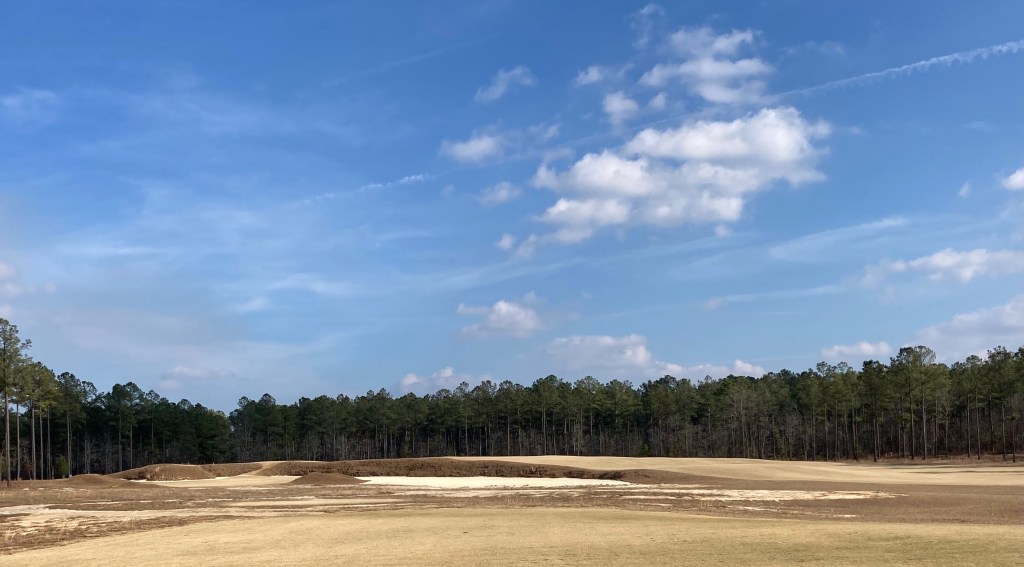
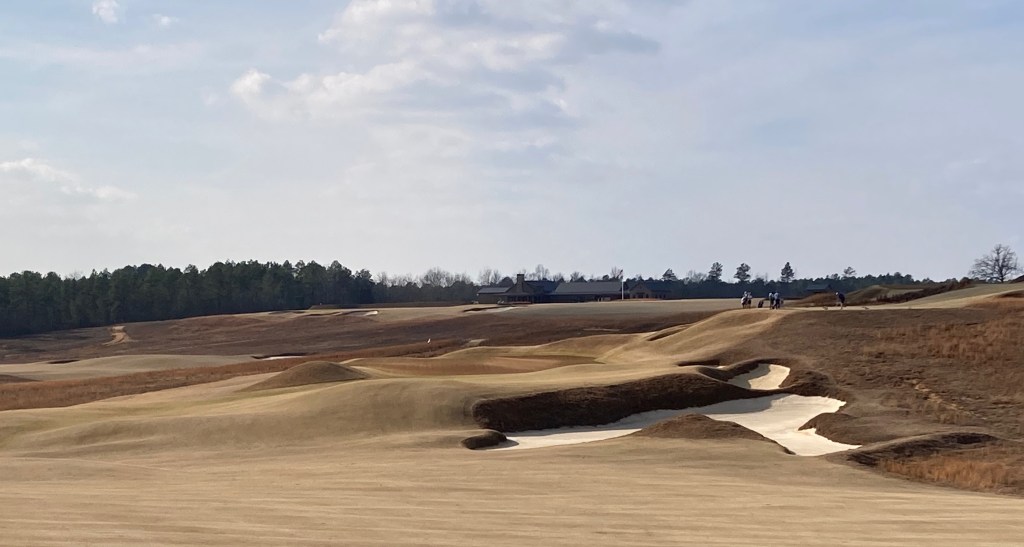
I knew that I still wanted to build more, but we were just getting off the ground and spending a lot of money and I wasn’t sure if we’d have the opportunity to do another whole 18 hole golf course. Luckily, things progressed in a way that did allow us to do it. And by that point, I think they felt like they had scratched a little bit of that holiday course itch too. And we’re back on this idea of a regular, maybe a shorter course. I don’t want to speak for them, but I think that that idea of a holiday course, quote unquote wasn’t really top of mind for them. They had a routing that they had done way back when on that property and when I was ready to move forward with the idea of building a 2nd 18 holes I asked, is this the routing that you guys want to go with? And that would have been the holiday course, and they said, well, give us some time, and they came back with a different routing that also included 3 holes on land that we didn’t currently own, but land that we could have gotten a few years ago. And it’s what the Gilroy is now basically. So 67 or 6800 yards par 70.
You touched on the mission, which is one of the coolest parts of Old Barnwell. I mean, the entirety of it is the coolest part of Old Barnwell, but how did you approach drawing members who fit that mission oriented mindset that you’d set out? How did you advertise it to get the right people while still finding enough people to buy in?
I wish I could tell you that we had this master plan and it all worked according to it, but truly it was a case of good intentions and acknowledging that we didn’t know what we didn’t know. To take a step back, this all kind of came about because we had sold that software business. But truly the reason I’m able to do this is because my father, who did not grow up with much, has been very successful. At some point after we sold the software business, I went to rehab – I had a drug and a drinking problem – and when I got back things were pretty dicey, as you can imagine, but my wife was the one who said, listen, whatever you do next you better love it. What do you love to do? And I love music and I love golf and golf course architecture and for somebody who doesn’t drink or use substances anymore, music was probably not the healthiest option. This idea of a mission focused golf endeavor really started with no firm concept. As we talked about things that we wanted to do and this idea of serving those groups that are generally underrepresented in the game. I started looking for land online, just looking at stuff, and I reached out to Blake.
I wish I could tell you that there was a linear progression of where this idea went, but as we moved along, what we realized is that we needed to find partners who were doing great things in the game and and hitch our wagon to their star, because we didn’t know what we were doing. That allowed us to get a little bit more comfortable in terms of creating our own kind of programming down the line with the help of those partners and fitting it within the framework of the community in which Old Barnwell sits: Aiken and Barnwell Counties.
Early on, the earliest members came to us. I was on a podcast with Cody from No Laying Up and it wasn’t their main podcast. It was kind of an ancillary podcast, but that was our kind of quote unquote coming out. It was January of ‘22 and we had not officially started membership at that point and so we talked about the mission there. Where we had previously gotten traction was on Golf Club Atlas, because people were hearing that Brian and Blake were doing something, and so the golf architecture nerds like myself were reaching out interested in finding out more. That is a small but powerful group of people in terms of, taste making is too strong of a phrase, but they talk amongst each other and there’s a real network there that can get word of mouth movement and moving quickly.
I come from sales. So I think about this as the top of the funnel. For not having spent a single dime on marketing, we had a pretty large number of people reaching out asking about what we were doing. A lot of it was curiosity, and we were very affordable particularly in the beginning. I think our first 200 members got in for an average of like $12,000. So that was the top of the funnel.
The first hire that I ever made outside of Brian and Blake was a local Aikenite named Morgan Purvis, who’s also a golf nerd and has since gone on and worked at High Grove and is now working on another kind of golf development project in Florida. But he and I met with every single candidate. So if I didn’t meet with them, he did and in most cases we both met with them. It is very tough early on to convince prospective members of what you’re going to do from a mission perspective when you don’t have a concrete plan.
We had started to develop those partnerships and started to make relationships and had an idea of a youth caddy program, which I’m very familiar with having been a youth caddy growing up in Midwest where they’re pretty common. Partnering with an HBCU or a local university to help provide scholarships and things like that. So we had some ideas. I think there’s a lot of skepticism from the people that we were first speaking with, but I think they saw sincerity, if nothing else. I’m not saying it wasn’t a risk, but it wasn’t the most expensive of a risk for them to take. So that’s how we got some early members. I think others reached out to us specifically because they wanted to be a part of something different within the game. And with those it was a lot easier because they got energy from the fact that there wasn’t a concrete plan, that we were working to find the right path forward and so those were different types of members.
Now we’ve got 495 members and we’ve been at capacity for a while, but that group of 495 families, they all come at it from a different angle, but they know that if they’re not interested in the membership or in the mission, they’re probably not the best fit for us, and hopefully we’ve gone through the wining and dining phase. But, you know, like anything else, there are times when you realize, this isn’t good for me and a member might figure that out or we might figure it out for the member. I would love to say that we’ve batted a thousand, but we did pretty well. I think people were hungry for something different, and they wanted a great golf experience too, and I didn’t fully appreciate how important that was in terms of benefiting the mission and what is now our foundation.
That is the coolest thing. I absolutely love that. And the fact that you prioritize having the right people who are invested in what’s a little larger than just the game.
It was easier than you’d think in the sense that there was a real hunger for it and I’m really pleased and we feel really fortunate that we got to meet a lot of these people through whether it was that podcast or a post or whatever the case may be. We reached a lot of people. A lot more than we deserve to, since we didn’t really invest in marketing. So it could have gone the other way and we’re lucky it didn’t.
What can you tell me about the Williston Country Club and what all you have going on there?
I’m so excited about Williston. A quick background: this is a 9 hole golf course about 15 minutes east of Old Barnwell in Williston, which is a town that, like a lot of places in South Carolina in the 60s, 70s, and even in the 80s, was a much more robust community. Like a lot of these towns it is not quite as robust as it once was. This 9 hole golf course was built in the 50s and it is a place where people got married. It is a place where the firefighters had their annual gala. It is where kids all worked either in the cart barn or picking up balls, whatever the case may be.
We had gotten to know the mayor of Williston and his brother through some of our programming. So the mayor, his name is Jason Stapleton, doesn’t even golf, but he and his brother bought the golf course to save it from development, in part because it was this community hub that they wanted to bring back. So we helped him with agronomy and we did a little bit here and there, but at some point, this January, I walked the course with Jason and his brother and it was like, what are we doing here? We could do so much more. They were doing better than they had in the past, but they were not doing great financially. And it’s like, what if we could take this over? And what if we could really invest, not just in the golf course, but in the programming? It’s right across the street from a middle school. It moved pretty quickly from there, frankly. It fit with so much of the stuff that we’re trying to do from a mission perspective around access, but again, using golf as a Trojan horse for something more was also something that was really appealing. So we hired Blake. Blake has done a master plan. We’re rerouting some of the golf holes, not a ton, but just a little bit, and he’s going to renovate all 9 greens and add a larger practice putting green. So far, the Old Barnwell Foundation has owned it since May or June, officially. Since then, we hired a superintendent who worked on our staff at Old Barnwell initially, Steve Whitaker, who is fantastic and lives in the neighborhood, and he has done a wonderful job getting it to a spot where the greens are not all dirt patches. Really improved that. He’s done a great job.
We’ve cleared a ton of trees to open it up, and Blake will start work in May. We’ll shut it down after probably the end of April, and Blake will come in in May and June, and hopefully we’ll be grassing in July and August so that it can reopen in October of 2027. So that’s the golf stuff. There’s some really cool golf stuff there. The clubhouse is an old ranch house, but it has a big 1000 square foot empty room with folding tables and folding chairs that we plan to put to good use around after school programming; less golf and more being a place for kids to go and where we can provide some adult supervision or homework help and things like that. And so we have not fleshed out all of our plans there, but that’s another component to this that we were really excited about. And we want it to be, whether it’s through the putting green or the practice facility, we want it to be a community asset again, and something where everybody feels comfortable. Having Blake, one of the best in the world that does what he does, to come through and make it really interesting and keep it affordable. We joke around that we’re going to raise prices 15%. So it’s going to go from $15 to $17.
You monster.
I was talking to Ed Brockner, our mission director about this the other day. He’s like, do you think our goal should be to make it the best 9 hole golf course in the country? And I was like, you know, no, I don’t. This isn’t about golf course architecture, what I want to do is create the best bargain in all of golf. If we can do that, then I think we’ve got our alignment set on the right things and Ed agrees. We want to shoot for the stars and land on the moon. I think Blake is going to turn it into something really spectacular and really fun and the conditions are already pretty great out there and we’re going to keep improving those and keep it affordable for locals and free for kids. So, that’s the plan.
One of my favorite things in golf is Muni’s that are transformed into something compelling, interesting, and still incredibly accessible.
I think it can be done. You’ve seen the Kaisers do it in Madison or Shoop Park. I know there are other examples out there. We are certainly not the first to do this, and this is probably an unpopular opinion. I think there is a role that private clubs should be playing. In this ecosystem. I really do. I think, you want to create the next generation of golfers, you want to create your next generation of members, right? If you’re a nice club in a big city, I think a way to do that is to invest in your community or to invest in the community around you and, whether it’s sharing equipment to punch greens twice a year, there are so many ways that they can help in a way that doesn’t impact the membership, but might impact the community. If you want to be a good member of the community there are so many ways that a private club can do that. It doesn’t cost that much and our budget is basically $2.5 million, and we’re not going to touch some of the fairways. We’re gonna keep them as they are. We’re basically rebuilding the greens and 40 yards and in with the help of John Deere and the help of Rain Bird. Really just being smart about what we’re spending money on. We feel like we’re going to create something really special and it’s not going to cost us $25 million. I think the benefit is it then allows us to keep prices affordable and hopefully has a lasting impact on the community around us. There’s so much that could be done in places all across the country where the population is more than 3000. Any number of small 9 hole or 18 hole golf courses in major cities that could just use a little bit of love.
I hope that becomes more commonplace going forward. And, and I know places like Hazeltine have done that with the Loop.
The USGA did the one in LA.
Was that Maggie Hathaway?
Maggie Hathaway. I think that’s a rare success story, though, like in terms of, if the US Open goes there. They could do this to a local muni. I just don’t think The Park is the best route to go. I mean, great. If you can raise 60 million bucks, go for it. But, for these communities that are not West Palm Beach, you can still make an impact if you can raise a 1 million bucks. Or if you can borrow equipment, if you can borrow expertise. We’re really fortunate that John Deere and Beard Equipment saw what we were doing and they wanted to be a part of it. So we’re getting a great deal on our equipment there. And the same is true with EZ Go. It’s those things where I think people want to be a part of these types of experiences and outcomes. I think that the private club benefits from the golf ecosystem everywhere. I think many of them are great neighbors. You mentioned Hazeltine. That’s an incredible story, and I love what they’ve done at the loop, and I know that there are countless others, but there are also a lot of clubs that like to keep their gates closed, and I think they have a role to play too.
My next question is somewhat self-serving. I’m such a nerd about golf architecture books. And I saw a pretty impressive golf architecture library at Old Barnwell. Can you talk about your interest in golf books? What’s had an impact on you and are there any you revisit often?
Sure. So I started like a lot of people with The Anatomy of a Golf Course by Tom Doak, and that got me into the writings from Colt and others. Then I started getting into really nerdy stuff. I would say that I don’t go back too much because I keep adding to the list. Lonely Beauty the new Sand Hills by David Normoyle which I can’t wait to read. I finished my previous book last night and so I’m starting it tonight. But also, I’m very lucky. My brother-in-law, somebody who came to golf late, has, in the last few years, gotten interested in architecture. He will go to yard sales or estate sales, and he will text me and say, hey, are you looking for any books? And he’s a large reason we have the library that we do. And frankly, we’ve got 4 or 5 more boxes full of books, we just don’t have enough bookshelf space for them. So kudos to Jeff, my brother-in-law, you found some really, really good ones. There’s one we’ve got that’s a compendium of all of James Braid’s courses and that’s so fascinating.
James Braid and his 400 Golf Courses?
Yes, that one, which I just love. I’ve got one on the sacred nine that is really, really good. I’ve never been there, but it really brings you there. I go back and enjoy looking at the pictures and reading about the great clubs. John de St. Jorre, the great clubs of the UK, and there’s the great clubs of the Midwest, and they’re beautifully done. I will say that I was rereading the ones in the UK recently, because I was showing my son something, and it is a little stuffy – just like “only men can drink in this room,” and it’s like, oh, I must have missed this the first time around. But the pictures are great and the history is great. I love the chapter on Rye in particular. I could go on and on. I love all this stuff.
You’re in good company.
I will say Getting to 18 may be the coolest book I’ve ever experienced. I hope he does another one. That one we have sitting in, we call it the Disher lounge after Craig Disher, who was the one who found those old aerials in that room. I love seeing people that don’t think about golf course architecture, thumb through that book. It opens it up. But this is not a, ‘put the fairway here, put the green there.’ It’s pretty intense, the thought that goes into this. I’ve enjoyed that. That’s one of those ones that costs an arm and a leg, but I’m more than happy for it to get worn around the edges if it means that people are actually looking at it.
Would you ever do a book on Old Barnwell?
I don’t know if you know Tom Dunne. He’s the McKellar guy and he’s done some club history, some really good ones. He did one on The Creek, that is, honestly, it doesn’t read like a club history. It reads like a really well written nonfiction book about that time period and that community. He has been generous with his time in archiving a lot of the things like the maps, the heat maps from our contractor for the Gilroy. Everything from that to podcasts or interviews. He’s been compiling those.
At some point there will be a time, and I hope it is when I am long gone, that people will want to know about the history and the story of it, but it’s still so early. We’re still making that history, and I think one of the things that happened at The Creek in the first 10, 15 years, is that there’s so many now 100 year old events that are member run or were ideas from members. We’re not there yet. We’ve got a lot of living to do and a lot of learning to do. I will say that Craig Disher once said to me, Nick, you can’t create tradition out of thin air. It just has to create itself. And I think about that a lot and try not to think about it a lot at the same time. I would love for Old Barnwall to be a place worthy of a book. But If that’s the goal, then we’re missing the point.


Leave a Reply